At a Glance
- Duration: 5 Nights (Mid-August 2026).
- Home Base: The Ship’s Quarters, Eyemouth (a quiet working harbor town in the Scottish Borders).
- Core Trail: The Berwickshire Coastal Path, navigated as flexible day hikes rather than an arduous pack haul.
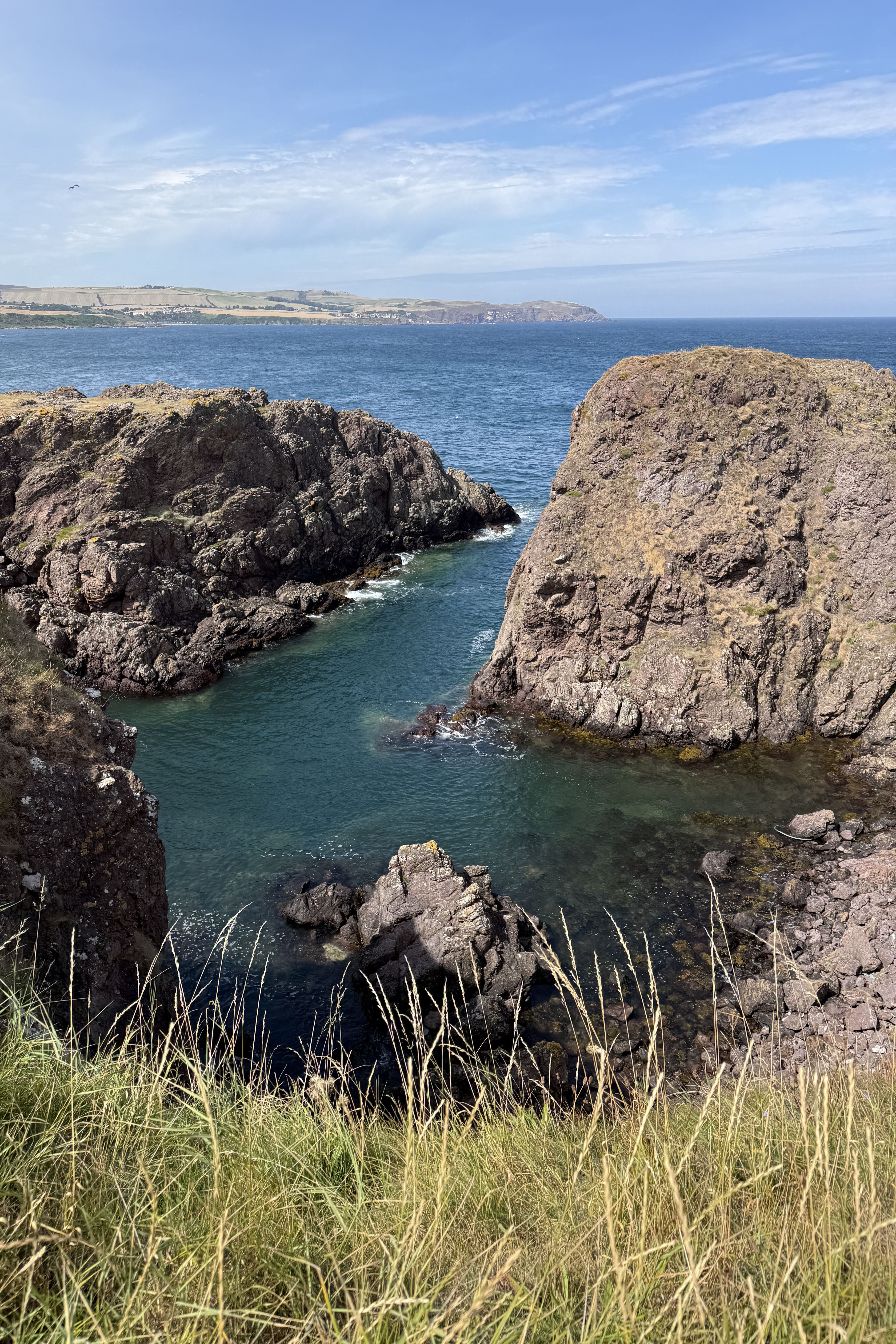
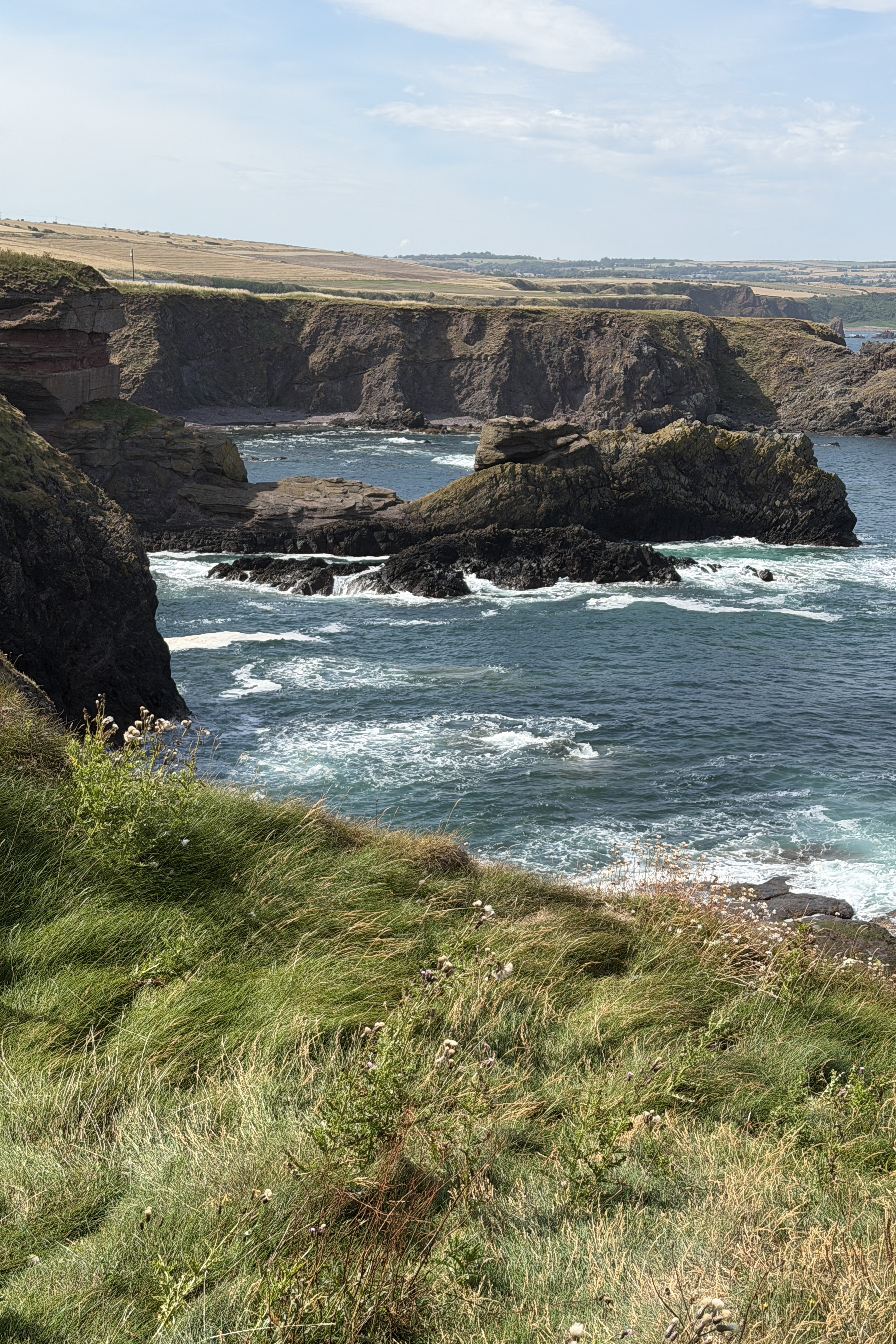
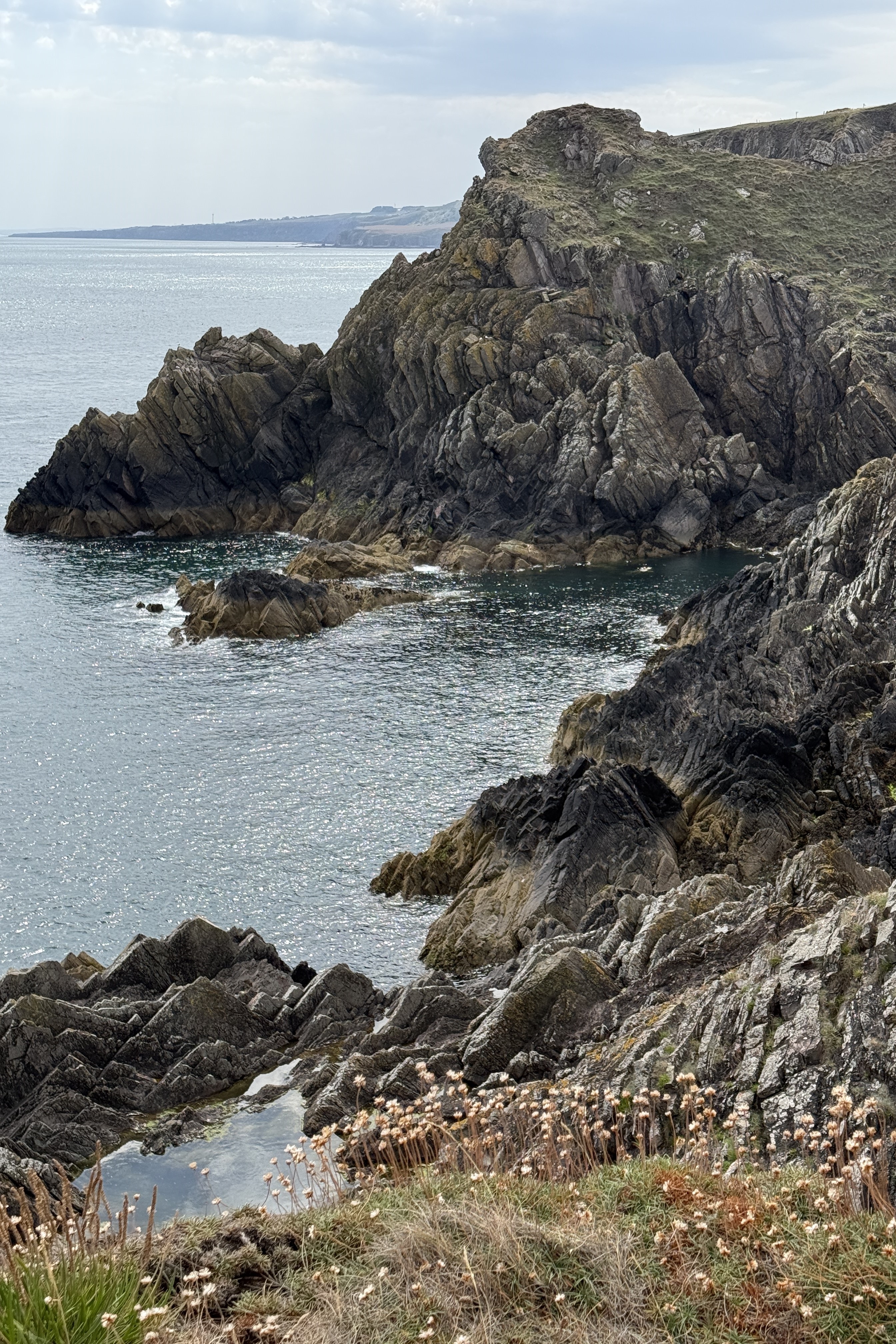
- Standout Hike: St Abbs Head Nature Reserve to Eyemouth via the cliff lighthouse (breathtaking volcanic drama, harbor seals, and cliffside gardens).
- Trail to Skip: Cockburnspath to St Abbs (inland farmer diversions, overgrown hip-high brambles, obscured cliff edges, and miles of animal pastures).
- Culinary Highlights: Warm, flaky, award-worthy scones from Lough’s Home Bakery; rich haddock cheddar chowder at The Ship; and independent wine bars in Newcastle upon Tyne.
Choosing Our Route: Scotland’s Berwickshire Cliffs vs. England’s KingCharles III Coastal Path
When we began outlining a coastal walk to round out our time in the UK, we found ourselves torn between two distinct stretches of North Sea coastline. Our initial concept was to take the train south from Edinburgh into England—stepping off at Berwick-upon-Tweed and walking south toward Newcastle along the Northumberland stretch of the King Charles III England Coast Path.
On paper, that English route has incredible appeal: sweeping sandy beaches, vast nature reserves, and historic fortress landmarks like Holy Island and Bamburgh Castle. However, as we researched the terrain, we were lured north by the promise of the Scottish Borders. We anticipated that the Berwickshire Coastal Path would deliver far more vertical, dramatic cliffside scenery—towering volcanic headlands, jagged sea stacks, and narrow coastal wynds that felt wilder and less pastoral. We also assumed the Scottish regional bus network would offer a tighter, more advantageous shuttle system between the fishing harbors, making daily hop-on, hop-off walking seamless.
Looking back, was that assumption completely accurate? It depends entirely on which stretch you walk.
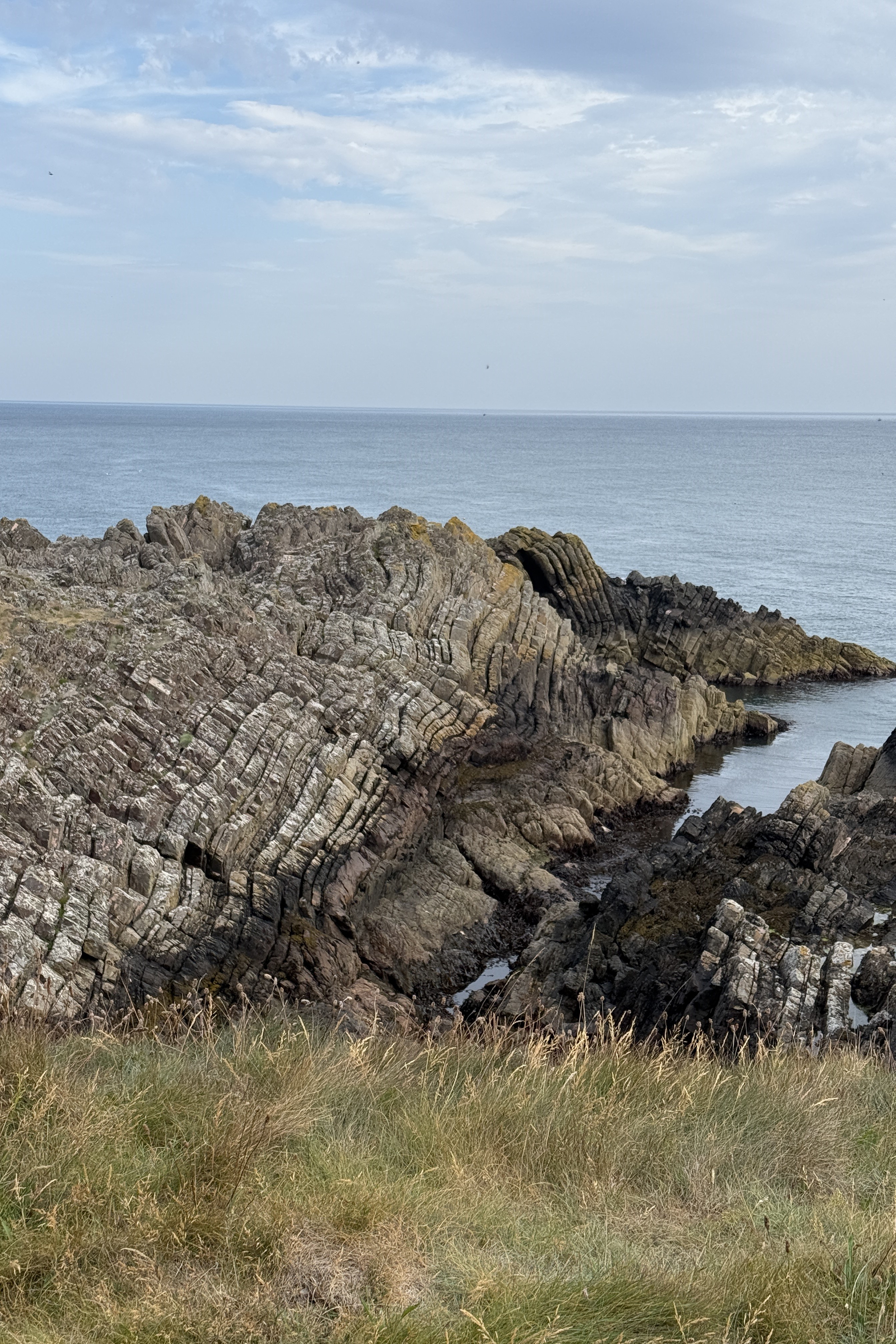
For the iconic segment between St Abbs Head and Eyemouth, Scotland absolutely lived up to the hype: the plunging cliffs, wheeling seabirds, and dramatic volcanic viewpoints were everything we had envisioned. But on the northern leg out of Cockburnspath, that vision of sheer coastal drama gave way to deep inland farm detours, overgrown brush, and rural paths far removed from the water.
Furthermore, while the Borders Buses network does connect the villages, rural timetables run only every one to two hours, and connections at tiny stops like Reston station demand careful coordination. England’s Northumberland coast, by contrast, benefits from dedicated coast buses that run with steady consistency between sandy castle towns.
If your heart is seton sheer volcanic rock faces, working fishing harbors, and rugged, dramatic headlands, the Scottish Berwickshire path is unmatched—provided you pick the right trail segments. If you prefer long, continuous walking along wide sandy expanses and medieval castles with flatter, forgiving terrain, the English King's Path remains a fantastic alternative.
Linear Trekking vs. The Hub-and-Spoke Base: Finding Your Style
When setting out to experience the Berwickshire Coastal Path, there are two distinct ways to structure the journey:
- Option 1: Point-to-Point with Luggage Transfers. You can hike linearly from village to village, hiring a specialized transfer service to haul your main luggage between inns each day. The clear advantage here is breadth: you cover maximum ground along the trail, finish each day’s walk in a brand-new coastal hamlet, and take in a wider variety of overnight stops. The tradeoff is rigidity and cost. You are locked into fixed daily mileage regardless of poor weather, specialized luggage services add up quickly, and tiny destinations like St Abbs have limited, often pricey lodging.
- Option 2: The Hub-and-Spoke Home Base. You establish a single base in a well-connected coastal town—in our case, Eyemouth—and use the regional Borders Buses paired with your own two feet to tackle the trail in digestible day sections. The advantage is deeper immersion. You get to settle into a town’s daily rhythm, build morning routines at local bakeries, get to know the harbor, and still explore adjacent hamlets during quick daytime stops. It also grants ultimate weather flexibility: if relentless sea fog or sideways rain rolls in, you aren't forced onto cliff edges just to reach your bed.
This approach gave us complete control over our pacing and transit days. Instead of worrying about carrying heavy packs or coordinating multi-leg luggage transfers, we spent our days tackling the trails, savoring harbor life, and keeping our bags settled in one place until we checked out. And when it was time to move on to our next major international destination, getting to our departure hub was simple: a quick 50-minute train south from nearby Reston station brought us directly into Newcastle upon Tyne, positioning us perfectly for our early-morning flight to Dubrovnik Croatia.
Getting There: The Reston Rail-to-Bus Reality
Getting from Edinburgh Waverley down to the Borders is quick—just a 50-minute direct train to the newly reopened Reston station (booked via Trainline with our Two Together Railcard).
The transition from train to village, however, requires attention. Borders Buses (Service 253) connects Reston station directly to Eyemouth High Street in under 15 minutes, but the rural timetable runs infrequently. We stepped off the train only to find we had missed the bus by ten minutes, facing a 2.5-hour wait for the next connection.
Fortunately, slow travel thrives on local interactions. We walked into Reston village with a kind local resident from our train, who guided us straight to the tiny combined general store and post office. The shopkeeper handed us the WhatsApp number for a trusted local private hire driver, who was just returning home and happily drove us straight down to Eyemouth. We also took this opportunity to book our return trip to the train station with the same driver.
- Transit Planning Rule: Download the Borders Buses app well before arrival and cross-reference your train times carefully. Always keep small cash on hand, save the contact details for local Borders taxis in your phone, and make friends with shopkeepers!
Harbor Life in Eyemouth: Base Camp & Essential Routine
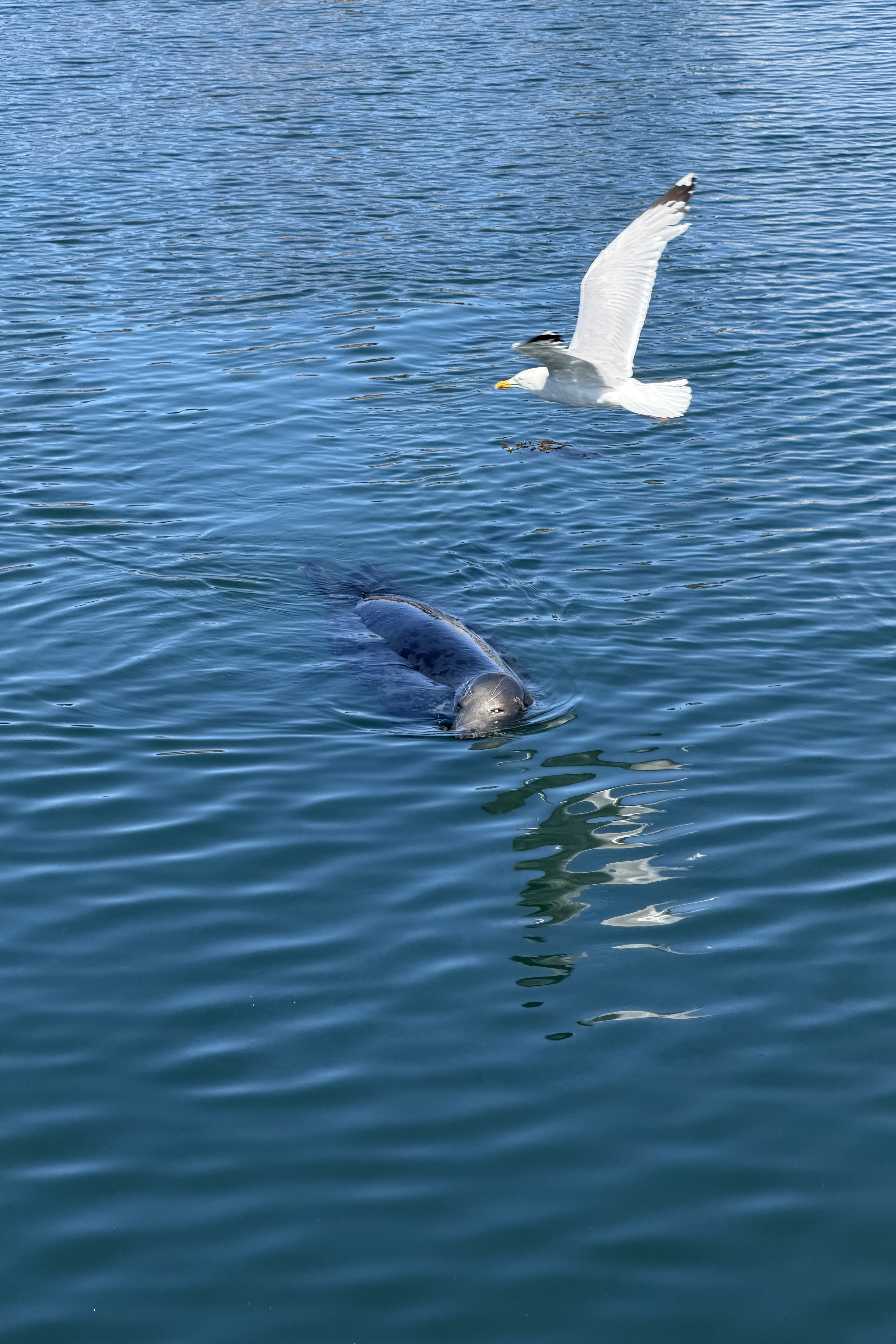
Checking into The Ship’s Quarters, our host Amanda welcomed us in early. Eyemouth is an active, unpretentious working fishing port rather than a manicured tourist trap. Fishing trawlers motor past the piers, gray seals pop their heads above the harbor waters hoping for fish scraps, and jagged red volcanic cliffs frame a sheltered crescent beach.
The town offered the practical rhythm we needed:
- Lough’s Home Bakery: Our absolute favorite daily ritual. We stopped here every single morning for breakfast. Tom loved their sausage and bacon breakfast rolls, while Danielle sampled their savory quiches and breakfast pies, and both of us tried a new variety of their unbelievable scones each morning. Flaky on the exterior, impossibly tender and moist inside, they are the best scones we have ever tasted—easily earning a nomination for our Touchpoint Tally Food Awards.
- The Co-op Grocery: Positioned right in the town center, this market was our go-to for stocking up on water, trail mix, fresh bread, and evening wine.
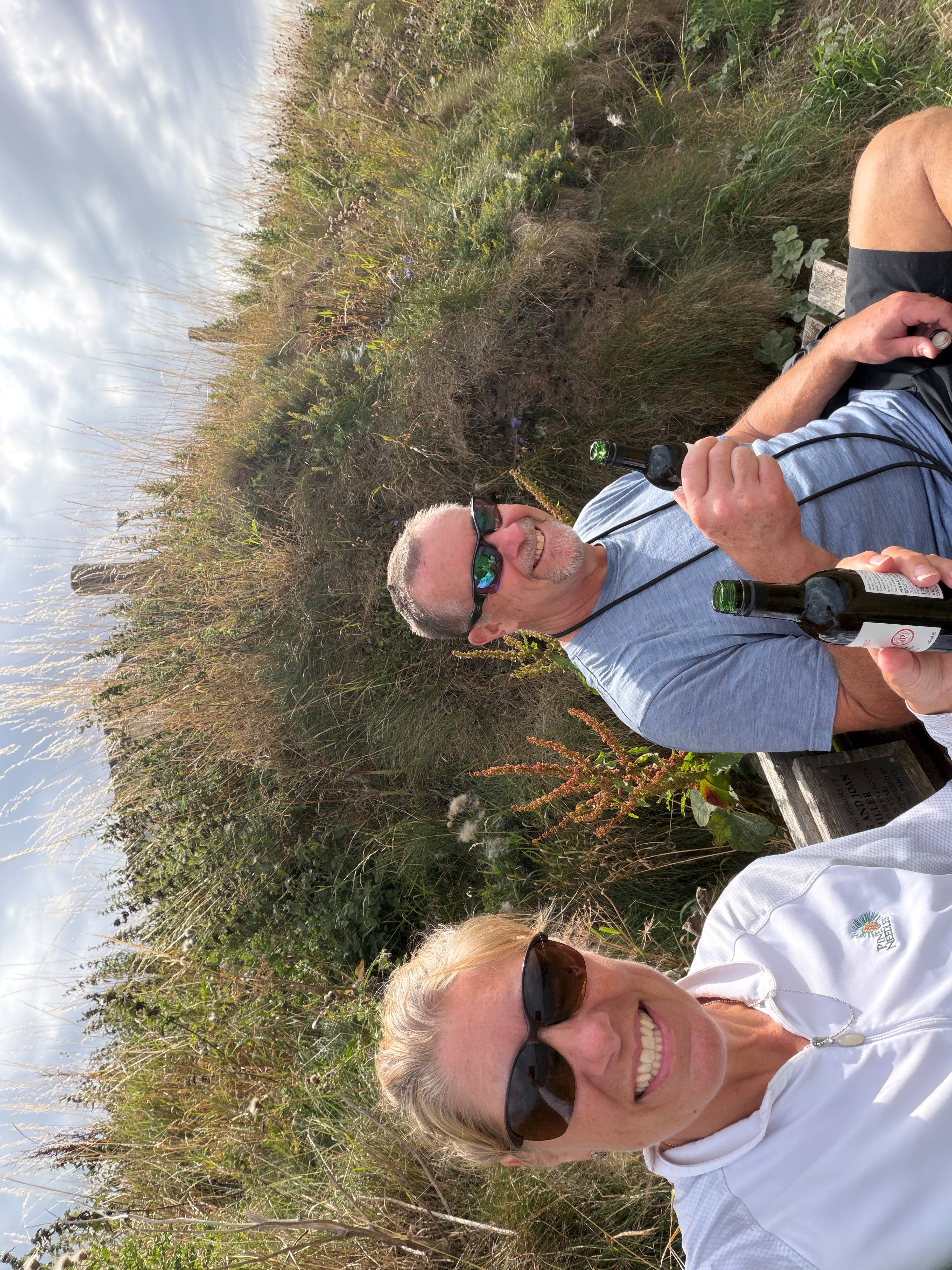
- Harbor Benches & Evening Reflections: Sitting on the benches overlooking the harbor mouth became our sanctuary. As we approached the one-year anniversary of our full-time life of travel, we spent hours here watching the tides, discussing our lifestyle pace, processing our travel budget, and watching the evening sun light up the rugged headlands.
The Day-by-Day Coastal Trail Breakdown
Day 1: St Abbs Head Lighthouse to Eyemouth (The 5-Star Highlight)
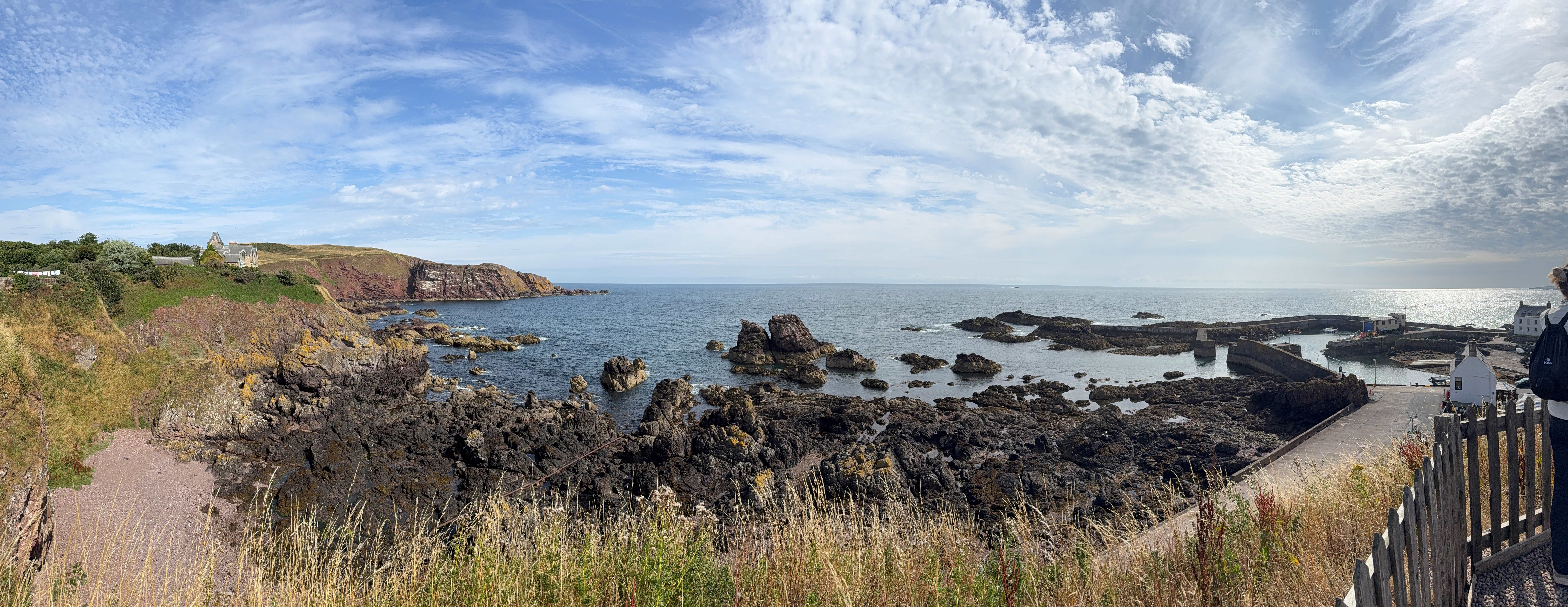
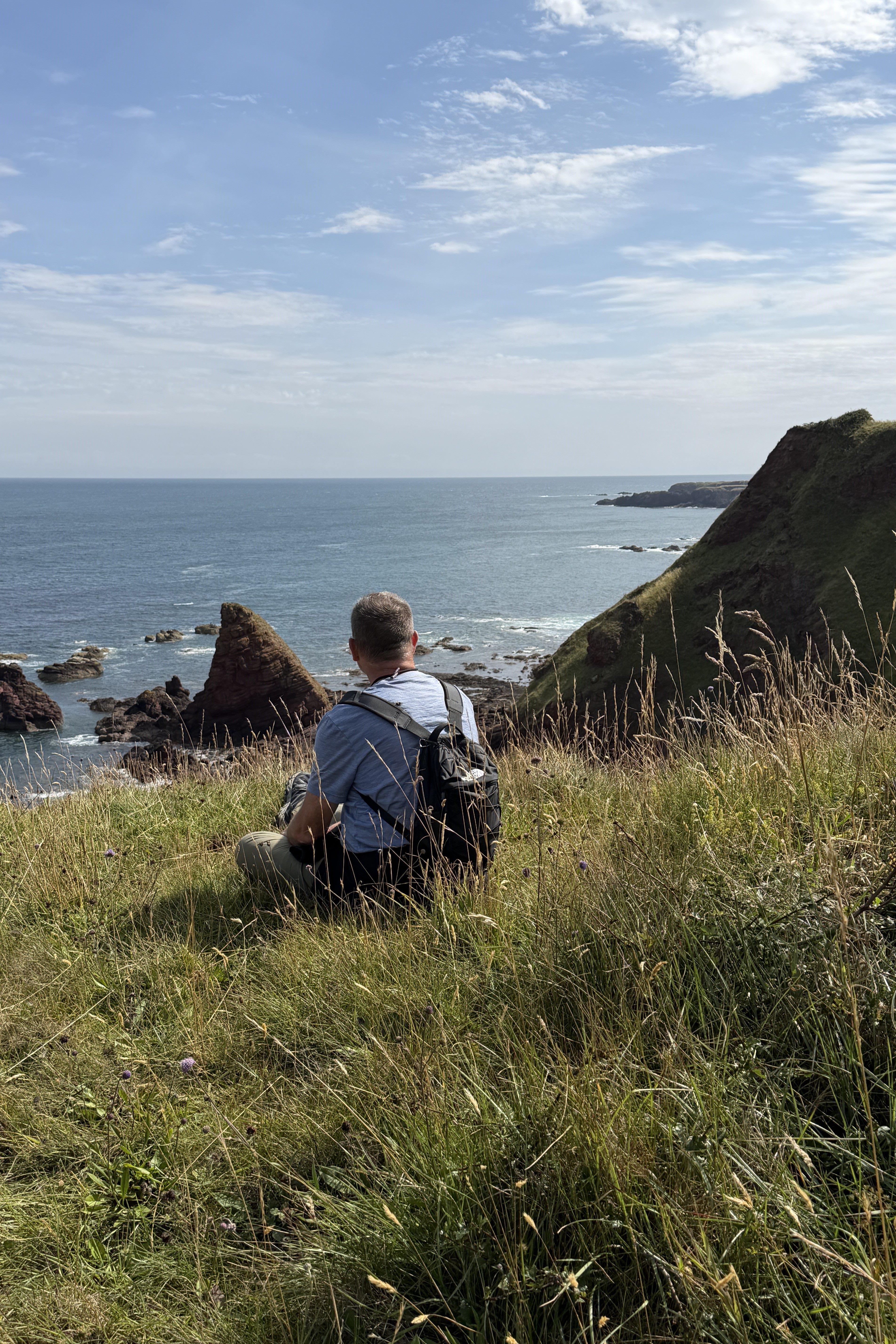
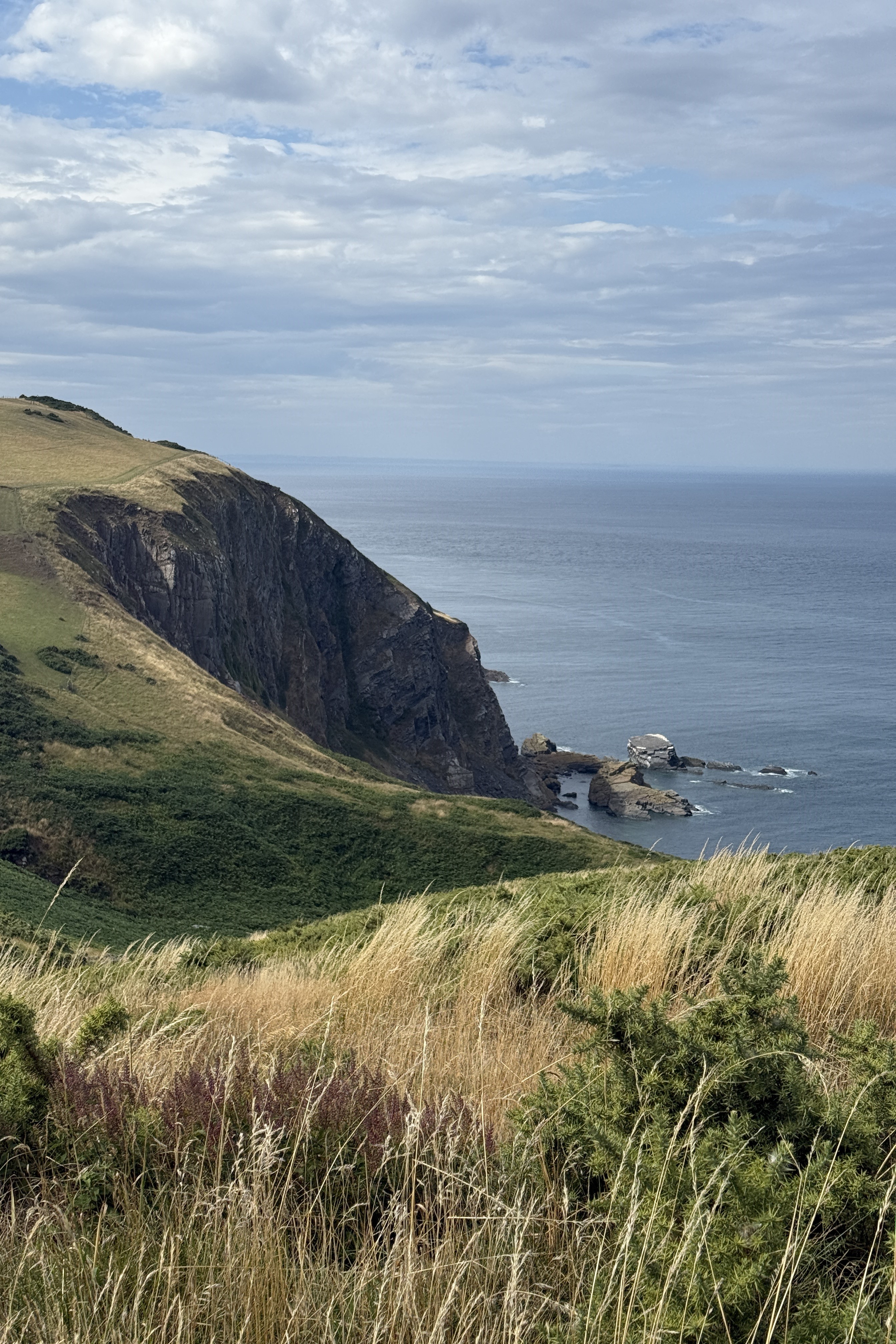
Taking the morning Borders Bus north to the road junction outside St Abbs, we walked up past the village and out toward St Abb’s Head National Nature Reserve toward the lighthouse. The path skirts dramatic, sheer volcanic sea cliffs towering over crashing North Sea surf. What charmed us most were the coastal homes: their stone cottages sit back from the path, with private little grassy lawns perched right at the cliff's edge furnished with Adirondack chairs and vibrant flower gardens.
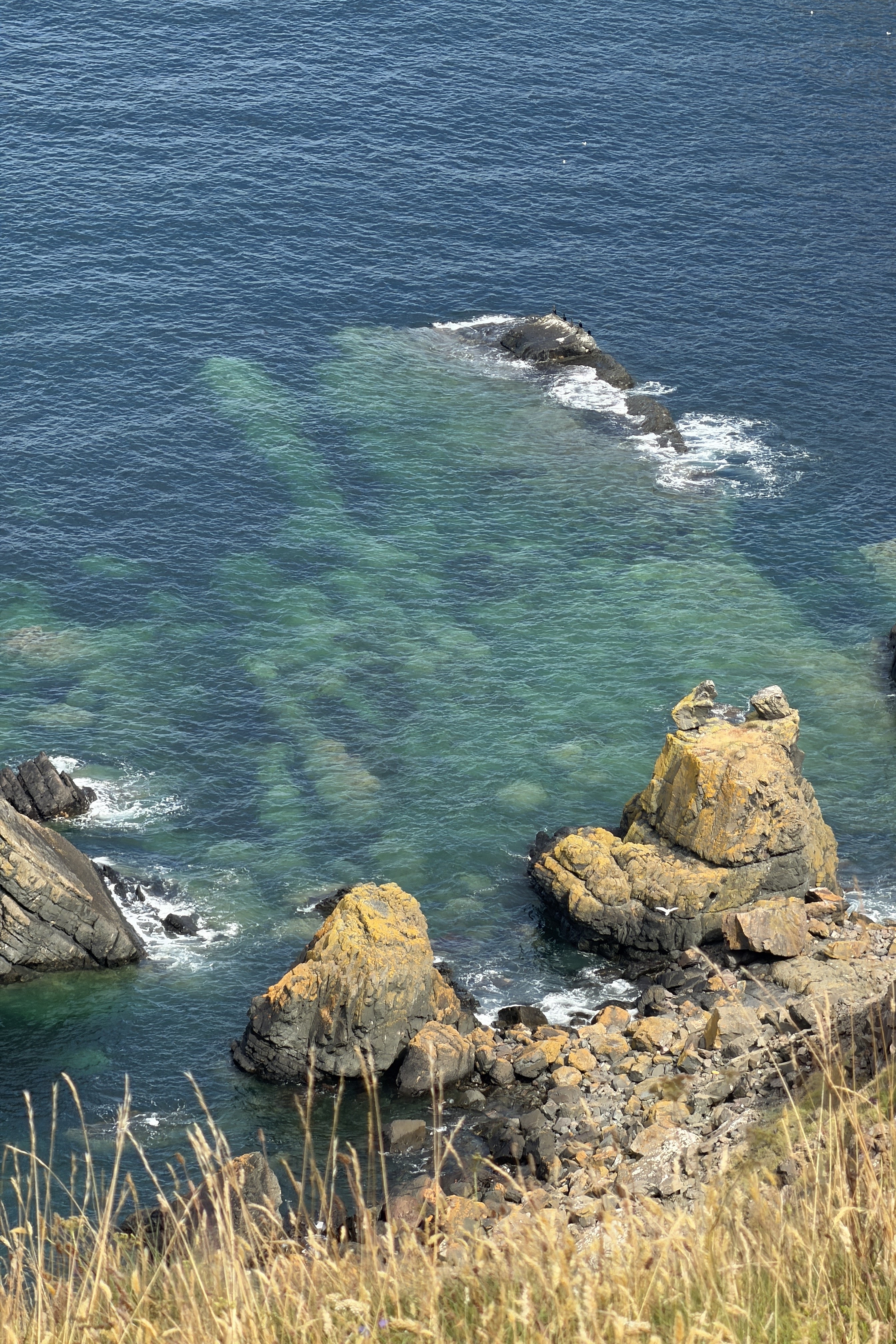
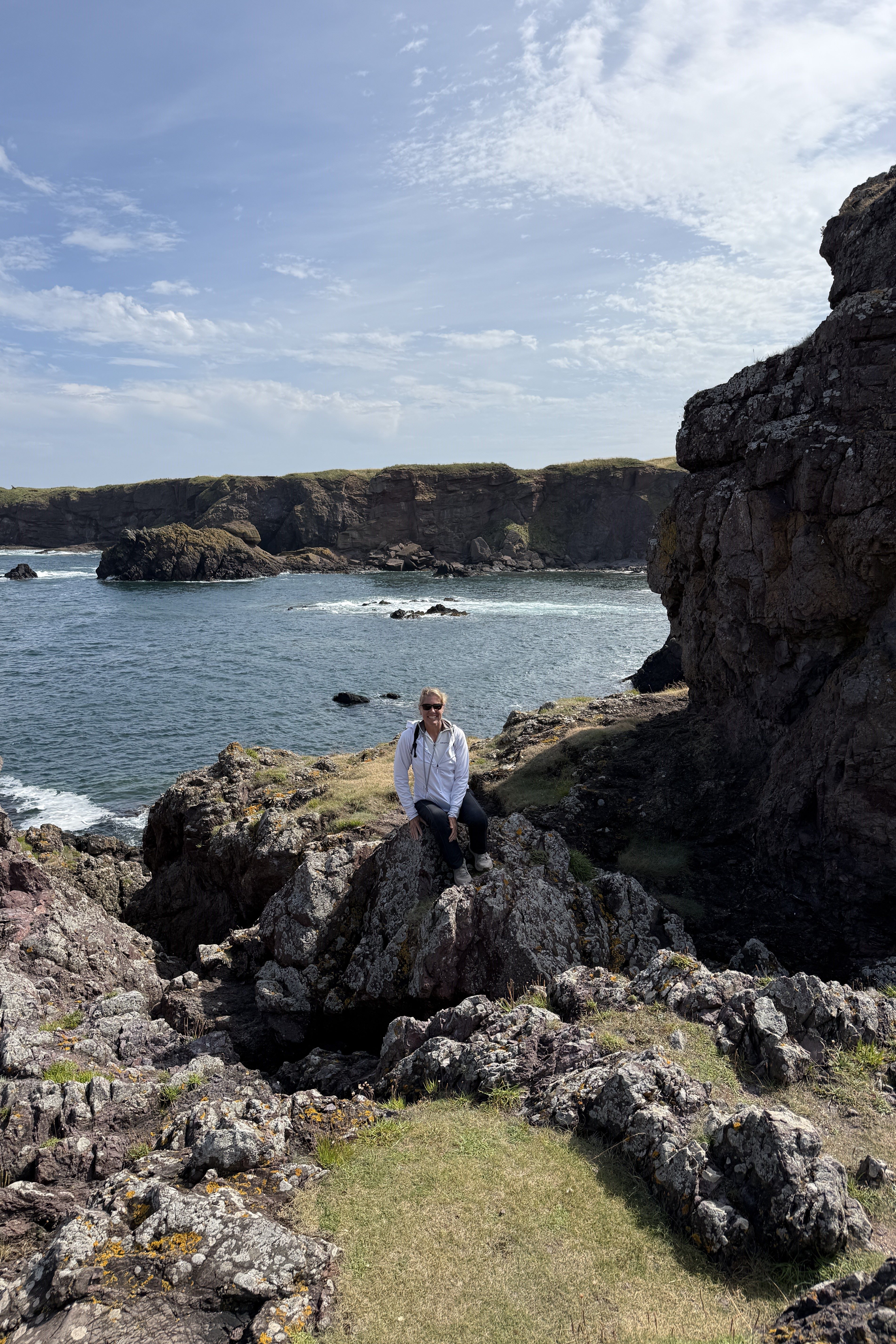
After taking in the lighthouse viewpoints, we picked up the coastal trail southward toward Eyemouth. The route is well-marked and gently rolling. Just outside Eyemouth, we scrambled down to a quiet, remote rocky beach. We perched on a massive boulder, eating our sandwiches and watching the rising tide slowly submerge the shoreline (and fill a forgotten leather boot left stranded on the rocks!).Continuing past the historic earthworks and cannons of the 16th-century Eyemouth Fort, the trail delivers sweeping views of harbor boat traffic. At an easy two-to-three-hour pace, this is one of the most magnificent coastal walks in Great Britain.
Day 2: Cockburnspath to St Abbs (Why You Should Skip This Section)
We caught the bus north to Cockburnspath, intending to hike the full northern segment down to St Abbs. To put it plainly: this section was an exhausting slog that we cannot recommend.
Rather than embracing the coastline, the trail forces long detours around private farmland, winding endlessly through service roads and distant perimeter fences where you cannot even see the sea. Near Pease Bay, the trail narrows to an insecure, heavily overgrown strip with obscured footing and steep drops. Elsewhere, we found ourselves wading through knee-high and waist-high ferns, brambles, and stinging nettles.
The trail then traverses miles of uneven, hole-riddled pastures dense with sheep, cow, and rabbit droppings, demanding constant downward vigilance. After nearly six grueling hours to reach St Abbs, we abandoned plans to walk all the way to Eyemouth, happily catching the bus home. We collapsed into our room with a takeaway chicken doner wrap from Kocero’s Kebab and a well-earned bottle of wine.
Day 3: Eyemouth South to Burnmouth (Rolling Cliffs & Wild Blackberries)
For our third walk, we stepped straight out of our door in Eyemouth and walked south toward Burnmouth. Unlike the overgrown northern leg, this trail is wonderfully maintained and largely empty of crowds.
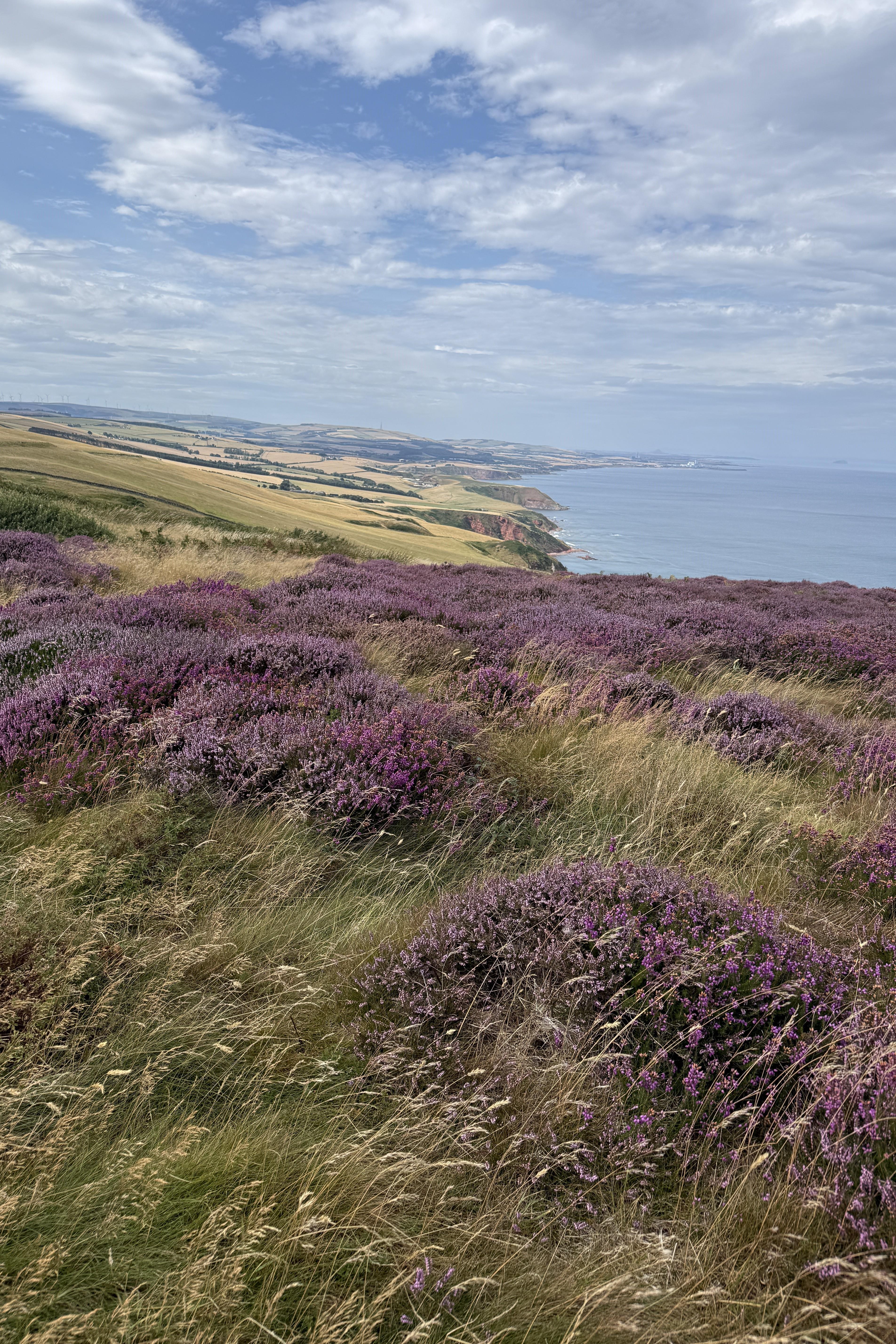
The path features more undulating elevation changes, offering sweeping cliffside vistas interspersed with massive patches of wild, sun-ripened blackberries that made for a delicious morning trail snack. After approximately 2.5 hours of hiking to Upper Burnmouth, we took in the views over the rocky inlet before looping back toward Eyemouth to spend another restorative afternoon perched on our favorite harbor rocks.
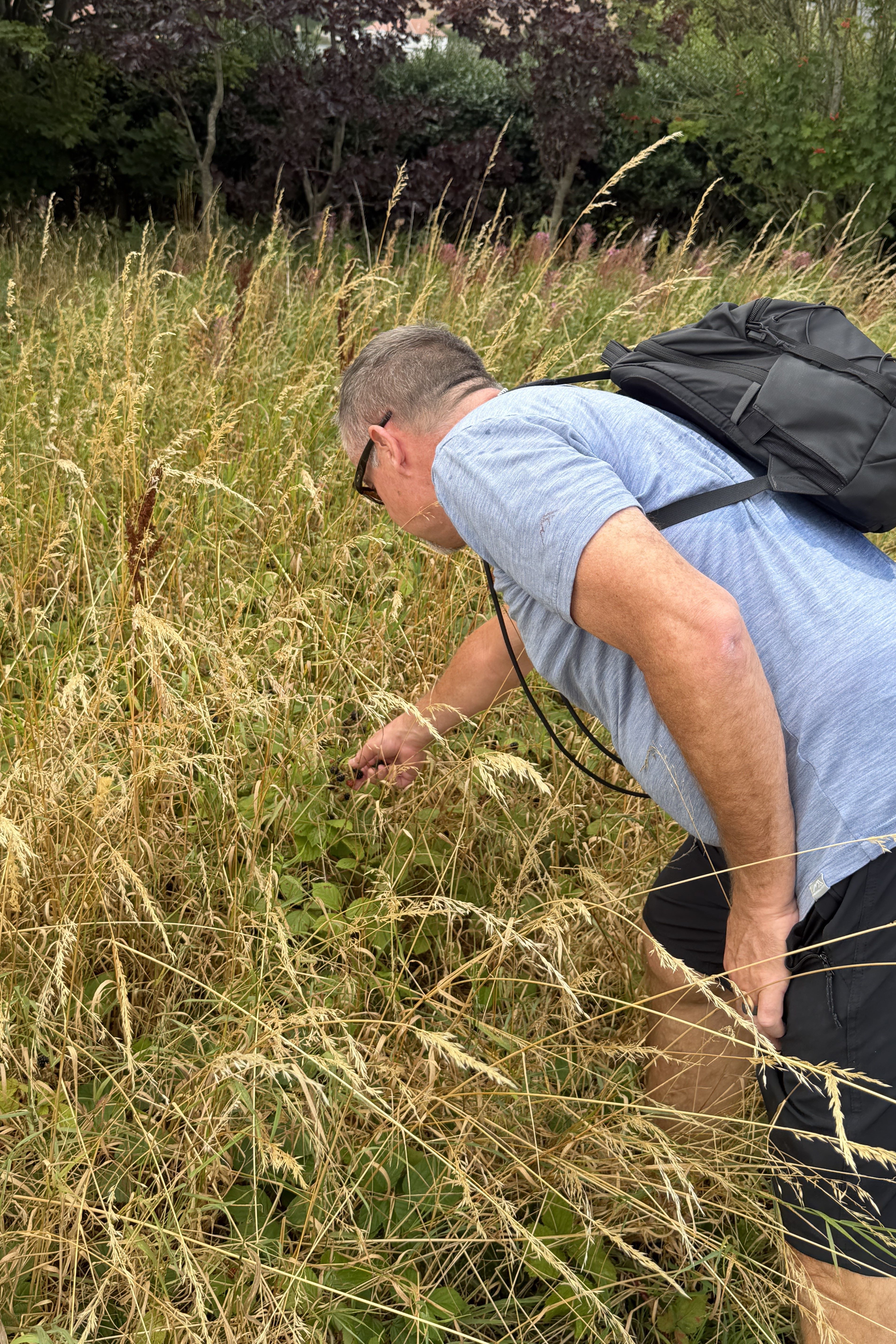

Day 3: Eyemouth North toward St Abbs
For our fourth walk, we decided to revisit the trail between St Abbs Head and Eyemouth. We left Eyemouth and walked north towards St Abbs, taking our time and enjoying our favorite spots along the cliffs. We turned back after a while and came back to Eyemouth, stopping again at the beach with our favorite rock perch and watched the tide come in.
Essential Planning & Field Logistics
- The Borders Bus Reality: The bus network is your lifeline, but service frequencies range from every hour to every two hours. Buses can run 10 to 15 minutes behind schedule. Download the timetable PDFs and screenshot them to your camera roll in case you lose cellular reception on the road.
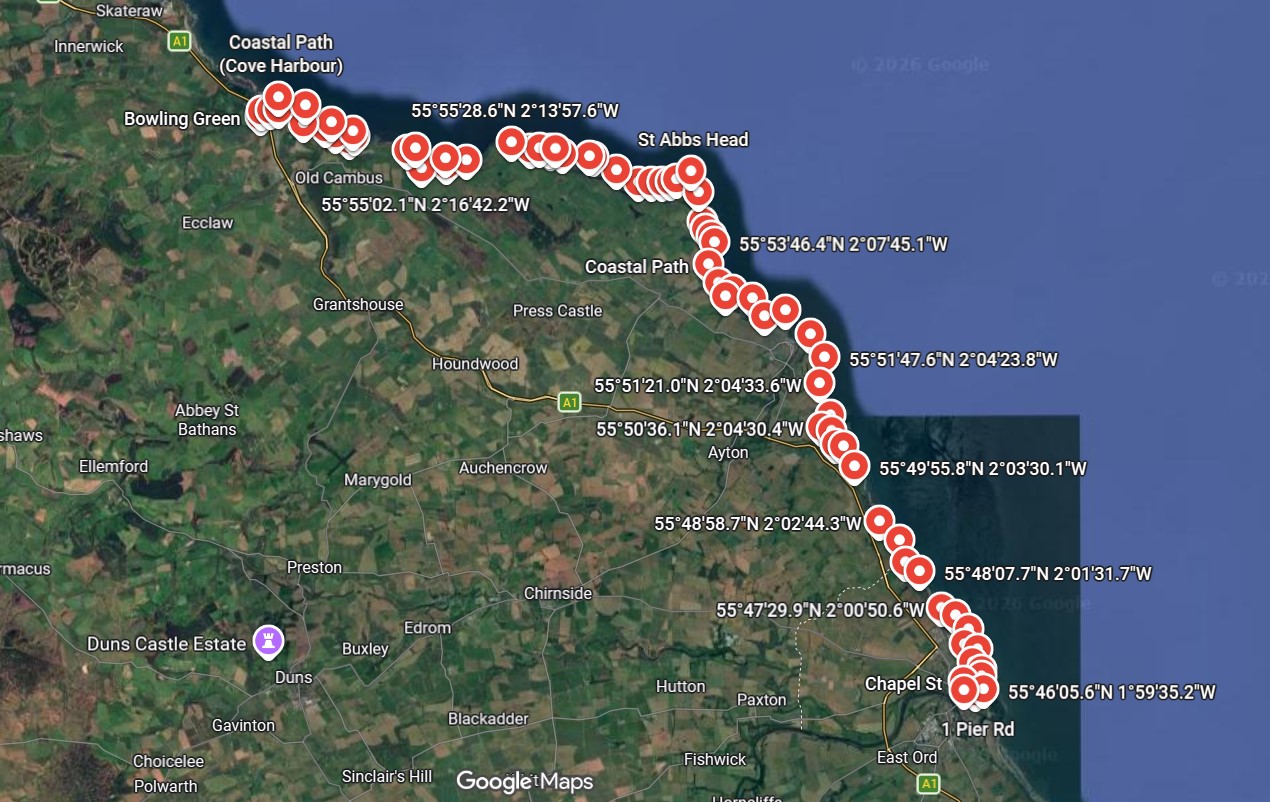
- Offline Navigation is Mandatory: Cellular coverage is exceptionally weak along the coastal path. Do not rely on active internet mapping. Drop offline pins on Google Maps or Apple Maps for every bus stop, trailhead, and crossroads before you leave town. Watching your GPS blue dot move against your offline pins eliminates unnecessary navigational panic. We used an app called "Walkhighlands" that shows a map of the trail. Along with Google we pined all the locations that looked like a turn.
- Layering for Microclimates: Scottish maritime weather shifts within minutes. We experienced warm sunshine requiring short sleeves and sunglasses, followed twenty minutes later by chilly, gale-force sea winds and sideways rain. A light windproof outer shell, a breathable long-sleeve layer, and sturdy footwear with good ankle grip are non-negotiable.
Dining & Pub Life: The Ship and Beyond
Eyemouth is small, so evening dining centers on a handful of dependable spots:
- The Ship Restaurant & Bar: Anchoring the harbor front, this was our primary dining room. Their haddock and cheddar chowder was rich, smoky, and comforting—so good that Danielle returned specifically the next night and was able to score the very last bowl in the kitchen! Tom enjoyed their steak frites and tried the local fish and chips. Note: the wine list here is very basic; stick to local Scottish ales or cold lagers with your meal.
- Kocero’s Kebab & Pizza: When you return from a five-hour hike completely spent, this casual takeaway serves massive chicken doner wraps and chips that can easily feed two hungry hikers.
- Cliffside Picnics via The Co-op: A fantastic alternative is to make your main meal on the cliffs. Grabbing fresh provisions and wine from the central Co-op allows for dining with the most spectacular sea views imaginable.
Urban Contrast & Departure Logistics: Exploring Newcastle upon Tyne
With a 6:30 AM flight out of Newcastle to Dubrovnik on our schedule, we wrapped up our Eyemouth stay by taking the direct 50-minute train south from Reston across the English border into Newcastle upon Tyne.
To eliminate pre-dawn transit stress for an early European departure, we booked the DoubleTree by Hilton Hotel Newcastle International Airport. Sitting literally a two-minute walk from the departure terminal doors, it is the ultimate logistical sanity-saver: we were able to drop our main luggage, take the Metro into the city center for a full afternoon of exploration, sleep comfortably, and simply walk across the tarmac plaza at 4:30 AM without needing a taxi.
Newcastle is famous across the UK as a high-energy party city, but beneath the lively stag parties and neon dance halls lies extraordinary neoclassical architecture. We strolled down the curving stone facade of Grey Street, marveled at the timber-roofed interior of Newcastle Cathedral (free to enter, deeply welcoming, and actively providing open shelter and care for the city's vulnerable), and walked down to view the iconic arched silhouette of the Tyne Bridge.
Naturally, we turned our pre-flight afternoon into a sommelier’s reconnaissance mission:
- St. Vincent (The Quayside): A celebrated wine venue on the river offering thoughtful European small plates and an adventurous wine program. We had a great wine chat with our bartender, who was actually heading up to the Edinburgh Fringe that weekend and wanted our favorite capital wine recommendations; in return, she mapped out her favorite local spots for us to check out across Newcastle.
- Grey Owl (Grey Street): A gorgeous, sun-drenched wine and cocktail bar featuring grand windows overlooking the street. We enjoyed glasses of Sicilian Nero d’Avola and Argentine Malbec while chatting with the wonderful bartender, who pointed us toward Panis around the corner for authentic regional dining.
Pivoting from the wild, windy sea cliffs of the Scottish Borders to an afternoon of urban architecture and fine wine—capped with a zero-stress airport sleep—was the ideal finale to our time in the UK.
The Slow Traveler’s Verdict
The Berwickshire coastline is one of the UK’s most dramatic walking corridors, but conquering it doesn't require blisters and heavy packs. By establishing a base in Eyemouth, learning the Borders bus rhythms, prioritizing the St Abbs Head loop, and fueling your mornings at Lough’s Bakery, you can experience pure Scottish maritime magic on your own terms.
Links: Edinburgh Trip Report | Surviving & Thriving at the Edinburgh Fringe | York City Trip Report | More Trip Reports
Next Up: Dubrovnik, Croatia
Welcome to the new Touchpoint Wines
We’re blending our passion for wine with a love for global exploration. Join us as we journey through the world's most captivating destinations, uncovering hidden wine gems and offering unique workshop experiences for your team retreats. Whether you're seeking to enhance team dynamics or discover the art of slow travel, let us be your guide.