At a Glance
- Duration: 14 Nights (Late July to Early August 2026).
- Home Base: Ceilidh Donia Hotel (a quiet residential base south of the core, 20–25-minute stroll to the Royal Mile).
- Bucket-List Milestones: The pomp and massed pipes of The Royal Edinburgh Military Tattoo, diving headfirst into the energy of the Edinburgh Festival Fringe, and playing the links at the birthplace of golf.
- Top Performances: Chris Dugdale’s mind-bending illusion show 1 Astonishment 2 Many (where Tom was brought on stage) and Pierre Novellie’s razor-sharp stand-up at the Monkey Barrel.
- Wine & Culinary Highlights: World-class independent wine bars in Stockbridge (Good Brothers, Smith & Gertrude) and tasting flights at Cask & Vine; sublime haddock fish and chips at The Salisbury Arms.
- Overall Vibe: A striking tale of two cities. Tom fell hard for the raw, medieval, multi-tiered terrain of Old Town; Danielle resonated with the grand Georgian elegance, hospitality, and sophisticated wine bar culture of New Town and Stockbridge. Navigating August requires immense energy, strategic booking, and thick skin for erratic weather, but the cultural rewards are unparalleled.
This City is Special Because... (Our Bucket-List Why)
Edinburgh had been circled on our bucket list for years. Everything we had heard or read convinced us it would be one of our favorite cities in the world. It also promised two monumental milestones: for Tom, the anticipation of witnessing The Royal Military Tattoo live on the castle esplanade; for Danielle, diving into the epicenter of global performing arts at the Edinburgh Festival Fringe.
Built across the craggy ridges and hollows of extinct volcanoes, Edinburgh possesses an architectural drama unlike anywhere else on earth. Old Town clings to a volcanic spine that falls from Edinburgh Castle down to Holyrood Palace, its multi-story tenements stacked like the world's original skyscrapers above hidden vaults and subterranean alleys. To the north across the railway ravine, New Town unfolds in immaculate Georgian stone terraces, broad boulevards, and vibrant neighborhood villages like Stockbridge.
Arriving in late July gave us the golden ticket: ten days to conquer the castle, power-walk volcanic trails, and savor intimate neighborhood wine bars before August transformed the city into an electric, chaotic carnival of three million performers, critics, and spectators.
Arrival Logistics & Our Residential Base
Our transition from York to Edinburgh was an exercise in peak UK rail survival. The direct Cross Country train was standing-room-only; luggage racks were so overwhelmed that food carts were canceled, and Tom spent the entire 2.5-hour journey standing between carriages guarding our check-in bags in the doorway.
- Slow Travel Transit Rule: When traveling mainline UK rail during peak summer festival weeks, always pack your own water, lunch, and snacks, since overcrowded aisles make catering impossible. We also discovered that booking reserved seats is essential. Platforms and aisles shuffle constantly as seat reservations are contested at every stop; holding a clear booking confirmation spares you a stressful game of musical chairs.
Upon arriving at Edinburgh Waverley, the city was humming. It took nearly 20 minutes to hail an Uber to our accommodation, the Ceilidh Donia Hotel. Tucked in a serene residential neighborhood south of the center, it was an ideal retreat:
- The Location & Transit: It sits a scenic 20-to-25-minute walk to the southern edge of the Royal Mile, or a gentle 35-minute walk to the Castle. Better yet, bus lines 14, 30, and 33 (with Line 2 swinging south and west) stop practically outside the door, providing effortless contactless transit back when sideways rain strikes (with fares conveniently capped after three daily rides).
- Morning Routine: A peaceful hotel dining room featuring a continental buffet and five or six made-to-order Scottish hot items fueled our long walking days.
The Great Outdoors: Crags, Rivers & Coastal Paths
One of Edinburgh's finest surprises is how swiftly its dramatic stone architecture gives way to wild open nature:
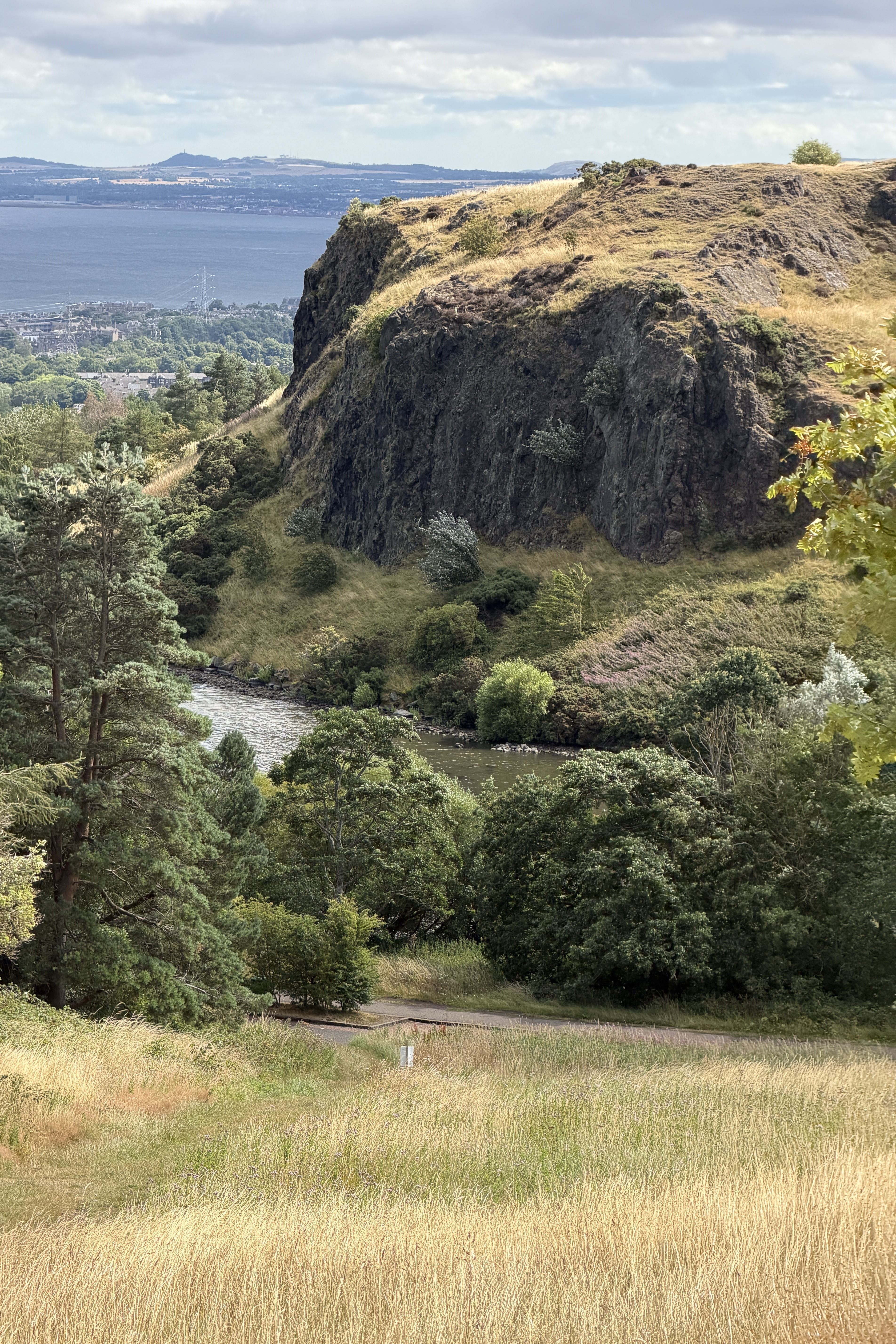
- Arthur’s Seat & Salisbury Crags: Starting from the base of Holyrood Palace, we picked up the Red Path into Holyrood Park to climb Salisbury Crags and Arthur’s Seat. The volcanic stone can be slick, but countless braided offshoot trails make it easy to tailor the climb to your preferred pace. Reaching the summit revealed gale-force gusts that rivaled Cabo de São Vicente in Portugal—at one point nearly knocking Danielle off her feet! The sweeping 360-degree panorama of the Firth of Forth framed against vivid patches of blooming orange and red heather made the hike unforgettable. This is one of the things you must do when coming to Edinburgh.
- The Water of Leith (Downstream to Stockbridge): Our favorite urban trek followed the Water of Leith Walkway downstream from west to east. Joining at Roseburn Cliff near Murray field transitions you immediately from city traffic into lush birdsong and shaded greenery. The path glides behind the sculpture lawns of the Scottish National Gallery of Modern Art, under the soaring stone arches of Dean Bridge, and directly into storybook Dean Village. After photographing the historic 19th-century grain mills and the red-stone façade of Well Court, we followed the river past the neoclassical columns of St Bernard’s Well, exiting straight into vibrant Stockbridge.
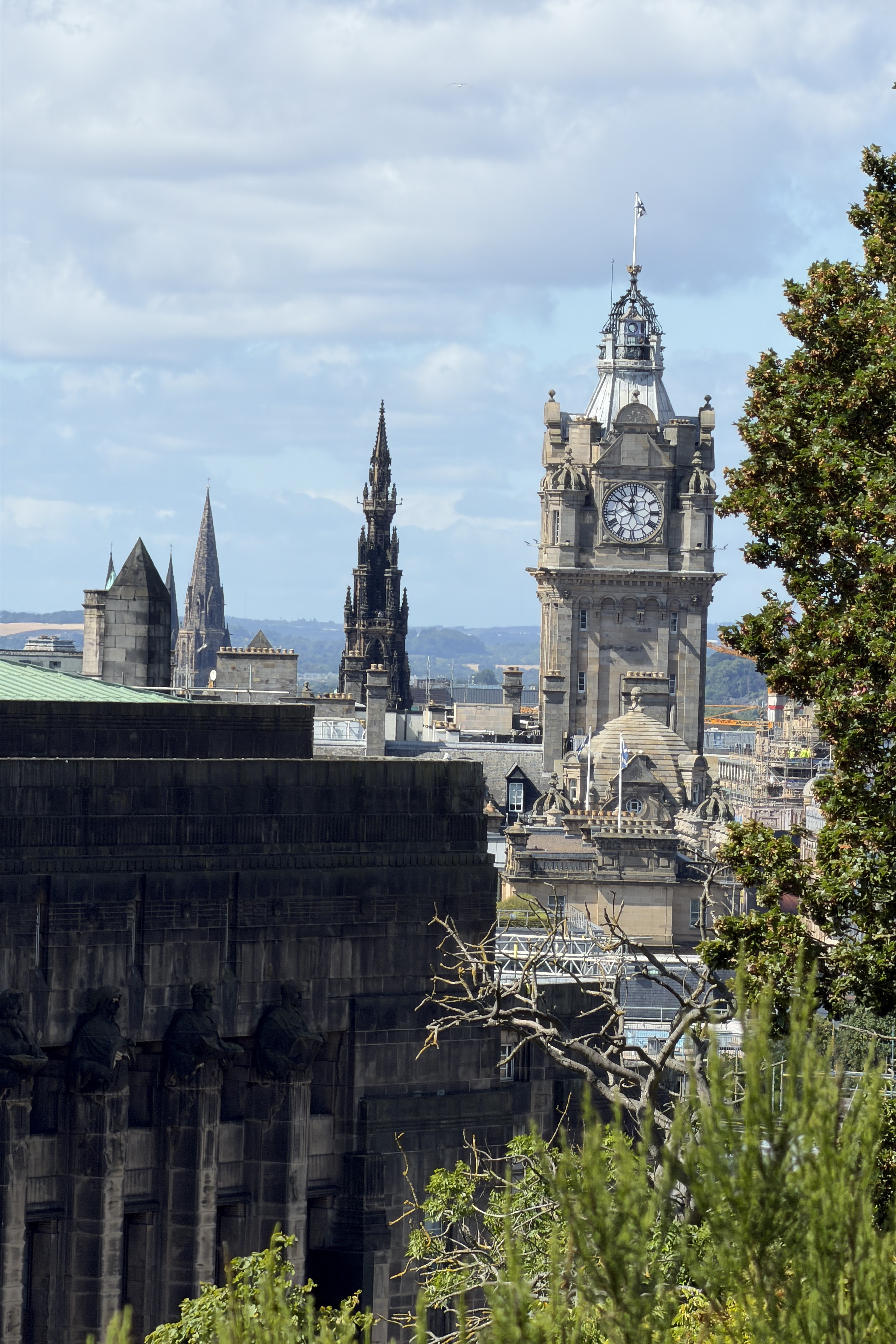
- Calton Hill & The Leith Coastal Route: On a crisp morning after rainfall, we climbed Calton Hill to take in iconic city views alongside the National Monument and Nelson’s Tower. From there, we traced the wooded Leith walkway north to the historic port of Leith. While the Royal Yacht Britannia is largely enclosed behind commercial ticketing docks, the waterfront streets are packed with exceptional independent pastry shops, coffee roasters, and traditional butchers.
Castles, Wynds & Subterranean Vaults
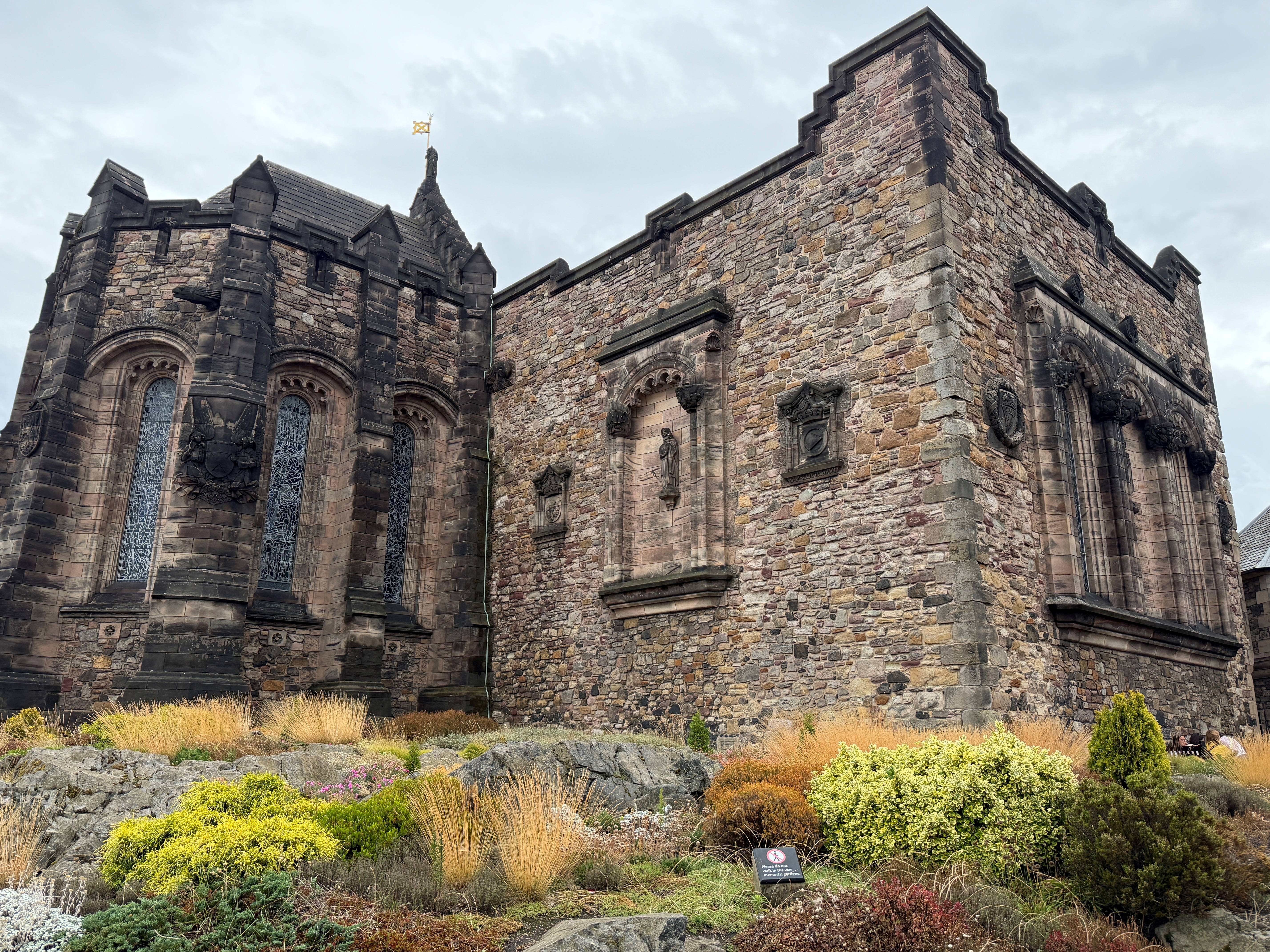
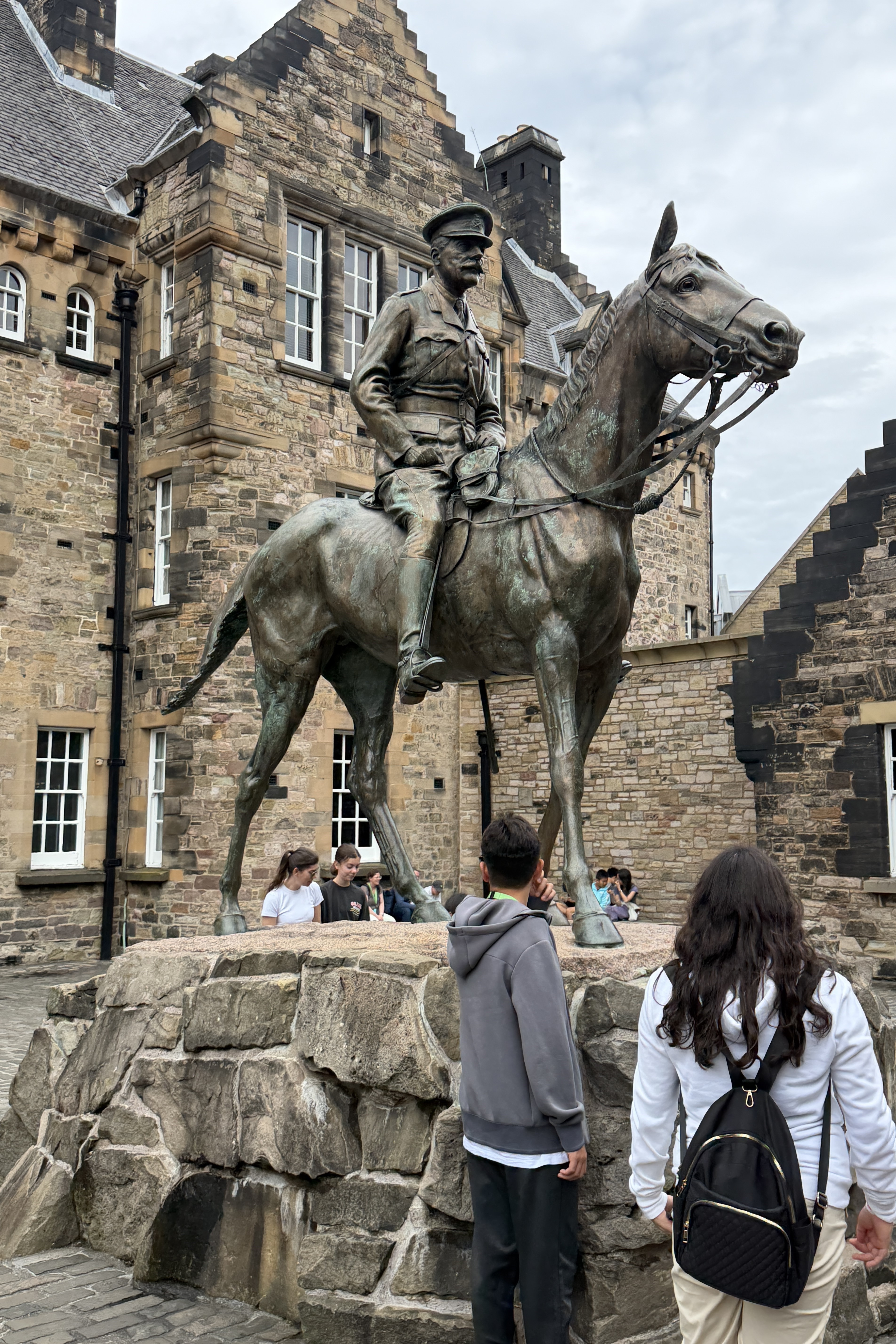
- Edinburgh Castle (Fortress on the Rock): We booked our timed-entry castle tickets three months in advance—a critical move, as "Sold Out" signs were posted daily at the esplanade gate. Rather than a single fortified shell, the castle functions as an entire historic citadel housing the 12th-century St. Margaret's Chapel, the Royal Palace, the Great Hall, and the moving Scottish National War Memorial. The queue moved swiftly to view the Honours of Scotland (the Crown, Sceptre, and Sword of State), and the audio guide brought centuries of castle sieges vividly alive.
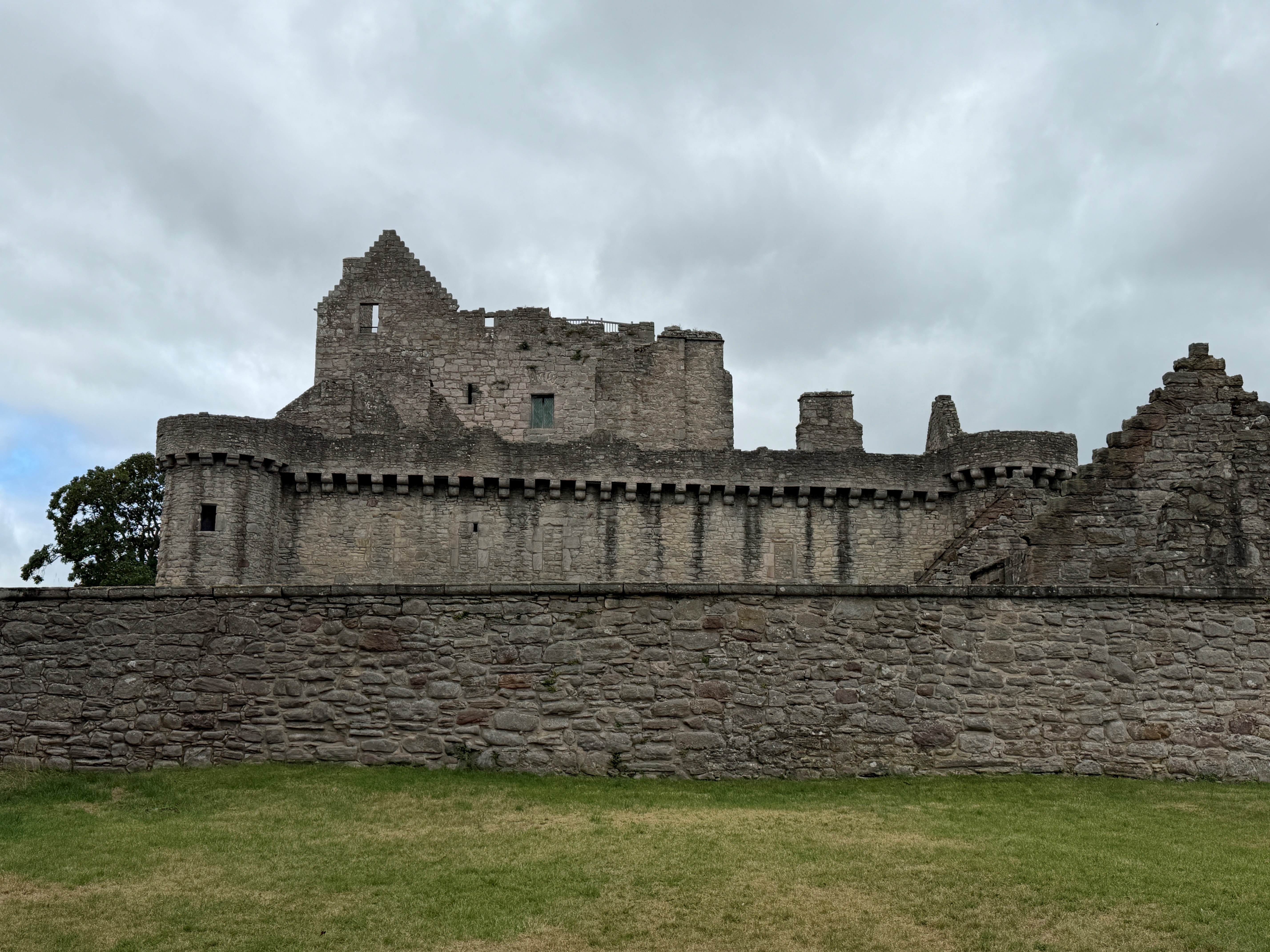
- Craigmillar Castle (The Underrated Medieval Fortress): If Edinburgh Castle is the grand national monument, Craigmillar Castle (located southeast through quiet woodlands, providing a lovely approach walk) is an authentic explorer’s dream. For just £8.95, you have virtually free rein over an impeccably preserved medieval labyrinth first raised in 1440. Famed as the retreat where Mary, Queen of Scots sought refuge (and a filming site for Outlander), we climbed the tower battlements for countryside panoramas and navigated vaulted stone kitchens and bedchambers without a single tour group in sight.
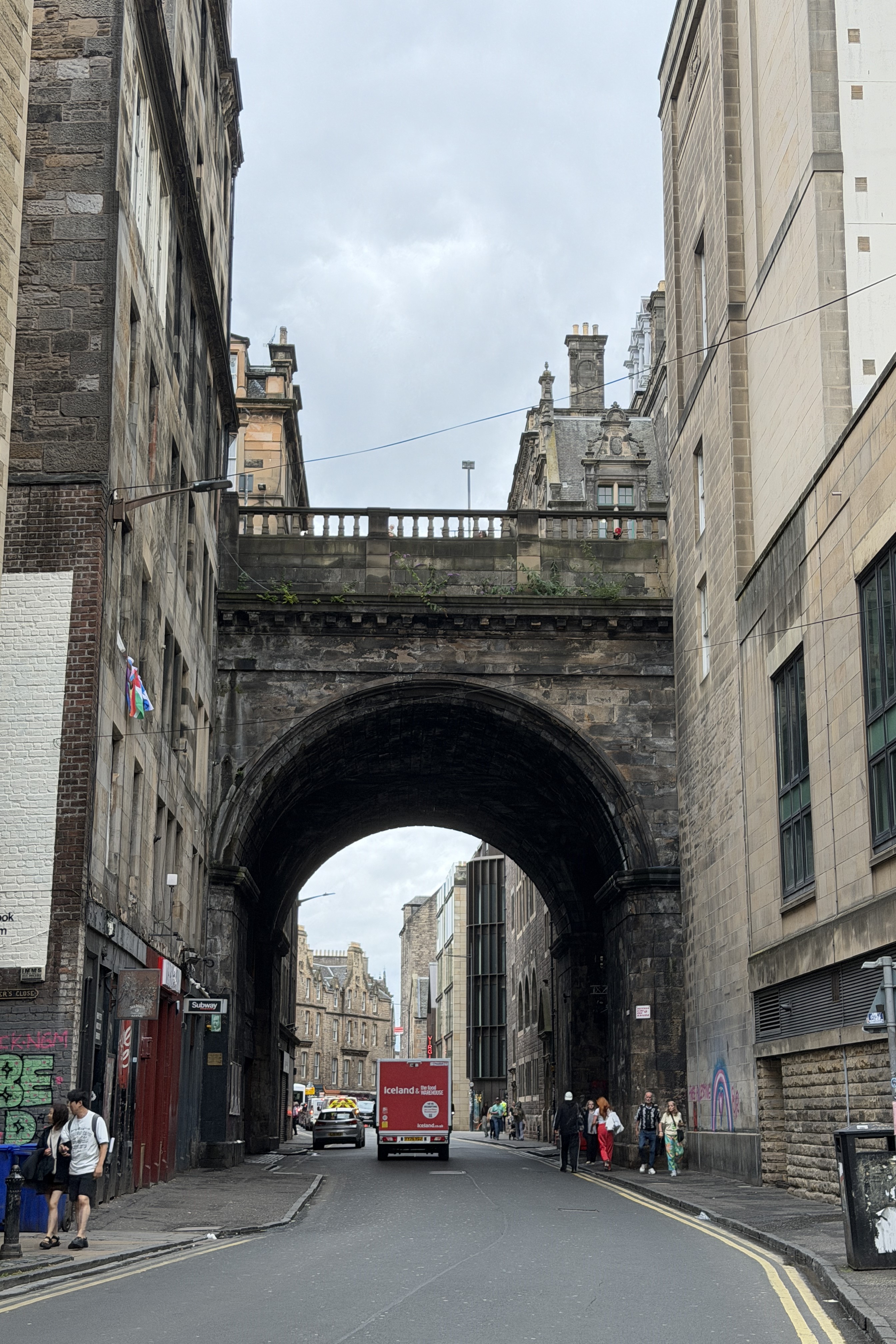
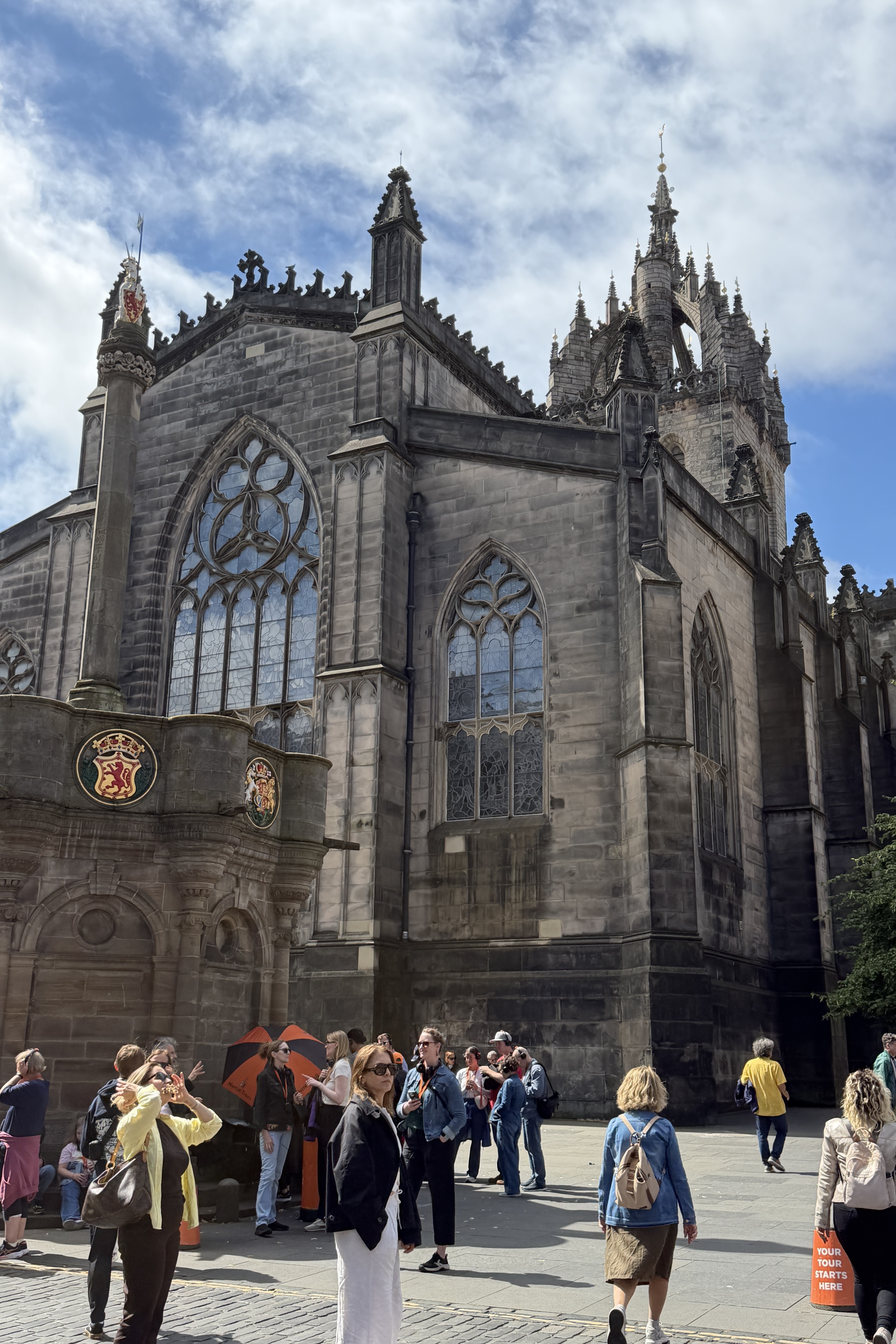
- Uncovering Old Town & Underground Vaults: To ground ourselves in the capital’s layout, we booked a 1.5-hour Old Town walking tour through Get Your Guide. Our guide did an exceptional job unraveling the stark social divide between Old Town and New Town.
- The Flodden Wall & Medieval "Skyscrapers": Following the disastrous Battle of Flodden, Edinburgh built a massive defensive wall running down past where The World’s End pub stands today. Trapped between the wall, the Nor' Loch, and the castle crags, the lower classes were landlocked. With nowhere to expand outward, Edinburgh built straight up—creating Europe's earliest multi-tiered tenements reaching 10 to 14 stories high. These overcrowded conditions bred horrific plague outbreaks that claimed half the city's 40,000 residents, alongside the unceremonious nightly ritual of shouting "Gardyloo!" (regardez l’eau) as chamber pots were emptied directly from high windows into the narrow wynds below.
- The Subterranean Vaults: Descending into the damp chambers beneath South Bridge, our guide explained how these stone arches originally housed cobblers and tradesmen before becoming forgotten slums for the destitute, and smugglers caves.
- Dickens in Greyfriars Kirkyard: We also visited the historic churchyard where a bizarre linguistic blunder inspired literature. Charles Dickens, wandering the headstones in 1841, misread the gravestone of merchant Ebenezer Lennox Scroggie—reading "a meal man" (corn trader) as "a mean man"—giving birth to Ebenezer Scrooge in A Christmas Carol!
- Detour Past Greyfriars Bobby & Victoria Street: Right outside the kirkyard gates stands the bronze monument of Greyfriars Bobby, the faithful Skye Terrier who guarded his master’s resting place for 14 years. This junction at George IV Bridge serves as an ideal escape from the Royal Mile. We strolled past historic pubs andslipped down curving Victoria Street to visit I.J. Mellis Cheesemongers, an artisanal haven packed with farmhouse Scottish cheddars, blues, and accompaniments, where we purchased some of the best cheese we have had in a while, including the Red Leicester.
The Royal Edinburgh Military Tattoo: Living Legend
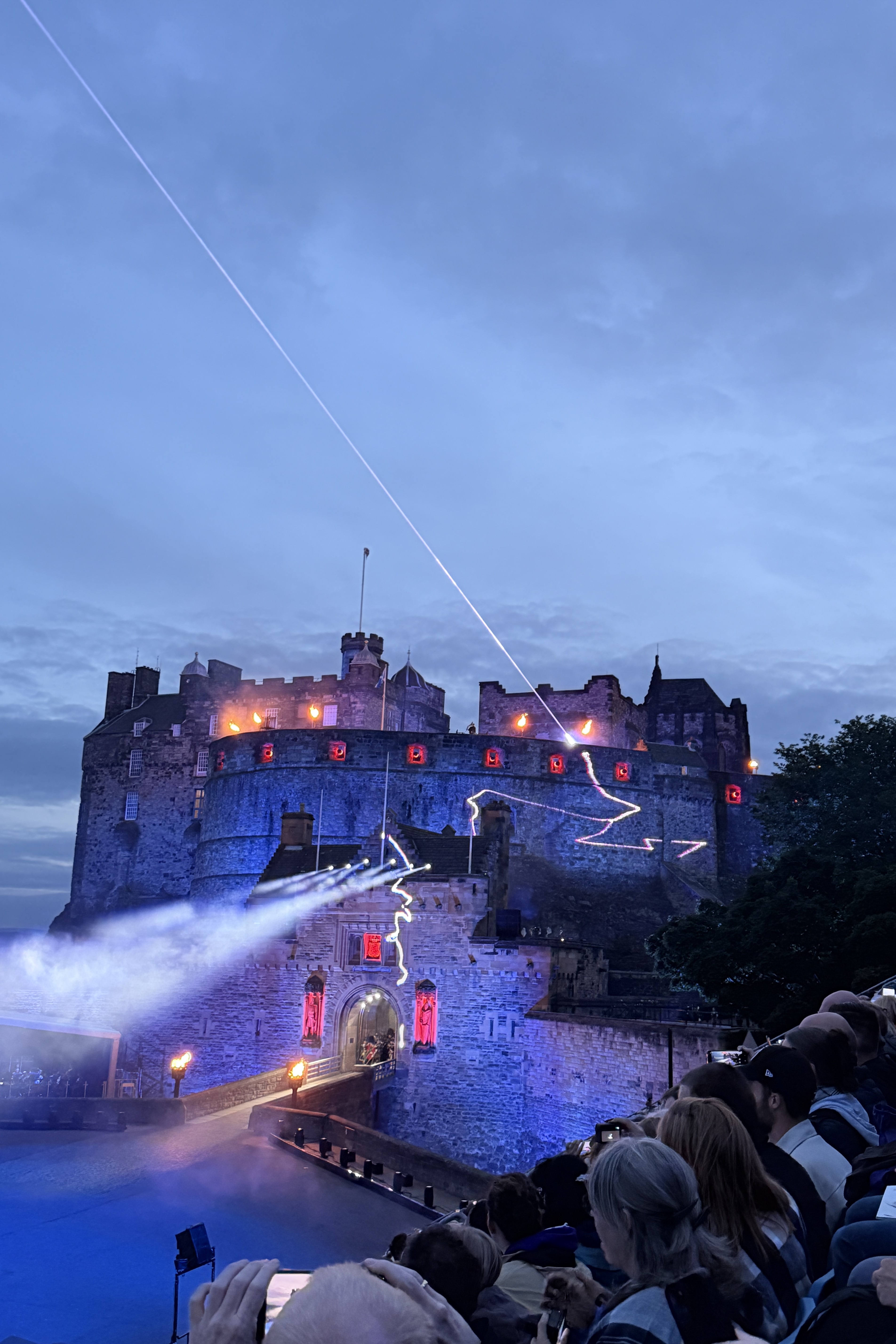
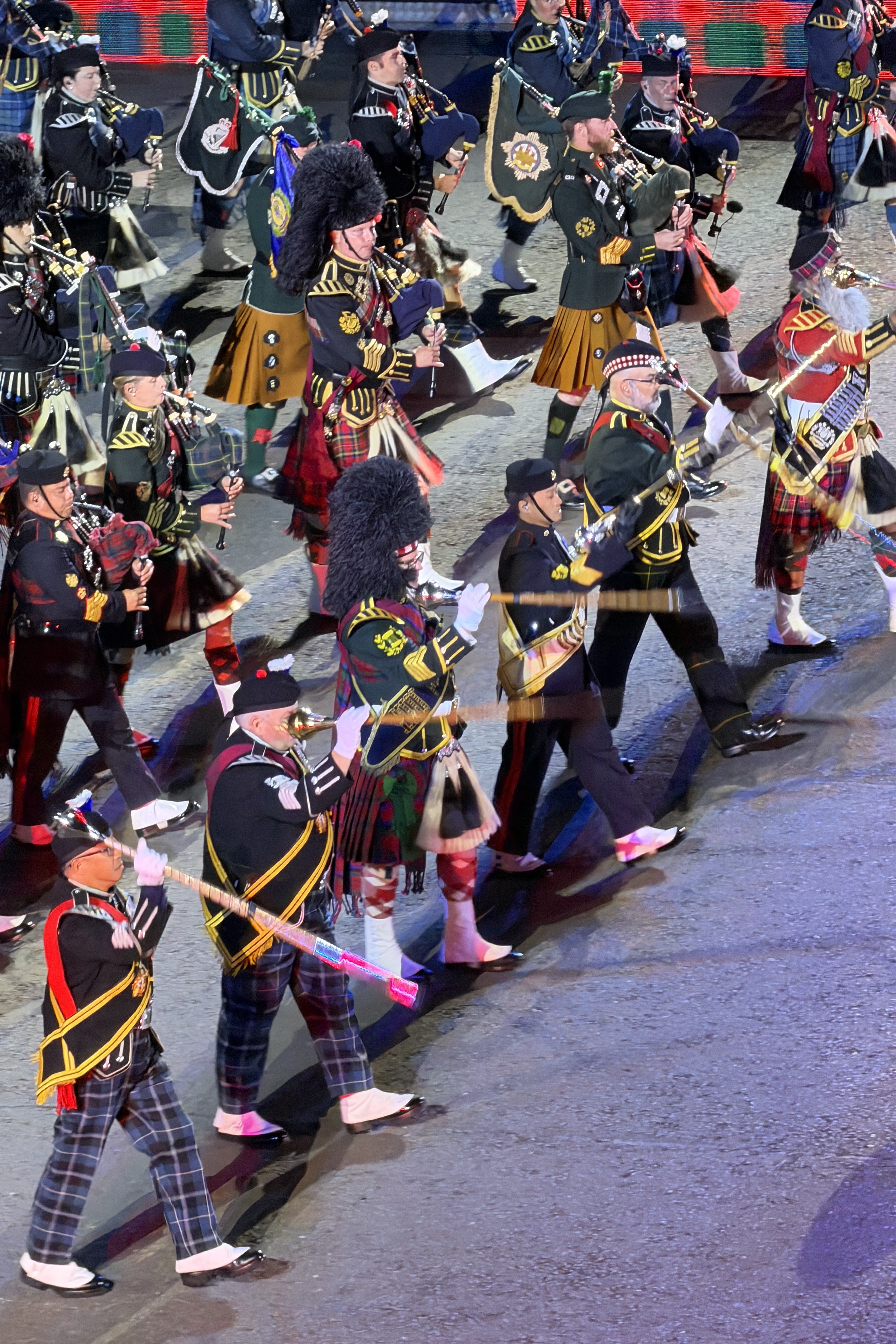
Stepping onto the historic castle esplanade for the Tattoo was an unforgettable bucket-list triumph. We arrived 45 minutes early, moving smoothly into our prime seats in Section 3, Row V.
As twilight deepened, the massed pipes and drums marched over the drawbridge into the arena, their tartans a blaze of clan colors against the ancient volcanic stone. The sheer precision and sonic power of hundreds of drummers and pipers echoing off the battlements was spine-tingling. International military contingents brought distinct flair—from New Zealand's charismatic formations to stunning German cultural projections transforming the castle walls into fairytale black-forest landscapes. The emotional pride and kinetic energy of that arena made it Tom's top nominee for our 2026 Touchpoint Tally Awards. While we booked months ahead, we noticed limited ticket availability lingered right up until opening night.
The complete show, filmed on August 31, 2026. Identical to the show we saw on August 7.
Festival Highlights: Sampling the Fringe
With over 1,800 registered productions transforming churches, basements, and garden tents across the city, the Edinburgh Festival Fringe is an exhilarating creative whirlwind. Rather than getting boxed into standard stand-up comedy, we used the official Fringe app's genre filters to sample across distinct performance styles:
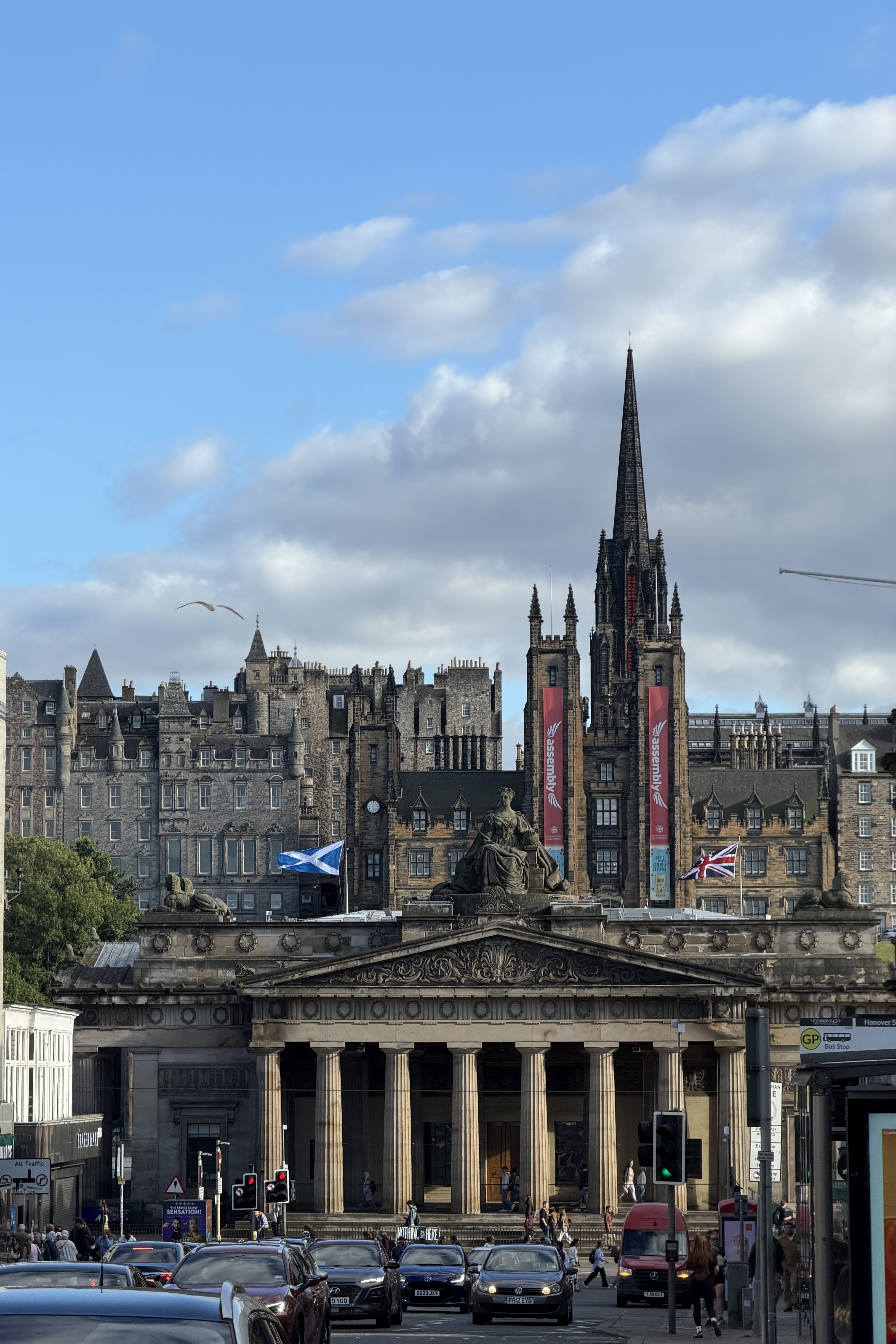
- Illusion & Mentalism: Chris Dugdale’s 1 Astonishment 2 Many at the Assembly Rooms was our absolute favorite show of the festival. Dugdale delivered a stunning masterclass in psychological observation. Tom was brought on stage as the primary participant, writing his name and Paris on a card, only to watch Dugdale repeatedly beat every impossible shuffle and cut. An undeniable contender for our Touchpoint Tally Experience Award!
- Headliner Stand-Up: At The Monkey Barrel—the premier venue circuit for headliners—we caught Pierre Novellie: Okay, One More Then Bedtime. His analytical deconstruction of everyday human behavioral habits was hands down the best comedy set of our trip.
- Acoustic Folk Heritage: At The Royal Oak Lounge—an undisputed institution of Edinburgh’s folk music scene—we attended 2 for the Price of Song. Two veteran singer-songwriters performed an intimate; heartfelt acoustic set composed entirely of their own original music and regional storytelling.
- Cellar Blues & Swing: We descended into The Jazz Bar on Chambers Street, a beloved subterranean cellar institution, for John Hunt’s Four O'Clock Afternoon Blues & Swing. John Hunt possessed a wonderful stage presence and a rich, gritty voice; while his original songwriting didn't resonate as strongly with us, his covers of classic blues and swing standards were brilliant.
- Variety & Storytelling: Jess Robinson: Elton Reimagined at the Assembly George Square Piccolo Tent delivered an exuberant showcase of vocal impressions celebrating Elton John’s catalogue. Earlier in the week, 5 Mistakes That Changed History at the Gordon Aikman Theatre provided a witty, clever exploration of pivotal historical blunders.
Planning Your Own Festival Trip?
Because managing preview tickets, locked-door rules, Free Fringe bucket collections, and saturated cellular data requires a deliberate playbook, we broke our complete logistical advice into a dedicated companion guide: Surviving& Thriving at the Edinburgh Fringe: A First-Timer’s Tactical Guide.
A Connoisseur's Notebook: Edinburgh’s Wine & Whisky Landscape
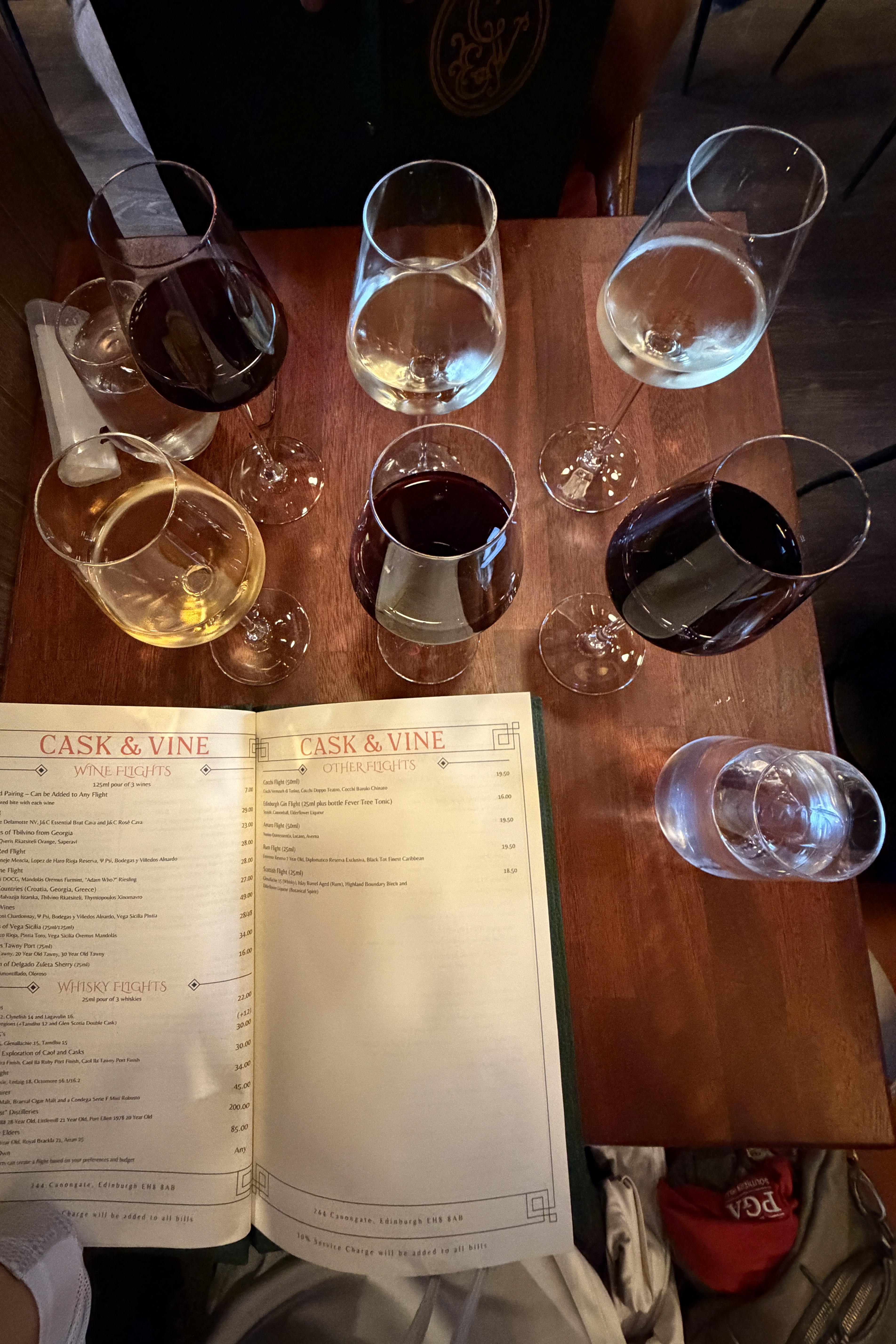
Unlike many UK destinations where fine wine takes a back seat to traditional ales, Edinburgh boasts a dynamic, educated beverage culture that balances Scotland’s heritage single malts with progressive international wine lists.
- The Scotch Whisky Experience (Royal Mile): Tucked near the castle gates, this 90-minute masterclass (£78 total) delivered an engaging sensory breakdown of barley, copper pot stills, and oak maturation, capped by a guided tasting across Scotland's five whisky regions. Tom, who historically avoided heavily peated scotch, surprised us both by falling in love with the briny, medicinal smoke of an Islay single malt.
- Subterranean Pint Secret (The Banshee Labyrinth): Skip expensive commercial vault tours. Instead, slip down Niddry Street into the Banshee Labyrinth, where cozy drinking dens are carved directly out of the South Bridge vaults. You can soak up centuries of subterranean stone arches for the simple price of a local draft.
- Good Brothers Wine Bar (Stockbridge): A neighborhood sanctuary run by owner Graham, whose 18-month cellar internship in Burgundy informs his list. When we mentioned our wine writing, Graham opened an exquisite, pale ruby Pinot Noir from Central Otago, New Zealand. Showing wild forest cherries, cranberries, and delicate savory minerality, it exhibited true Burgundian restraint rather than heavy fruit extraction. Graham’s tableside warmth represents the very best of Scottish hospitality.
- Smith & Gertrude (Stockbridge): A stylish wine bar specializing in thoughtful flights paired with artisanal cheeses. Working with sommelier Sam, we sampled an Albillo Mayor from Riberadel Duero (saline minerality and crisp green pear) alongside an expressive Rhône Grenache. Sam shared valuable context on the close-knit nature of Edinburgh's sommelier circle, where Michelin-trained veterans run focused neighborhood cellars.
- Cask & Vine (Royal Mile): An essential festival refuge because they allow you to pre-book tables exclusively for drinks. Guided by a fellow WSET professional on staff, we enjoyed their "Unique Countries" flight: a floral Malvazija from Croatia, a crisp Georgian Rkatsiteli, and a structured Greek Xinomavro showing dark berries and cocoa. We finished with a glass of Pintia from Vega Sicilia in Toro, Spain—an inky, 15.5% powerhouse packed with blackberry and spicy oak. Unlike pre-set flight venues, the sommeliers here are delighted to customize personalized flights to your palate and price target.
- The Black Grape (Old Town): A chic small-plates spot on the lower Royal Mile pairing inventive Scottish dishes with an adventurous wine roster. We fell in love with a medium-bodied Turkish red bursting with wild raspberries and white pepper, served lightly chilled to accentuate its bright acidity.
Dining, Historic Taverns & The Great Fish & Chip Quest
- The Old Bell Inn (Southside): As local and unpretentious as it gets. Located just a short walk from our hotel, we ate here twice to unwind away from the tourist crush. We pulled up seats alongside neighborhood regulars, watching horse racing on the screens our first night and live football the next. Serving solid pub fare and cold pints in a genuine neighborhood atmosphere, it was the exact slice of everyday Scottish life we love finding.
- The Salisbury Arms (Southside): Located near our hotel, this elevated pub became our go-to haven. Their tarragon-battered haddock with triple-cooked chips, savory chicken and leek pie, and Sunday roast enjoyed next to a live jazz ensemble provided our favorite comforting meals in Scotland.
- Sambuca Italian Restaurant (Causewayside / Newington): Tucked along our regular walking route between the Meadows and our hotel, this family-run neighborhood trattoria proved to be one of the best dining surprises of our trip. After our Craigmillar Castle trek, we stopped in for an early dinner. Tom ordered the Caprese salad while Danielle chose the rustic bean soup, followed by a shared pizza and a small carafe of house wine. Unpretentious, comforting, and authentic, the entire meal cost a fraction of central city prices—easily one of the least expensive and highest-value dinners we enjoyed anywhere in the UK.
- The Pilgrim Bar (Cowgate): Tucked just off the busy festival corridors, The Pilgrim proved to be an unexpected oasis between shows. While the draft lineup is basic, they broadcast live tournament golf on the screens (showing both the women’s and men’s events), making it a great casual breather to reset before evening Fringe shows. The staff displayed the usual Scottish charm, where we learned a lot about local life and their personal stories.
- The Doctors (Teviot Place / University District): Perched directly across from the historic University of Edinburgh Medical School, this handsome pub has served generations of students and physicians. It bridges classic and modern: deep wood paneling and leather banquettes paired with large windows that flood the room with natural light. Escaping south from the Old Town crowds down here was a great tactical move for an unhurried pint in a welcoming room.
- The Argyle Bar (Marchmont): Continuing south past the University and across the green expanse of The Meadows brings you to Marchmont. The Argyle feels half-Parisian bistro and half-cozy neighborhood café, lined with big picture windows and communal wood seating. It’s a genuine local haunt free of tourist congestion (though stick to the ales, as the wines were unremarkable).
- The Abbotsford (Rose Street): A classic Edwardian public house lined with carved mahogany, crushed velvet, and traditional pub staples—an atmospheric refuge after shows near Scott Monument.
- The Touchpoint Tally Fish & Chip Verdict: After extensive "research" across England and Scotland, Tom settled a definitive culinary debate: fresh haddock is superior to cod every single time. Haddock offers a sweeter, firmer flake that stands up brilliantly to rich beef dripping and golden, crisp batter.

Day Trip Highlight: Pilgrimage to St Andrews
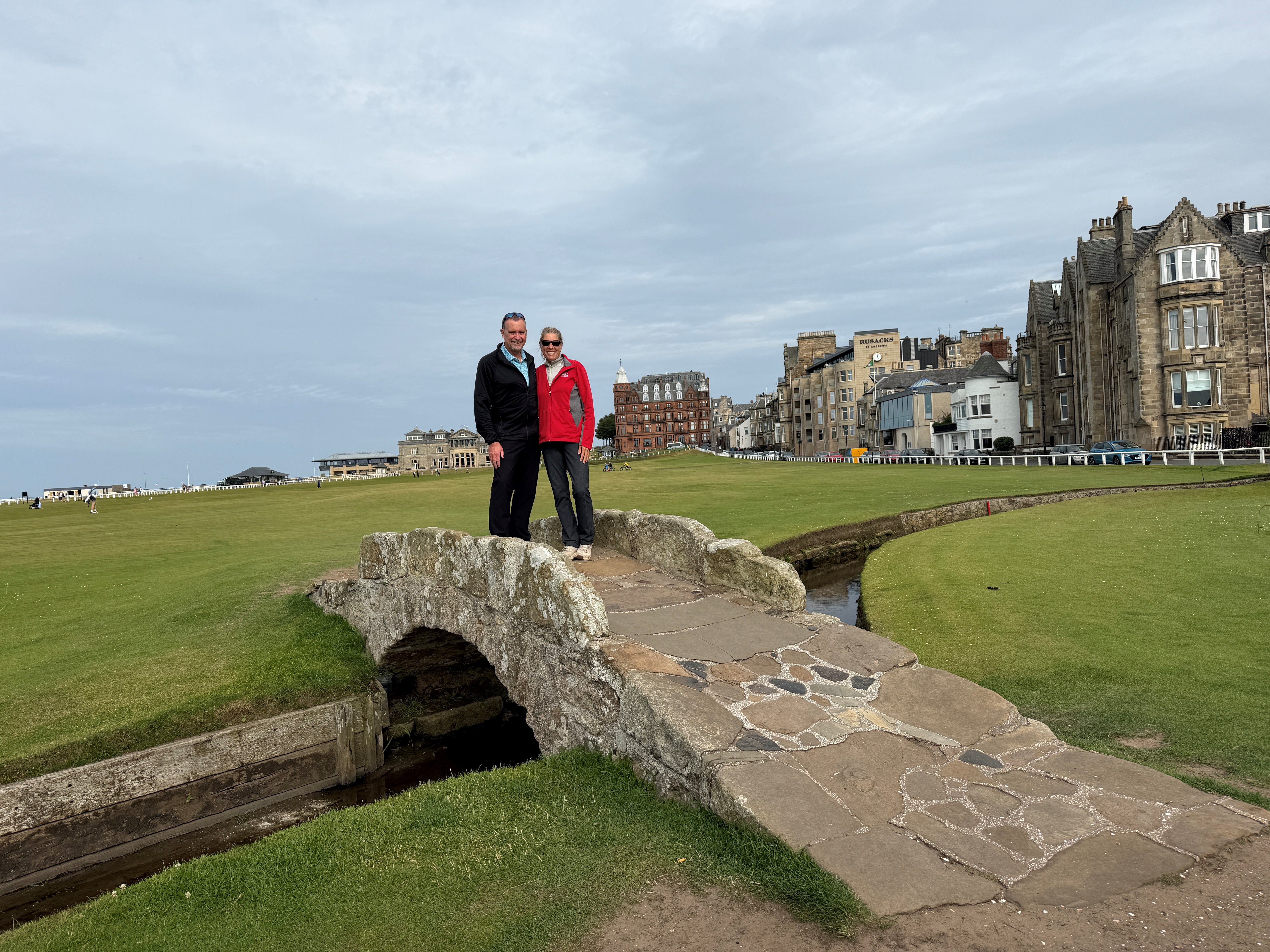
No trip to Scotland is complete without honoring the Home of Golf. On Sunday, we took the direct ScotRail service from Waverley to Leuchars (45 minutes, booked with our Two Together Railcard), hopping a quick taxi into St Andrews.
Because the legendary Old Course is closed to golfers on Sundays and opens as a public municipal park, we had the incredible privilege of walking fairways 1 and 18, strolling over the iconic Swilcan Bridge, before heading over to tee off on the New Course (booked five months in advance). Paired with a lovely couple on golf holiday from New York, we tackled the windswept seaside links with their helpful local caddies guiding our line. Standing on those undulating seaside dunes was pure links magic.
Reflections & The Slow Traveler's Verdict
- What We Loved Most: The striking human warmth of the Scottish people. Every server, publican, and taxi driver greeted us with authentic curiosity and warmth. The theatrical majesty of the Tattoo, the sheer quality of the Stockbridge wine bars, and the unexpected tranquility of Dean Village and Craigmillar Castle will stay with us forever.
- What Chafed: The urban grime and August overcrowding. The sheer volume of festival attendees leaves central street corners overflowing with litter and pungent odors that frequent Scottish rain showers somehow fail to cleanse.
- Tom vs. Danielle: A Tale of Two Cities: Tom fell deeply under the spell of Old Town—the dark, brooding wynds, the historic stonework built straight out of the volcanic bedrock, and the tangible sense of ancient drama. Danielle found her groove across New Town and Stockbridge—where wide, leafy Georgian terraces give way to brilliant culinary hospitableness, artisanal markets, and sophisticated wine lounges.
Edinburgh is intense, visceral, and wildly romantic. If attending in August, balance the manic energy of the Fringe with peaceful walks along the Water of Leith and quiet evenings in neighborhood bistros. It was a magical two weeks that exceeded our expectations and earned an indelible place in our slow-travel journey.
Links: London Trip Report | Bath City Trip Report | York Trip Report | Part 2: Escapes from the Hub: 5 Unforgettable Day Trips from Bath | Surviving & Thriving at the Edinburgh Fringe: A First-Timer’s Tactical Guide
Next Up: Eyemouth, UK
Welcome to the new Touchpoint Wines
We’re blending our passion for wine with a love for global exploration. Join us as we journey through the world's most captivating destinations, uncovering hidden wine gems and offering unique workshop experiences for your team retreats. Whether you're seeking to enhance team dynamics or discover the art of slow travel, let us be your guide.