At a Glance
- Duration: 5 Nights July 2026.
- Home Base: Coco Suites, a comfortable residential retreat positioned just outside the historic core.
- Memorable Experience: Attending daily Evensong at York Minster—experiencing the soaring Gothic acoustics and choral harmony was captivating.
- Culinary Standout: Skosh, where Michelin-level creativity met our palates through exquisite lobster dumplings with lemongrass foam and salt-aged beef fillet tataki.
- Overall Vibe: Layered, ancient, and undeniably atmospheric, yet heavily tourist-commercialized. While its 2,000 years of Roman, Viking, and medieval history are magnificent when uncovered through guided walks, parts of the city center lean heavily into commercial kitsch. For slow travelers not using it as a launchpad for coastal or moorland day trips, two to three days is the ideal sweet spot.
ThisTown is Special Because... (Introduction & Our Why)
After three weeks anchored in the Georgian elegance of Bath, we boarded our cross-country train north to immerse ourselves in an entirely different era of British heritage. York is an ancient fortress city shaped by the confluence of the rivers Ouse and Foss. Encircled by the most complete set of medieval stone ramparts in England, York has witnessed Roman legions marching under Emperor Constantine, Viking raiders establishing the bustling trade capital of Jorvik, and the monumental rise of medieval church power.
We came to York seeking deep historical immersion, scenic riverside walking routes, and a taste of northern culinary culture. What we uncovered was a city of intriguing dualities: on one hand, quiet stone ruins, artisan mason yards, and atmospheric centuries-old taverns; on the other, a high-volume tourist machine fueled by ghost tours, novelty shops, and Harry Potter wizarding boutiques. Navigating York required peeling back that commercial veneer to discover the living, historic heart underneath.
Our Home Base: Coco Suites & Getting There
Our journey from Bath began with a split-saver rail ticket booked on Trainline. We spent a relaxed morning in Parade Gardens, Bath, before taking the local train to Bristol Temple Meads, transferring to our packed (and thankfully air-conditioned) Cross Country service north. The five-hour journey carved right through the English spine—though thick trackside trees obscured much of the countryside scenery.
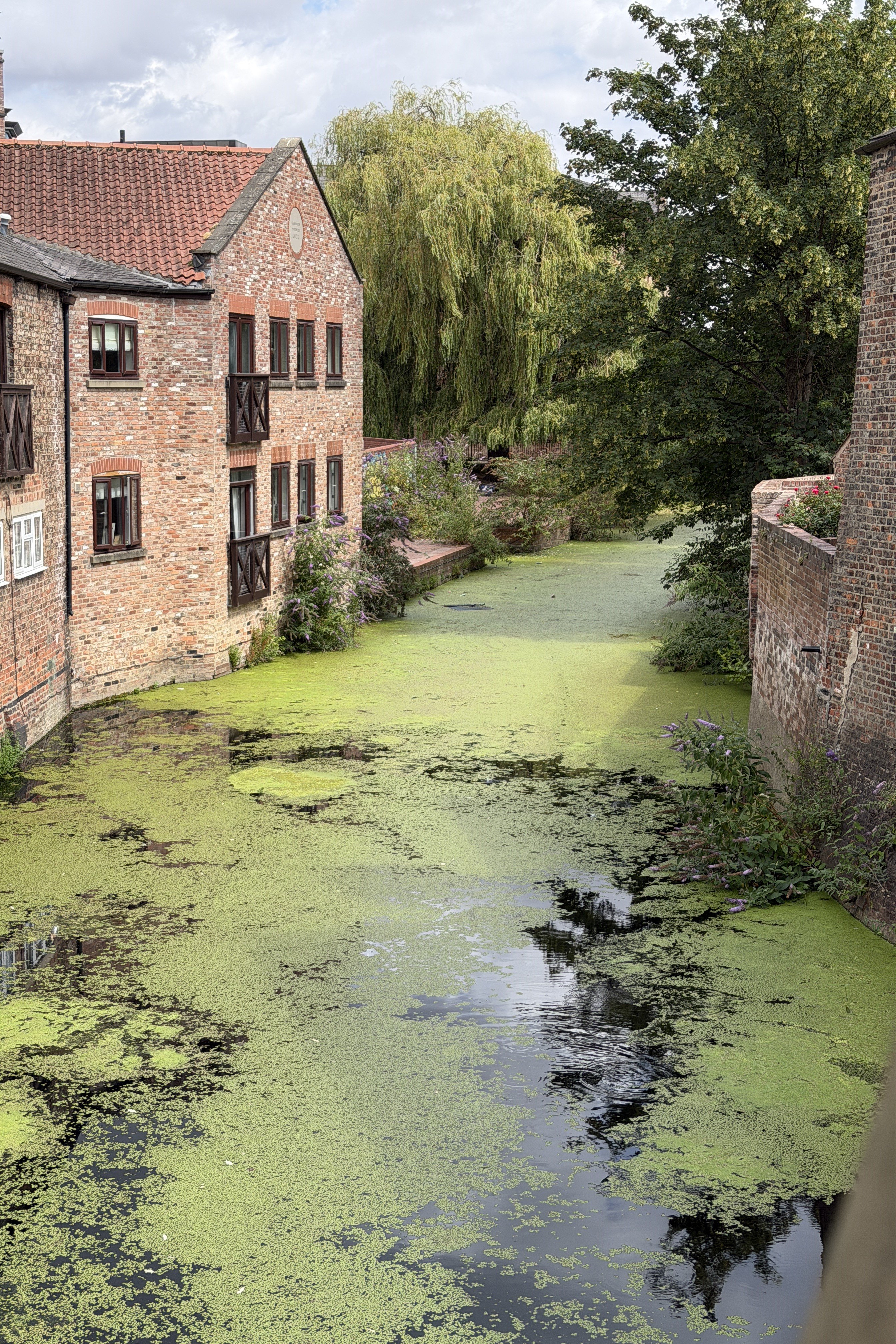
Upon pulling into York’s grand Victorian station, we checked into Coco Suites. For our first evening, we took a casual stroll over to Brew York, an expansive local brewhouse situated right along the River Foss. Using their table ordering app, we paired cold craft beers with Asian street food ordered from their upstairs kitchen—sharing warm steamed bao buns and crispy gyoza before settling in for the night.
Our York Experience: The Day-to-Day
Walking the Roman and Medieval Ramparts
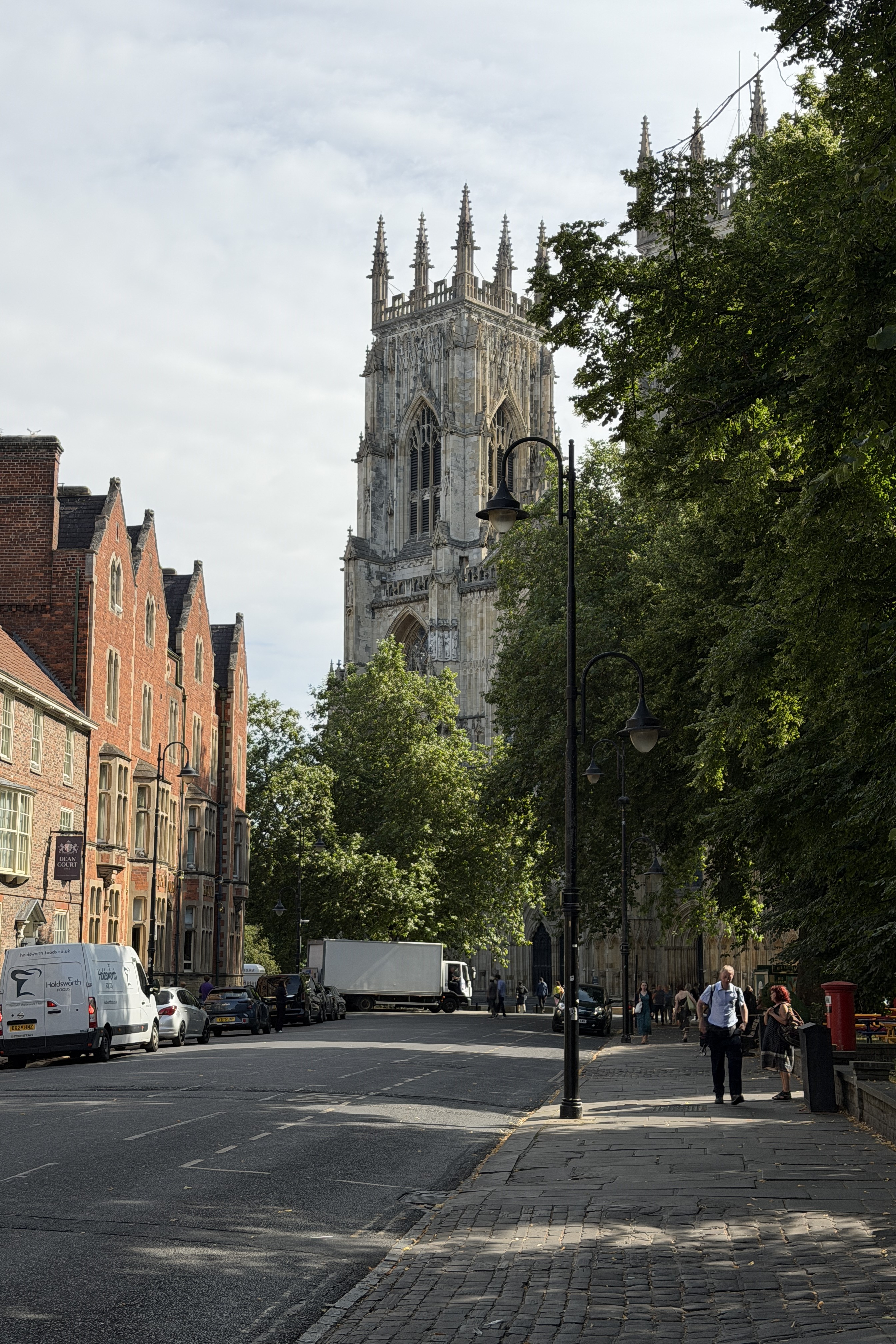
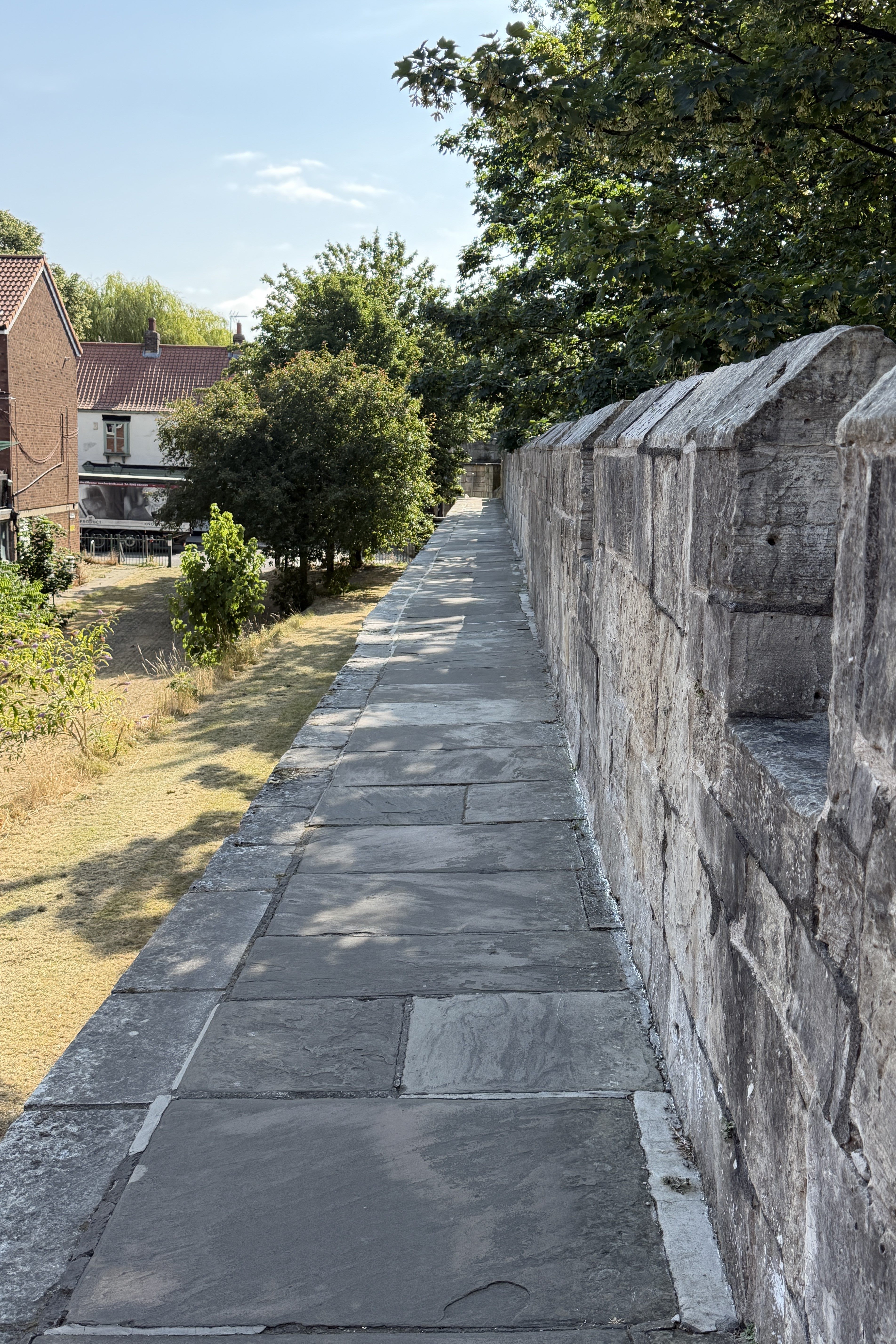
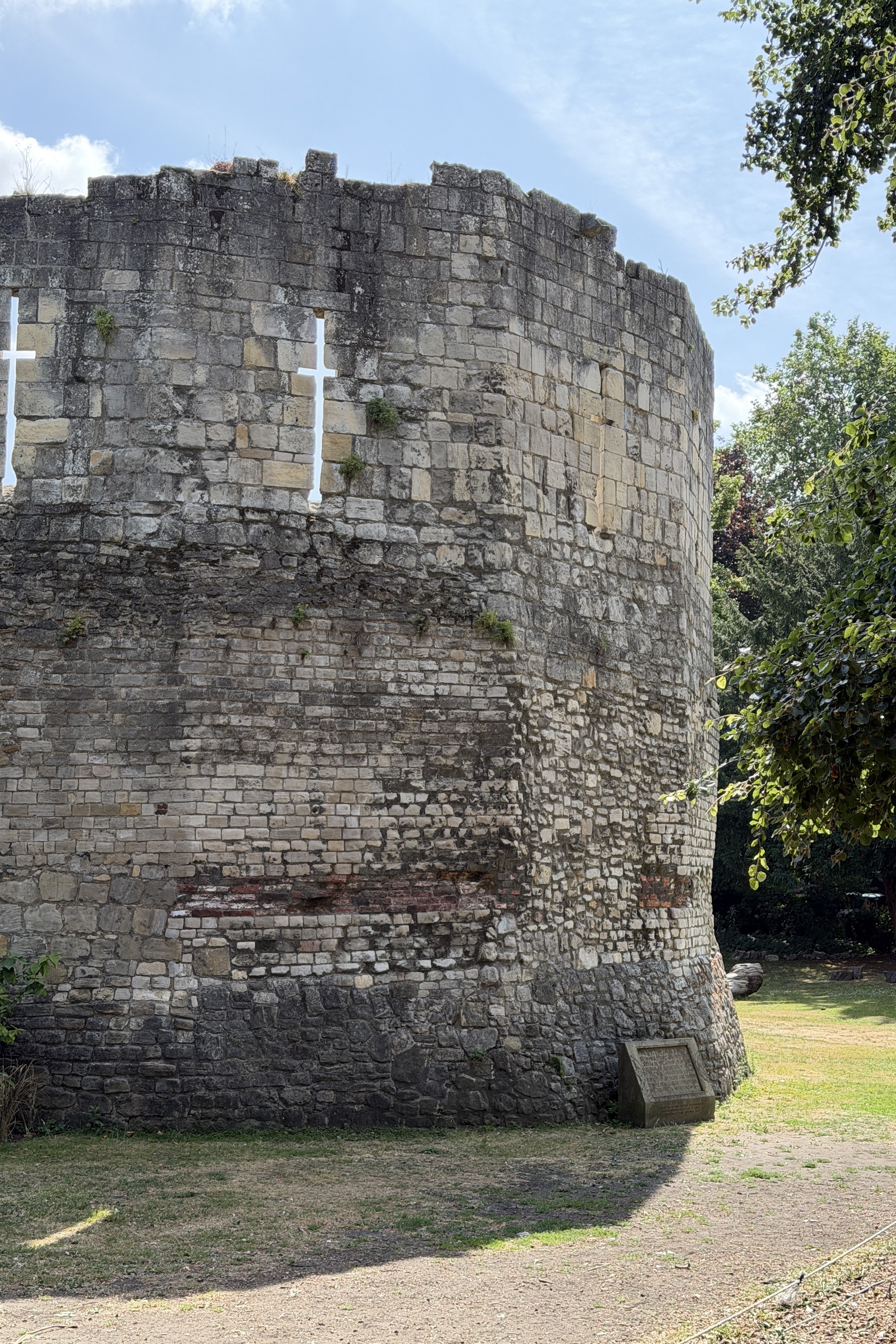
Walking the elevated stone walls is the quintessential York experience. Stretching nearly 6 kilometers around the perimeter, the rampart walk takes just under two hours. While gaps exist where modern bridges and roads cut through the medieval ring, stepping onto the stone ramparts offers bird’s-eye vistas of red-tiled rooftops, hidden gardens, and the towering silhouette of the Minster, all while providing a window into the modern city humming outside.
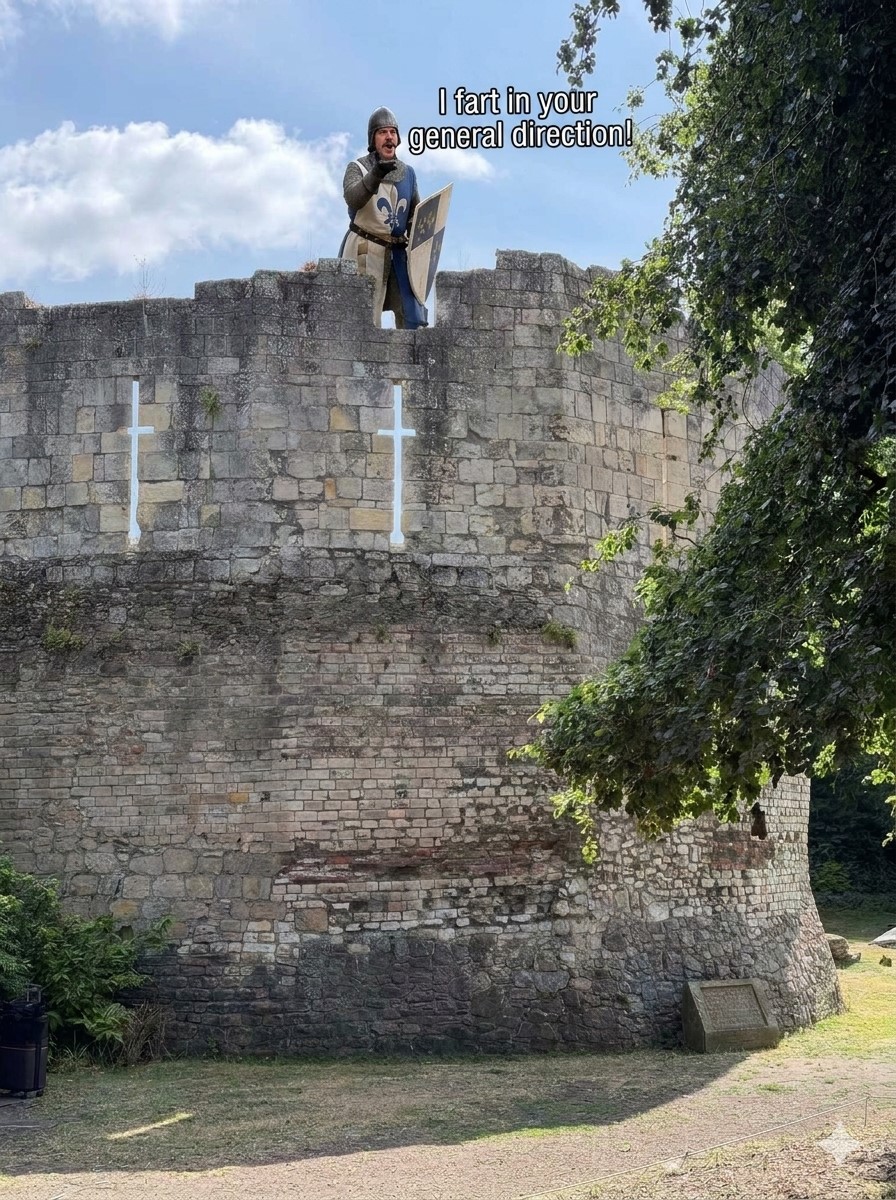
Along one stone stretch, our guide pointed out the ramparts that inspired the iconic Monty Python and the Holy Grail scene where King Arthur faces the taunting Frenchman—a fun nod to British pop culture that made for great photos.
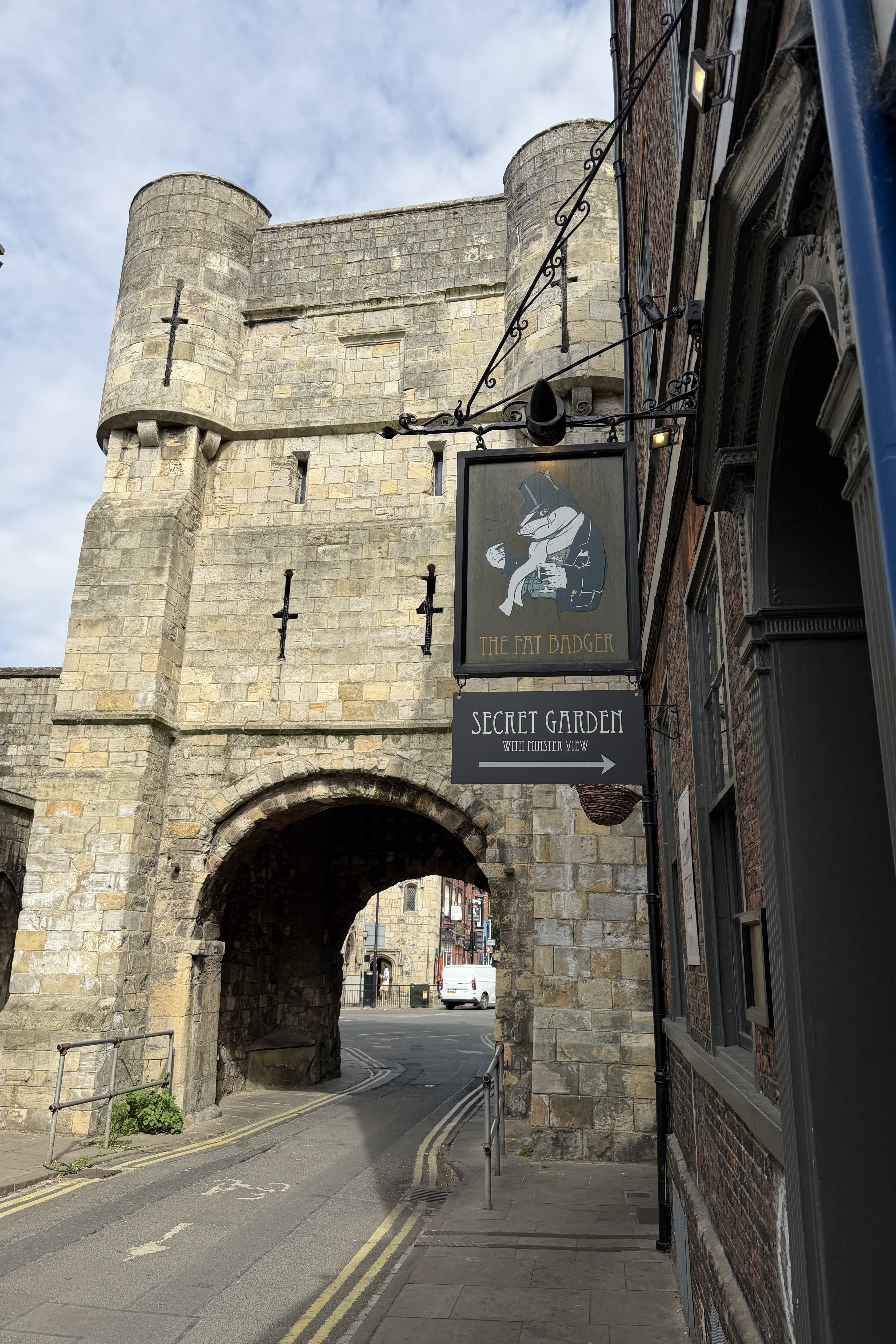
Walking the entire wall is something you can do anytime at your own pace simply by ascending at a "Bar." In York, the massive fortified gatehouses that pierce the walls are called Bars (such as Mickle gate Bar, Bootham Bar, Monk Bar, and Walmgate Bar). The term comes from the heavy wooden barriers that were lowered across the arches to collect customs tolls and restrict nighttime entry during the Middle Ages.
Uncovering the Past with the Volunteer Guides
Just like our beloved walking tour in Bath, York offers a phenomenal, free 2.5-hourhistoric walk led by the Association of Voluntary Guides. Meeting at Exhibition Square, our guide David delivered a masterclass in local history without accepting a single penny in tips:
- St. Mary’s Abbey: We wandered through the Museum Gardens among the soaring ruined limestone arches of St. Mary's Abbey. The highlight was examining the surviving lower foundation stones, which made it easy to visualize monastic daily life and the sheer footprint of the complex. As powerful feudal landholders, medieval abbots governed regional trade, held market rights, and collected lucrative rents and tithes from surrounding estates. They funneled much of that vast wealth directly into regional infrastructure, establishing early schools and funding charitable hospitals to care for the sick, poor, and traveling pilgrims long before secular municipal services existed. Seeing these foundations helped us comprehend the immense economic power the abbots wielded, which ultimately painted a target on their backs. David brought Henry VIII’s brutal Dissolution of the Monasteries to life, explaining how the King seized church wealth and systematically tore down the abbeys to fill his depleted royal treasury.
- The Norse Transformation & The Shadow of Plague: Beyond the monastery's dramatic downfall, our walk traced York’s astonishing cycle of rise, collapse, and reinvention. While pop culture paints the Vikings solely as bloodthirsty raiders who sacked the city in 866, our guide brought to life their role as world-class urban planners and merchants. Under Norse rule, the settlement of Jorvik transformed from a decaying Roman military garrison into one of the wealthiest, most multicultural trading capitals in northwest Europe. Viking craftsmen, weavers, and traders turned narrow lanes like Copper gate into booming manufacturing hubs, importing silk from the Byzantine Empire, amber from the Baltic, and walrus ivory from the Arctic. Yet York’s fortune was precarious. As wars subsided, waves of the Black Death struck the crowded medieval lanes repeatedly over several centuries, wiping out nearly a third of the population and halting construction on the Minster for decades as master stone carvers perished. Walking the city today, you realize you aren't just looking at quaint old buildings; you are walking on layers of resilience, built over centuries of foreign conquest, commercial booms, and catastrophic survival.
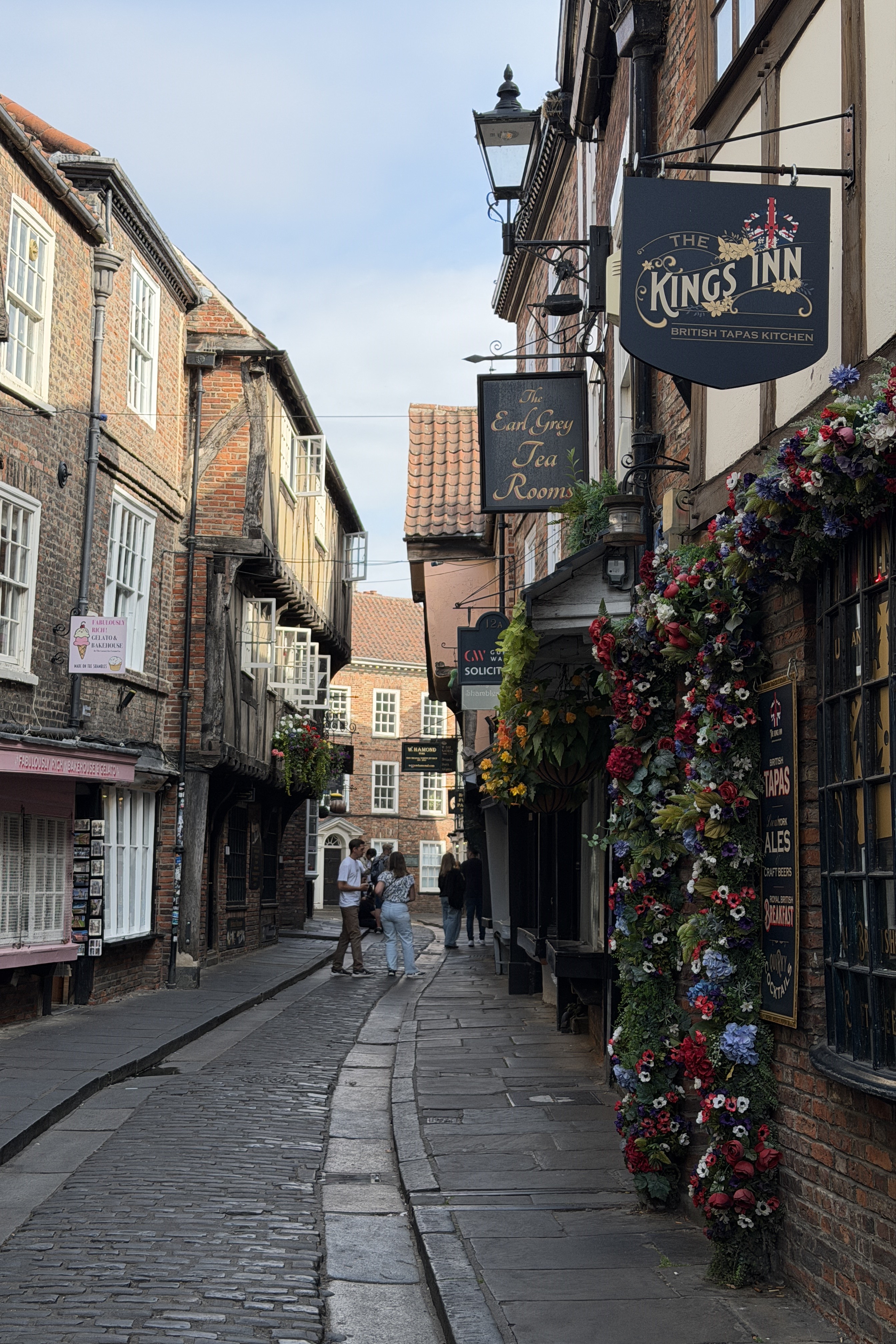
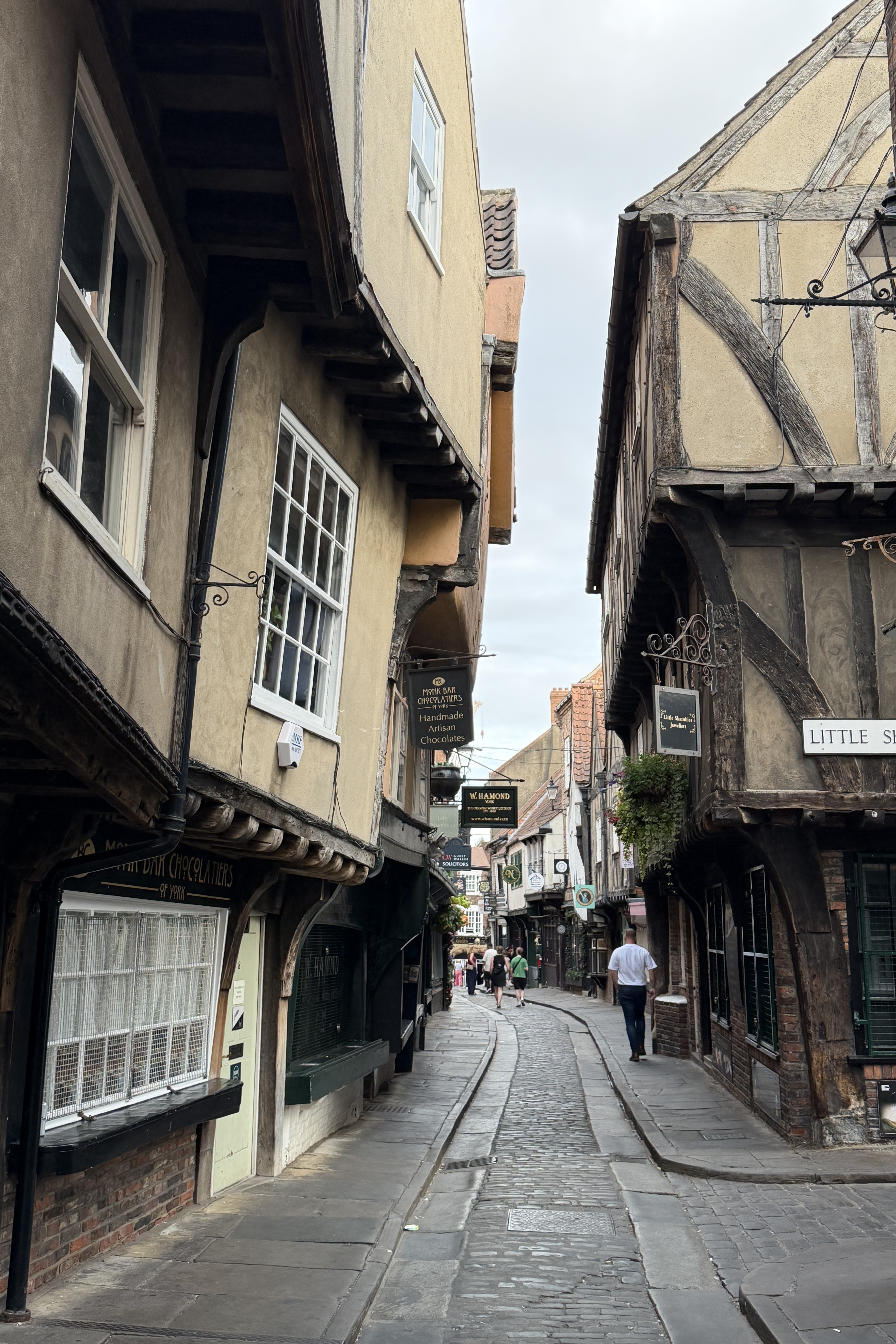
- The Shambles Early Morning: We made a point to wander The Shambles at 8:00 AM before the tour groups descended. Seeing the 14th-century timber-framed overhanging buildings lean across the quiet cobblestones was magical. Hearing the true history—that the deep exterior grooves and street channels were designed to wash away offal and blood from medieval butcher stalls—grounded the street in visceral reality before the souvenir crowds took over.
A Quick York Linguistic Lesson
Navigating York means adjusting your vocabulary. The city's layered heritage gives rise to a classic local linguistic puzzle: In York, the gates are called Bars, the streets are called Gates, and the bars are called Pubs!
Any street ending in -gate (such as Stonegate, Micklegate, Fossgate,Walmgate, or Whip-Ma-Whop-Ma-Gate) derives from the Old Norse Viking word gata, which simply means "street" or "way." Micklegate translates to "Great Street," Fossgate is the "Street leading to the River Foss," and Stonegate was the ancient stone-paved Roman route.
Even more fun to explore are York's snickel ways—a delightful local portmanteau for the narrow, pedestrian-only alleys and passages slicing between medieval buildings. One of the greatest joys of exploring the city center is ducking into these shadowy shortcuts just to see where they spill out.
Evensong at York Minster
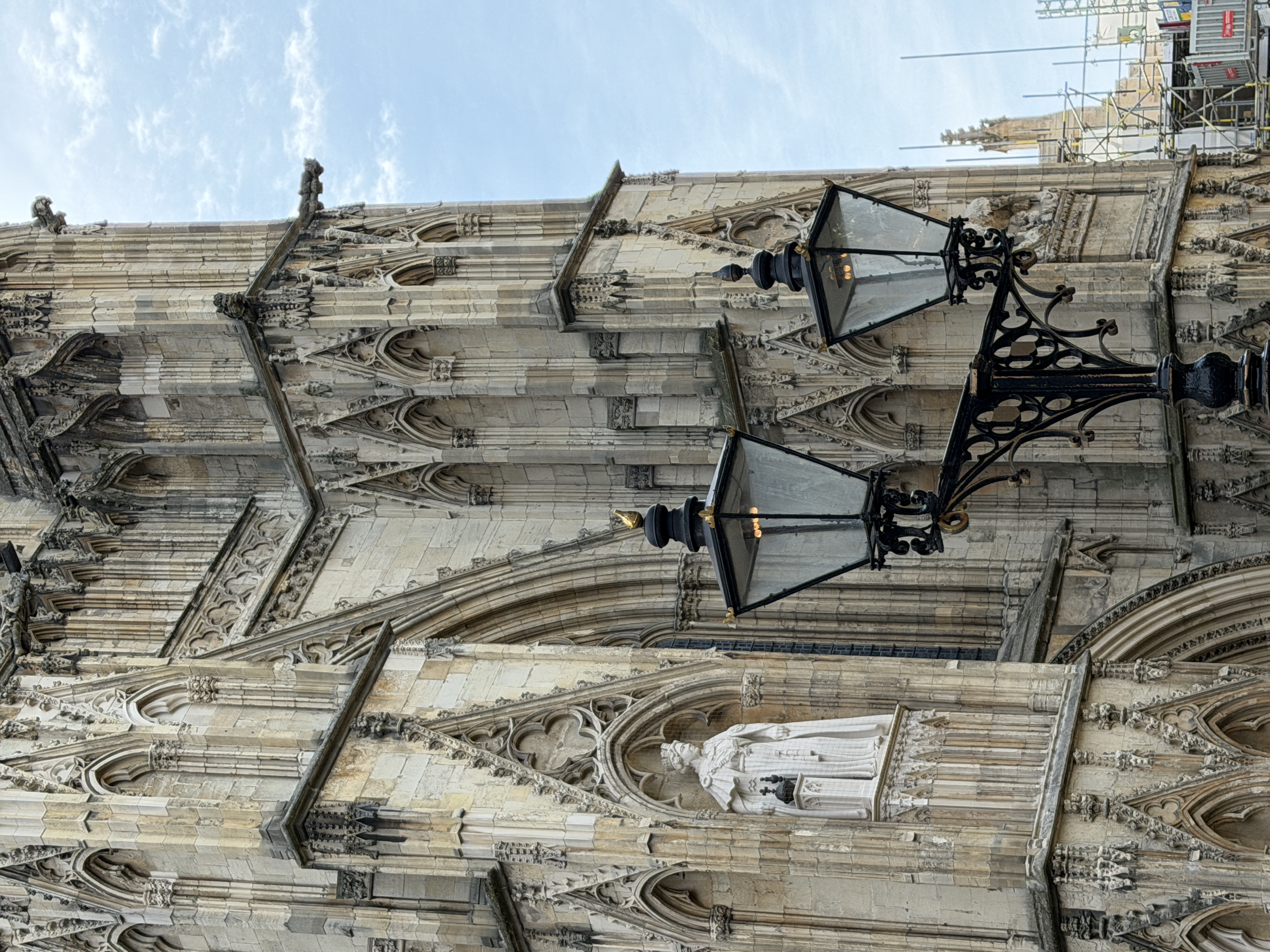
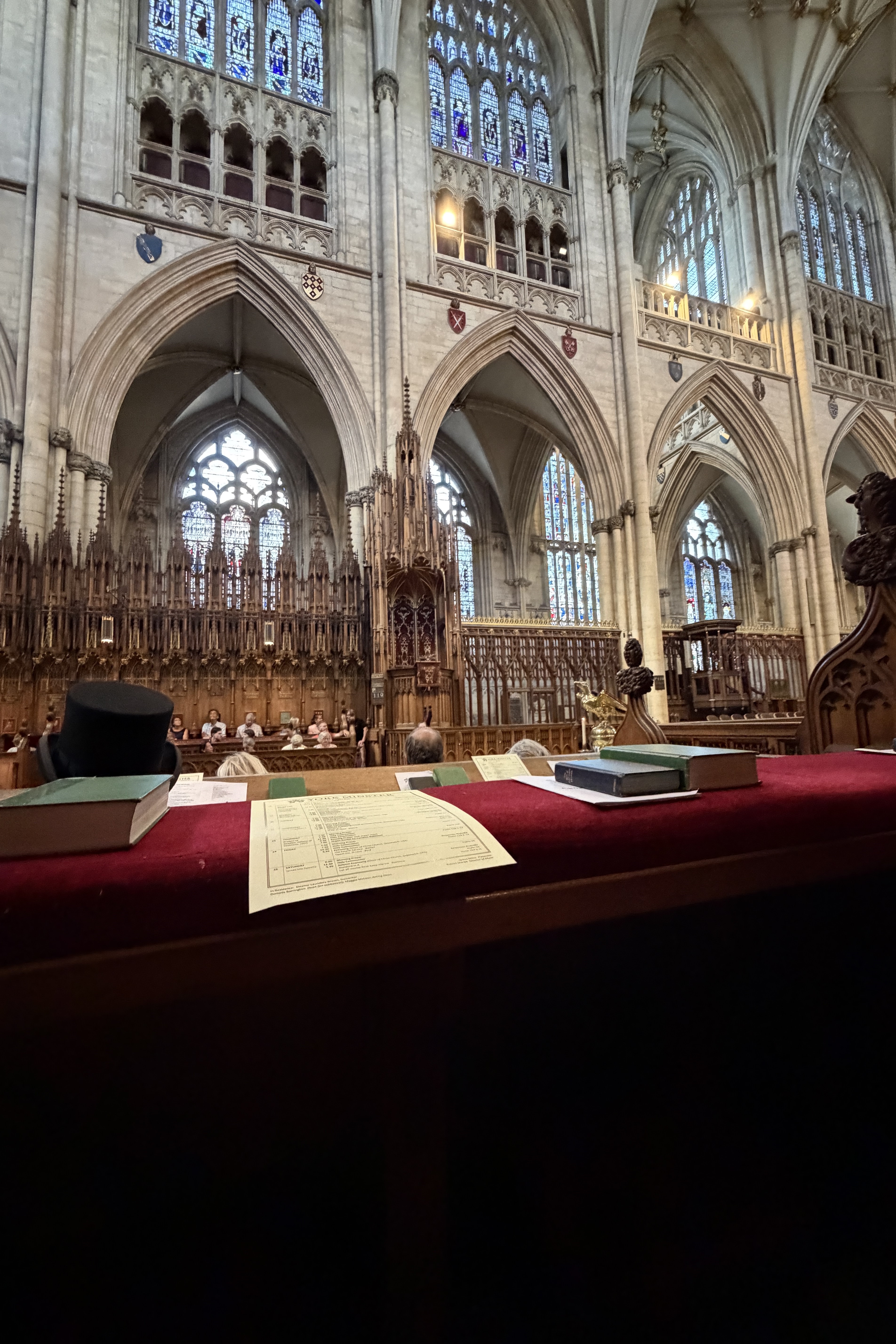
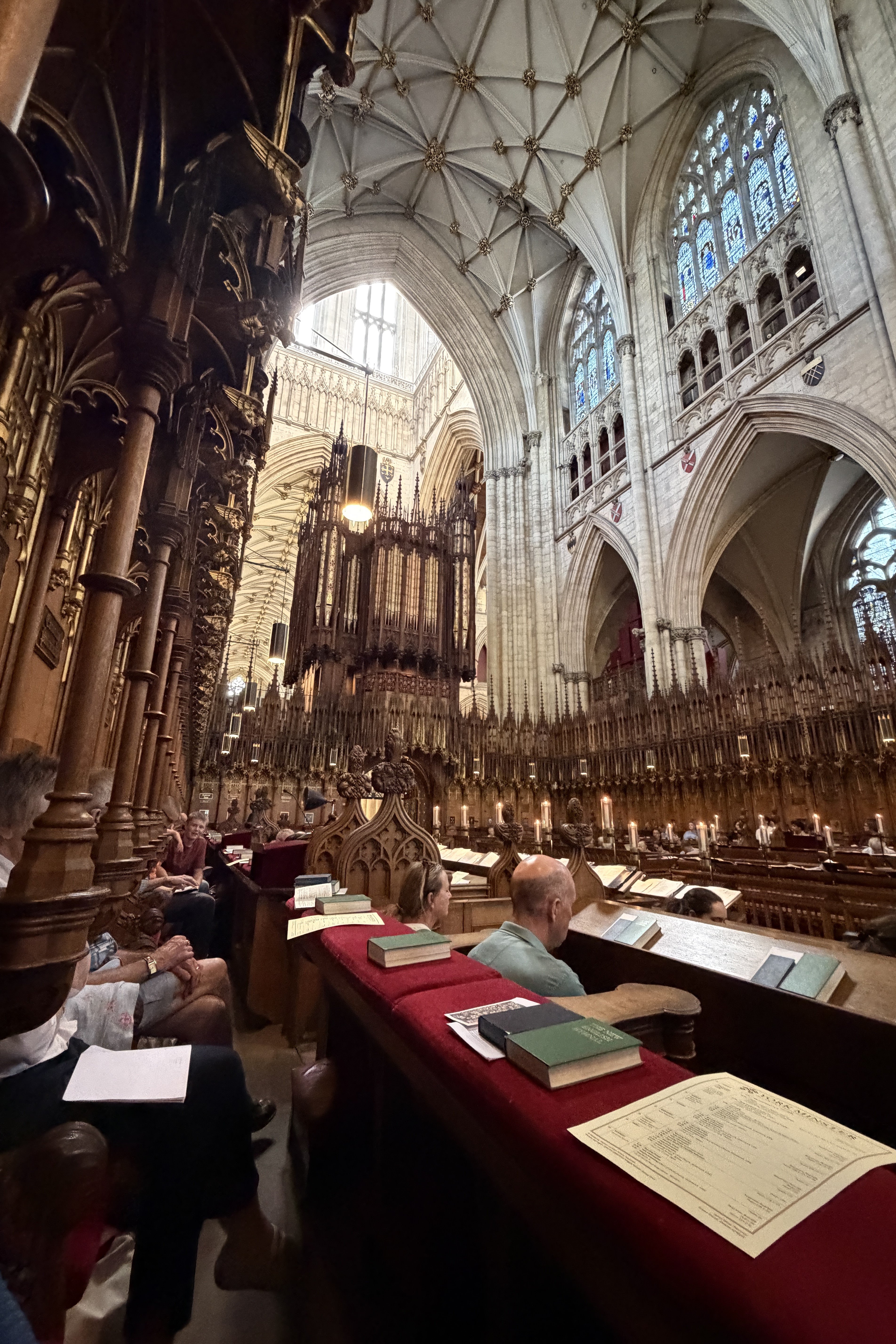
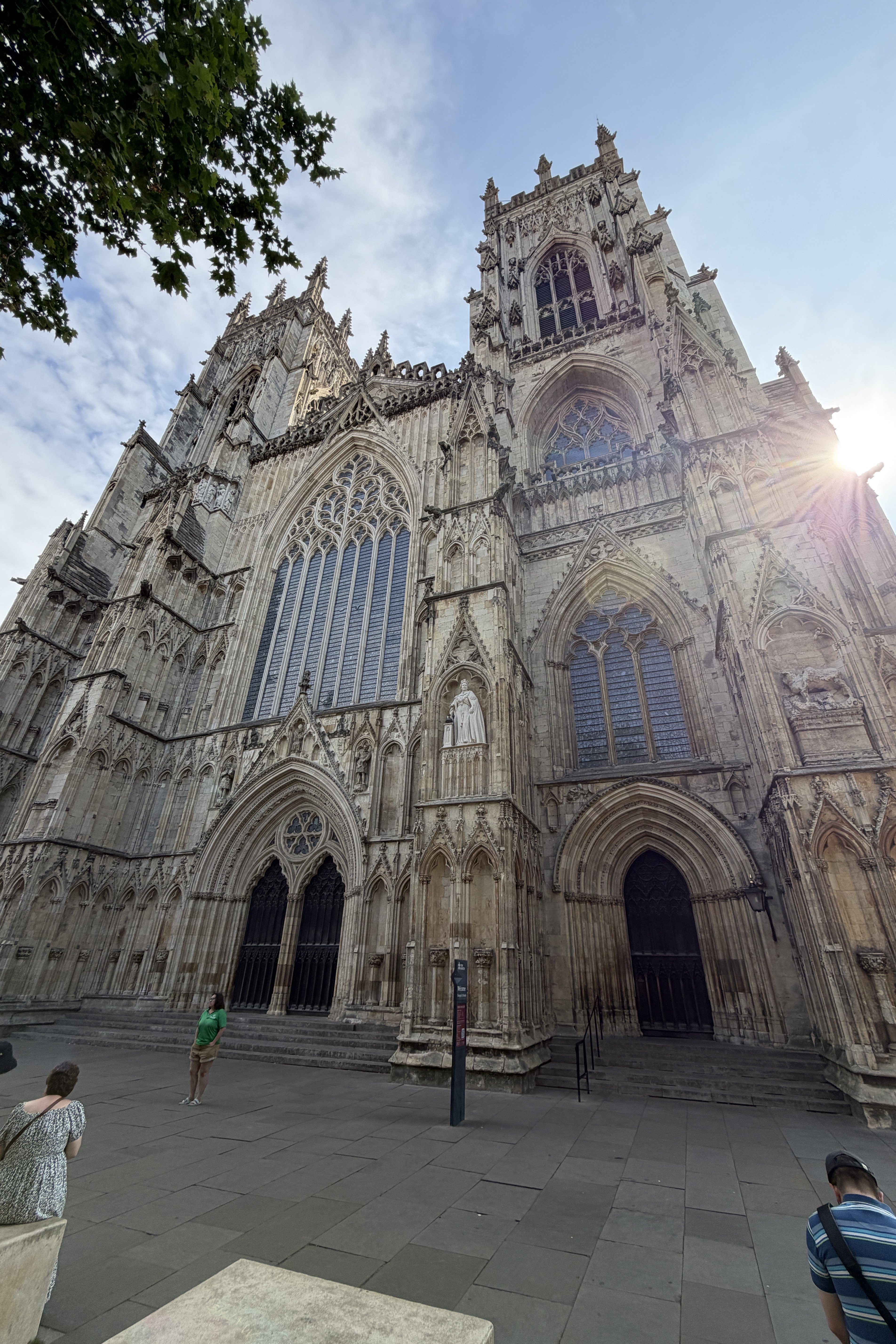
Rather than paying £18–£20 per person to join the crowded daytime tourist route, we took a classic British approach: we attended daily Evensong at York Minster. As the largest Gothic cathedral in Northern Europe (taking over 250 years to construct due to plagues and wars), the Minster's scale is breathtaking. Because the resident school choir was away for the summer break, a visiting guest choir from the United States led the service. Sitting in the ancient carved wooden quire as choral harmony echoed off the soaring vaulted stone ceilings was a deeply peaceful, spiritual pause away from the midday bustle.
We learned on our tour that local tradition adamantly insists it is a "missionary church" and not merely a cathedral. In technical church governance, it is a cathedral because it serves as the official seat of the Archbishop of York. However, because it originated in the 7th century as an Anglo-Saxon missionary church long before the Normans introduced the word "cathedral," locals remain fiercely proud of its ancient title. Don’t be surprised if a resident gently corrects you: "It’s York Minster."
The Evening Comedy & Ghost Walk
To see the historic center under lantern light, we joined the evening comedy and ghost walk that meets nightly at 7:00 PM outside York Minster. It’s an inexpensive walk-up tour (£8 per person) promising a mix of macabre folklore and theatrical humor. While the tour itself was just okay and leaned heavily into commercial camp, the audience dynamic was priceless: watching fellow tourists nod along with deadpan seriousness as the guide made wild, tongue-in-cheek historical statements was easily the funniest part of the night. Nevertheless, wandering the quiet, cobbled snickelways as dusk settled offered a cooler, peaceful view of the medieval center without the daytime crowds.
The Bishopthorpe Riverside Trail
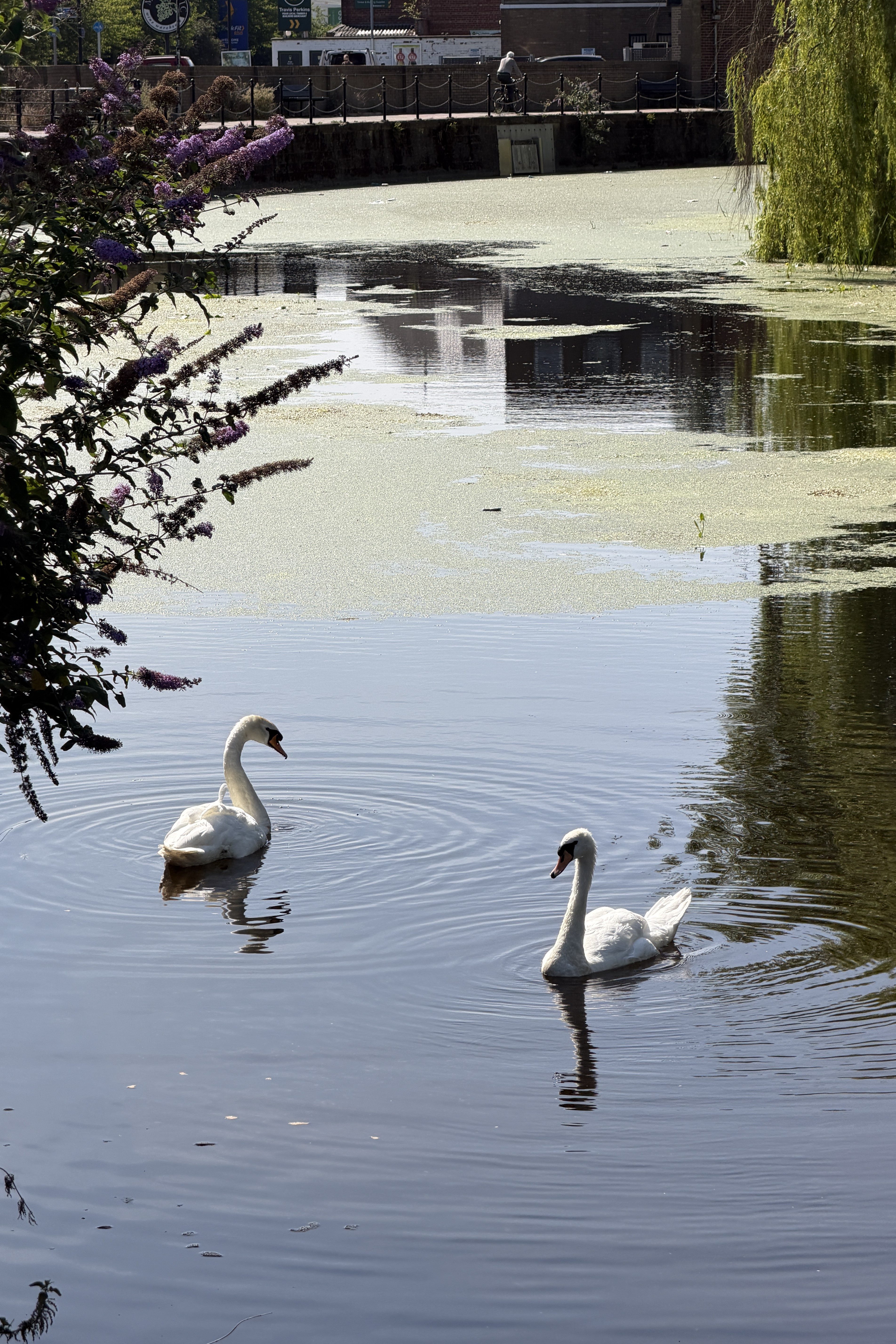
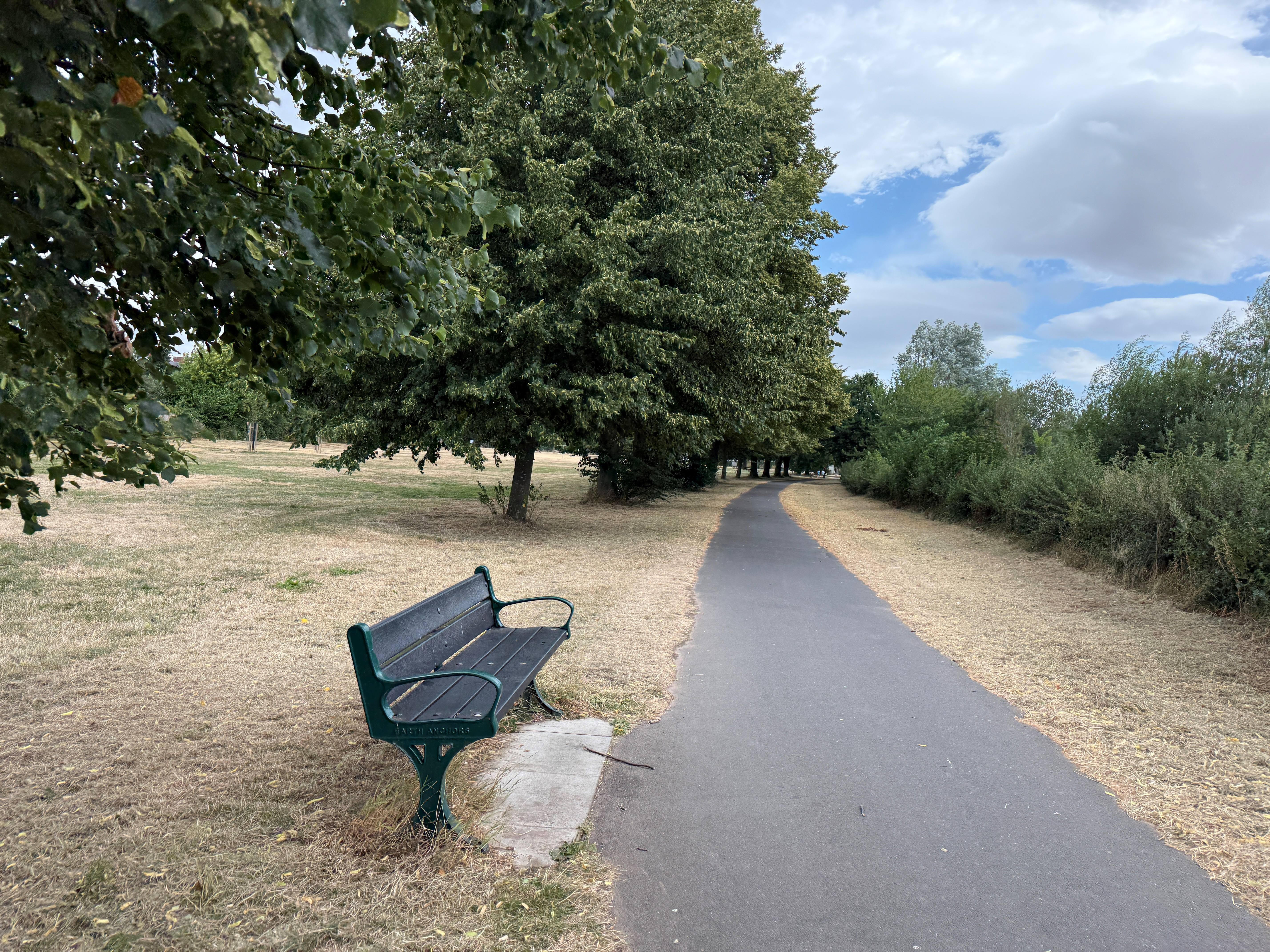
For our morning exercise, we set out on an energetic out-and-back power walk along the River Ouse toward the village of Bishopthorpe. The trail starts paved near the city center—buzzing with scullers rowing on the water, joggers, prams, and stately riverside townhomes—before transitioning into an unpaved country footpath through thick woods and wide pastures. The brisk two-hour walk provided fresh air, river views, and quiet open space away from the tourist core.
Historic Taverns & Culinary Discoveries
The Walmgate & Fossgate Gateway: York’s Culinary Spine
Whenever we walked from our apartment at Coco Suites into the historic center, our route naturally took us down Walmgate and across the River Fossonto Fossgate. We quickly discovered that this continuous stretch is York’s beating culinary heart, delightfully free of corporate chains and crowded with independent bistros, global kitchens, and wine bars. It’s where you’ll find everything from casual spots like Brew York tucked down an alleyway by the water to cozy wine venues like Cave du Cochon and nearby 22 Yards, alongside vibrant Sardinian, Syrian, and Polish eateries.
- Il Paradiso del Cibo (Walmgate): Tucked right on this lively strip, this tiny, bustling Sardinian trattoria is a local legend that doesn't take dinner reservations. Knowing it gets packed to the rafters during peak evening hours, we employed our favorite slow-travel strategy: we arrived during the late-afternoon lull around 3:30 PM. We were rewarded with an immediate table, enjoying rustic handmade pasta, warm hospitality, and rich, authentic flavors.
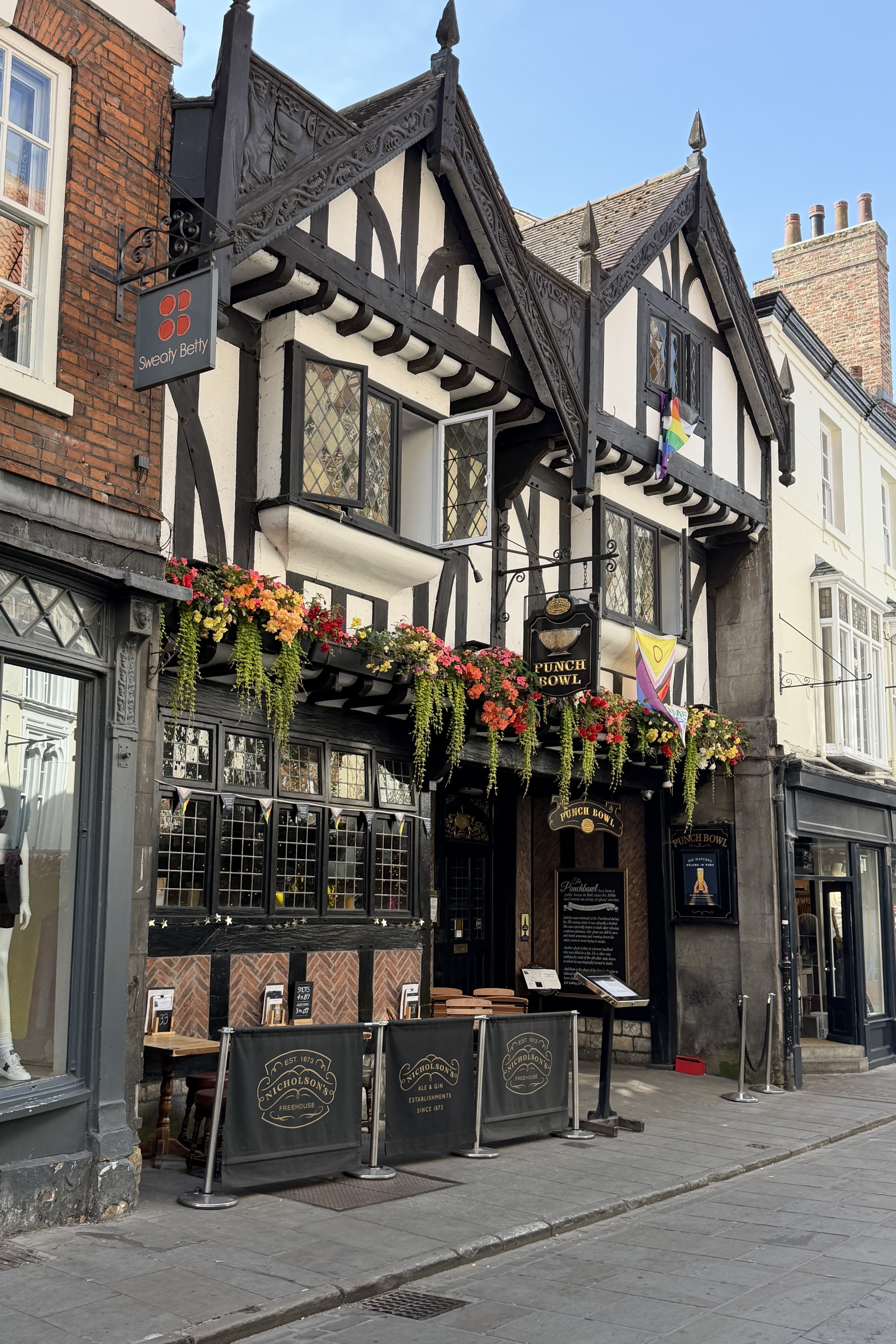
- The Blue Bell (Fossgate): York’s smallest and most authentic 18th-century public house. Stepping into this tiny tavern with its preserved timber paneling, we shared a long communal table with welcoming locals and the publican. They eagerly traded travel stories, asked about our slow-travel lifestyle, and gave us the best insider dining recommendations in town.
- The Chopping Block (at Walmgate Ale House): Discovered thanks to our chat at The Blue Bell, this spot pairs traditional British tavern comfort with rustic French bistro cooking. Sitting outside in their quiet walled garden, we enjoyed rich French onion soup, pan-seared scallops, and tender roast beef served over authentic Yorkshire pudding with dark gravy.
- Skosh (Micklegate): An exceptional Michelin-recognized dining experience. We shared a lovely bottle of Portuguese wine alongside six creative small plates. Two dishes were runaway contenders for our 2026 Touchpoint Tally awards: delicate lobster dumplings bathed in a fragrant lemongrass and ginger foam, and the incredible salt-aged beef fillet tataki dressed with cherry, mustard, and crisp kohlrabi. While the food was phenomenal, the wine service was surprisingly casual for a Michelin venue—our bottle was opened and poured without formal tasting presentation, cork review, or subsequent refills. Reservations are strictly required, and tables operate on a two-hour window.
- Phranakhon Thai Dining: A vibrant, highly rated restaurant overlooking Grape Lane. Securing a front window table offered prime people-watching. The staff was exceptionally hospitable, opening bottles of rare Thai wines from Monsoon Valley just so we could sample their fruity rosé and Shiraz. The food was remarkably balanced and authentic: whole crispy sea bass, salt-and-pepper wings, crunchy mushrooms, and tender pork shoulder drizzled in spicy Thai chili sauce.
- Plonkers Wine Bar: Situated right along the River Ouse by the tour boat slips. We sat outdoors right at the water’s edge, lingering over multiple glasses of European wine while enjoying the late-afternoon river breeze.
- Thomas the Baker & York Confectionery: At King’s Square, we stopped by Thomas the Baker for hot sausage rolls, savory quiche, and fresh scones, pausing to watch street variety performers and jugglers entertain the square. We also sampled traditional York chocolates, learning how Quakers like Rowntree and Terry built an ethical, booming confectionery capital here.
Reflections on the Journey
- The things we loved the most: The human warmth and authentic living history. Sharing pints at the communal table of The Blue Bell, walking foundation stones with volunteer guide David at St. Mary’s Abbey, and the choral majesty of Evensong at the Minster were deeply memorable highlights.
- The things we didn’t: The tourist saturation and commercial kitsch. York leans heavily into sensationalized ghost walks, dungeon attractions, and novelty shops. If you don’t actively seek out legitimate history, the center can feel a bit like an overcrowded theme park (reminding us at times of Mackinac Island or New Orleans).
- Our Slow Travel Verdict on York: We realized that five nights was too long if staying entirely within the city center. Unless you utilize York as a regional transit hub to take day trips into the North York Moors, Whitby Abbey, or Castle Howard, two to three nights is the perfect amount of time to walk the medieval ramparts, attend Evensong, explore the snickelways, and enjoy the dining scene. While Bath held our attention for three full weeks without a single dull day, York is best savored as a focused, high-impact cultural stop.
Links: London Trip Report | Bath City Trip Report | Bath & Day Trips Planning Guide | More Trip Reports
Next Up: Edinburgh
Welcome to the new Touchpoint Wines
We’re blending our passion for wine with a love for global exploration. Join us as we journey through the world's most captivating destinations, uncovering hidden wine gems and offering unique workshop experiences for your team retreats. Whether you're seeking to enhance team dynamics or discover the art of slow travel, let us be your guide.