At a Glance
- Duration: 7 Days (Late August to Early September 2026)
- Home Base: Spacious coastal apartment featuring a panoramic terrace looking directly across the channel to the Pakleni Islands, situated a scenic 25-minute promenade walk west of Hvar Town.
- Top Day Trip / Excursion: Full-day speed boat expedition to Vis Island, the Stiniva Cove cliffs (Mamma Mia 2 filming site), the glowing Blue Cave of Biševo, and an after-hours swim inside the Green Cave.
- Memorable Moment: Standing among multi generational island families at the 76th annual Jelsa Wine Festival, cheering on local competitors scaling a greased 10-meter rope to reach a hanging pršut before rock bands filled the harbor square.
- Overall Vibe: Vibrant, sun-soaked, and paradoxical; an island balancing the loud, energetic pulse of youth and super-yachts with authentic inland agricultural roots, dramatic sea caves, and deeply generous local hospitality.
This Island is Special Because... (Introduction & Our Why)
After our time amidst the vertical stone staircases of Dubrovnik and the quiet, herring bone alleys of Korčula, Hvar welcomed us with a completely different energy. Arriving at the sun-drenched Riva, the immediate impression is one of maritime luxury and animated youth. Hvar has a worldwide reputation as the playground of the Adriatic—a glittering hub where super-yachts anchor side by side, beach clubs thump along the coves, and water taxis zip across the sapphire channels.
Yet beneath that polished, jet-set surface lies an island of extraordinary geographic drama and ancient agricultural heritage. Long before it became a summer party stop, the ancient Greeks cultivated these sun-drenched limestone hills, terracing slopes that produce some of the most potent, concentrated red wines in the Mediterranean.
By this third leg of our late-summer journey, the sheer novelty of fortified stone walls and polished marble alleyways had begun to settle into a familiar baseline. What made Hvar special for us was not the see-and-be-seen bustle of the central piazza, but its access to the sea and the community life tucked just beyond the tourist bubble.
Instead of cramming our days with rigid schedules, we structured our week to embrace the slow-travel flow: dedicating entire days to open water exploration, booking an overnight excursion to the agricultural heartland of Jelsa for their annual wine festival, and setting aside quiet mornings on our balcony to balance professional client work with the rhythm of the Adriatic.
Our Home Base: The Coastal Promenade West of Hvar Town
Lodging in Hvar often dictates your entire travel experience. Choosing to stay right in the historic center puts you at ground zero for late-night music, buzzing crowds, and steep pedestrian steps. We deliberately chose the opposite approach, securing an apartment situated about a 25-minute coastal stroll west of Hvar Town.
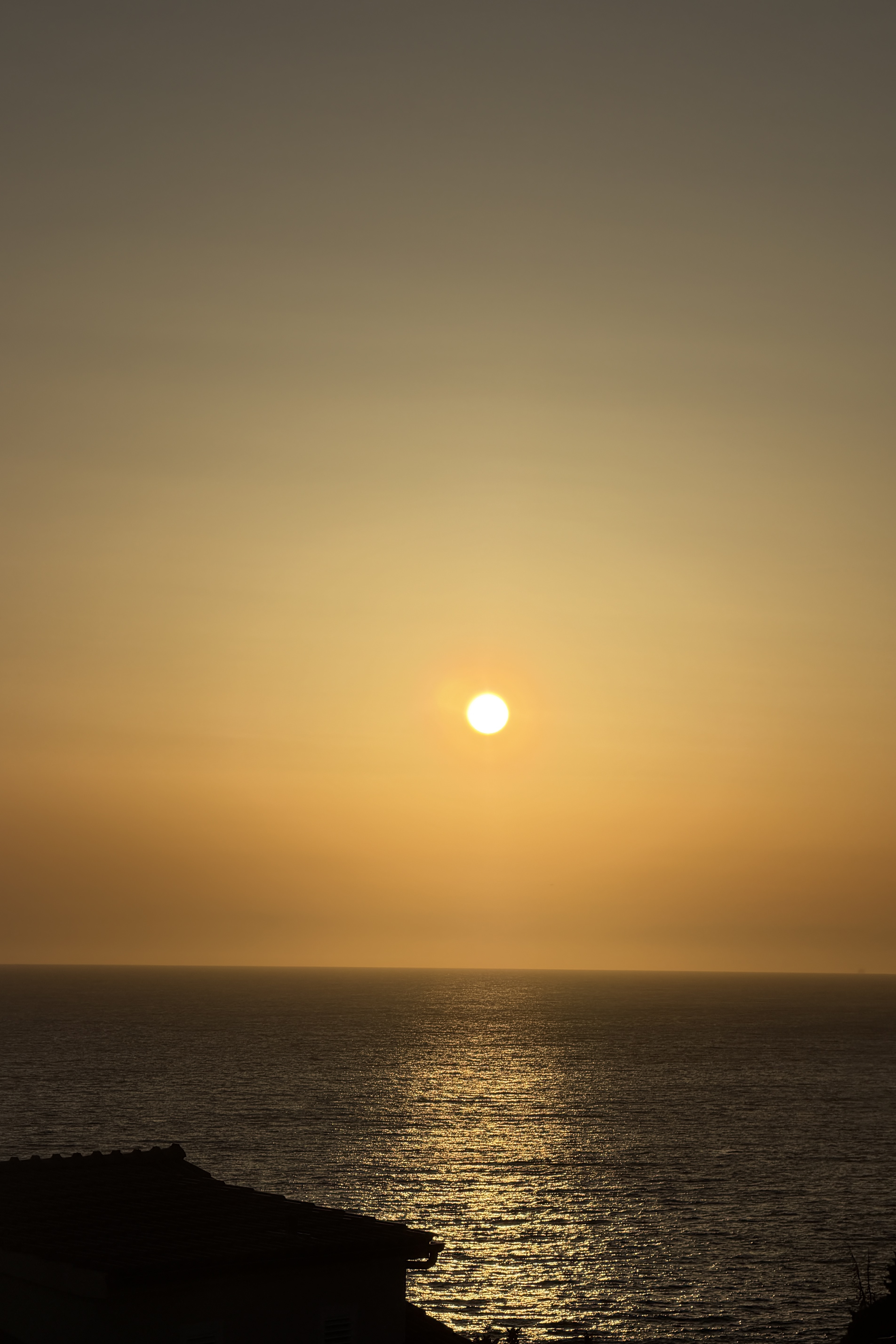
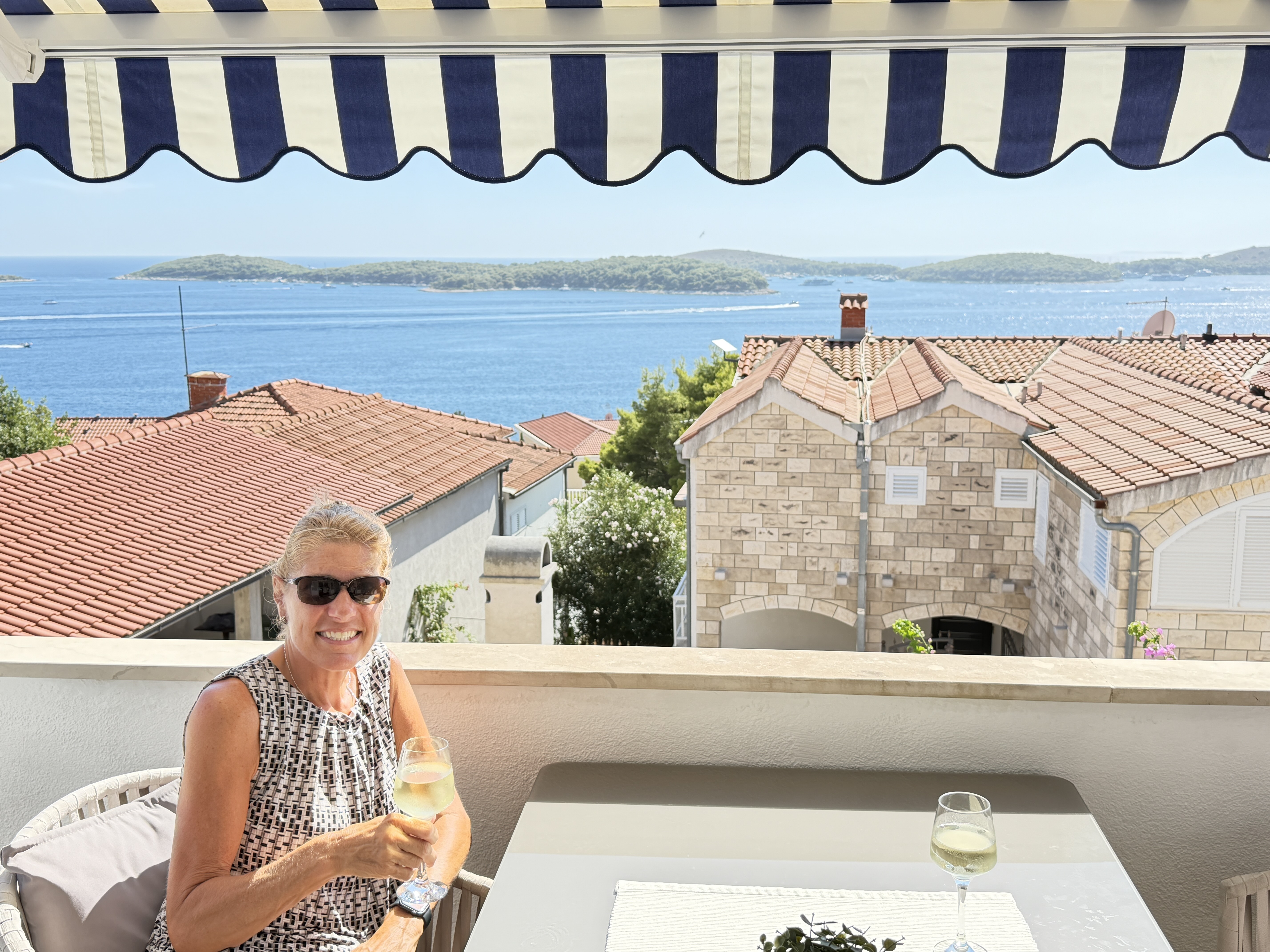
This flat was easily our favorite, most comfortable living space in Croatia. Unlike our compact perches in Dubrovnik and Korčula, this was a true home base where you could unpack, spread out, and comfortably settle in for an extended stay. The defining feature was the wide, private terrace looking out over the open Adriatic. From our elevated seats, the vista was a living seascape: the emerald silhouettes of the Pakleni Islands stretched across the foreground, while sailboats, water taxis, and day cruisers wove peaceful paths across the channel all day long. We spent hours out here catching the sea breezes, working through project decks, and sharing chilled bottles of wine as the setting sun dropped behind the archipelago.
The daily commute into town was half the joy of the location. The entire stretch between our apartment and the historic harbor is connected by a wide, paved pedestrian promenade winding gently along the rugged water's edge. Dotted with shaded pine groves, tucked-away swimming ladders, sun lounger perches, and low rocky ledges where bathers jumped straight into the sea, it became Tom’s absolute favorite walk on the coast.
Living slightly removed also helped navigate the island's relentless pricing realities. Croatia continued to surprise us with costs that routinely outpaced our past bases in Spain, Portugal, and even the UK. A critical tip we learned from locals: avoid the smaller "orange" convenience grocers in town, which carry hefty tourist markups, and seek out the larger "red" supermarkets along the perimeter roads for a much wider selection at fair, local prices. Having a full kitchen allowed us to pick up fresh produce, bakery staples, and snacks, preserving our dining budget for focused, meaningful meals.
Our Hvar Experience: The Day-to-Day
The Active Routine & The Daily Rhythm
The Working Flow, Promenade Strolls & Historic Exploring
With daily temperatures regularly climbing into the lower nineties, we structured our time around cooler morning hours, productive work sessions, and shared afternoon explorations.
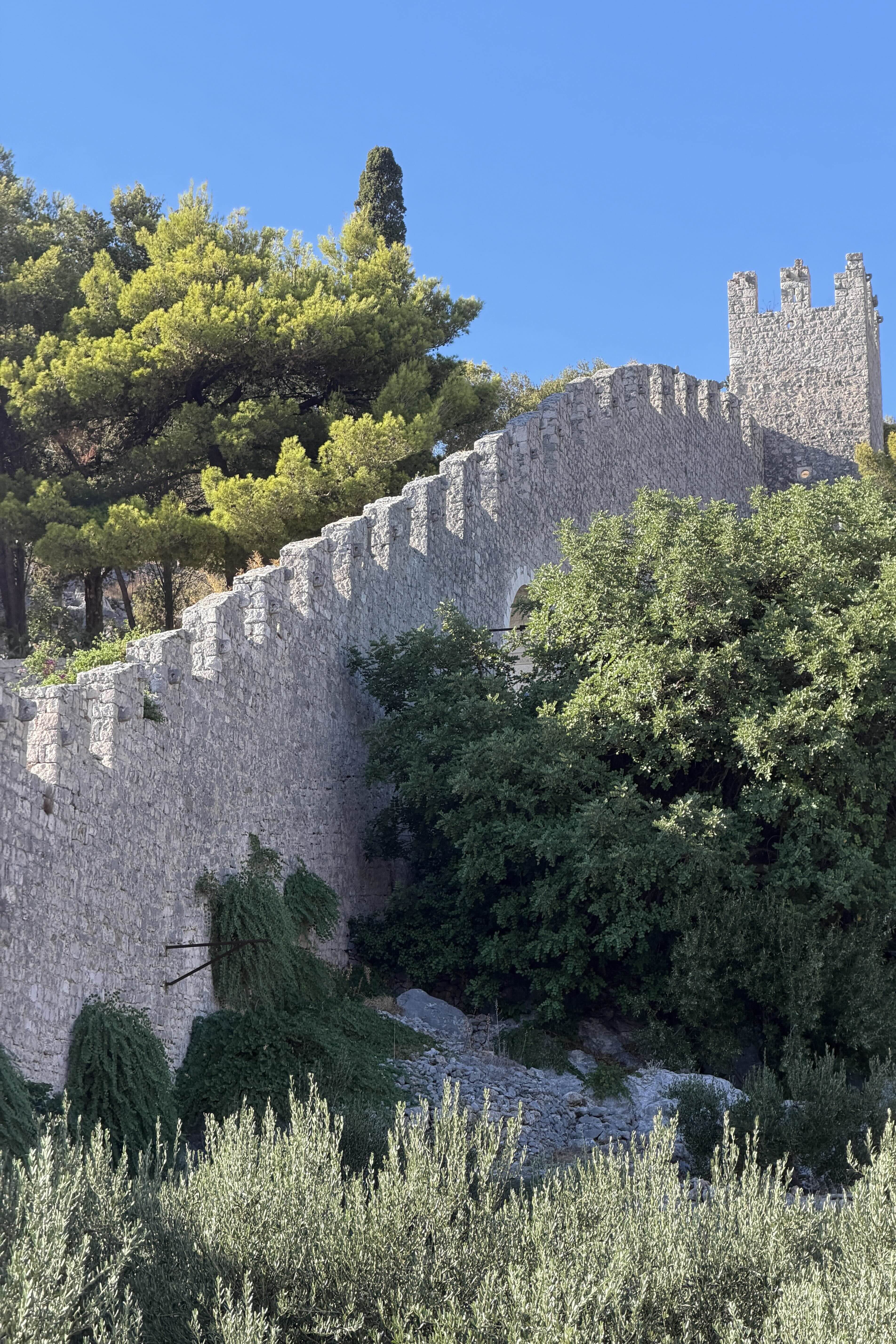
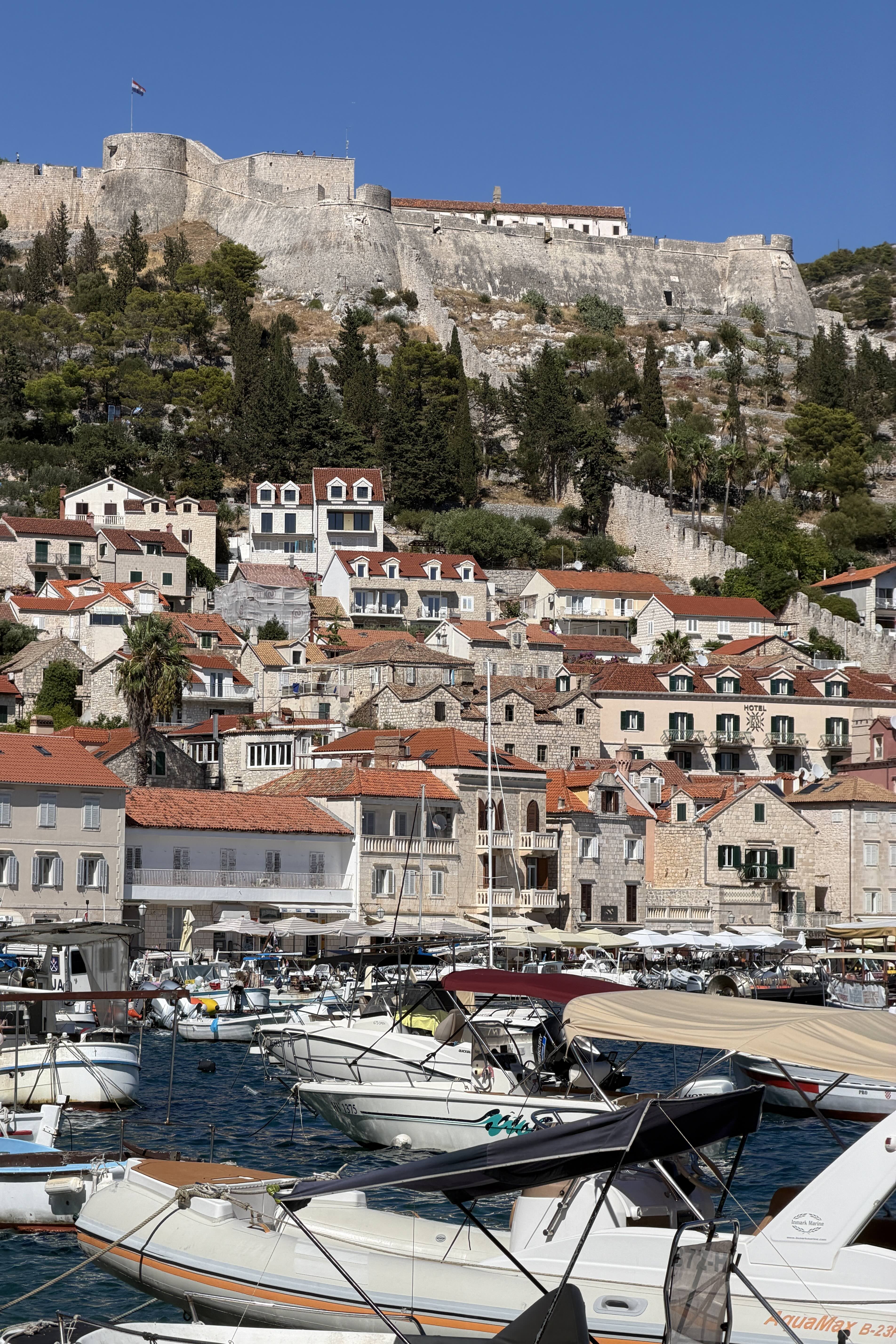
Our weekday routine was grounded in a balanced, comfortable flow from our apartment. I tackled client work, while Tom focused on editing videos, building out our website content, and organizing our travel reports. On one particularly blazing morning Tom headed out solo to tackle the conditioning hike up the pine-lined hillside to the Spanish Fortress (Tvrđava Fortica). In 92-degree heat, that exposed limestone trail proved brutally hot, and after checking out the sweeping panoramic views of the harbor and Pakleni Islands from the outside perimeter without paying the €8 entry fee, he returned thoroughly baked, making our breezy terrace an essential recovery spot.
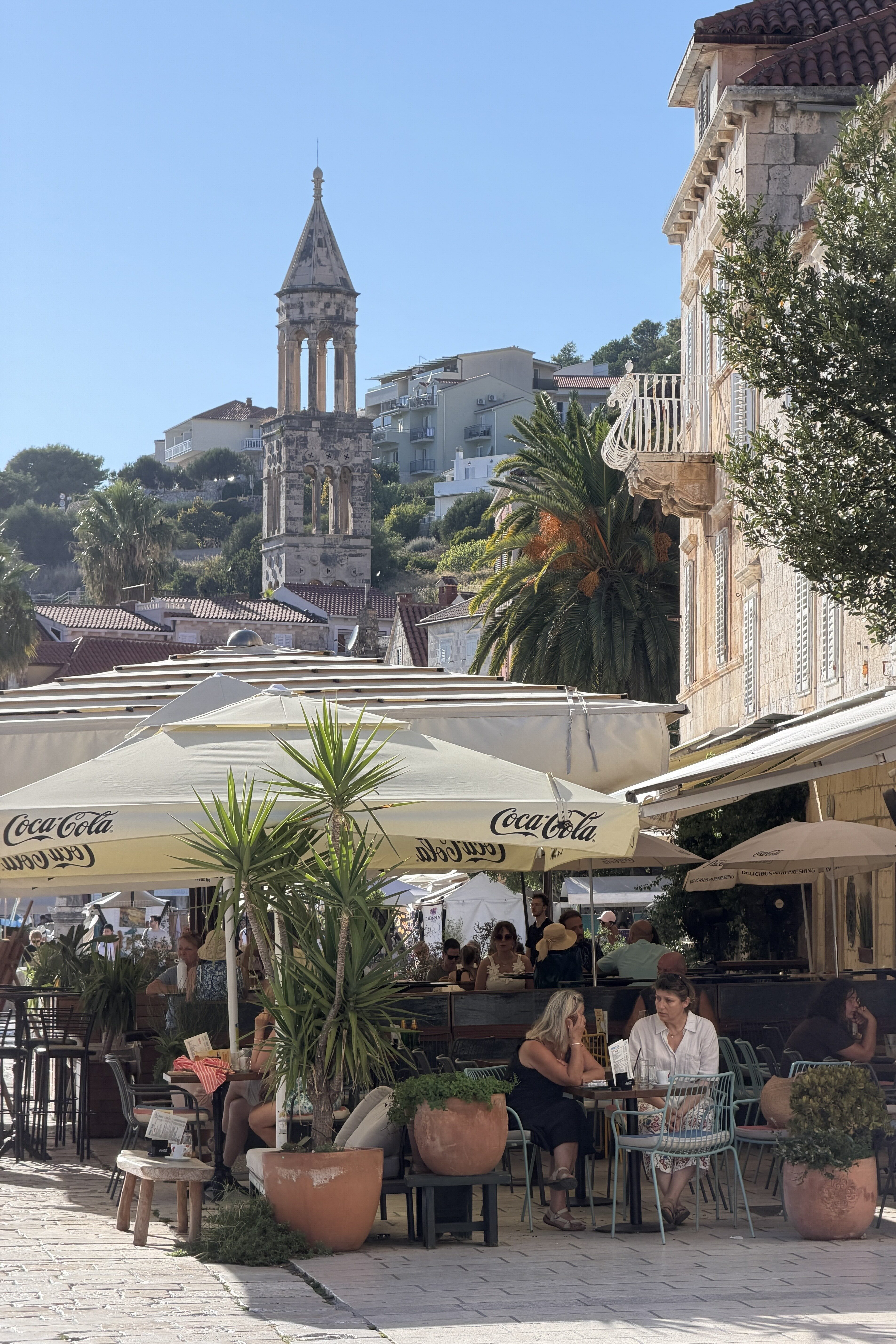
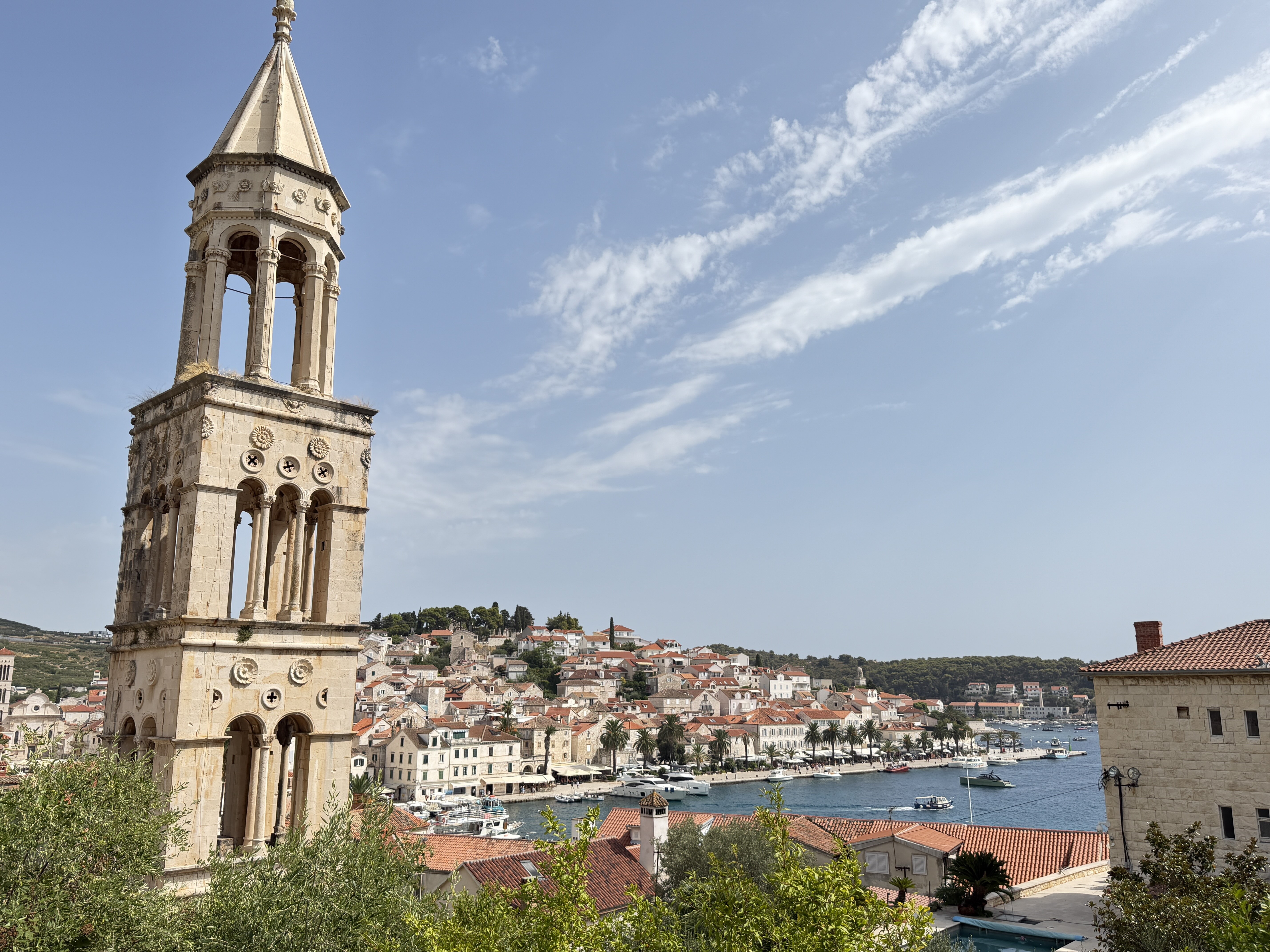
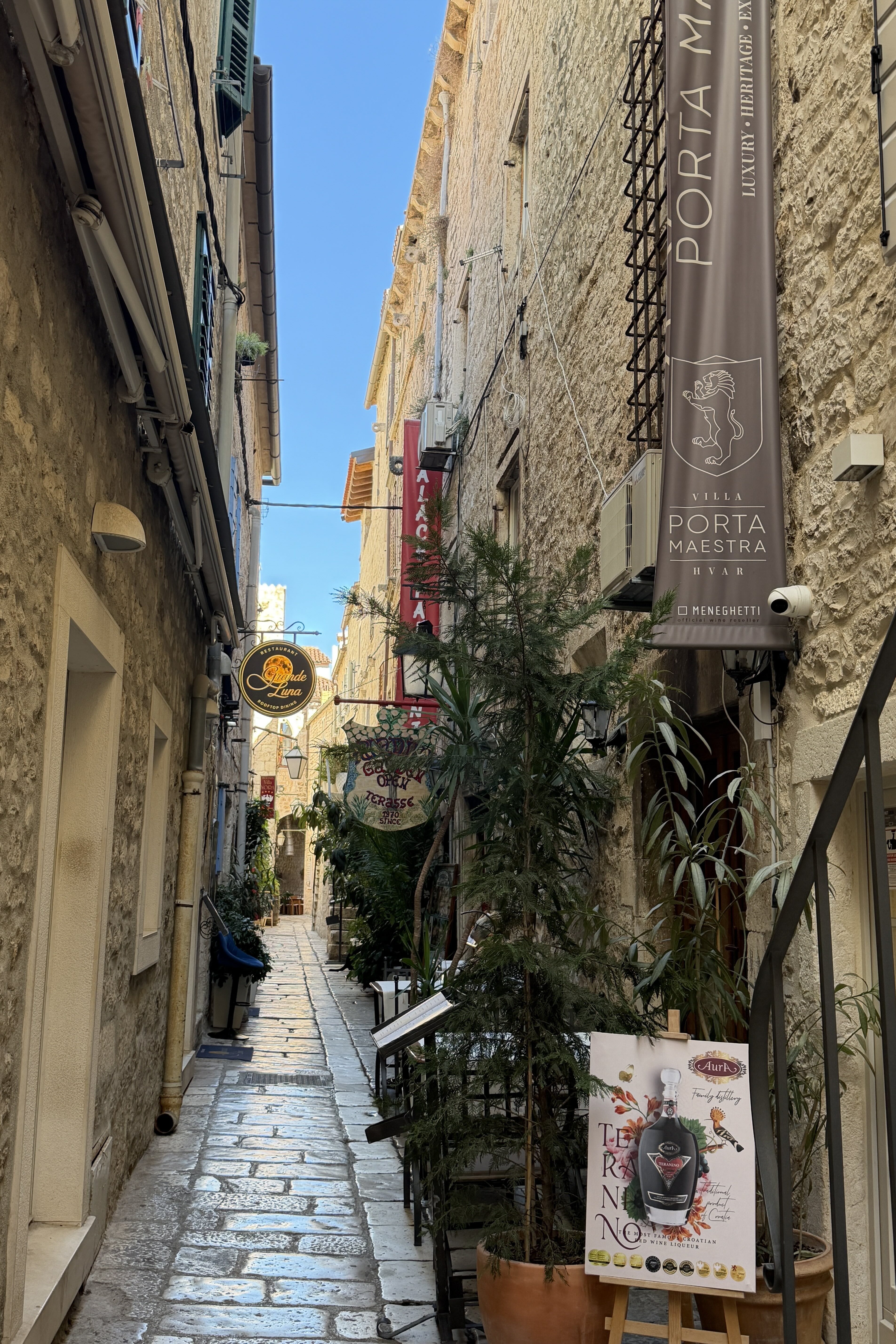
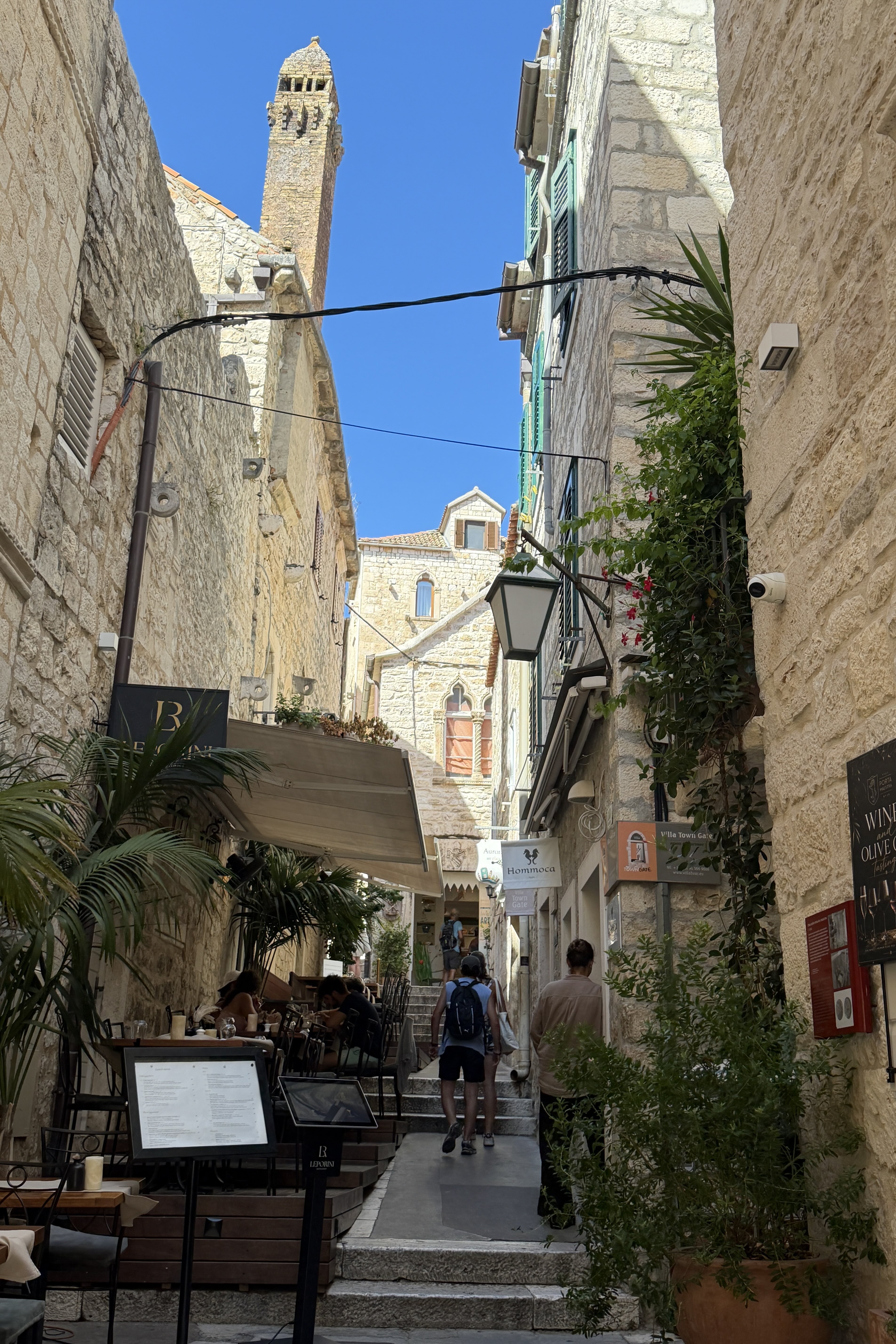
Late mornings or afternoons were dedicated to walking into Hvar Town along the waterfront promenade. We would weave through the wide, polished piazza and branch off into the quiet, labyrinthine stone alleys to discover the town’s hidden corners, browse tucked-away shops, and sample local bakeries. On one of our wanders, I went on a mission to track down a savory, spiced Mexican-style roll wrapped in flaky filo—hoping to replicate the incredible pastry I had discovered in Korčula. While the traditional burek od sira (cheese) and od mesa (meat) we picked up from bakery counters like Pekarna Palma were warm and flaky, none quite captured the quality of that first Korčula find.
After sightseeing and scouting the historic lanes, we would settle in for our primary meal of the day: an unhurried, late lunch or early dinner. Because we typically eat just one main meal a day, this off-peak timing reliably allowed us to avoid the thick dinner crowds, claim the best terrace tables, and strike up lingering conversations with local owners and winemakers. We would then stroll the long seaside path back to our apartment as golden hour settled over the water, taking in the spectacle of yachts cruising into the channel and locals swimming off the rocks.
A Local Culinary Exploration
Dining in Hvar Town swings wildly between over priced tourist fare and genuine scratch hospitality.
One of our standout discoveries was Primi Piatti, an unassuming spot close to our neighborhood known for wood-fired Neapolitan pizza. Arriving at 4:00 PM, we had the entire shaded terrace to ourselves, enjoying sea views while splitting crisp salads and a phenomenal ham, artichoke, and mushroom pizza. The crust was blistered and airy, the tomato sauce was bright with fresh acidity, and the table was set with their house-infused truffle oil, chili oil, and jars of intensely fragrant local dried oregano.
What elevated the meal was the hospitality. The owner, who has run the restaurant for forty years, was sitting near the entrance enjoying a tall glass of wine. Over the course of the meal, he stopped by to check on us, brought over a chilled, homemade digestif flavored with lemon and honey, and gifted us a bottle of the family’s private-reserve olive oil. He shared the story behind the label, which featured a photograph of his elderly grandmother proudly holding cash euros. Decades ago, a photographer had asked to take her portrait; she agreed only on the condition that he first purchase €50 worth of her products! The oil itself was crafted using a unique traditional island method: while the early October harvest is cold-pressed, a special batch of olives is left on the trees until November, submerged directly in sea water for a period to draw out bitterness, and then warm-pressed at 30°C to produce a delicate, rounded oil.
Not every food adventure was seamless. On Sunday, we undertook a 45-minute walk outside town for a pre-booked traditional octopus peka (the iconic Dalmatian slow-braise baked under a heavy iron bell). A text message mix-up with the family restaurant had them expecting us the day before, leaving us standing outside closed doors. We pivoted back to the harbor for a very expensive, traditional seafood dinner of fresh fish soup and mixed seafood platters, reminding us that travel logistics will occasionally unravel. Similarly, an evening visit to the Hvar Town location of Silk—which operates as an experimental test kitchen rather than the reliable Asian-fusion spot we loved in Korčula—fell flat with aggressive patio flies, prompting us to box our dim sum to go and retreat to our private balcony.
A Connoisseur's Notebook: Passion & Pairing at Elision
On our very first afternoon walking the harbor promenade, we stepped into a local wine shop to pick up an everyday red. While the bottle itself was unremarkable, the shopkeeper pointed us toward a brand-new wine bar that had just opened a few doors down called Elysium.
Walking in at 4:00 PM, we met Dominic, the passionate young owner and chef. In Croatia, students can specialize in vocational trades during secondary school; Dominic trained as a professional chef from his teens. After five years of rigorous kitchen work, he decided to build an integrated wine and food concept in Hvar. Elision had been open just one month and five days when we pulled up and were seated at a lovely table outside the restaurant.
Dominic lives by an uncompromising standard: "A restaurant’s food and wine can be a 3 or a 4, but the service must always be a 5." We spent nearly two hours tasting through his list while trading notes on our cellar visits in Lumbarda and our upcoming trip to the Jelsa festival. Dominic poured an expressive white blend of Traminac (Gewürztraminer), Riesling, and Sauvignon Blanc—aromatic, textured, and surprisingly full-bodied—followed by a coastal Sauvignon Blanc that transitioned from ripe tropical fruit into a flinty, saline mineral finish.
In between pours, he brought out thick slices of homemade sourdough accompanied by rare olive oil sourced from a local producer who presses only twenty-two liters a year, followed by an elegant tuna ceviche. His wine list is a curated celebration of small-production Dalmatian estates alongside exclusive boutique Italian imports. Encountering a young local professional taking calculated risks to elevate island culinary culture was a standout slow-travel connection.
Day Trips & Excursions: The Outer Islands & Sea Caves
The Blue Cave, Vis & Pakleni Islands Speedboat Expedition: Secret Grottos & Coastal Cliffs
To experience the Dalmatian coast’s dramatic maritime landscape, we booked a full-day speedboat excursion out to the distant island of Vis and its surrounding sea caves.
- The Crew & Logistics: We gathered at 10:00 AM at the harbor offices, boarding an open speedboat with fourteen guests and two energetic young skippers—university students from Split and inland Croatia working the summer season. The small-group dynamic was lively, allowing us to trade travel stories with couples from New York and the Netherlands and a fun group from San Diego. We chatted with the two skippers and learned a lot about working in the Hvar tourist sector and being a student in Croatia, and got some great tips on where to go to experience Hval like a ocal.
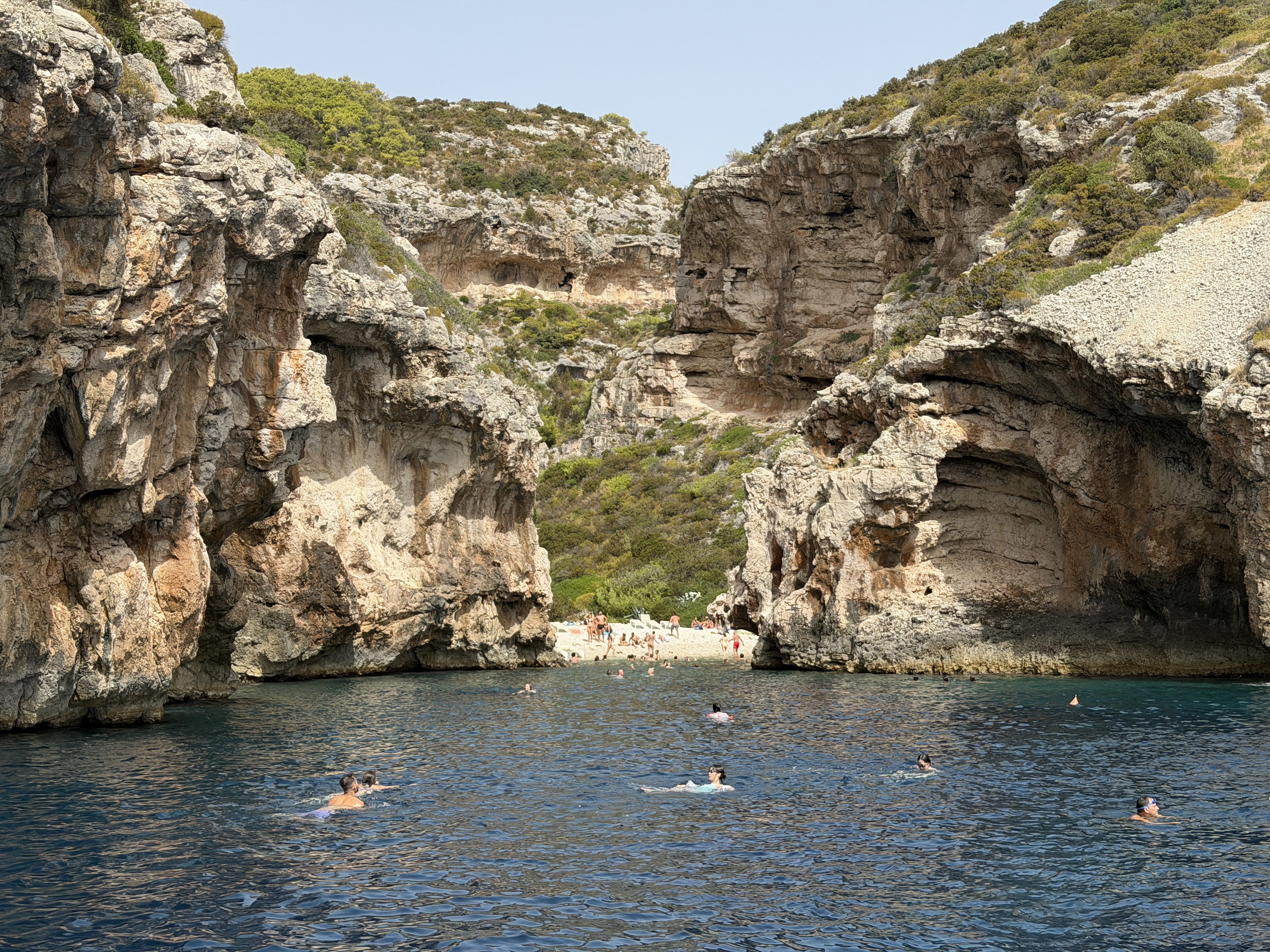
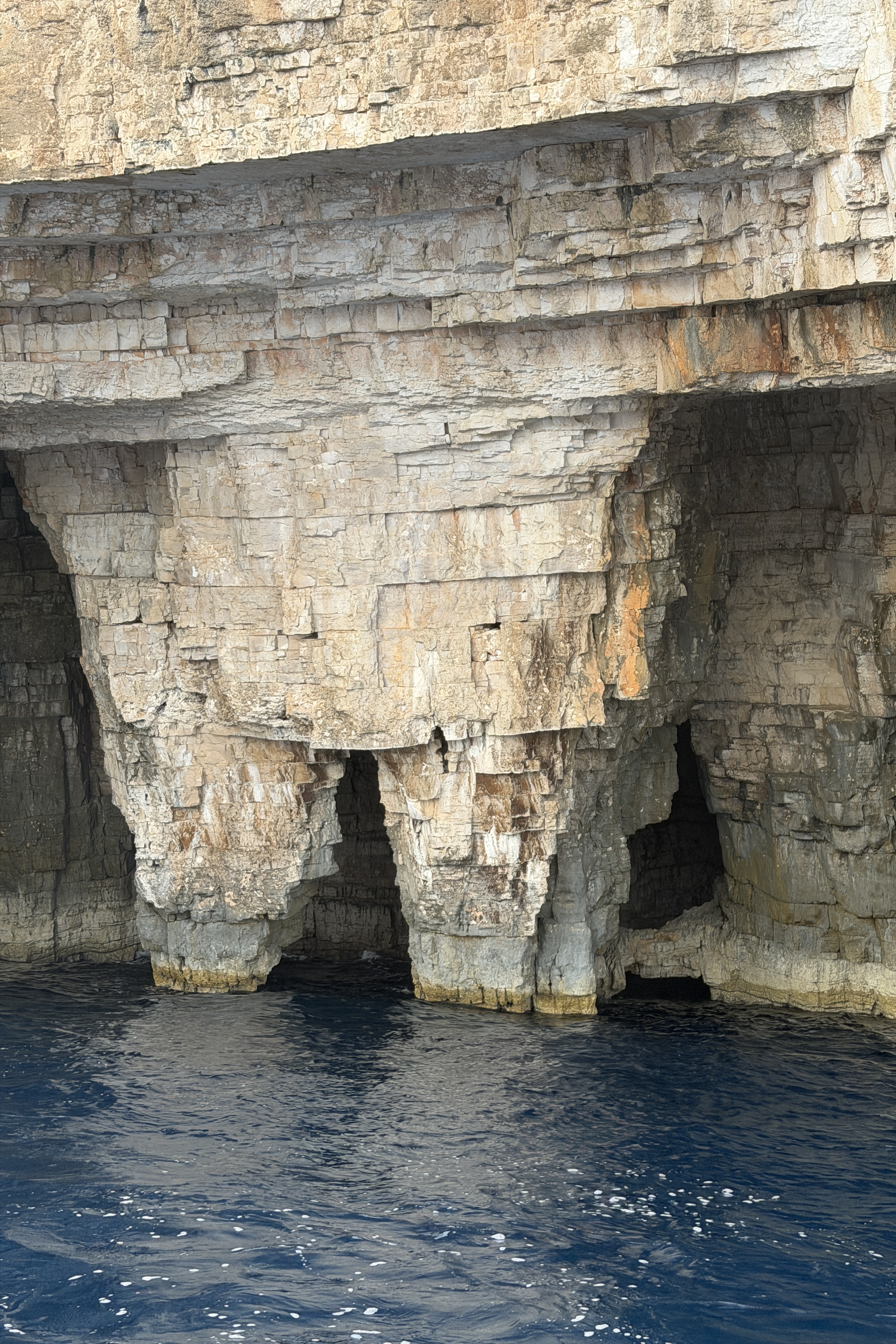
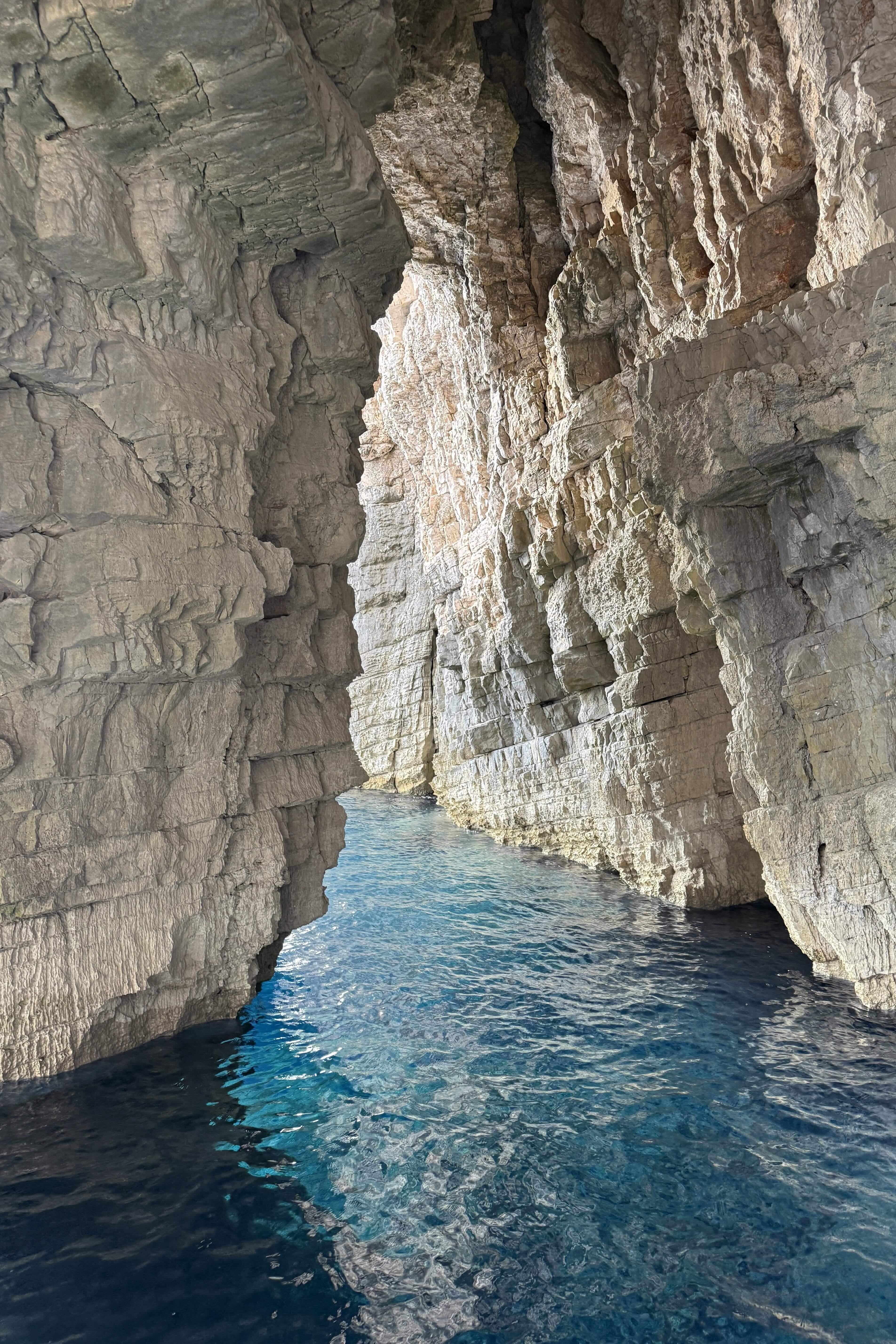
- Stiniva Cove & Swimming the Cliffs: After a brisk swim stop at a sheltered blue grotto, the boat crossed open water toward the southern coast of Vis. We anchored outside Stiniva Cove, famed for its razor-thin sea passage that opens into a hidden pebble beach, used as a filming backdrop for Mamma Mia 2: Here We Go Again. Tom and I strapped on snorkel masks and swam from the boat, navigating the towering, vertical limestone cliff walls that frame the entrance. Gliding through the narrow passage into the secluded cove while looking up at sheer rock faces was a breathtaking sensory experience.
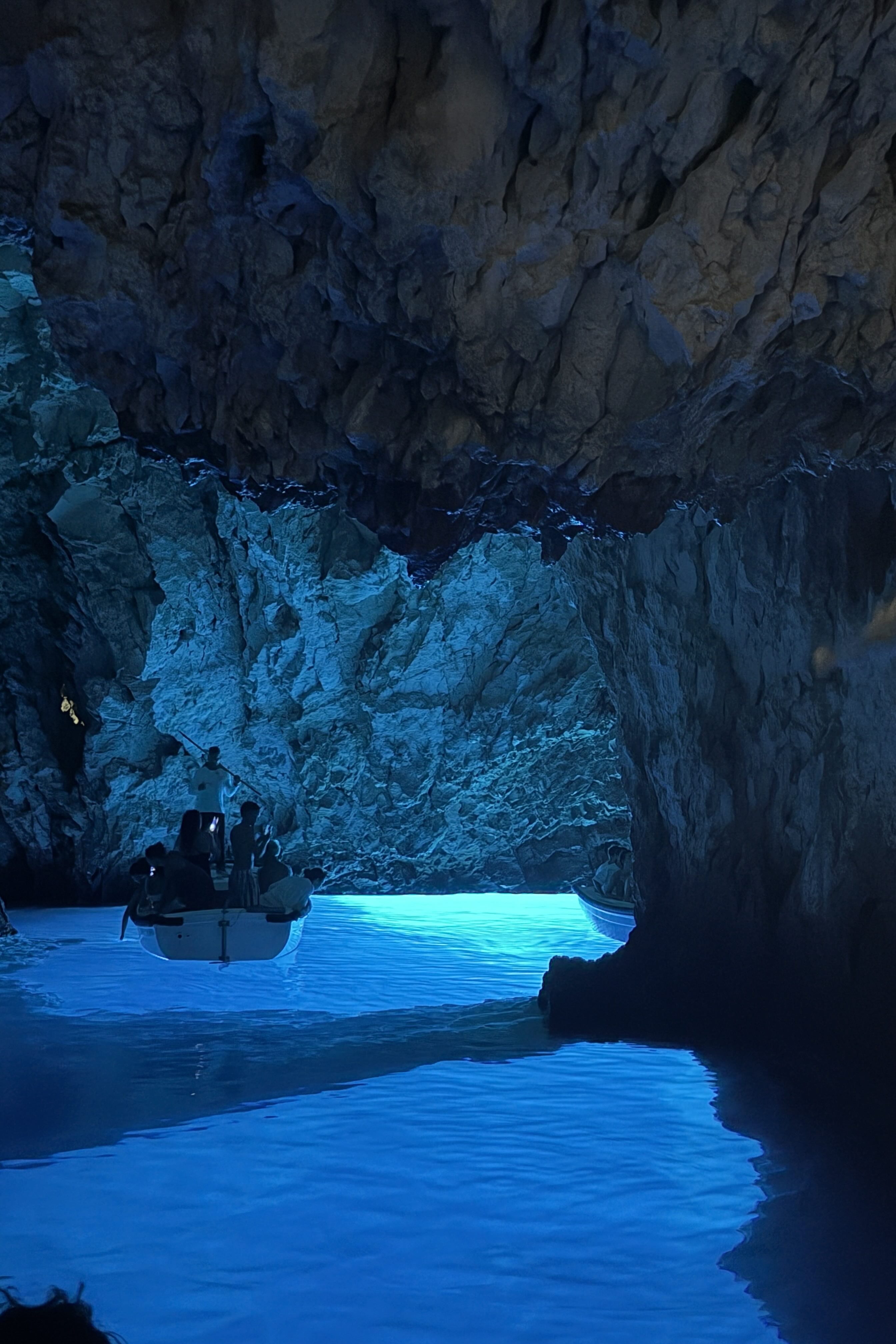
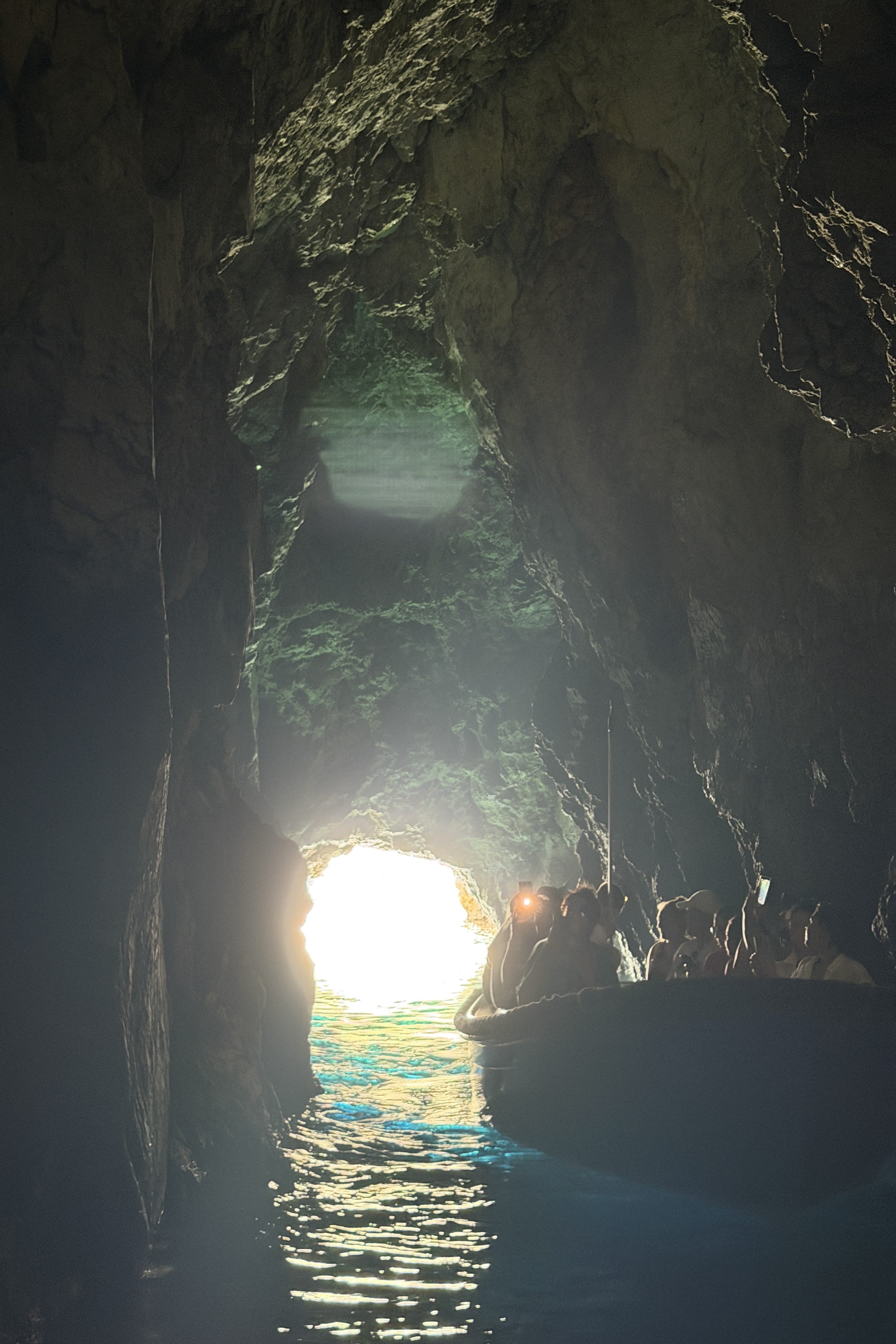
- The Blue Cave (Modra Špilja) on Biševo: Cruising over to the tiny islet of Biševo, we paid €24 cash per person for admission to the world-renowned Blue Cave. Visitors transfer into low-profile wooden boats that duck through a tiny, natural stone archway. Inside, the visual effect is astonishing: midday sunlight penetrates an underwater opening in the rock face, reflecting off the white sand bottom to illuminate the entire cavern in an eerie, luminous electric blue. When you dip your hands into the sea, your skin glows silver, and splashing creates droplets that look like liquid crystal. While the visit is brisk, with four small boats sharing the chamber, it is an undeniable natural wonder.
- Seaside Lunch in Komiža: We docked at the historic fishing village of Komiža on the western rim of Vis for an unhurried harbor lunch at Dal Mare. While the dishes were simple—Tom had prawn fettuccine and I had grilled sea bass with beurre blanc—the harbor setting and quiet stone quay offered a nice break from the boat.
- The Highlight: After-Hours at the Green Cave: The defining triumph of our day came at the Green Cave (Zelena Špilja) on Ravnik island. Instead of taking us during peak daytime hours when visitors pay €15 for a hurried five-minute dip, our clever skippers waited until the ticketing office closed and the guards departed for the evening. We pulled up just as the crowds cleared, giving us free rein to jump into the water and explore the grotto on our own terms. Swimming all the way into the deep, echoing rear of the cavern, I turned around to look back toward the exterior: from that angle, the two arched entrances resembled a giant skull submerged in the water, with the sea reflecting through two glowing eye sockets. We floated in the peaceful, emerald-tinted water as long as we wanted—an unscripted moment that made the entire day a top Touchpoint Tally contender.
- Pakleni Island Wind-Down: We capped the expedition with a final swim stop at a tranquil blue-water cove on the Pakleni Islands before cruising back to Hvar Town as the late-afternoon sun softened across the water.
Wine Scene & Dedicated Excursions: The 76th Jelsa Wine Festival
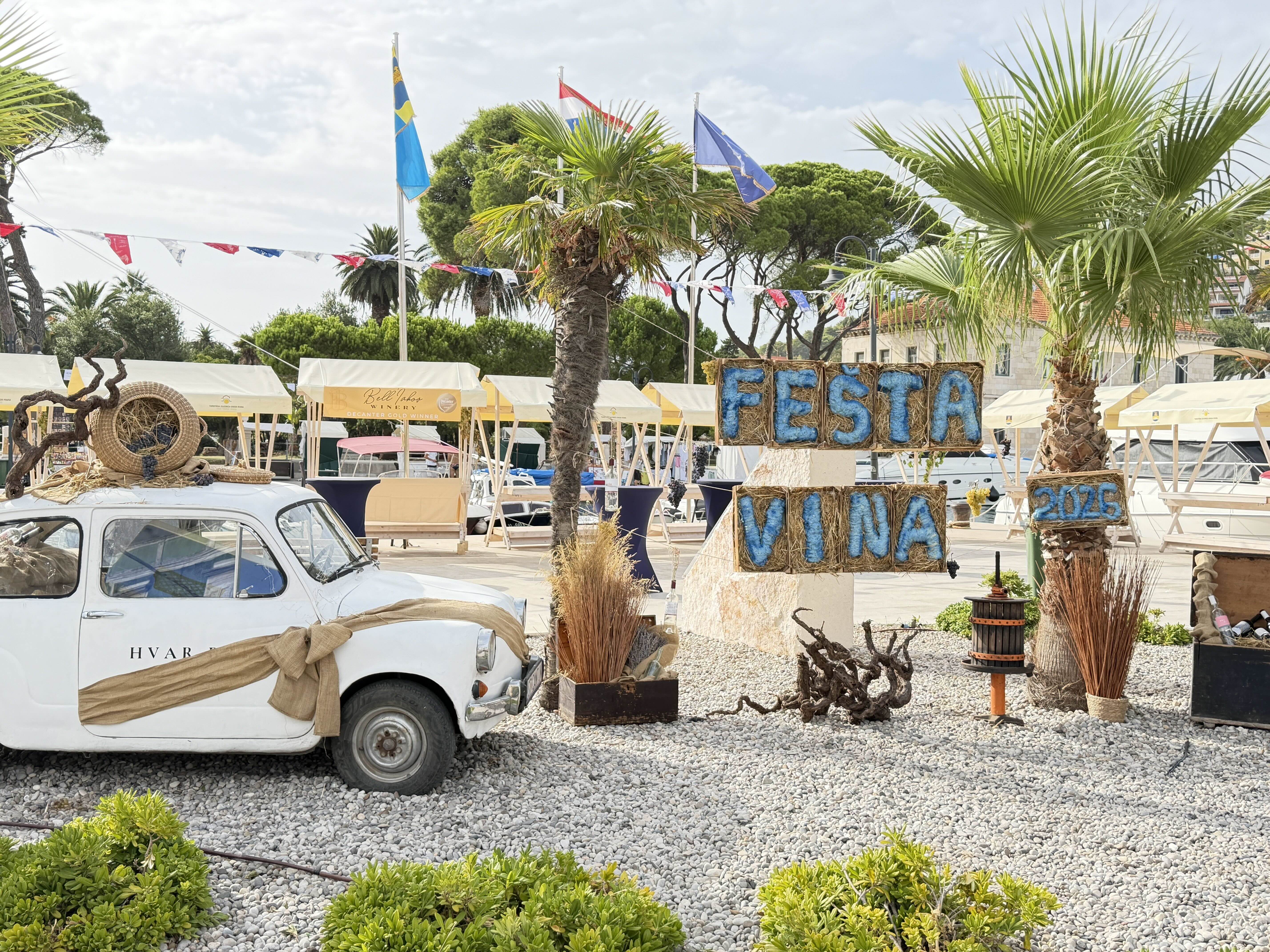
Rather than taking standard commercial tasting tours, we centered our Hvar wine study around a dedicated weekend trip across the island to Jelsa for their historic, annual wine festival (Fešta Vina).
The Logistics & Setting
On Saturday, we boarded the 12:10 PM public bus from Hvar Town to Jelsa (€11 one way for both of us, cash paid directly to the driver). The scenic one-hour route crested the spine of the island, stopping at Stari Grad and the ferry terminal before descending into the tranquil, horseshoe-shaped harbor of Jelsa.
Knowing the festivities would stretch well past 2:00 AM, we booked a simple overnight apartment in Jelsa rather than worrying about late-night transport. After dropping our bags and stopping at a bakery for warm cinnamon rolls, we wandered around and eventually sat on the outdoor terrace at Bistro Oskari, sharing crispy fried calamari and fresh salads while watching yachts moor along the stone quay, and vendors set up for the festival.
The Festival & Terroir Notes
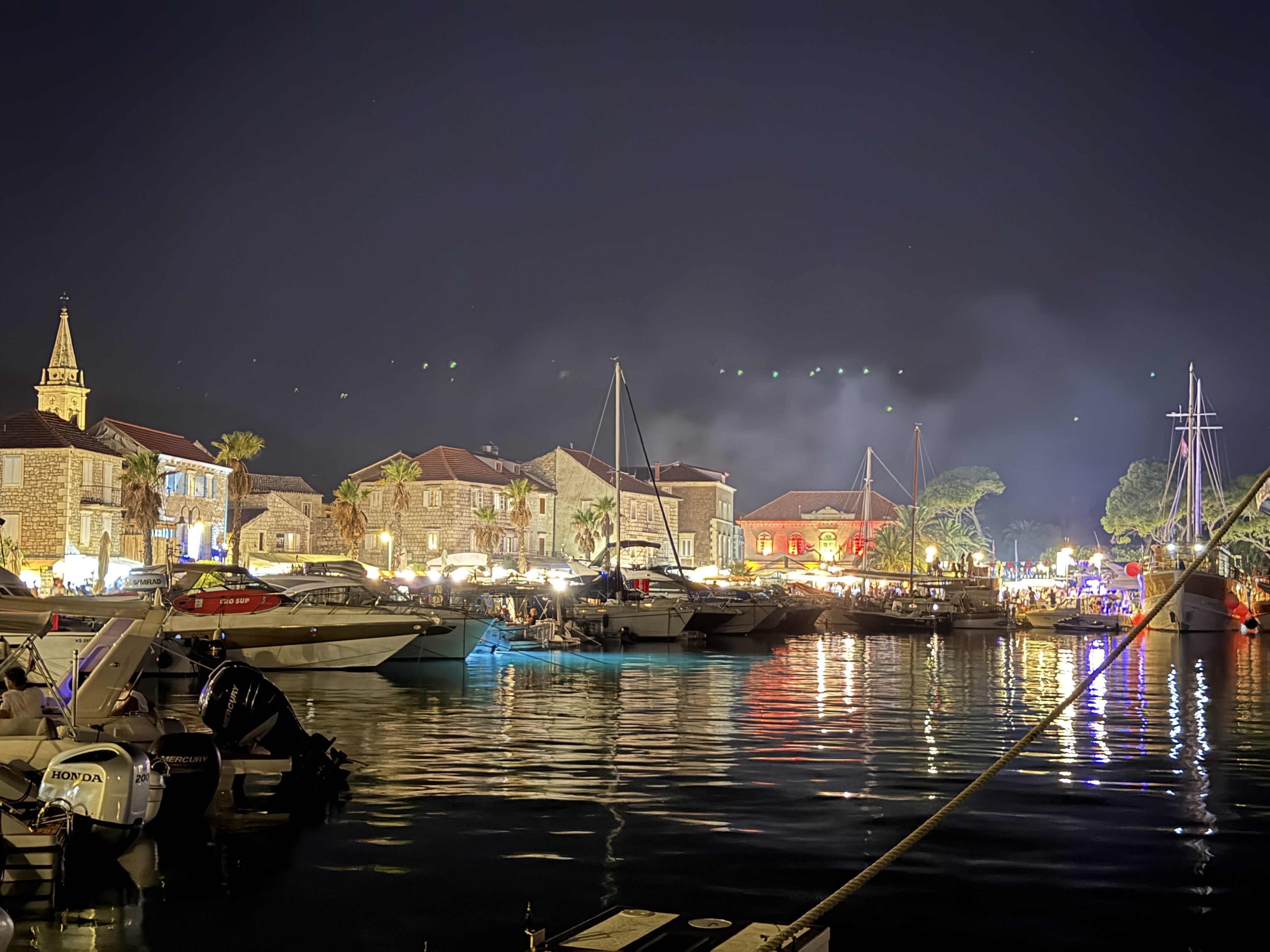
Around 6:30 PM, the stone quayside transformed into an open-air celebration of island viticulture, lined with local craft stalls, wheelbarrows of fresh cheeses, cured pršut, and tasting stands representing twenty regional wine estates.
Plavac Mali is the reigning king of Hvar's vineyards, particularly those cultivated on the precipitous, sun-scorched southern limestone cliffs near Sveta Nedjelja. Because of the intense heat, these grapes develop massive sugar levels that yield high-alcohol reds, frequently reaching 15% to 16% ABV. The true craft of Dalmatian winemaking lies in managing that alcohol without producing a wine that feels hot, coarse, or out of balance:
- Vina Tomić (Standout Producer): Based right in Jelsa, Tomić was the undisputed star of the evening. Their flagship Plavac Barrique demonstrated refined, velvety tannins with balanced French and Croatian oak aging, holding dark plum, cocoa, and dried fig notes without any burning heat. Even more impressive were their cellar blends combining Plavac Mali with Cabernet Sauvignon; we fell in love with an exclusive reserve blend produced only in exceptional vintages, but happily purchased two bottles of their classic blend for our apartment cellar.
- Zlatan Otok: Cultivated on the precipitous southern cliffs of the island, Zlatan Otok is an icon of coastal Croatia. We tasted both their traditional Plavac and a five-year barrique-aged reserve. While the barrique was heavily oaked, their standard bottling delivered hallmark structure, dried prune, and crushed stone minerality; we picked up a bottle for €17.
- Carić: We tasted their acclaimed Plavac Ploški, grown on the dramatic southern slopes. While historically respected, this particular bottling showed a pronounced, harsh alcoholic heat that dominated the fruit on the finish.
An Authentic Community Tradition
Midway through the tasting, we ran into Aric, a friendly boat captain we had met days earlier while wine tasting on Korčula. We stood together along the harbor wall to watch the festival's premier sporting event: the traditional rope climb.
Ten local women and twenty-nine men signed up to scale a 10-meter greased rope suspended over the harbor water, aiming to reach the top and touch a suspended whole leg of prosciutto (pršut). The crowd cheered wildly, shouting technical advice as young boys, girls, and seasoned locals showed sheer grit trying to overcome the slick rope.
Aside from two small groups, we heard virtually no English all evening. This was not an event staged for cruise passengers; it was a 76-year-old island homecoming. Grandparents gossiped on benches, children ran safely through the cobblestone alleys, and stylishly dressed locals greeted lifelong friends with warm embraces.
As the evening deepened, a live rock-and-pop band took the central stage. Even though we didn't speak the language, the rhythms, laughter, and coastal energy were universal. We caught the 9:45 AM bus back to Hvar the following morning, savoring morning cappuccinos with a deeper understanding of the island's true character and feeling blessed to have been able to experience a festival that is truly local but so welcoming to the few tourists that wanted to experience it.
Reflections on the Journey
What We Loved Most
The boat trip through the Pakleni and Vis islands was pure magic—particularly the thrilling swim through the dramatic entrance of Stiniva Cove and floating inside the echoing chamber of the Green Cave after hours. The 76th Jelsa Wine Festival provided our most authentic cultural immersion of the trip, feeling like the hometown summer celebrations of our youth in northern Michigan, where community pride took center stage. Above all, the unexpected warmth of local hosts—like Dominic at Elision and the veteran owner of Primi Piatti sharing his family olive oil—grounded our time in genuine human connection.
What Chafed / The Honest Truth
Hvar Town itself felt somewhat crowded, loud, and geared toward a transient, party-focused crowd compared to the rich historic soul of Dubrovnik or the quiet elegance of Korčula. Island pricing was consistently steep across food, accommodation, and excursions, requiring careful navigation to avoid overpaying for mediocre meals.
Tom vs. Danielle: A Tale of Two Perspectives
- Tom’s Take: "The daily walk along the coastal promenade outside our apartment was one of the finest seaside paths we’ve encountered anywhere in Europe. It made Hvar feel active and open, with swim spots and fun beach clubs around every turn. The speedboat trip out to Vis was the peak adventure day of the entire Croatian journey—swimming through the narrow rock cut into the beach at Stiniva Cove was unforgettable. While Hvar Town was a bit too commercial and crowded for my taste, having our quiet seaside terrace to retreat to made all the difference."
- Danielle’s Take: "Hvar was a complex study in contrasts. While the town’s commercial tourism felt a bit normalized after the breathtaking architecture of Dubrovnik and Korčula, the island’s authentic layers completely won me over. Discovering young culinary visionaries like Dominic at Elision, learning about high-alcohol Plavac viticulture at the Jelsa festival, and floating in the quiet waters of the Green Cave gave me a deep appreciation for the true soul of Dalmatia. It reinforced that slow travel is all about looking past the obvious surface to find where real life thrives."
Links: Dubrovnik Trip Report | Korčula Trip Report | Croatian Wine Guide | Croatian Planning Guide | More Trip Reports
Up Next: Split Croatia
Welcome to the new Touchpoint Wines
We’re blending our passion for wine with a love for global exploration. Join us as we journey through the world's most captivating destinations, uncovering hidden wine gems and offering unique workshop experiences for your team retreats. Whether you're seeking to enhance team dynamics or discover the art of slow travel, let us be your guide.