At a Glance
- Duration: 7 Days (Early September 2026)
- Home Base: Residential neighborhood flat situated a peaceful 15-minute walk outside the crowded historic core of Split.
- Top Day Trip / Excursion:The dual journey to the UNESCO-listed island town of Trogir—taking the 1-hour scenic ferry out across the bay and returning via the quick local express coach.
- Memorable Moment: Sitting in the ancient Peristyle under a starry evening sky as virtuoso pianist Fazil Say performed beneath towering Roman columns, the music reverberating off 1,700-year-old imperial stone.
- Overall Vibe: Monumental, layered, and distinctly alive; unlike a sterile open-air museum, Split is a bustling working city, with an amazing Old Town built organically inside the retirement residence of a Roman emperor.
This City is Special Because... (Introduction & Our Why)
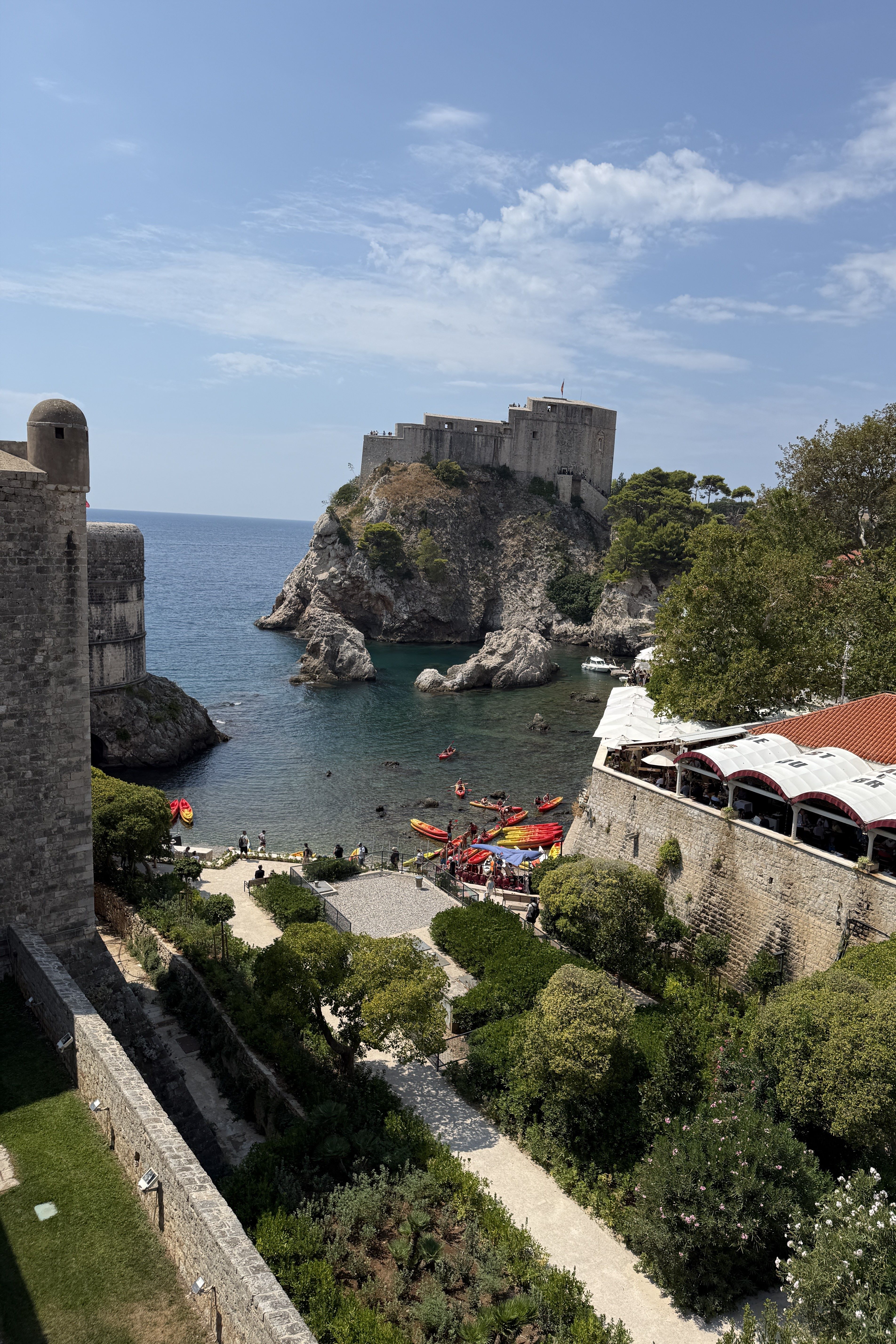
Split is unlike any other historic destination along the Mediterranean. In Dubrovnik, you walk atop mighty defensive sea walls; in Korčula and Hvar, you navigate compact Venetian Island citadels. Split, however, presents an astonishing urban reality: an entire, bustling modern city, and at its center, an Old Town built entirely inside the retirement palace of a 4th-century Roman emperor.
We anchored here for a full week as the grand finale of our late-summer Croatian coastal journey. Having moved sequentially from the fortified stairways of Dubrovnik up through the tranquil vineyards of Korčula and the sun-soaked coves of Hvar, Split provided a welcome shift into a vibrant, grounded mainland hub.
What makes Split soutterly compelling is its organic transformation. In 305 AD, Emperor Diocletian—a common-born Dalmatian soldier who rose through the ranks by ruthless military savvy and became one of the few Roman rulers to abdicate voluntarily—built a colossal, heavily fortified retirement estate along this sheltered bay. Centuries later, when invading Avars and Slavic tribes sacked the nearby Roman provincial capital of Salona, displaced refugees fled inside the emperor’s abandoned, towering fortress walls for survival.
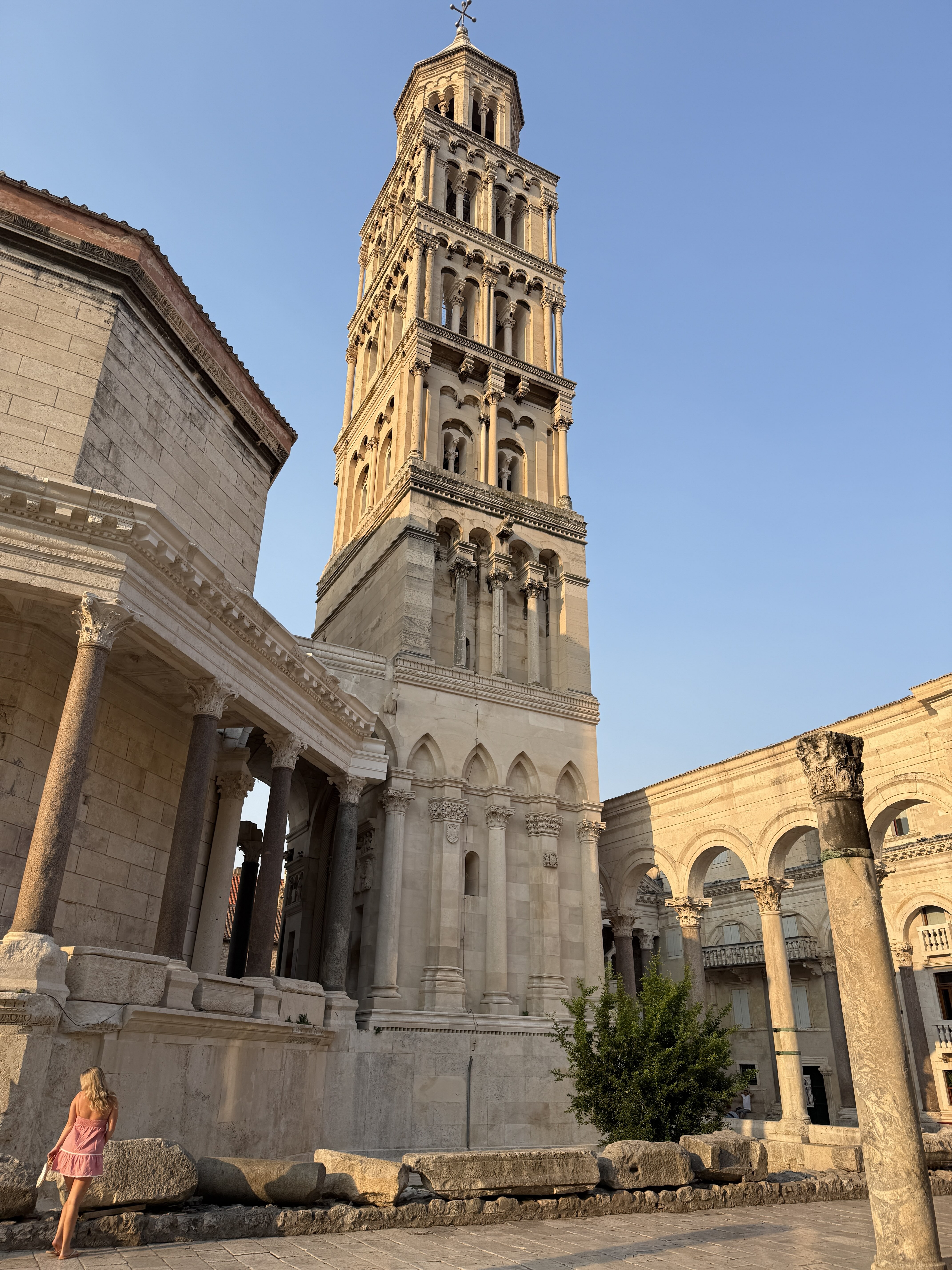
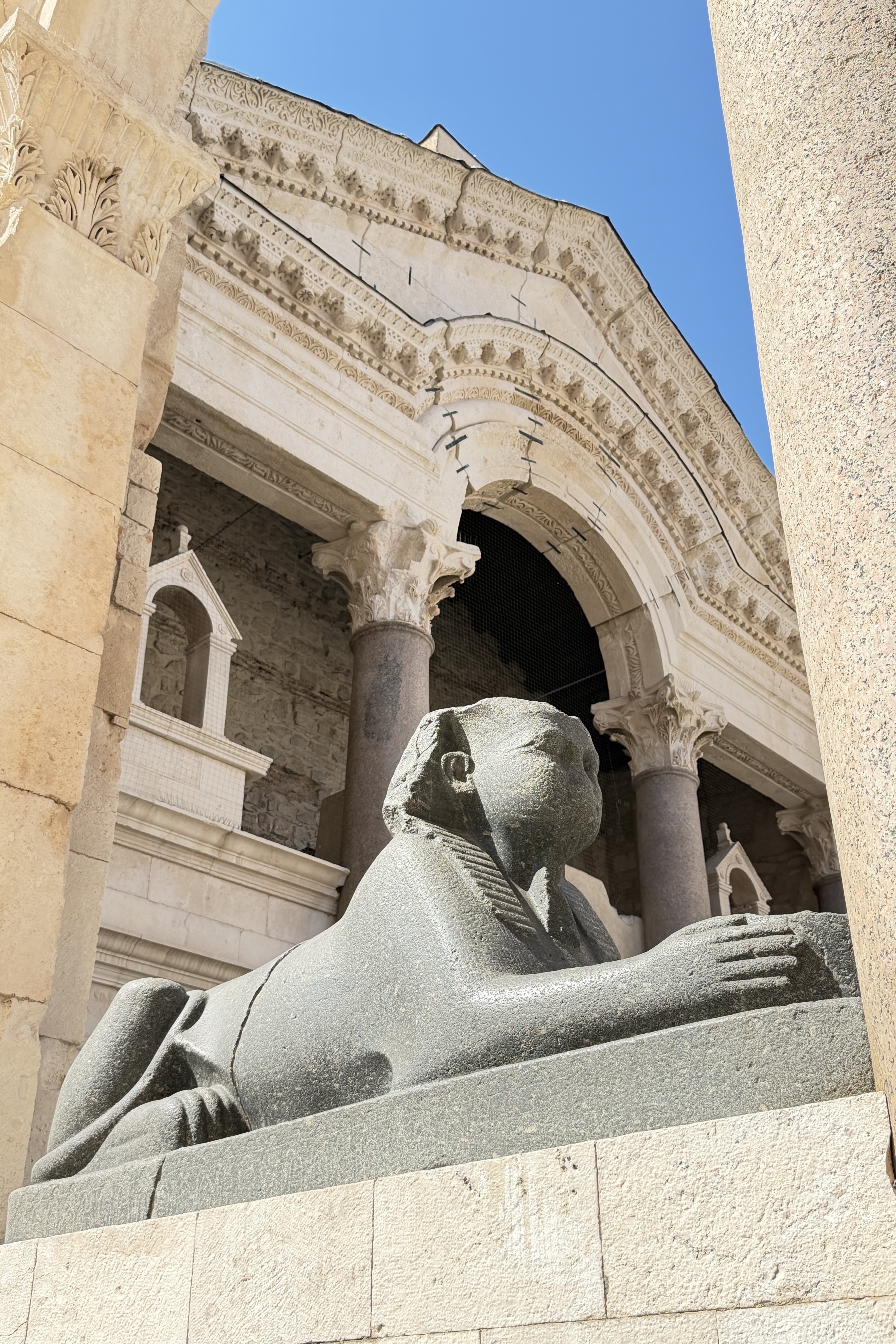
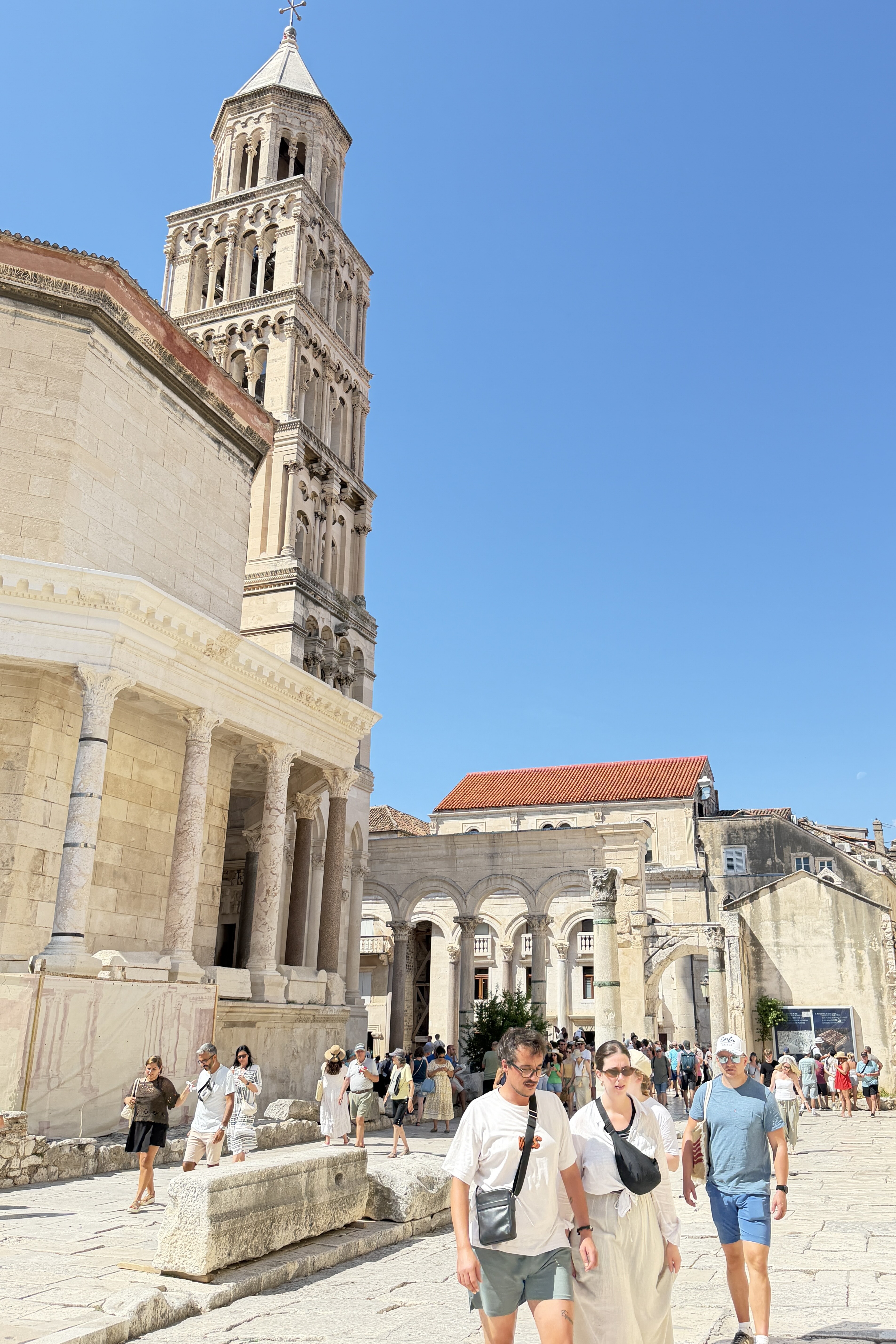
Instead of treating the palace as a sacred monument, those refugees turned it into their hometown. They repurposed imperial temples into churches, threw open the palace gates for trade, and constructed narrow, twisting medieval tenement buildings directly against the grand classical colonnades. Modern Split remains completely alive: laundry lines flutter between Roman pillars, artisan shops and konobas operate out of ancient guard chambers, and the original imperial cellars—which survived centuries purely because medieval residents used them as subterranean garbage pits—stand today as the most intact Roman residential basements on earth. Outside the palace walls are diverse neighborhoods with their own distinct culture, great beaches, and an immense variety of things to explore.
Split served as the ideal operational hub to round out our trip, combining rich local neighborhood life with straightforward spoke excursions by bus, ferry, and organized trail coaches to Krka National Park and Trogir.
Our Home Base: A Neighborhood Buffer Beyond the Palace Walls
Finding the right slow-travel base in Split requires choosing between immersion and tranquility. While staying directly inside the palace walls sounds romantic on paper, hauling rolling luggage across centuries-old, polished cobblestones through thick crowds of cruise passengers and late-night revelers is an endurance test.
We opted to base ourselves in a quiet, authentic residential neighborhood about a 15-minute walk outside the historic center. This choice gave us the best of both worlds: quick pedestrian access to the waterfront Riva and the ancient gates whenever we wanted them, paired with peaceful evenings, neighborhood grocers, and space to settle in.
Living outside the tourist core also provided options for better everyday value. Down along the palm-fringed Riva promenade, a small 0.33-liter draft beer commands €5—a reflection of the heavy cruise-ship markup. Just around the corner from our apartment, we stumbled upon The One-Eyed Pig, an easy going neighborhood pub where that same €5 bought a generous, chilled half-liter mug, surrounded entirely by local residents catching up after work. We also found a dedicated Croatian drugstore chain outside the city center where we could reasonably restock on personal hygiene items and travel-sized toiletries.
Our daily provisions came courtesy of Split’s lively Green Market (Pazar), sprawling along the eastern ramparts of Diocletian’s Palace. We spent unhurried mornings browsing the open-air stalls, loading up on fresh cucumbers, ripe tomatoes, local cheeses, and prepared turkey meatballs for easy lunches back at our flat.
Our connection to this neighborhood was cemented by our wonderful host and hostess. Because we were staying for a full week, our hostess reached out with an extraordinary gesture: her husband is an avid fisherman, and since he had just come in with fresh catch, she asked if she could prepare a home-cooked fish dinner for us. We were thrilled. That afternoon, she brought up a late lunch of fresh, perfectly grilled Adriatic fish paired with tender seasoned vegetables. The meal was sensational, but the hospitality was unforgettable. How often do you get locals welcoming you into their world by cooking for you outside a restaurant? It was a generous, heartwarming exchange that grounded our stay in genuine Dalmatian warmth.
Our Split Experience: The Day-to-Day
The Working Flow, Marjan Trails & Roman Wanders
Our daily rhythm in Split settled into a productive and active balance. Mornings were anchored at our apartment, with me managing project deliverables, while Tom drafted our UK travel guides and organized our evolving video logs.
When we closed our laptops, we explored the city together. Our most active urban outing was a self-guided trek up Marjan Hill, the steep, pine-cloaked peninsula jutting into the Adriatic directly west of the Old Town. We plotted our route through the quiet stone lanes of the Varoš neighborhood to reach the base of the hill, ascending via a mix of shaded stone staircases and packed gravel trails.
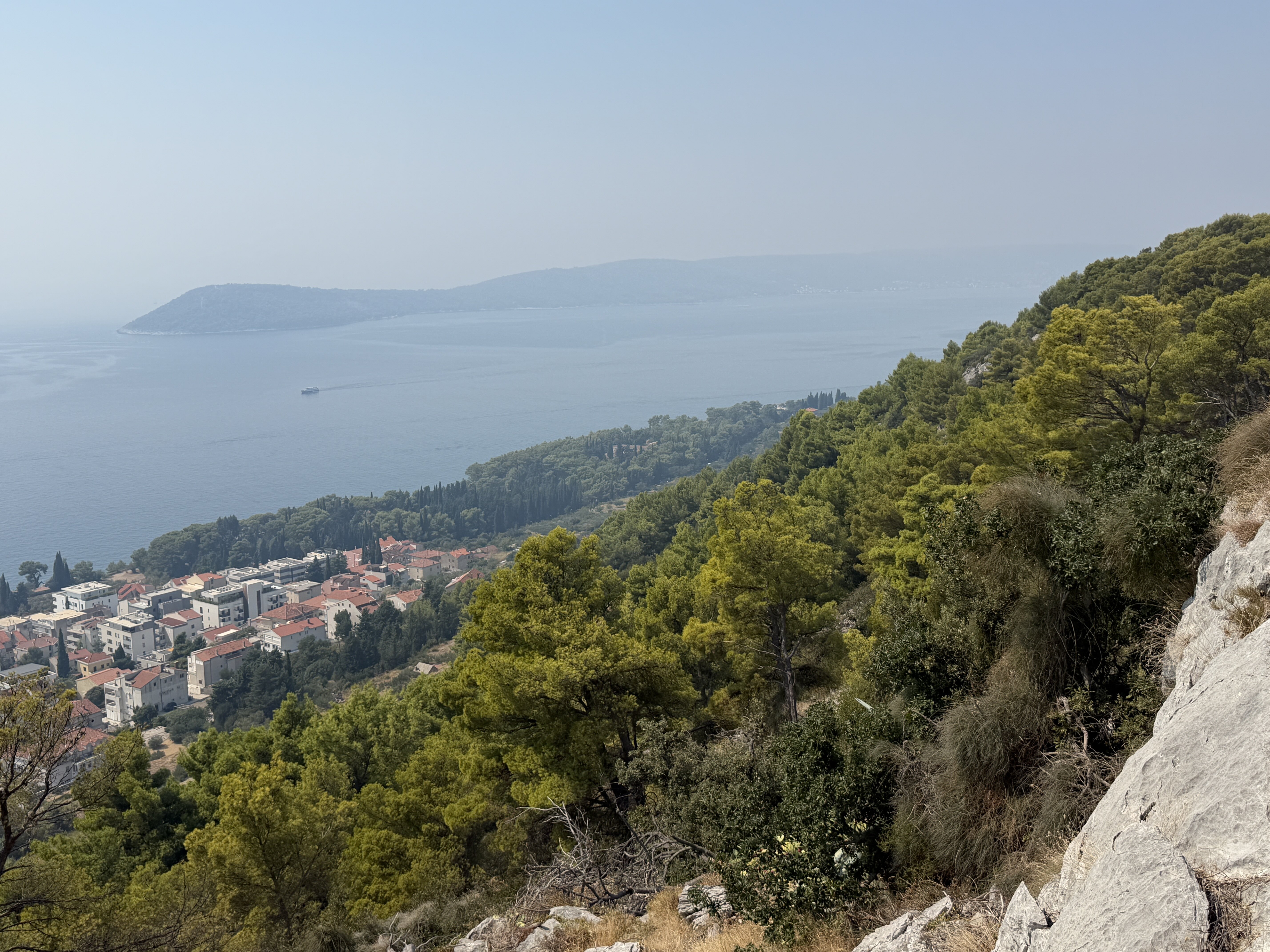
Our first rest stop was the tiny, charming 13th-century Church of St. Nicholas, which features a welcomed fresh-water refill station. Continuing upward through the park brought us past the botanical garden and up to the main summit observation point. Wildfires burning across the interior borders of Serbia and Bosnia that week had cast a thick, fragrant haze of woodsmoke across the horizon, partially obscuring the distant islands. Even with the muted visibility and 92-degree heat, the hike was thoroughly rewarding. The fragrant Aleppo pine groves, dry sea air, and towering Agave americana cacti—their massive leaves thick and leathery from the summer heat, with wild red-berried specimens sprouting along the rocky verges—gave the entire hillside a distinct Mediterranean character.
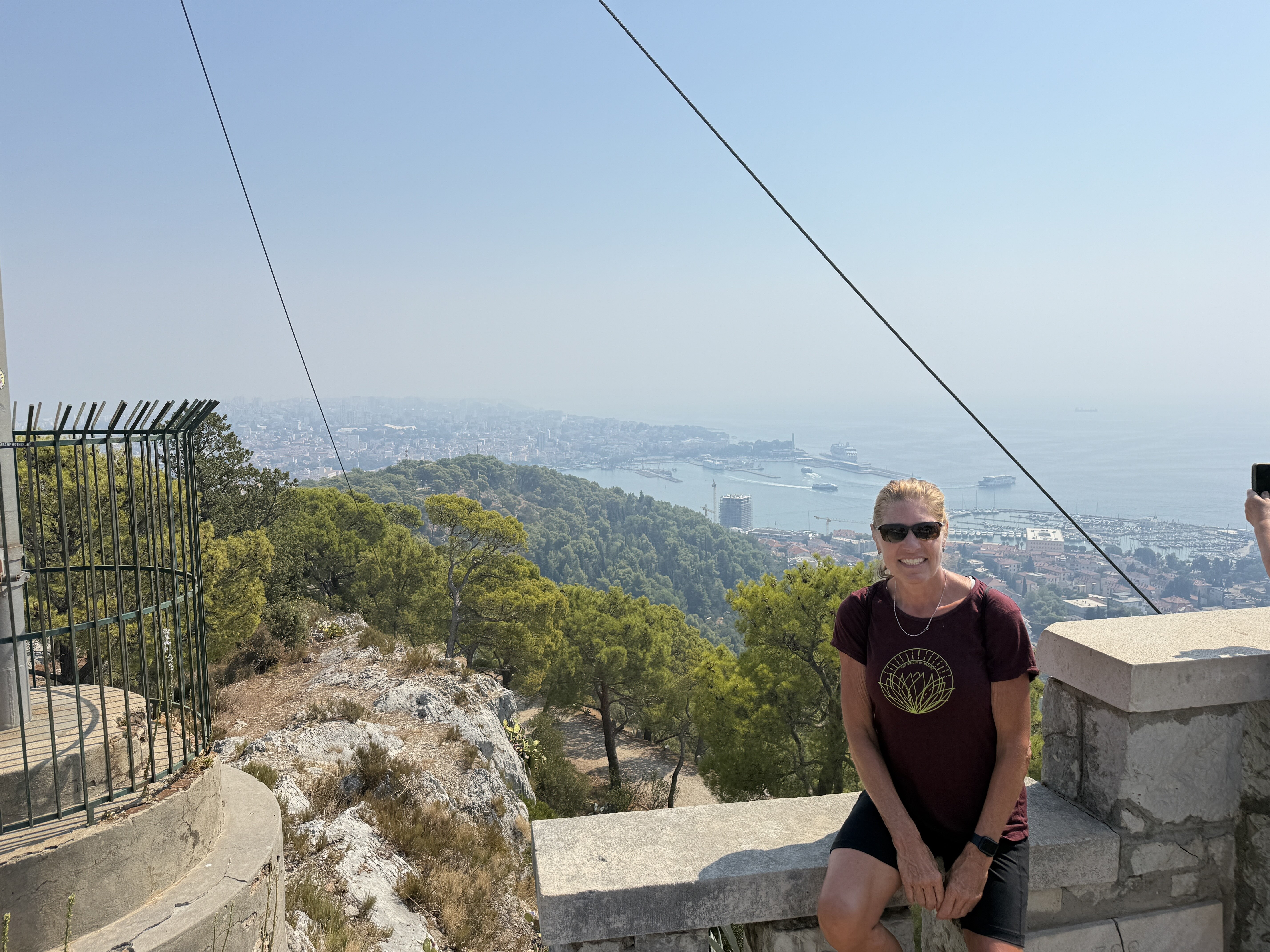
On our descent, we explored the historic Varoš district. Originally settled in the 17th century by peasant fishermen and farmhands, its quiet, stone-walled lanes offered an interesting glimpse into residential life away from commercial shopfronts. From there, we wound our way back into the labyrinth of Diocletian’s Palace, intentionally taking side alleys, we had yet to walk, ducking under stone archways, and tracing the ancient perimeter.
Toward the tail end of our week, Tom caught a persistent late-summer head cold. Slow travel gives you the grace to pause without guilt. We downshifted: resting in the apartment, preparing comforting home-cooked meals, catching up on reading, and playing rounds of Wingspan at the kitchen table to let him recover before packing our bags for our departure. When transit day arrived, we booked a Bolt ride to Split Airport for an easy €26—a welcome savings compared to the €40 flat rate quoted by traditional airport taxis.
Discovering the Palace with Ivan
To truly understand the puzzle of Diocletian’s Palace, we joined an exceptional two-hour historic walking tour through GuruWalk. Our group of sixteen was led by Ivan, a local high school history teacher whose depth of knowledge, wit, and educational pacing made this one of our top guided tours of the entire summer.
Ivan brought the stones to life, showing us how to read the city’s architectural timeline. The original Roman layout remains visible in the wide, straight axes built wide enough for ten soldiers with arms outstretched, aligned precisely along cardinal north-south and east-west axes. Conversely, the moment you step off those main arteries, the streets become tight, crooked, and maze-like—the signature imprint of medieval refugees who built tight, defensible lanes for safety.
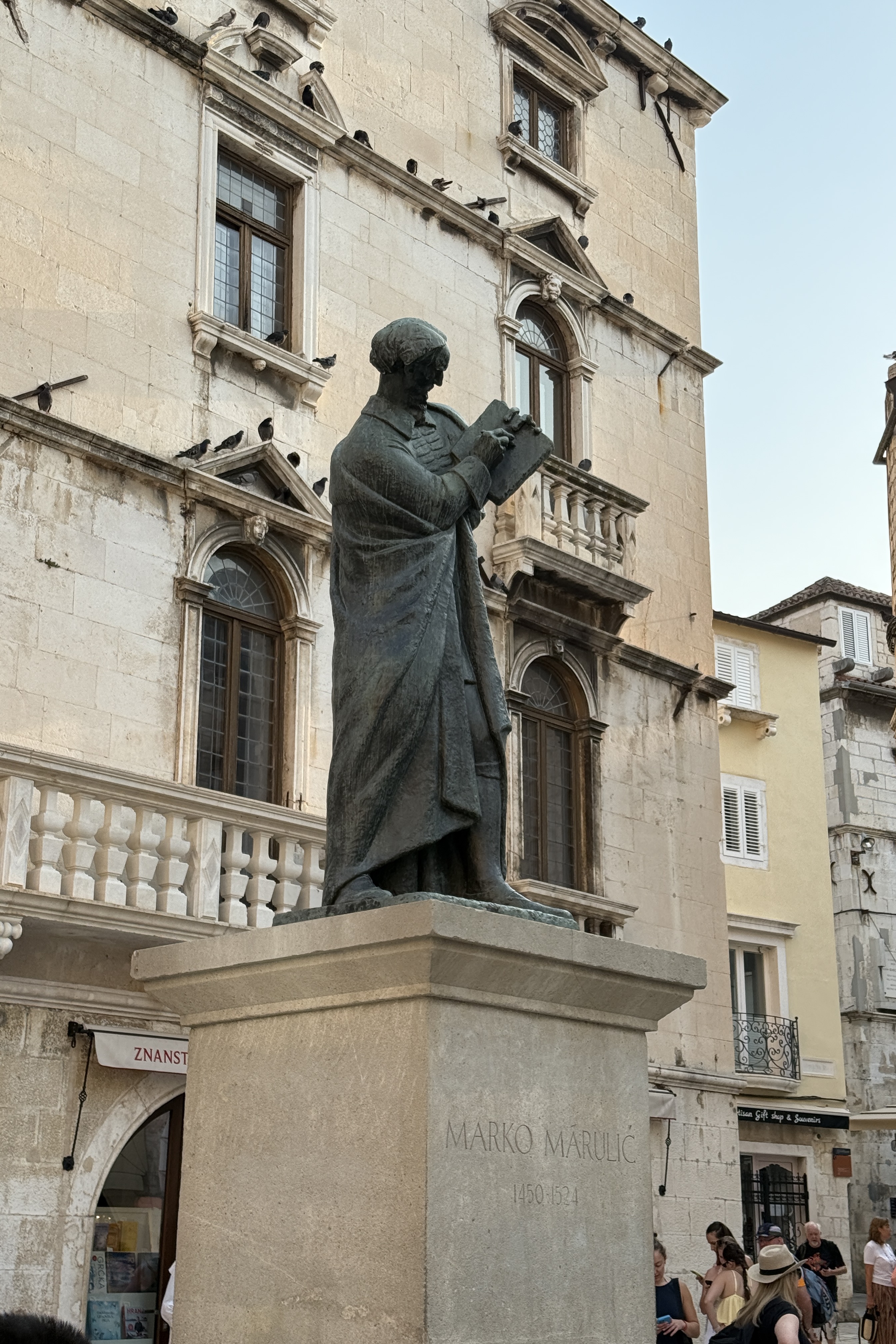
Standing outside the towering exterior walls, Ivan pointed out the foundational self-portrait embedded in the public square. Outside the palace gates stands the grand statue of Marko Marulić, the celebrated 15th-century poet and humanist. When the modern sculptor was commissioned to cast the monument, he realized no historical likeness of Marulić actually existed. Coming from the same hometown, the artist simply reasoned, "Well, he was from here, so he probably looked a lot like me," and cast the statue as an intentional self-portrait!
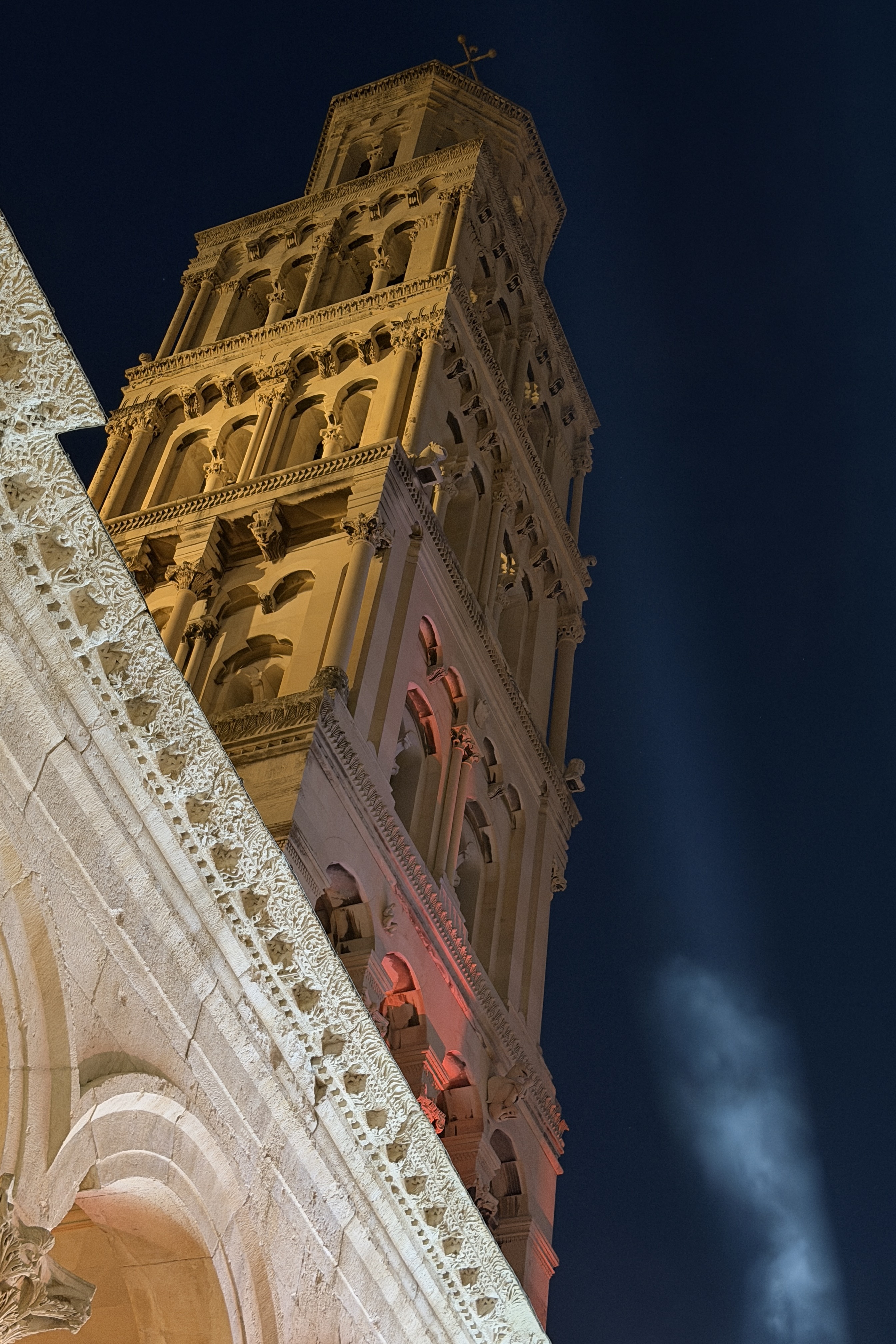
Ivan also walked us through the palace’s dark irony. Diocletian was infamous as one of history's fiercest persecutors of early Christians. Yet just three centuries after his death, Christian refugees transformed his lavish imperial mausoleum into the Cathedral of Saint Domnius—tossing the emperor’s sarcophagus and bones out entirely and dedicating the altar to one of the very Christian martyrs Diocletian had executed. It stands today as one of the oldest, smallest cathedrals in the world.
He also shared fascinating insights into modern Croatian culture, noting how historical occupations—from the Venetians and French to Tito’s communist regime—cultivated a deep, enduring skepticism toward government authority. In Croatia, avoiding taxes and slowing down public work is practically treated as an art form.
Essential slow-travel footing note: The stone walkways throughout Diocletian’s Palace are polished to a glass-like finish from 1,700 years of footsteps. They are shockingly slippery even when completely dry, and treacherous after a light drizzle; shoes with reliable, high-traction tread are essential for exploring the Old Town comfortably.
Cultivating Connections: The Peristyle Under the Stars
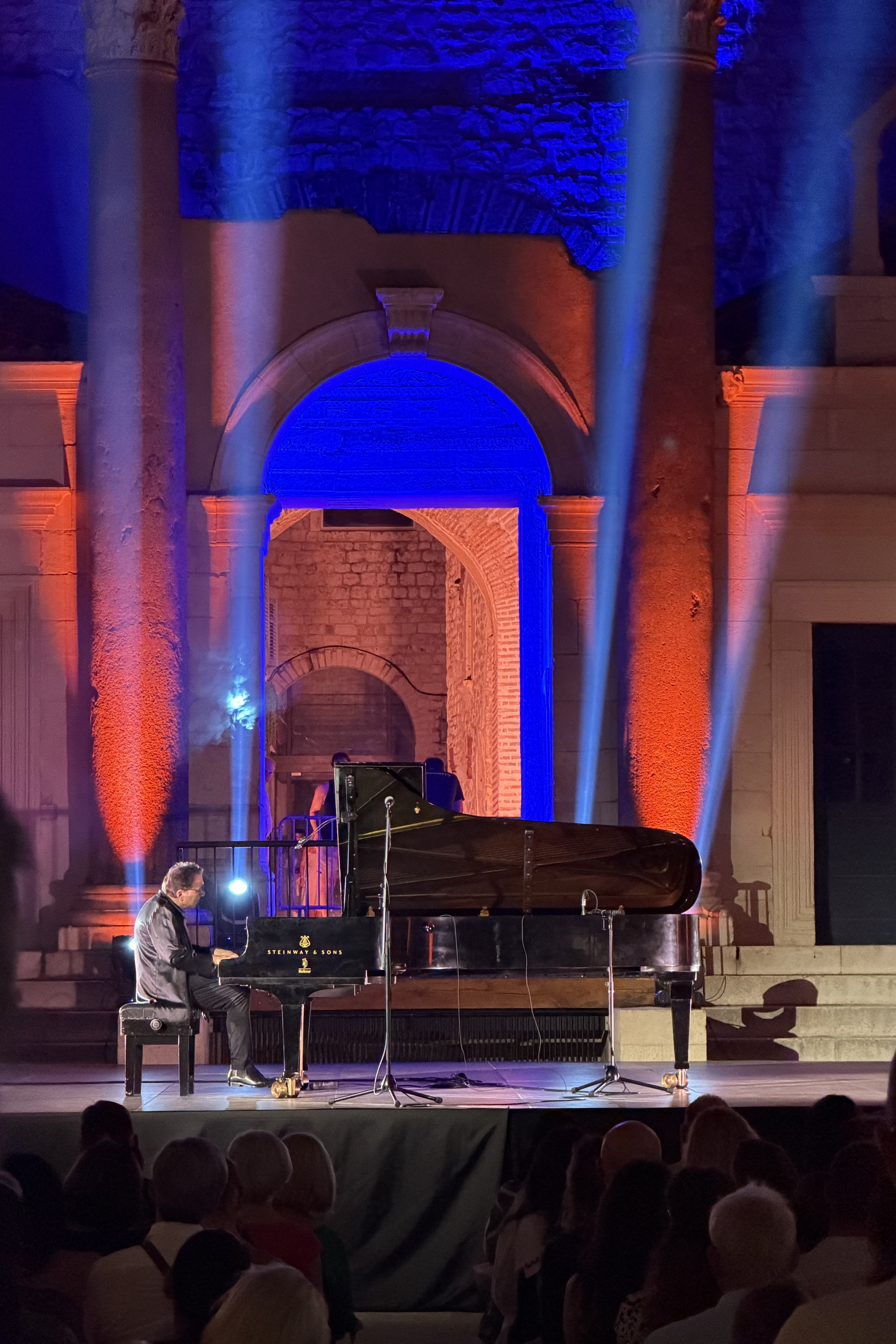
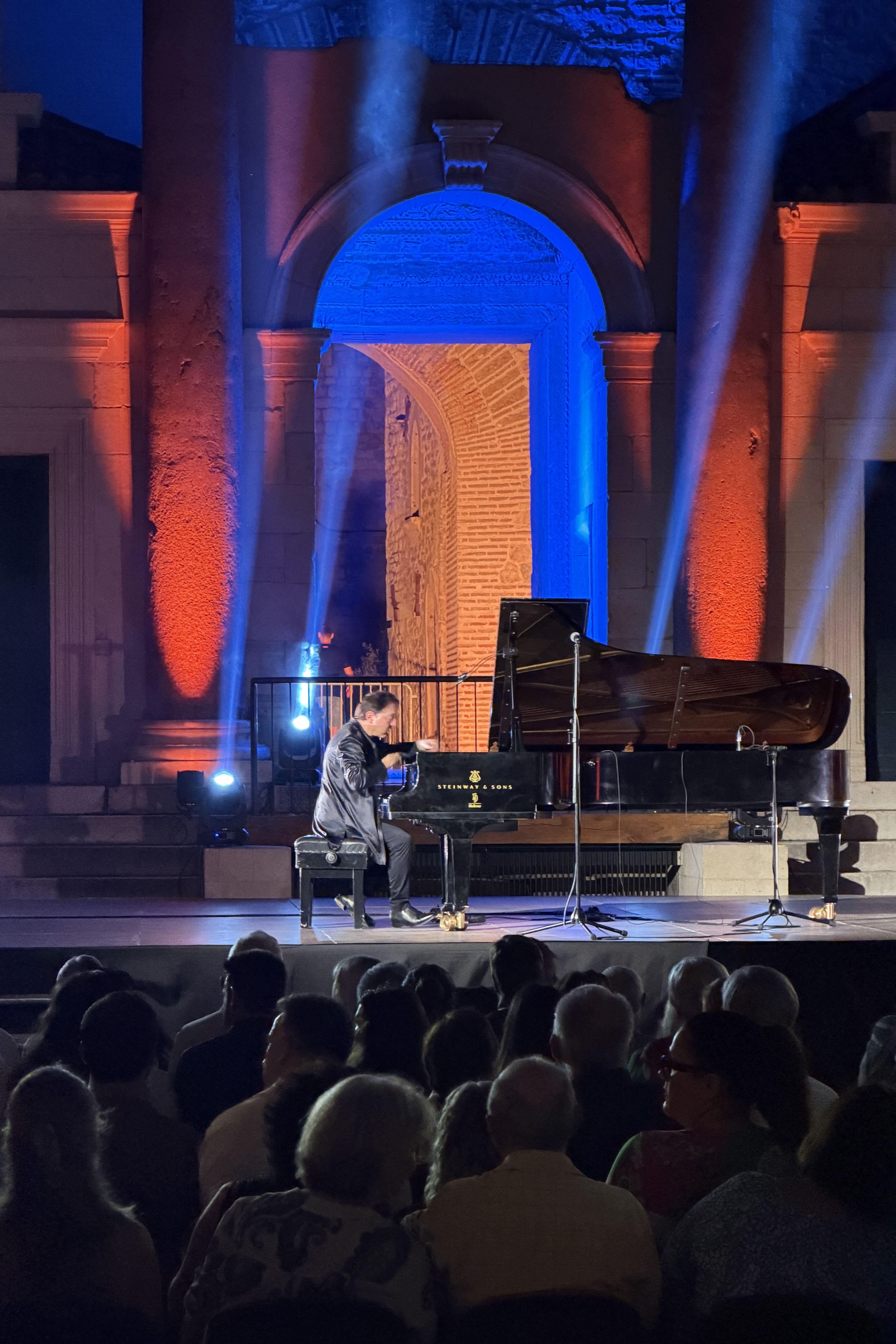
Our peak cultural memory in Split was pure serendipity. As part of the annual Split Cultural Summer Festival, the central Peristyle—the imperial ceremonial courtyard at the heart of the palace—was converted into an open-air concert venue.
We secured tickets for an evening solo piano recital by the internationally acclaimed Turkish pianist and composer Fazil Say. Settling into our chairs under the 80-degree night sky, the atmosphere was breathtaking. Ancient Corinthian columns towered above us, framing the dark sky, while the red granite sphinx brought from Egypt by Diocletian sat silently nearby.
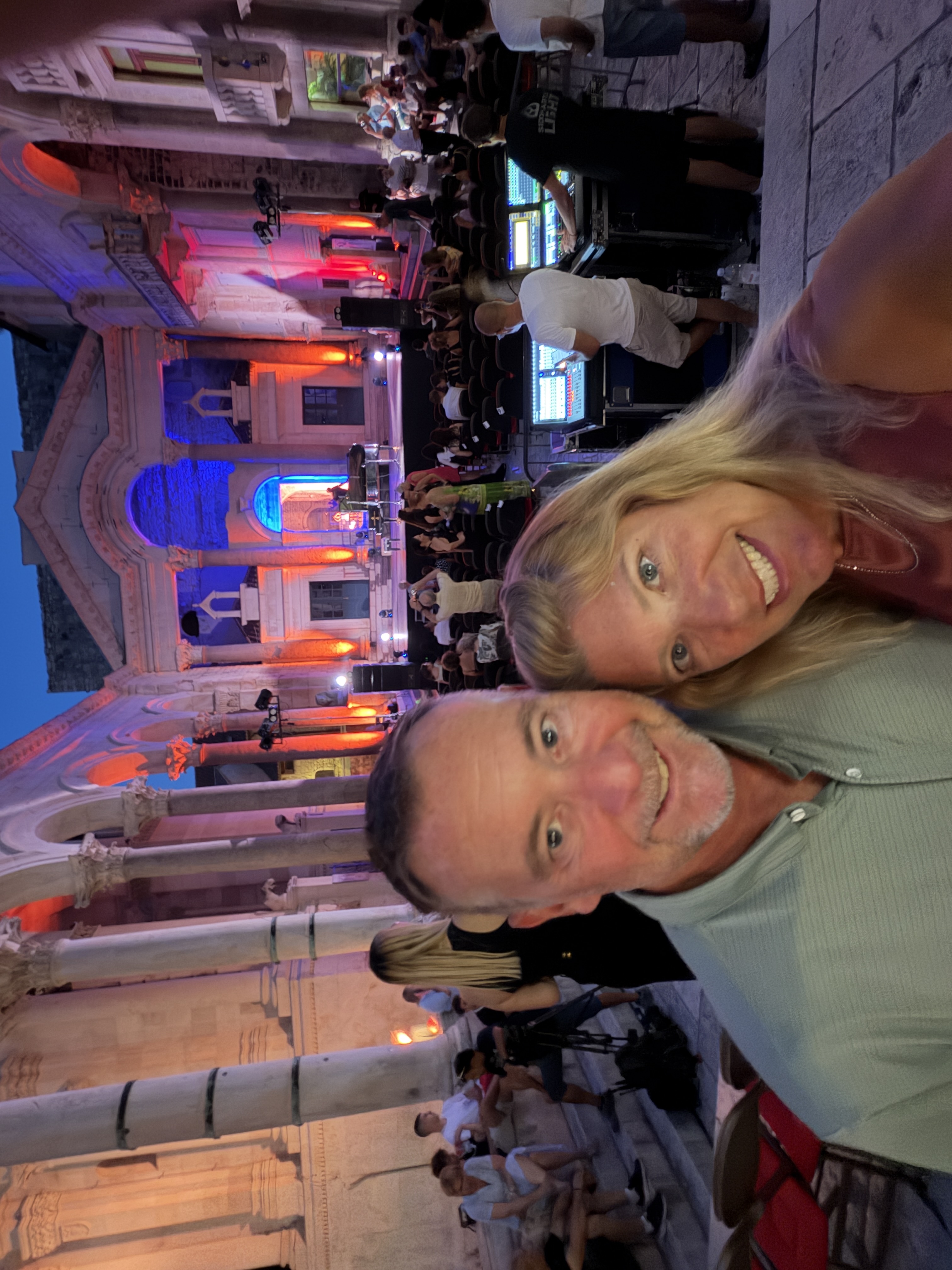
When Fazil Say took the bench, his performance was mesmerizing—passionate, dynamic, and technically brilliant. The classical acoustics against the Roman stone arches were stunning, sending literal shivers down our spines. While we still held a special place in our hearts for the raw intimacy of our flamenco evening in Malaga and the symphonic richness of the Zagreb Philharmonic in Dubrovnik, the sheer historic drama of listening to a world-class pianist perform inside a Roman emperor’s private courtyard made this one of the most visually stunning cultural experiences of our travels.
Day Trips: Escapes from the Hub
Because Split is Central Dalmatia’s primary transit nexus, it makes an exceptional springboard for day trips. We took two dedicated excursions that showcased the region’s diverse natural landscapes and medieval maritime heritage:
Day Trip 1: Trogir & The Best Stuffed Peppers in Croatia (Our Top Pick)
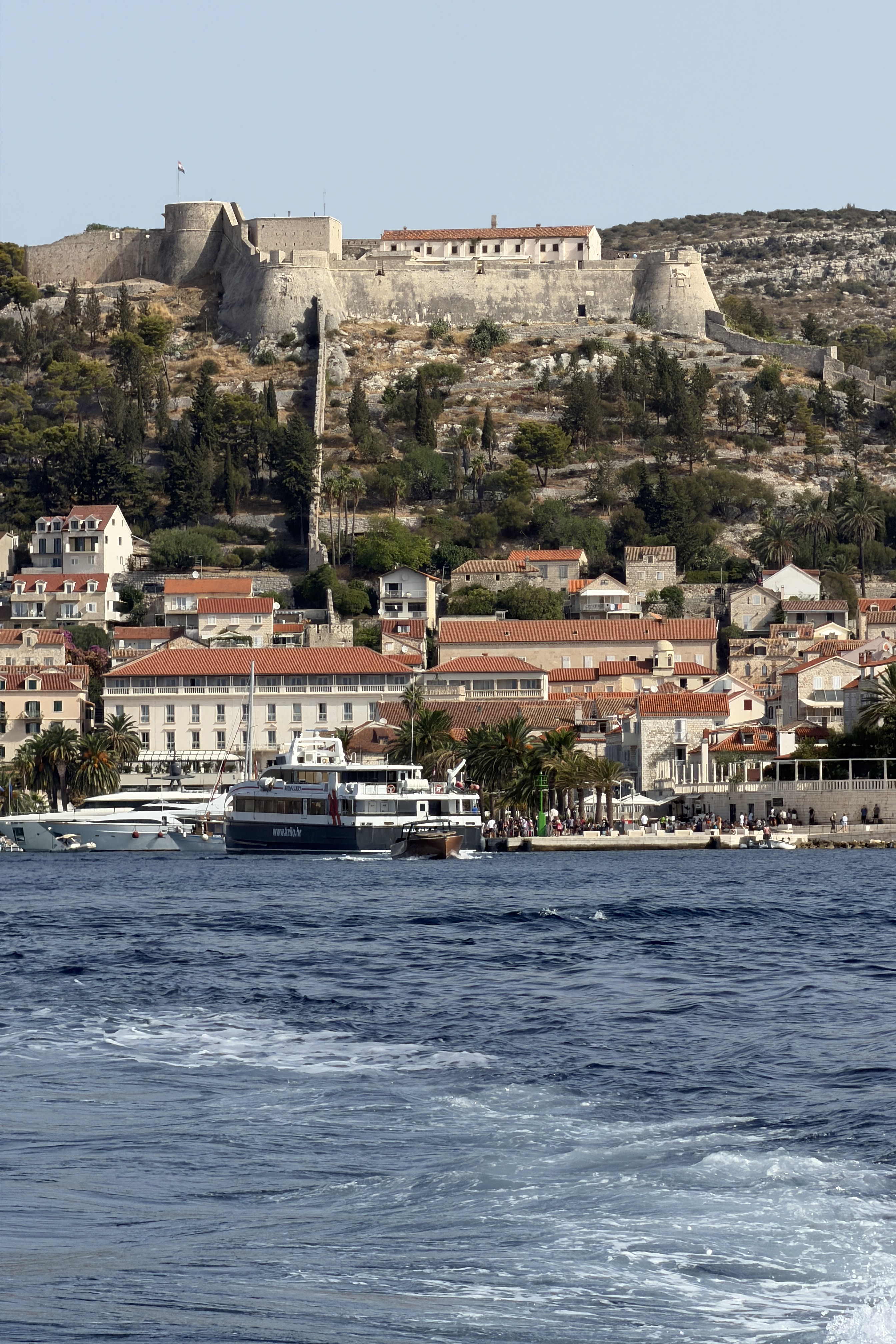
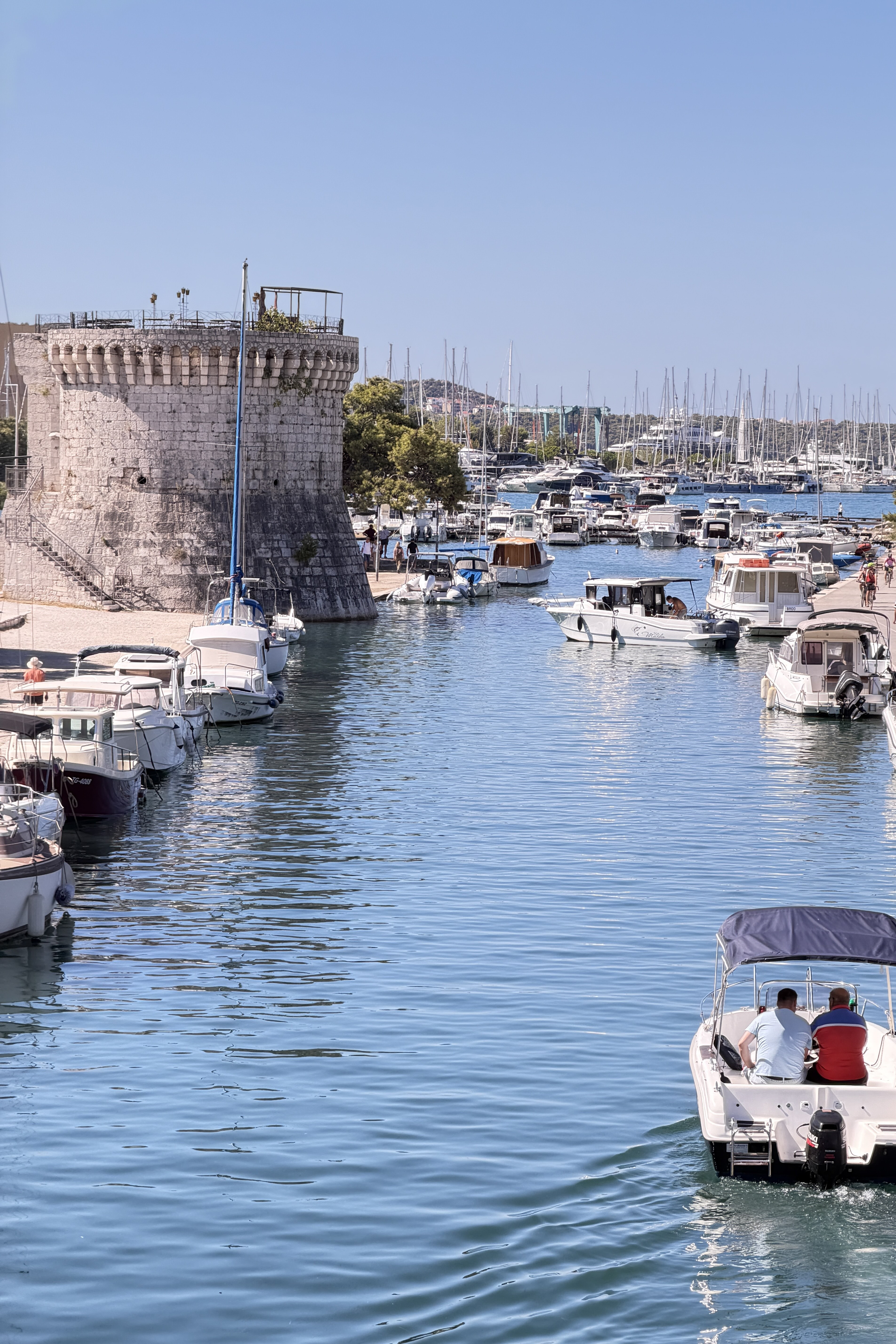
- The Journey & Logistics: We made a loop out of the logistics. At 9:30 AM, we boarded the local Bura Line passenger ferry from Split harbor for a scenic, relaxed one-hour cruise across the bay to Trogir. The boat ride provided wonderful coastal views and a chance to chat with a lovely couple visiting from Reading, Massachusetts. For the return leg later that afternoon, we took a local express coach (FlixBus) from Trogir’s bus station, which breezed along the coastal highway and returned us directly to Split’s ferry port in just 36 minutes.
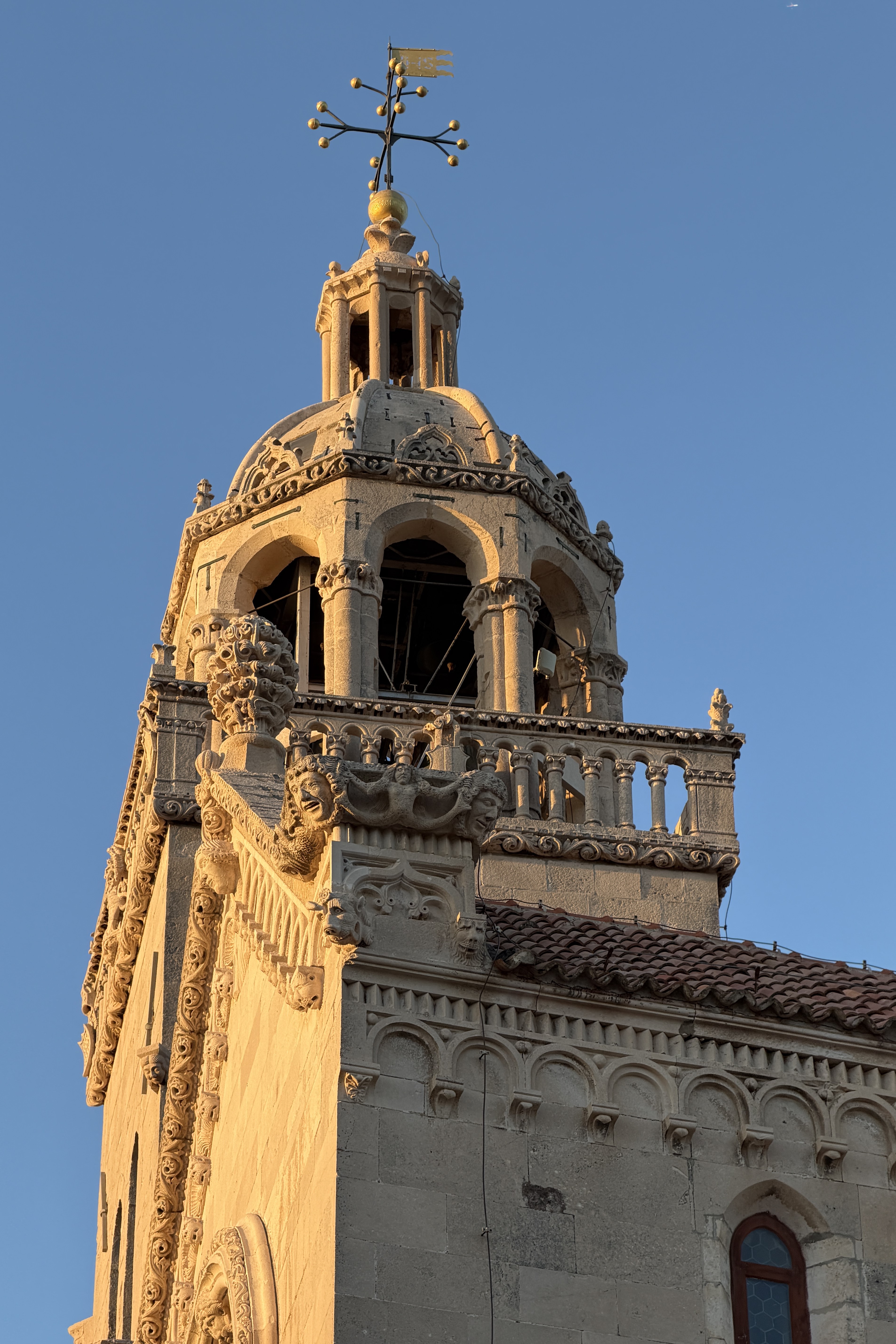
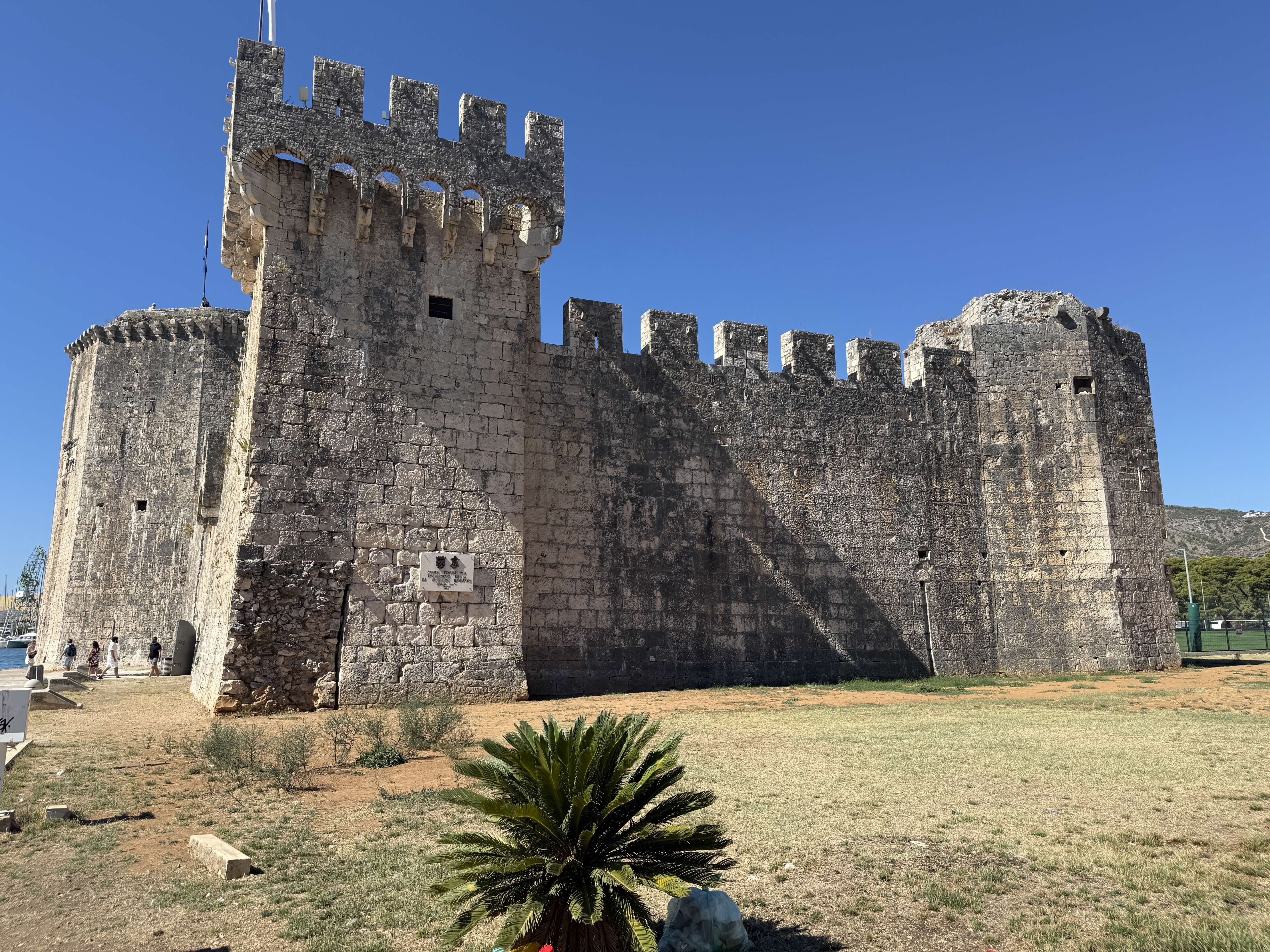
- The Experience & Medieval Charm: Trogir is a postcard-perfect medieval gem. Situated on a tiny, fortified island linked to the mainland by stone bridges, the entire historic core is a designated UNESCO World Heritage site. We meandered along the wide, yacht-lined waterfront promenade and traced narrow, sun-dappled alleys lined with stone archways, residential courtyards, and artisan boutiques. Trogir boasts almost as many hidden restaurants as it does residential buildings. At the central square, theVenetian clock tower, open loggia, and the Cathedral of St. Lawrence provide an impressive architectural backdrop. I found a boutique dress shop holding a 50% clearance sale, snagging a gorgeous, silky spaghetti-strap maxi dress that will be perfect for our Mexico resort stay. We also hunted down a traditional sweet specialty: Rafiola, delicate crescent-shaped pastries crafted from crushed almond flour pastry and stuffed with rich chocolate-hazelnut and pistachio creams.
- A Standout Culinary Find at Don Dino: We ducked into the shaded courtyard of Don Dino Casa, a celebrated local institution where reservations are usually mandatory. We secured an open table and ordered a chilled bottle of the Babić from Testament Winery—the exact indigenous red label we had fallen in love with back in Dubrovnik. We originally intended to have a glass of wine and head out for gelato, but the table beside us was served an entree that smelled so incredible we immediately changed our plans. We ordered the house specialty: traditional Dalmatian stuffed peppers (filana paprika), packed with a savory, perfectly spiced blend of minced beef and pork, simmered in a light, sweet-savory tomato broth, and served alongside velvety mashed potatoes. The rich, comforting flavors of the peppers paired with the bright, scrub-herb acidity of the Babić was an absolute match. It was easily one of the best dishes we enjoyed in Croatia, earning an immediate nomination for our Touchpoint Tally Awards. We rounded off the afternoon by returning to the patisserie for dual-scoop gelato (chocolate, cookie dough, and wild berry) before catching our coach home.
Day Trip 2: Krka National Park & The Skradinski Buk Boardwalks
- The Journey & Logistics: We booked a day excursion through Booker, meeting outside the Marko Marulić statue in Split for a comfortable one-hour coach drive north into the Dalmatian hinterland. Our guide gave us an excellent historical overview of inland Dalmatia along the drive, dropping us off at the park's primary entrance.
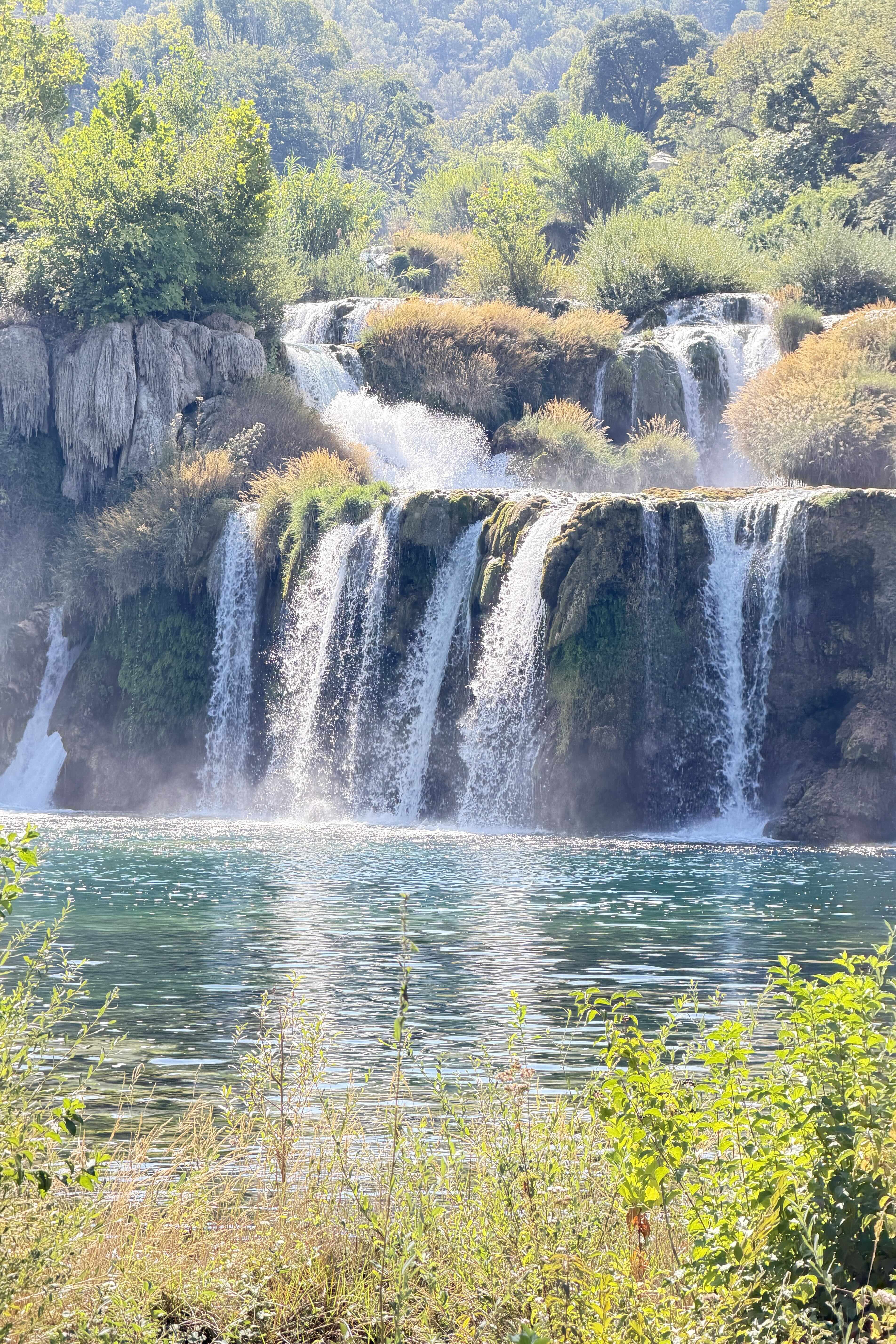
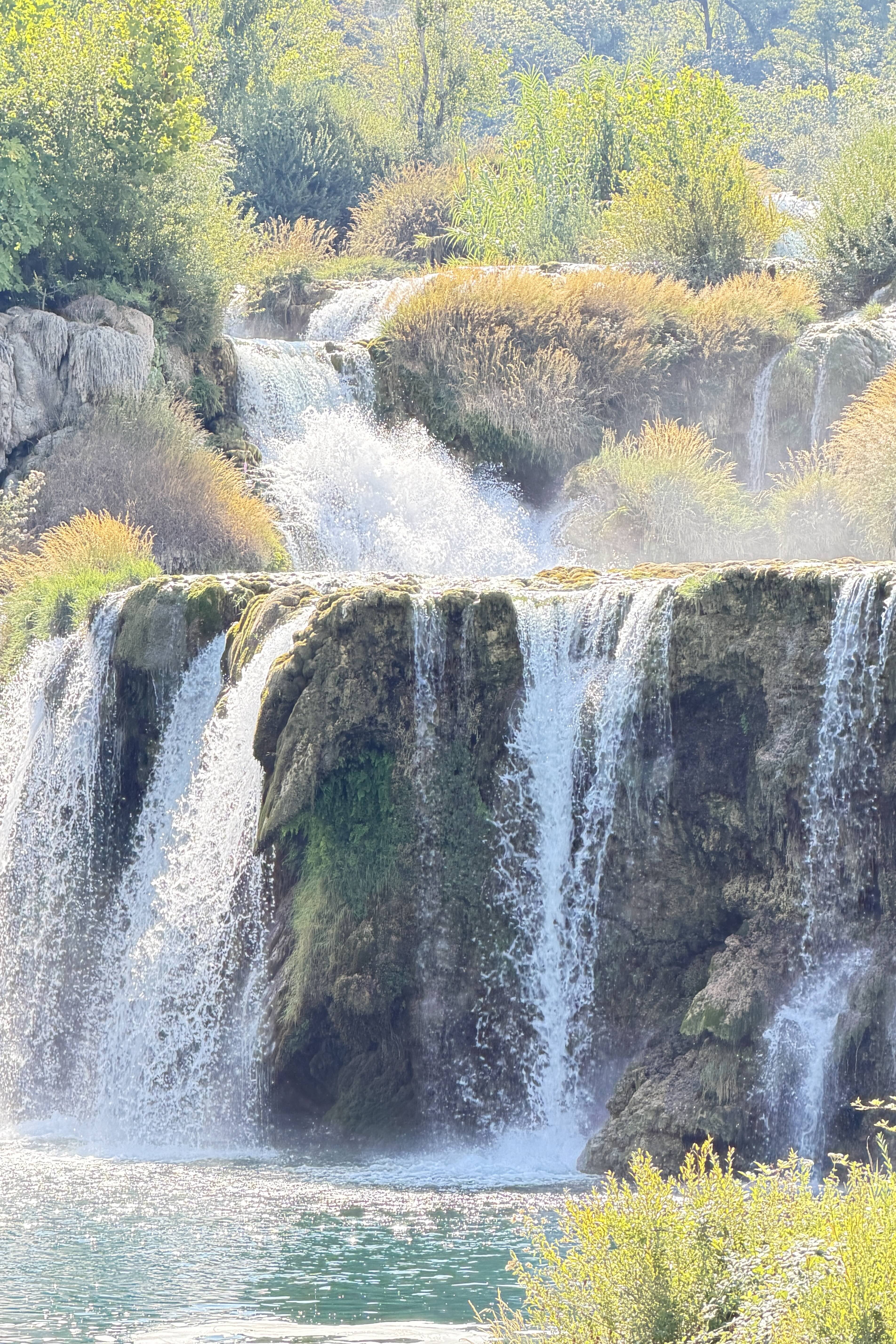
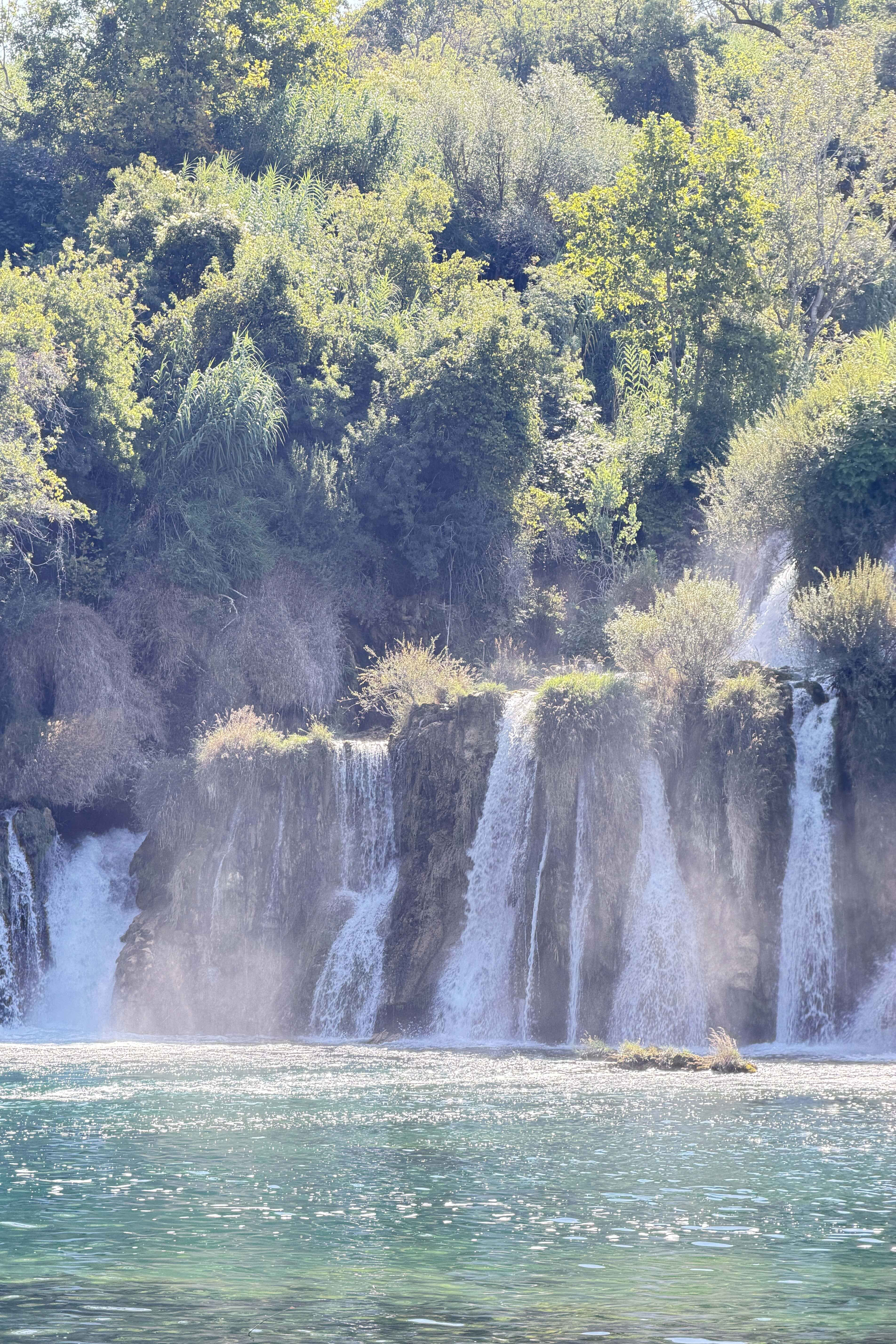
- The Trail & The Waterfalls: Krka is renowned for its series of seven dramatic travertine waterfall cascades formed along the Krka River. The primary visitor experience at Skradinski Buk is a peaceful, circular trail built almost entirely onto elevated wooden boardwalks suspended directly over the emerald water, reed beds, and rushing streams. The full loop takes an easy 30 to 35 minutes to walk at a casual pace. We walked down to the thundering base of the main falls, spent time soaking in the misty breeze, and then reversed our path back along the wooden boardwalk to admire the smaller cascades and historical 19th-century hydro-mill. Standing on the lower viewing bridge looking up at the immense, churning wall of water sparked fond travel conversations about other great waterfalls we’ve explored—from Yosemite and Niagara to the rugged cascades of Morocco’s Atlas Mountains and Switzerland’s Lauterbrunnen Valley.
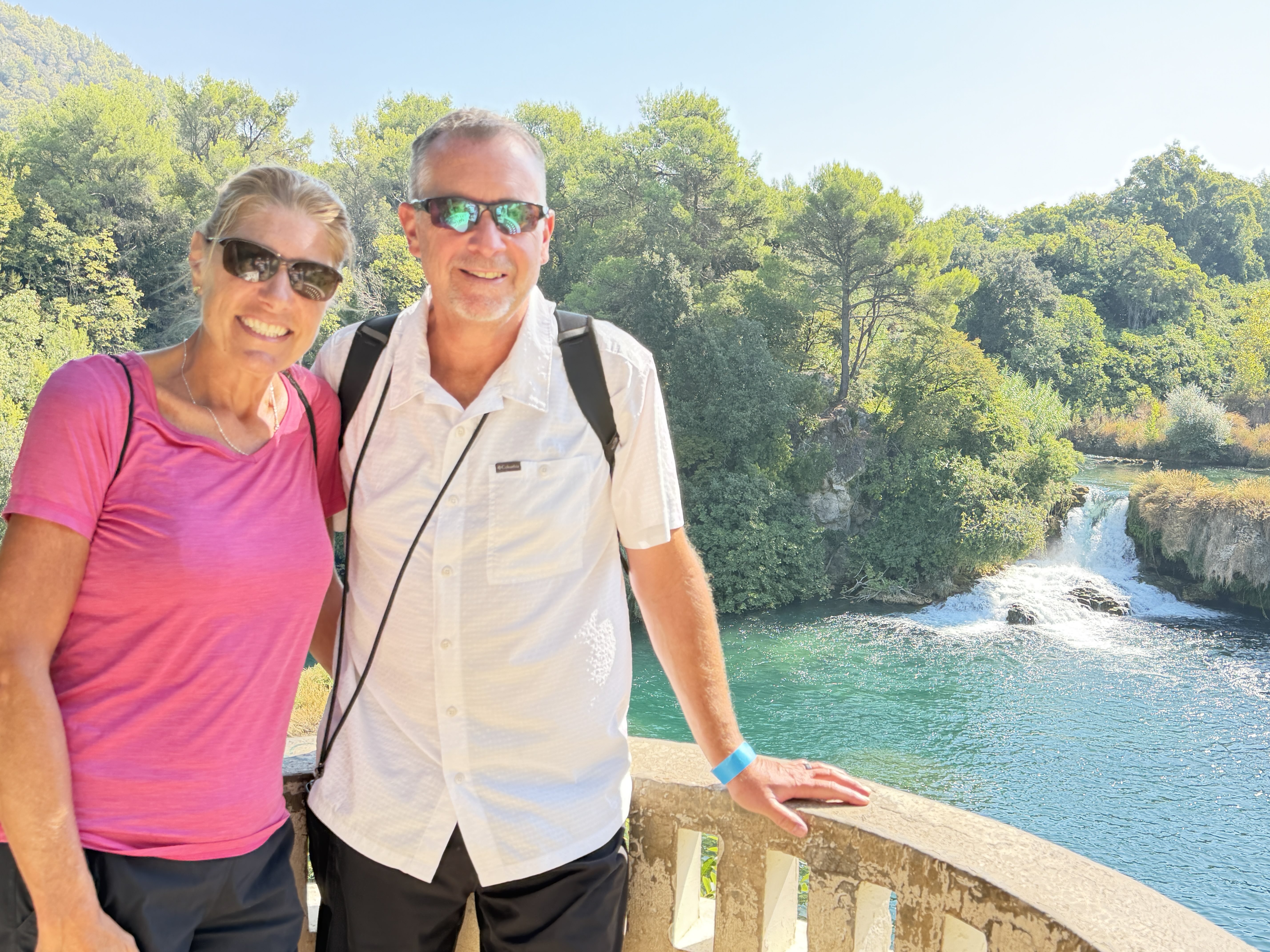
- Practical Realities & Tips: Even in early September, the afternoon heat reached 92 degrees. Fortunately, large portions of the boardwalk trail are shaded by lush river woodlands. The trail is exceptionally accessible and flat—I wore my sturdy walking sandals, Tom wore his reliable Tevas, and light footwear is all you need. Crucial planning tip: The public restrooms and fresh water refill stations near the upper trail entrance are completely free, whereas the facilities located down near the commercial restaurant area require a €2 cash fee. We packed our own picnic lunch to enjoy under the trees, dodging the overpriced fast-food kiosks at the base. While swimming directly under the falls has been banned to preserve the delicate travertine ecosystem, walking the boardwalk loop remainsa refreshing, scenic day away from coastal stone.
Reflections on the Journey
What We Loved Most
Split gave us the feeling of living inside a living, breathing historical artifact. Wandering the narrow alleyways inside Diocletian's Palace at dusk, shopping alongside locals at the Green Market, and watching Fazil Say perform classical piano under Roman arches were lasting highlights. Beyond the palace, our ferry day trip to Trogir—crowned by that unforgettable plate of stuffed peppers and Testament Babić at Don Dino—was one of the finest culinary excursions of our entire season. Most of all, our hosts cooking us that fresh grilled fish lunch reminded us why we travel slow: genuine human connection turns a foreign destination into a home.
Practical Realities / The Honest Truth
Honestly, very little chafed during our week in Split—it was a remarkably easy, welcoming place to anchor. The few minor frictions were simply physical and environmental realities. The 1,700-year-old Roman stone walkways are polished to a literal mirror finish and are deceptively slick even when bone dry, meaning you constantly have to watch your footing. Midday cruise crowds can also pack the central palace arteries, though living 15 minutes out easily insulated us from the rush. Lastly, late-summer wildfire smoke drifting in from the interior hinterlands brought a hazy, woodsmoke sky that softened the panoramic views from Marjan Hill, proving that Mediterranean heatwaves always bring unpredictable natural elements.
Tom vs. Danielle: A Tale of Two Perspectives
- Tom’s Take: "Split’s unique urban layout won me over. To have an entire city functioning inside the skeleton of an imperial Roman palace is unlike anything else in the world. Walking up Marjan Hill through the pine forests was a great active outlet, even with the smoke haze, and our apartment with an amazing view, gave us the exact local respite we needed away from tourist crowds. Trogir was an absolute highlight—an easy, beautiful day trip that felt completely intact."
- Danielle’s Take: "Split provided the perfect, layered conclusion to our month in Croatia.While Dubrovnik offered monumental drama and Korčula gave us intimate wine romance, Split offered authentic culture and living history. Listening to classical piano echo off Roman Corinthian columns in the Peristyle gave me literal goosebumps. Pairing that with our host's incredible home-cooked grilled fish lunch, the rich culinary discoveries in Trogir, and our daily neighborhood routines solidified Central Dalmatia as a deeply special chapter in our slow-travel journey."
Links: Dubrovnik Trip Report | Hvar Trip Report | Korčula Trip Report | Croatian Wine Guide | Croatian Planning Guide | More Trip Reports
Up Next: Antalya Turkiye
Welcome to the new Touchpoint Wines
We’re blending our passion for wine with a love for global exploration. Join us as we journey through the world's most captivating destinations, uncovering hidden wine gems and offering unique workshop experiences for your team retreats. Whether you're seeking to enhance team dynamics or discover the art of slow travel, let us be your guide.