At a Glance
- Duration: 5 Days (Late August 2026)
- Home Base: Hillside second-floor apartment overlooking the beach cove, coastal promenade, and open sea just steps from Korčula OldTown.
- Top Day Trip / Excursion: Independent bus and vineyard crawl through Lumbarda’s sand-dune vineyards, followed by an inland terroir trek to Žrnovo.
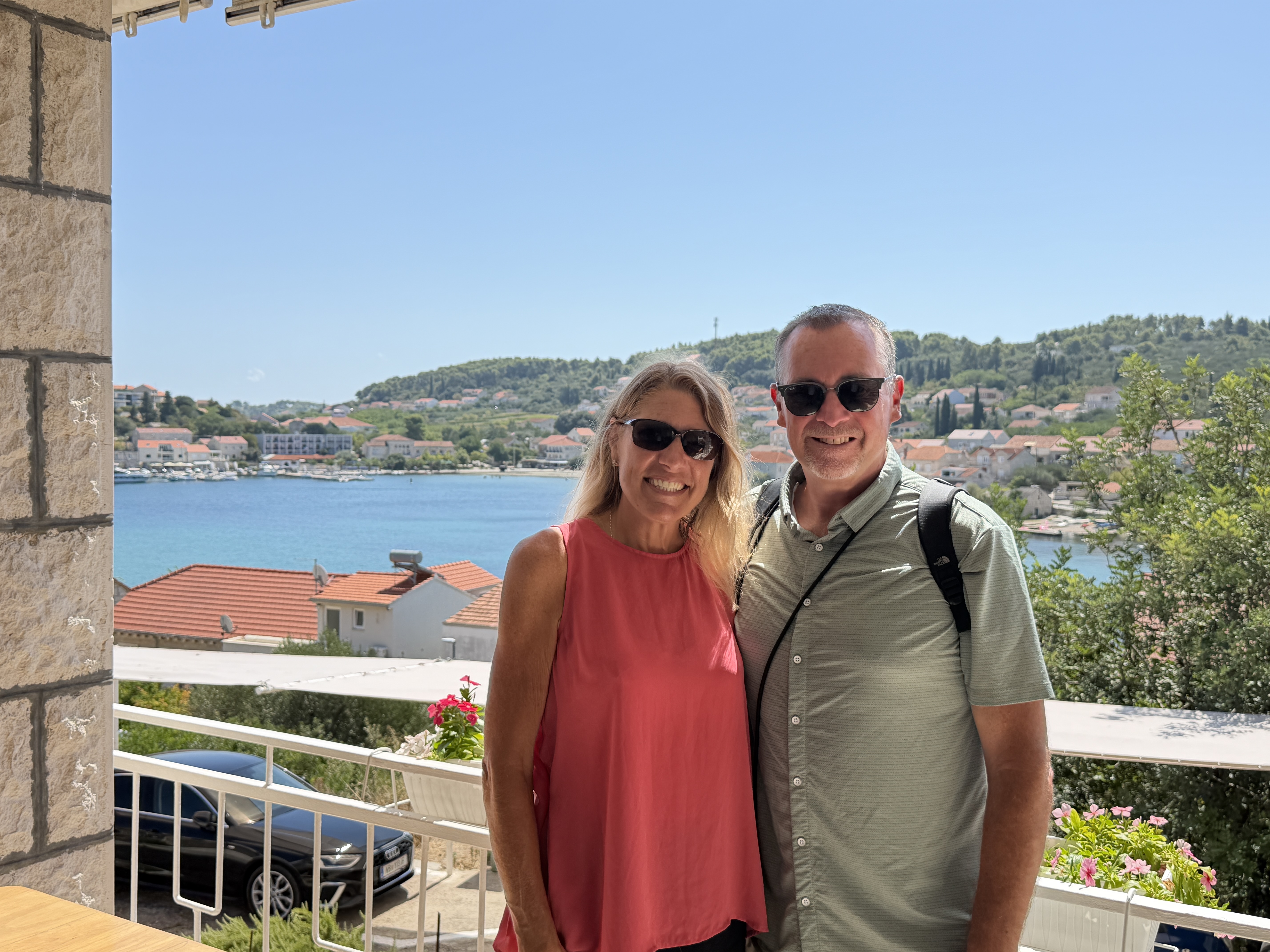
- Memorable Moment: Sitting on our private terrace at sunset with a glass of crisp local white, watching families swim in the beach right below us while catamarans, sailing yachts, and windsurfers carve through the pelagic channel.
- Overall Vibe: Intimate, maritime, and deeply historic; a relaxed, walkable haven where the ancient fortified core meets an approachable island wine culture.
This Island Hub is Special Because...(Introduction & Our Why)
After five intense, stair-climbing days in Dubrovnik, arriving in Korčula felt like stepping onto a more tranquil, intimate stage. We transferred north aboard a sleek 2.5-hour catamaran ferry from Dubrovnik's Gruž port. While we had anticipated luggage chaos and queued up early, the boarding process was seamless—bags were stacked into dedicated lower-deck bulkheads, and we settled in for a smooth crossing that threaded through the southern Dalmatian archipelago.
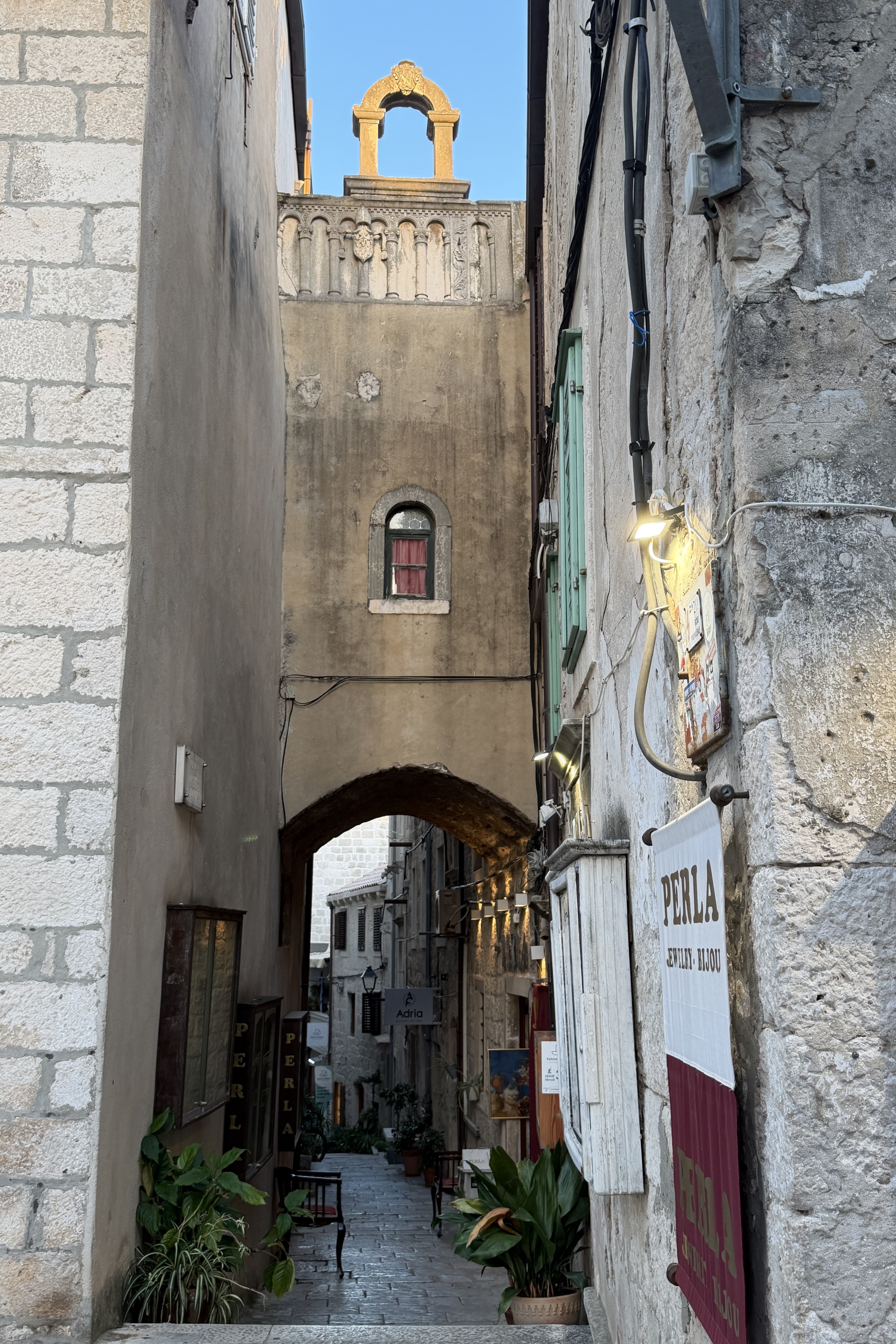
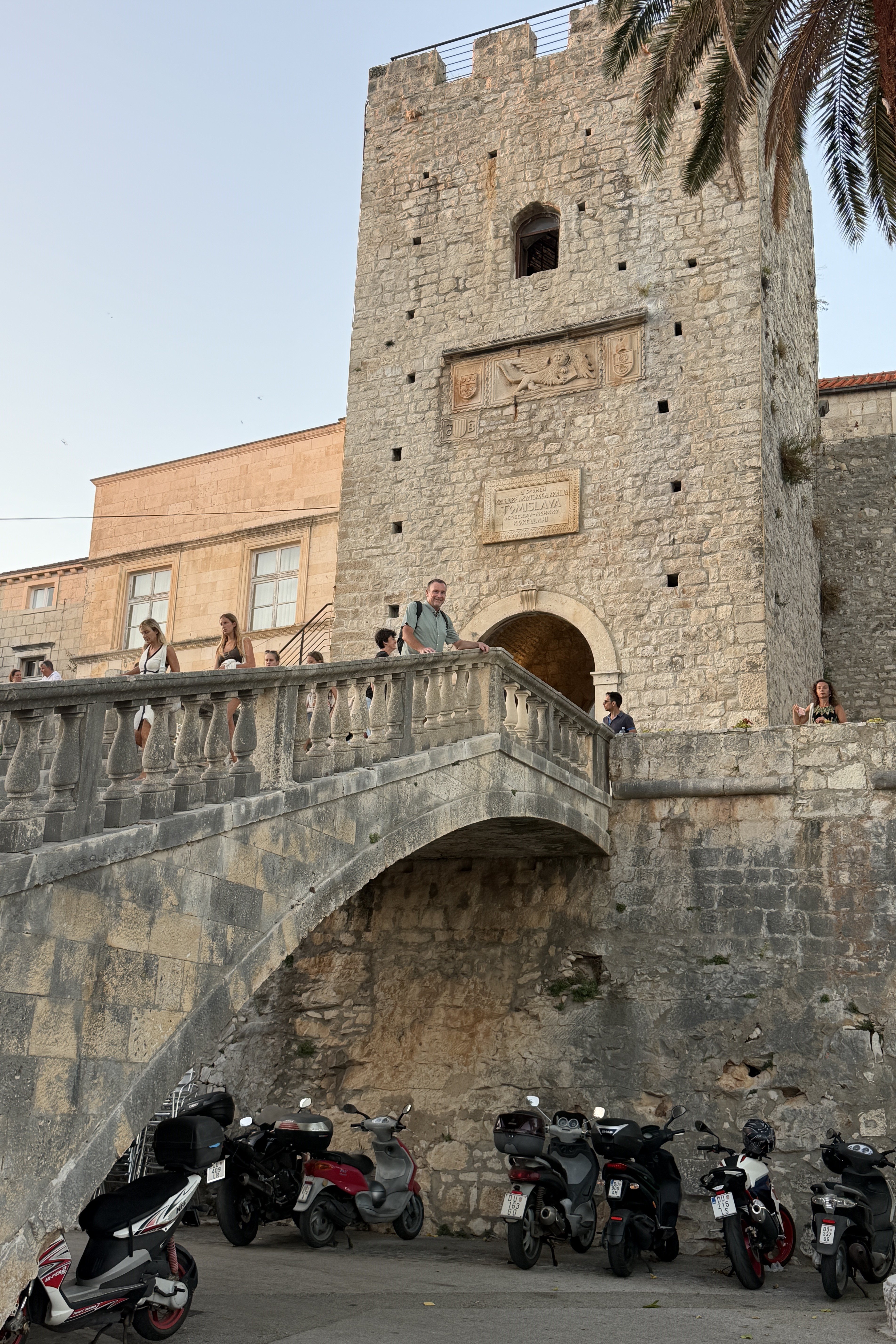
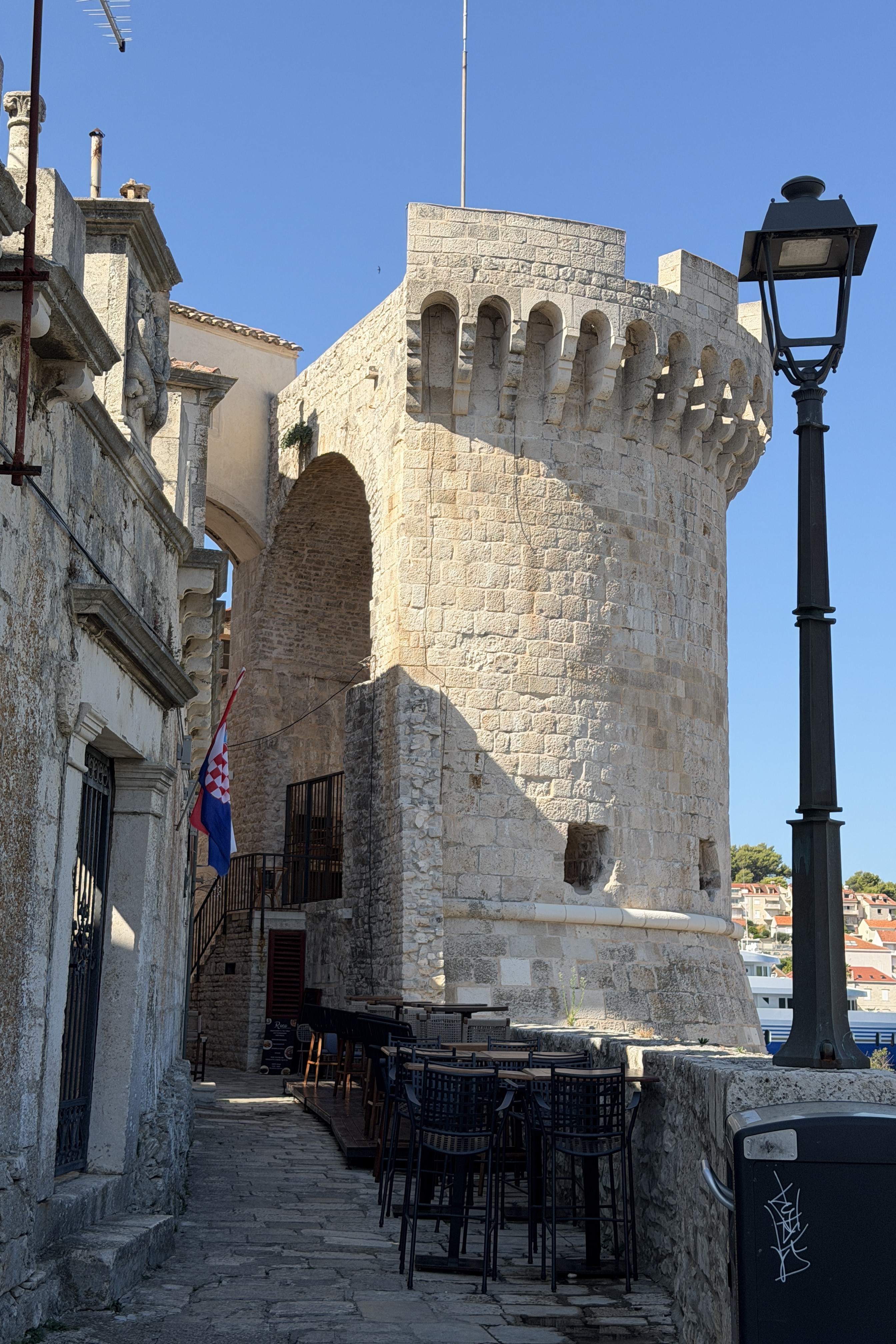
Korčula immediately cast its spell. Often affectionately dubbed "Little Dubrovnik," the Old Town is a compact, oval-shaped medieval citadel built onto a tiny peninsula projecting into the Pelješac Channel. It was engineered by the Venetians in a brilliant herringbone layout: the central spine catches the cool summer mistral breezes while the curved, tiered side alleys buffer against the cold winter bura winds. But while Dubrovnik is monumental and dense, Korčula is immediately accessible and distinctly romantic.
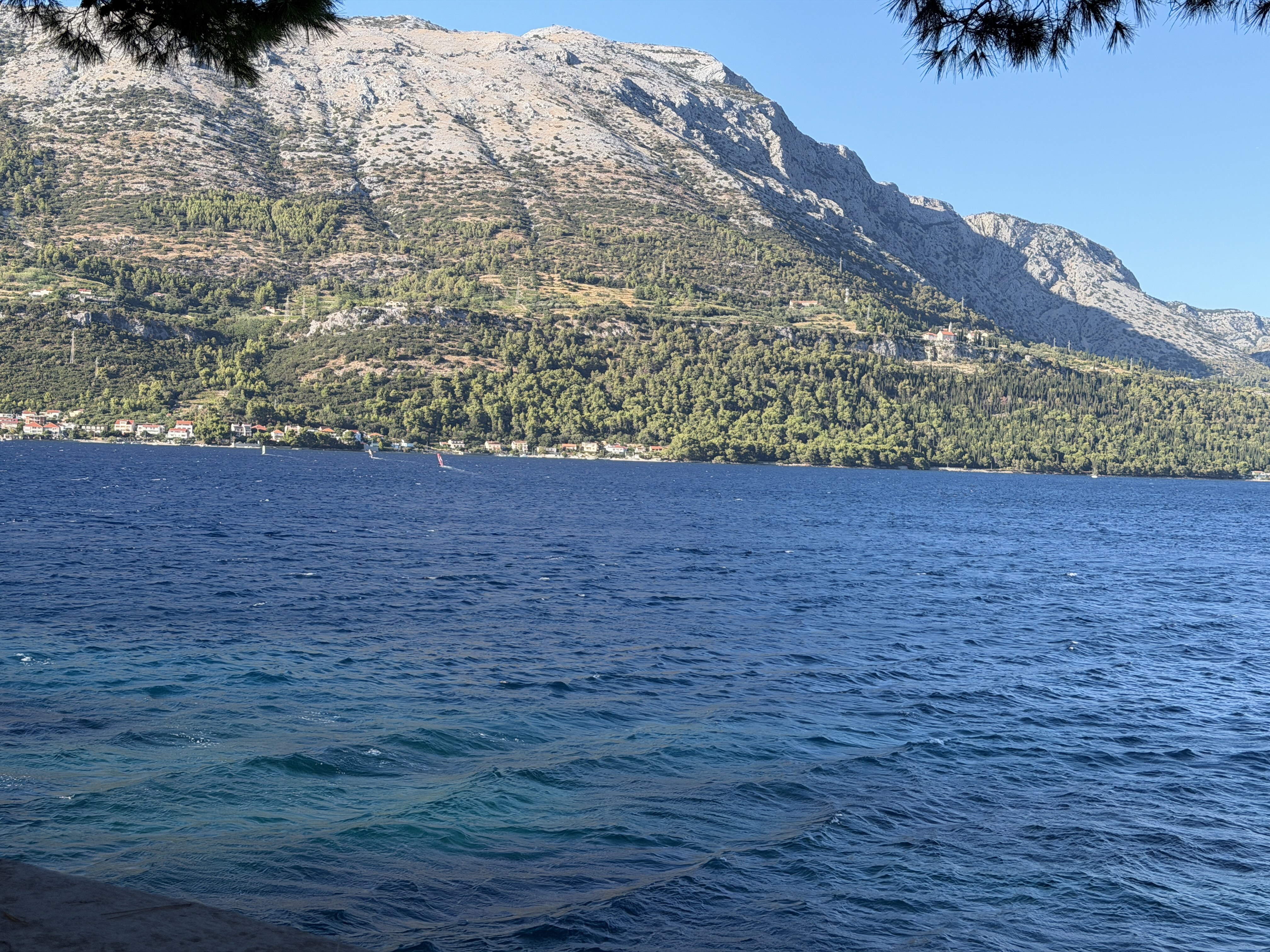
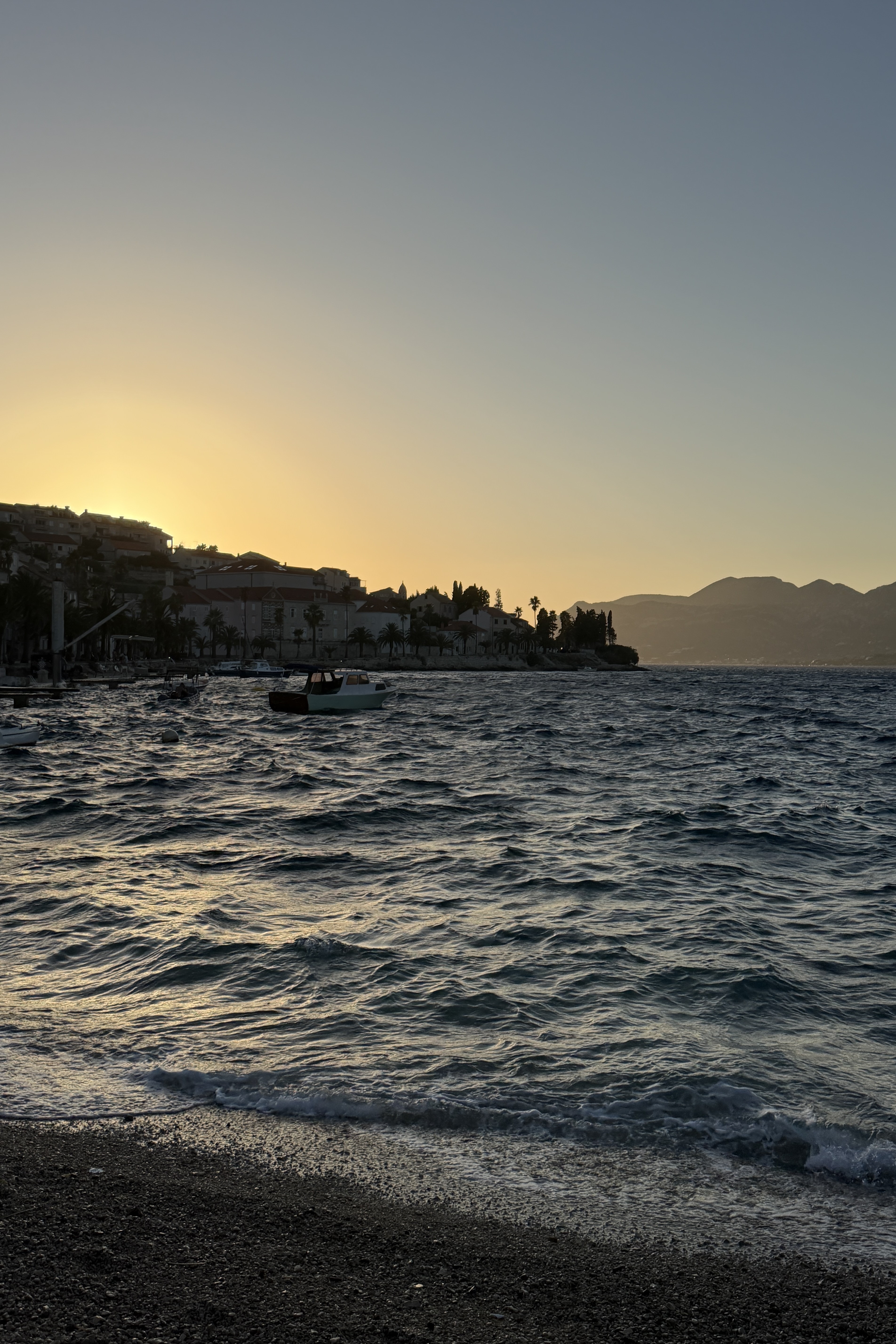
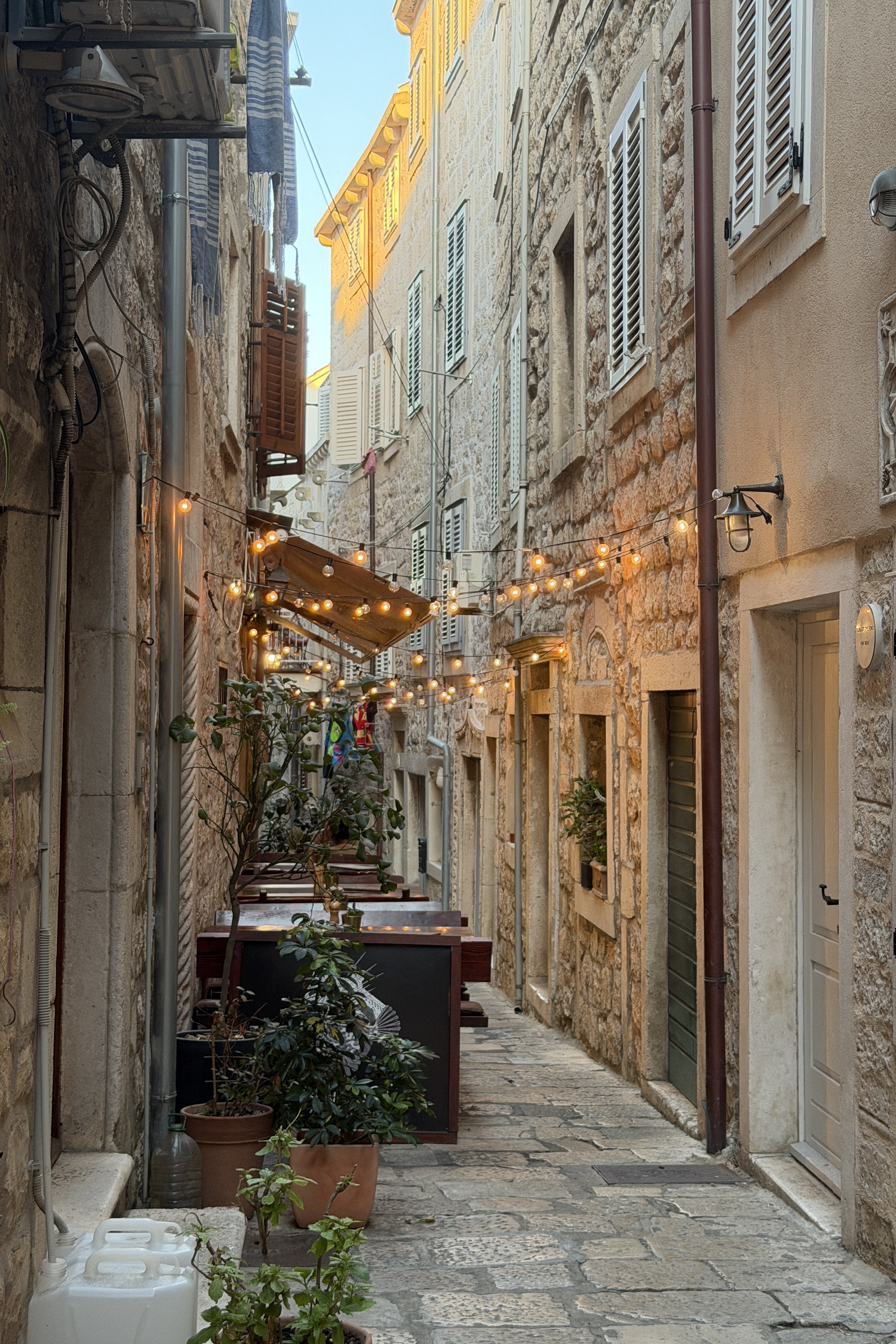
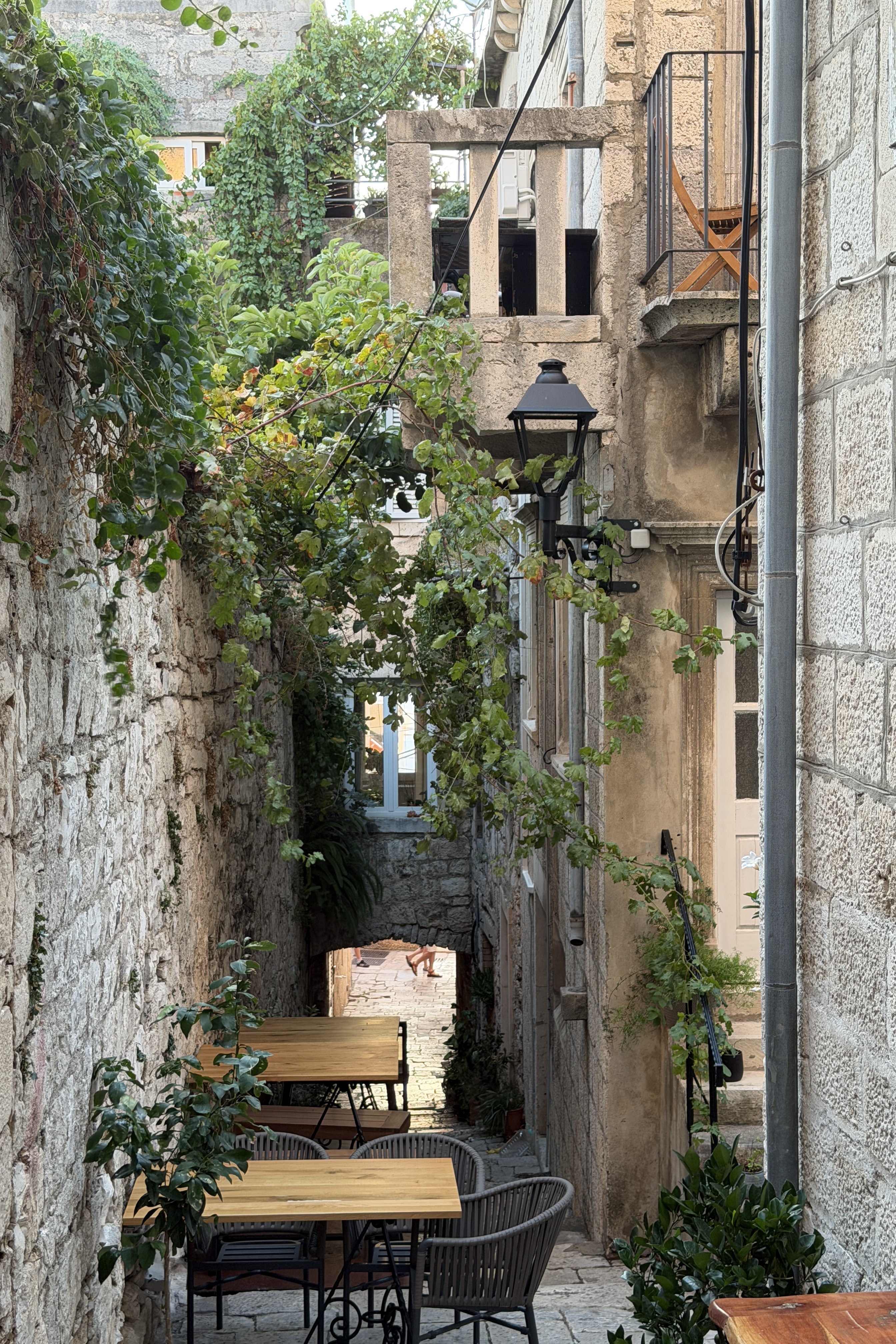
In Dubrovnik, business signage took the form of hanging iron lanterns; here in Korčula, the alleyways are marked by charming circular signs that project from stone storefronts, guiding you through miniature plazas, bakeries, and tucked-away konobas. The crown jewel of the town’s layout is its seaside promenade. The western and northern perimeter walls are lined with lively terraces and outdoor dining spaces nestled directly under leafy canopies, offering sweeping views across the shimmering water toward the dramatic, arid mountains of the Pelješac peninsula. This setting is why I liked Korchula over Hvar.
We chose Korčula as our second sequential Croatian hub specifically to delve into its rare, highly localized viticultural heritage. This island is the birthplace of Pošip and the exclusive home of Grk—a grape grown virtually nowhere else on earth. It offered the ideal bridge between active exploration, crystal-clear sea swims, and serious wine education.
Our Home Base: Overlooking the Beach Cove
Finding lodging in Korčula involves balancing convenience with personal space. We booked a second-floor flat a brief seven-minute walk from the ferry dock, perched up a short set of stone steps.
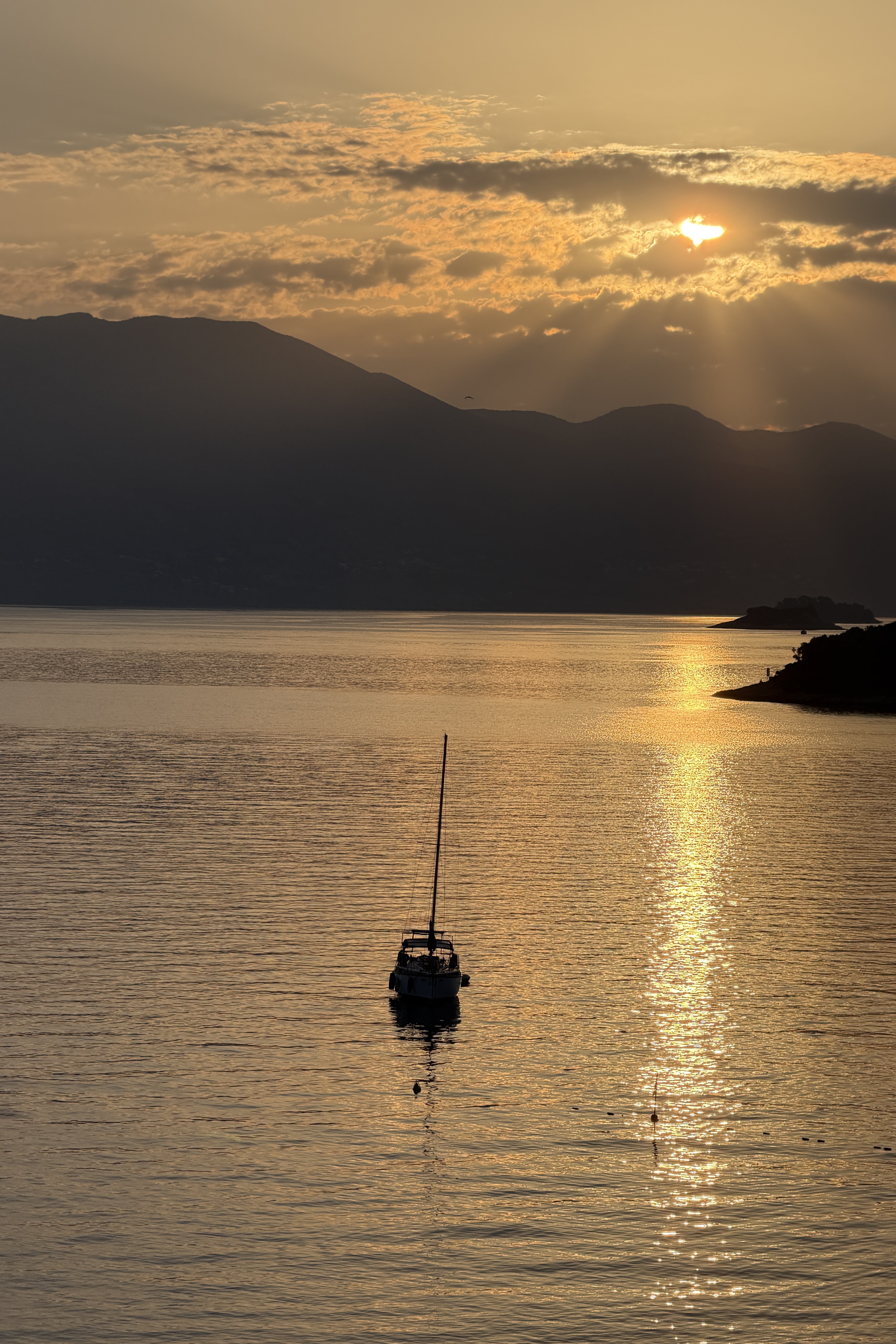
Inside, the apartment was sparse and basic—certainly not a plush interior designed for long afternoons of lounging. But the moment we stepped through the sliding doors, the justification for the booking was clear. The private terrace looked out over the crystalline cove, the pebble beach directly below, and the continuous parade of sailboats and luxury catamarans cutting through the blue channel. In slow travel, your terrace is your living room. We used that deck daily as our leisurely start to the day over coffee and our open-air tasting perch, popping corks from local cellar visits while watching the setting sun paint the Pelješac mountains in shades of rose and violet.
Our location gave us immediate access to everyday rhythms. While midday crowds thickened when cruise passengers arrived, our perimeter base allowed us to retreat, relax, and pop down to the water whenever the sun hit its peak.
The financial reality of the island, however, matched what we discovered in Dubrovnik. Croatia in late summer is surprisingly expensive. Coming into the trip, we had anticipated price points roughly on par with our slow-travel bases in Malaga or the Algarve, but Korčula frequently surpassed the UK, France, and Spain in lodging, casual drinks, transportation and dining costs. Having a functional kitchenette and an uncrowded balcony allowed us to balance our travel budget, preparing simple breakfasts and enjoying early-evening happy hours before stepping out for dinner.
Our Korčula Experience: The Day-to-Day
The Daily Rhythm: Timing the Town & Pebble Beach Dips
Because our time in Korčula was just four full days—two of which were dedicated full-day wine education excursions out to Lumbarda and Žrnovo—this wasn’t a stop where we locked into an entrenched daily routine. Instead, it became an exercise in intentional timing, carving out pockets of calm while the high-season tourist engine spun around us.
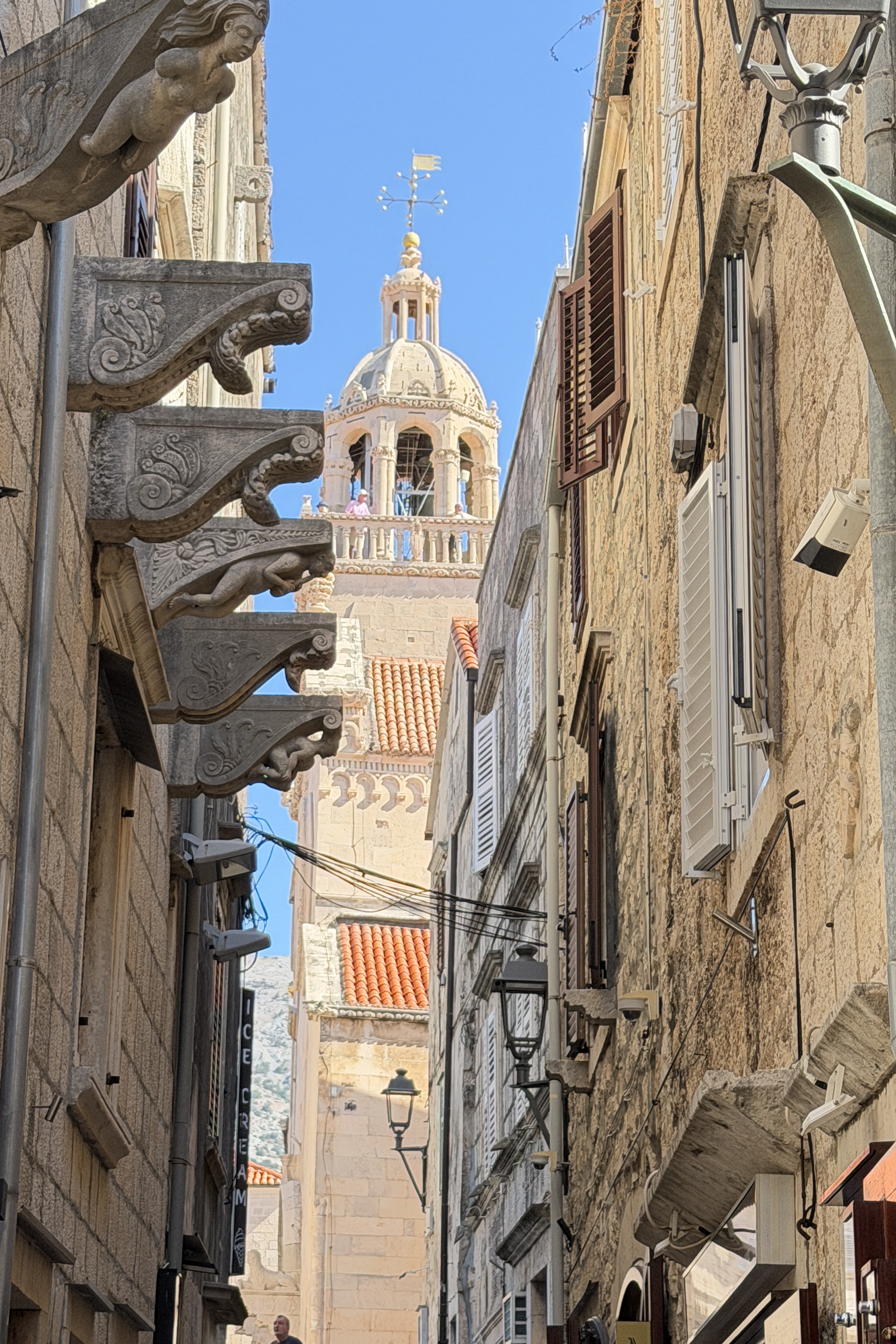
On our dedicated Old Town exploration day, the contrast between the typical holiday rush and our slower pace was stark. We headed out on foot into the ancient core around 8:30 or 9:00 AM. For that golden hour, the polished limestone alleys were peaceful, the morning light highlighted the intricate stone carvings on St. Mark’s Cathedral, and you could capture photos in total stillness. As a mid-morning snack—having skipped breakfast back at the flat—I ducked into a local pekara and grabbed a freshly baked, spiced Mexican roll, which was warm, savory, and surprisingly memorable.
Right around 10:30 AM, however, the town’s pulse completely shifted as tenders from two cruise ships began funneling tour groups through the gates. Watching the narrow alleys suddenly congest with umbrella-led excursions was our cue to exit. While typical day-trippers sprinted through checklists under a scorching midday sun, we retreated to the pebble beach cove sitting just below our apartment.
The beach afternoon was a standout. The pebbles were fine and small enough that we easily smoothed them out to lay our towels down comfortably, spending nearly three hours floating in the pristine, buoyant sea. The Adriatic here was the clearest water we have ever encountered—refreshing, cool, and clean, with small schools of fish and sea urchins tucked into the deeper rocks.
Our other non-winery day was spent strolling the perimeter walls, exploring the harbor docks, and claiming an outside table along the old town promenade facing the sea. Sitting in the breeze with a cold drink, eating sushi, while watching sleek yachts dock and windsurfers race across the channel toward Pelješac, gave us the exact perspective we travel for: observing the rhythm without feeling rushed by it.
A Local Culinary Exploration
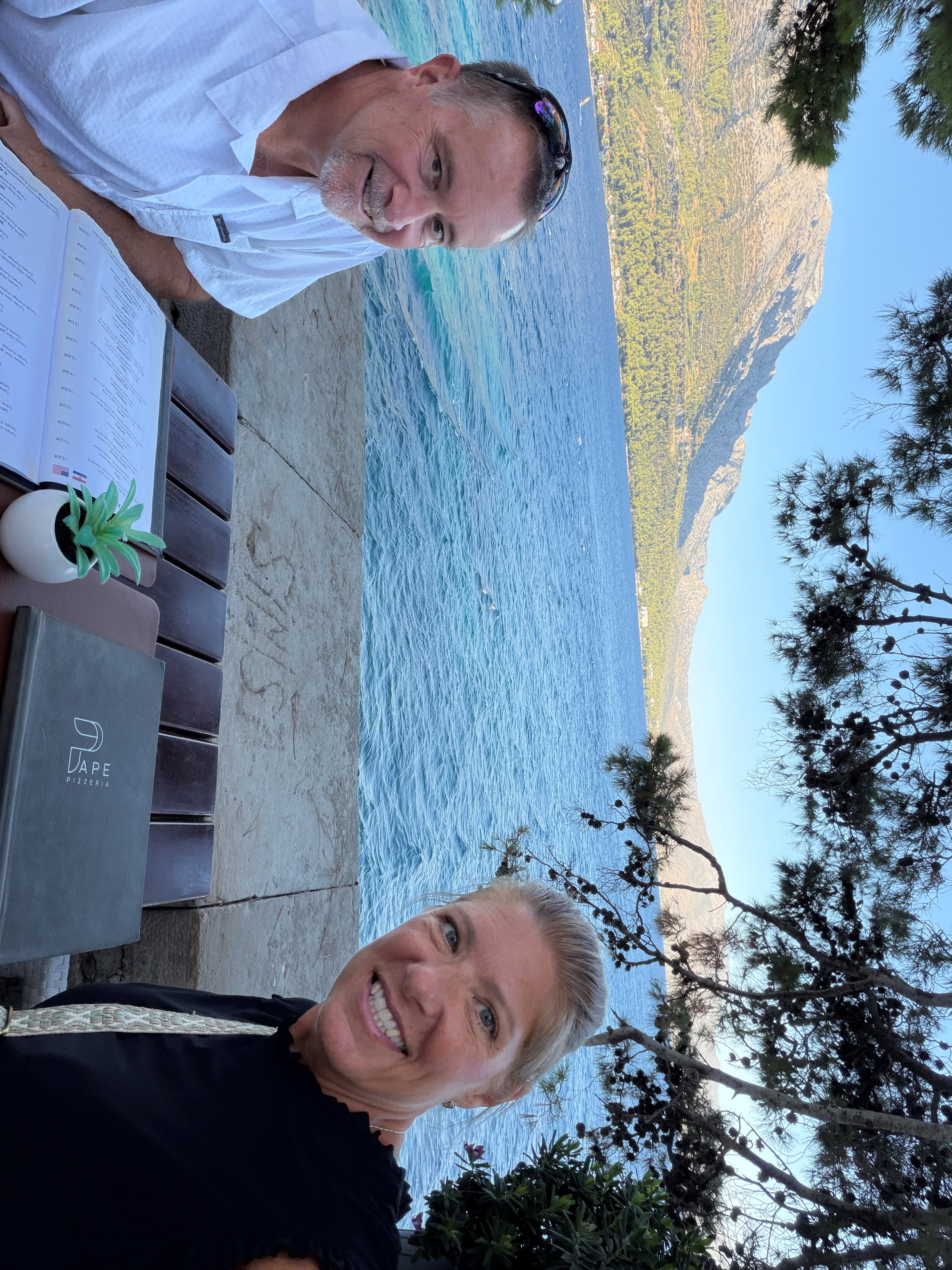
Dining on Korčula revolves around maritime settings and regional Dalmatian staples. Given our penchant for outdoor meals with a view, the seaside promenade along the Old Town ramparts became our standard evening destination.
On our quiet evenings, we found ourselves settling into what jokingly became our Croatian default dinner: sharing a crisp Greek salad loaded with local feta alongside a wood-fired ham-and-mushroom pizza. After enjoying it in Dubrovnik, repeating it at a seaside table along the water while windsurfers zipped across the sunset proved hard to beat.
When we craved a departure from traditional Mediterranean fare, we snagged a table at Silk, an Asian-fusion venue perched on the historic ramparts overlooking the channel. Sharing fresh spring rolls, savory dim sum, and a vibrant plate of Pad Thai was the exact palate cleanser we needed. Afterward, we took an evening walk out past the edge of the Old Town toward the western point, lingering by the water to watch the sun drop behind the distant islands. We had hoped to catch the traditional Moreškas word dance—a dramatic 16th-century folk performance unique to Korčula—but learned the scheduling had shifted to bi-weekly performances, meaning we missed it this turn.
For traditional Dalmatian home cooking, we headed inland away from the tourist-heavy waterfront. During our excursion into the pine hills of Žrnovo, we booked an unhurried lunch at Konoba Markul. It was an unforgettable meal. We ordered the two regional benchmarks: handmade šurlice macaroni tossed in a slow-simmered, savory beef sauce, and traditional black cuttlefish risotto (crnirižot). The risotto was a revelation—earthy, rich, and deeply savory with impeccably tender seafood folded throughout. It was easily an award-worthy highlight and an undisputed entry for our Touchpoint Tally Awards.
The Boating & Yachting Lifestyle
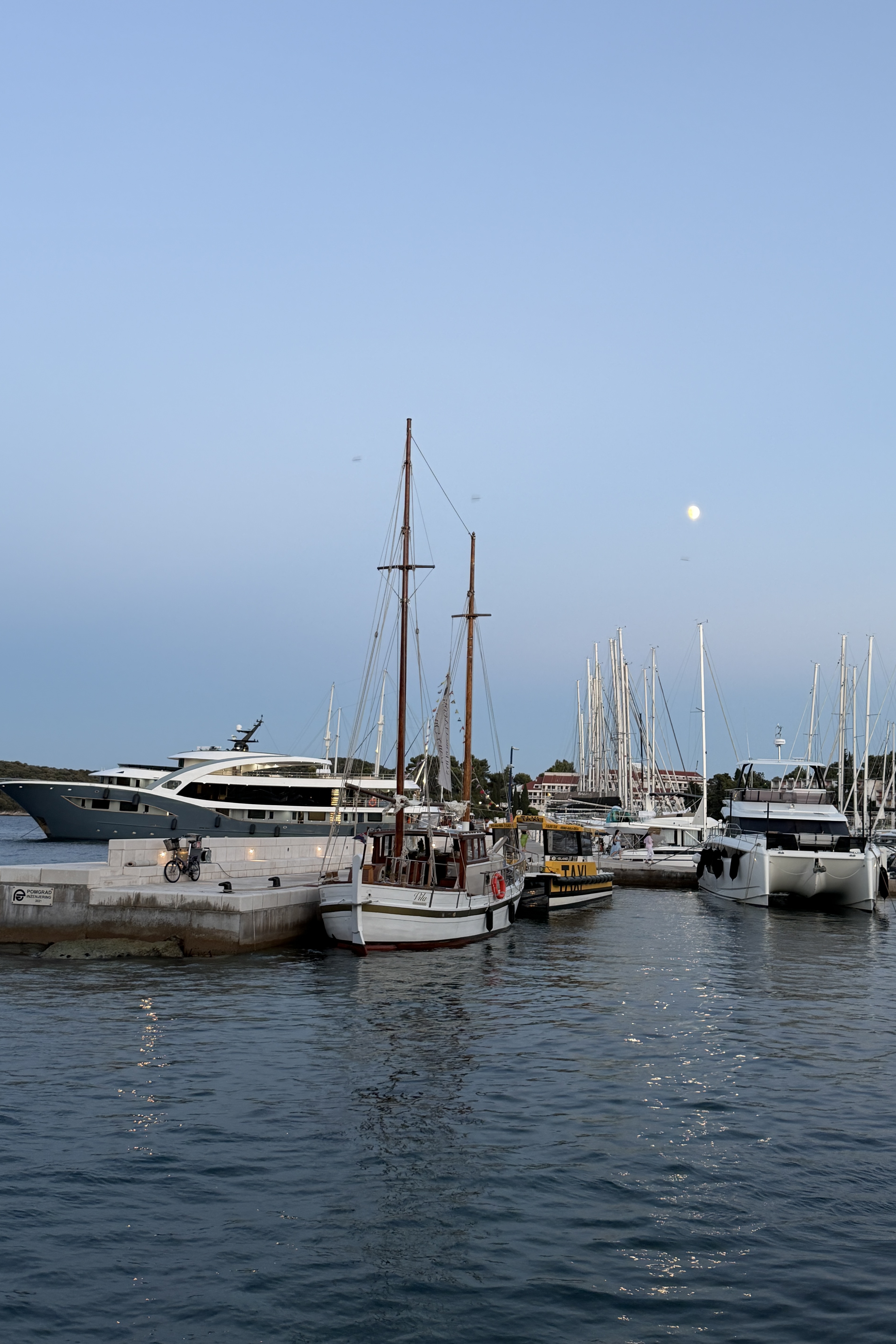
One of the most captivating elements of Korčula is its maritime theater. Unlike typical fishing harbors where working trawlers dominate the docks, Korčula’s waterways are dedicated almost entirely to lifestyle boating. Sleek monohulls, high-end catamarans, and luxury mega-yachts continuously drop anchor in the harbor or trace the Pelješac passage.
Sitting out on our balcony during golden hour, wine glasses in hand, we watched crews furl their sails, tenders shuttle passengers to the docks, and travelers gather on aft-decks for sunset aperitifs. It sparked long, engaging conversations between Tom and me about whether full-time boat life could ever match the grounding rhythm of our land-based slow-travel lifestyle.
Wine Regions & Cellar Visits: The Magic of Grk & Pošip
Korčula is a dream destination for anyone studying the relationship between geography and wine. The island boasts two ancient white grapes of extraordinary distinction, shaped by two radically different micro-terroirs: the beach sands of Lumbarda and the elevated limestone hills of Žrnovo and Smokvica.
Lumbarda: Sandy Soils & The Enigma of Grk
On Saturday—intentionally avoiding the mid-week cruise ship schedules—we boarded the local public bus just outside Korčula’s walled gate for the short, scenic 15-minute ride to Lumbarda (€2.30 each way). While Lumbarda features casual sandy swimming coves, its agricultural fame rests on an unusual grape: Grk.
Grk is an ancient white variety introduced by Greek settlers in the 3rd century B.C. It thrives uniquely in Lumbarda’s deep, sandy, dry soils, which spared the vines from phylloxera. What makes Grk globally fascinating is that it possesses only female flowers. Because it cannot self-pollinate, growers must plant a compatible, simultaneous-flowering grape in every third or fourth row to achieve fertilization. The grape chosen for this task is almost always Plavac Mali, the celebrated red cousin of Zinfandel. If pollination fails, the unfertilized berries remain small, seedless, and intensely sour; in fact, the name Grk translates colloquially to "bitter" in Croatian. In skilled hands, however, it yields a dry white wine with golden reflections, aromas of pine resin, pear, and citrus, with a structured, delicately phenolic finish.
Our independent cellar visits in Lumbarda provided an exceptional side-by-side study (note: wineries on the island operate strictly on cash only. Additionally, because many family wineries produce tiny allocations that sell out directly to island restaurants, travelers visiting in late September or October may findtasting rooms already depleted of flagship bottles.):
- Lovrić Winery: Perched on an openterrace with panoramic breezes sweeping across the bay toward Pelješac, Lovrić delivered a stunning introduction. Maria, a cousin of the multi-generational family operation, walked us through their winemaking approach (they utilize dry ice during maceration and stainless-steel temperature control). She spent time showing us their small operation then walking us through their wines while we sat on a deck with a stunning view.
- 2025 Grk: Distinctly complex and layered. The nose revealed a harmony of stone fruit, ripe citrus, and melon, moving onto a medium-bodied, textured palate with a well-integrated touch of that signature bitter-almond grip on the finish. Exceptionally balanced.
- 2025 Pošip: Aromatic, reminiscent of a crisp, floral Sauvignon Blanc crossed with the body of an unoaked Chardonnay. Bright green apple, pear, and gardenia aromas with vibrant acidity.
- Plavac Mali & Rosé: The rosé (macerated for just one hour) poured an intriguing, almost orange hue, delivering clean berry notes. The red Plavac Mali showed hallmark dark berry, dried fig, and bramble flavors, though high alcohol (14.4% ABV) dominated the finish, confirming how challenging it is to tame Plavac's power in warm sandy soils. We happily purchased bottles of both the Pošip and the rosé to bring back to our terrace.
- Casa Boschi: Located just steps uphill from the main bus stop, this unhurried terrace tasting was led by the estate’s master winemaker and father of the house. Tastings here are €3 per pour.
- Rukatac (Maraština): An aromatic local white related to the Malvasia family. Highly perfumed with sweet citrus blossom, seagrass, and lemon zest, though a lower acid structure made it slightly cloying on a hot afternoon. The winemaker shared a charming local tradition: upon the birth of a son, families bury a sealed bottle of wine in the front yard, unearthing it decades later solely to toast on the day of his wedding.
- Award-Winning Pošip: This was a showstopper. Having won silver and gold at major international competitions in London, it showcased intense peach, mango, and subtle floral layers, lifted by energetic mineral acidity and a remarkably persistent finish.
- Bire Winery: Regarded as one of Lumbarda’s premier organic estates, Bire was established in its modern form in 1996 and now supplies Michelin-starred dining rooms across Europe. This was a standout experience because of our host, one of the winemaker’s sons, who spent a lot of time with us telling us about his family history, the roles he and his brothers have in the winery and getting into a detailed conversation with me around their practices in the vineyard including their dense vineyard spacing, strict hand-harvesting, and distinct soil plots (sand near the coast, limestone on the slopes, and red clay to the west).
- Bire blends their Grk across all three soil plots to maintain balance and manage heavy international demand. Their sparkling rosé (produced via the Charmat method) provided a crisp, bright aperitif, while their aged Plavac Mali—left on the skins for extended concentration without harsh pressing—demonstrated rare refinement. Bire utilizes a methodical "pump-over" process, exposing small fractions of fermenting juice to oxygen for thirty minutes before re-incorporating it to blow off raw green vegetal aromas. We purchased a few bottles of the Plavac Mali, and wished we would have gotten more.
Žrnovo: High Limestone Terroir at Tasovac Winery
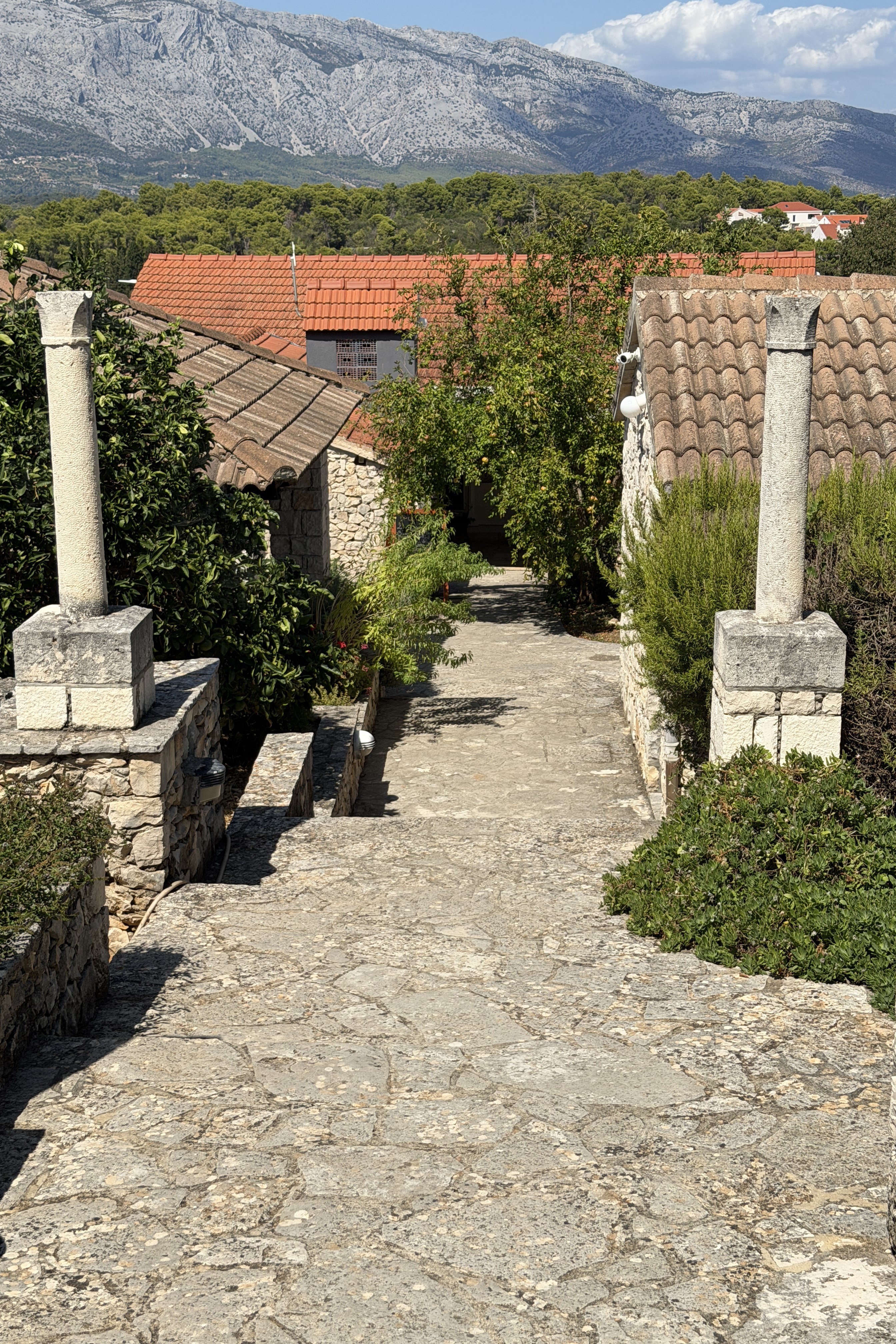
To contrast Lumbarda’s sandy sea-level vineyards, we took a €15 taxi inland into the high, pine-cloaked hills of Žrnovo—a collection of five historic hamlets north of Korčula Town. Here we visited Tasovac Winery, an intimate, boutique garage estate founded in 2017 that produces roughly 15,000 bottles annually.
The contrast in terroir was immediate. Instead of deep sand, Tasovac’s vines grow in fractured limestone and stony red soils, yielding wines with pronounced, savory minerality:
- Rosé (Plavac Mali): Exceptionally pale, crisp, and refreshing, with delicate red berry notes and a clean, stony backbone that made it one of our favorite dry rosés of the entire summer.
- Estate Pošip: Medium-plus intensity, bursting with fresh white peach, nectarine, gardenia, lime zest, and green melon. The rocky limestone gives the wine a structured, sharp mouthfeel with energetic acidity that pairs naturally with coastal seafood.
- Pošip Sur Lie: Aged for twelve months in oak barrels and six months in bottle on the dead yeast lees. While the mid-palate felt slightly heavy initially, the finish evolved into a remarkably long, nutty, and savory experience.
- Plavac Mali: Made using a traditional technique passed down from their grandfather, the wine is fermented in oak casks before aging in stainless steel, crafted specifically into a lighter, fresh-fruited red that they serve lightly chilled.
Chatting with the owner while her husband managed the fermenting vats, we learned that the hot, dry summer had produced exceptional concentration across the whites, while the red harvest was still two weeks away. It was an authentic, deeply personal cellar door encounter that showcased the diverse microclimates tucked across this compact island.
Reflections on the Journey
What We Loved Most
The intimate, walkable scale of Korčula Old Town was enchanting. Strolling the tree-shaded seaside promenade at twilight, listening to the water lap against the ramparts while boats maneuvered through the channel, felt like pure Dalmatian magic. From a wine perspective, diving deep into Grk and Pošip at family-run estate doors provided some of our most rewarding sensory experiences in Croatia. The genuine hospitality of the islanders—who welcomed us warmly without being pushy—allowed us to truly unwind and feel part of the community.
What Chafed / The Honest Truth
Accommodation and dining costs were noticeably inflated for late August, challenging our Schengen budget expectations. Midday cruise crowds can also temporarily congest the small historic core, requiring you to plan your sightseeing carefully in the early mornings or late afternoons.
Tom vs. Danielle: A Tale of Two Perspectives
- Tom’s Take: "After five days of nonstop stairs in Dubrovnik, Korčula was a welcome change of pace. The town is incredibly easy to navigate on foot, the water at the pebble beach was the clearest I've ever seen, and watching the parade of high-end catamarans from our terrace was pure relaxation. The black risotto at Konoba Markul in Žrnovo was easily one of the best meals of the trip. It’s an island where you can genuinely downshift without feeling bored."
- Danielle’s Take: "Korčula was a triumph of wine and quiet elegance. As a wine student, being able to walk through Lumbarda’s sandy vineyards and learn firsthand why the female Grk vine requires Plavac Mali to bear fruit was a dream lesson in ampelography and terroir. Pairing those discoveries with unscripted terrace dinners, fresh morning pastries, and crystalline swims made Korčula my personal favorite stop along the Dalmatian coast."
Links: Dubrovnik Trip Report | Croatian Wine Guide | Croatian Planning Guide | More Trip Reports
Up Next: Hvar Trip Report
Welcome to the new Touchpoint Wines
We’re blending our passion for wine with a love for global exploration. Join us as we journey through the world's most captivating destinations, uncovering hidden wine gems and offering unique workshop experiences for your team retreats. Whether you're seeking to enhance team dynamics or discover the art of slow travel, let us be your guide.