At a Glance
- Duration: 3-night stay.
- Home Base: Elephant Bedroom Camp, an un-gated, intimate luxury tented camp in the heart of the Samburu National Reserve.
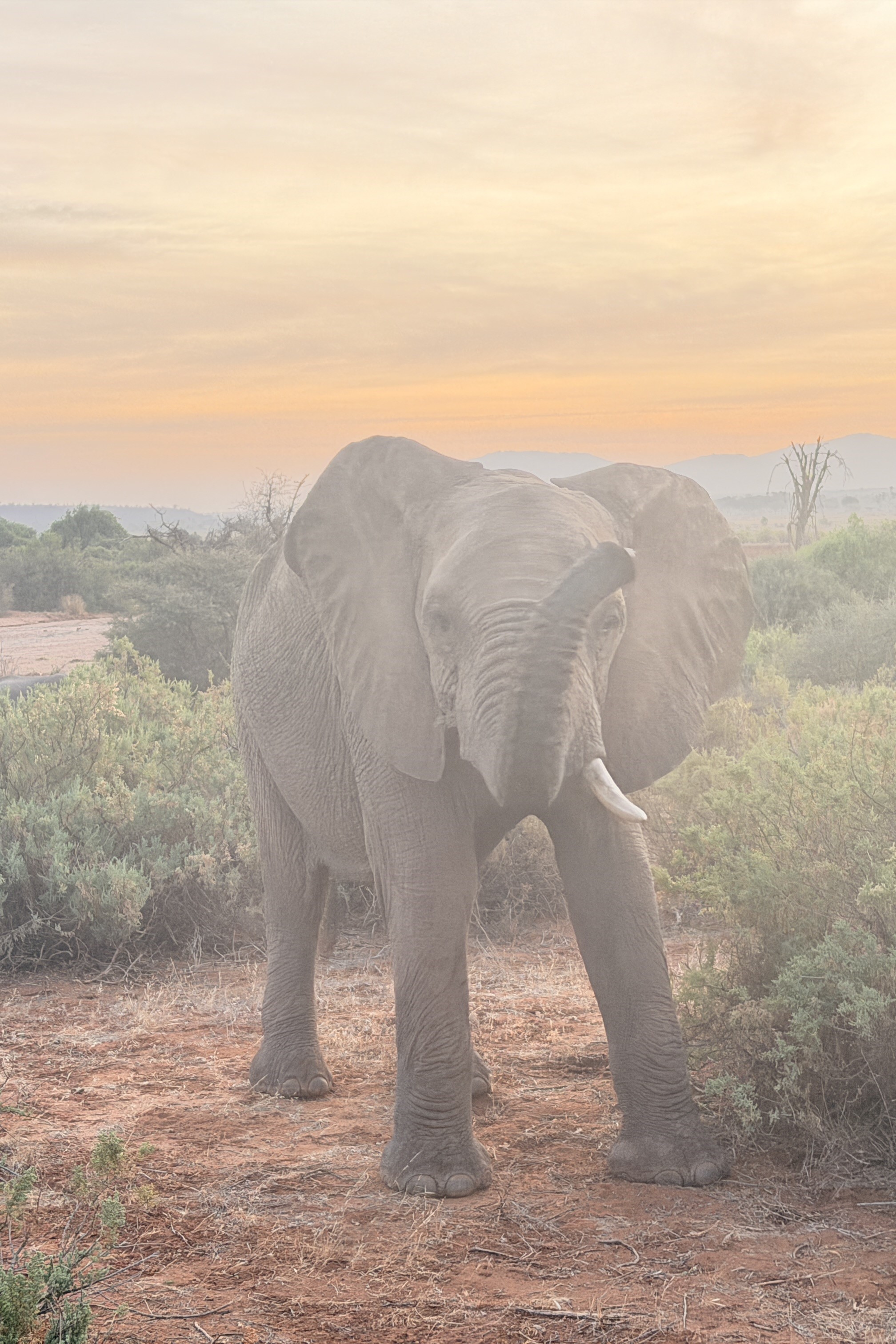
- Top Wildlife Moment: Witnessing a massive elephant herd merge at sunrise on their way to the riverbed and seeing their protective "defensive circle" behavior when they caught the scent of nearby lions.
- Memorable Accomplishment: Seeing a leopard on every single game drive—including a mother and her cub.
- Overall Vibe: Intense, immersive, and educational. While Ol Pejeta was raw and secluded, Samburu was high-density and high-energy, offering a "National Geographic" look at animal behavior.
Following our raw and private stay at Ol Pejeta, we arrived in the Samburu National Reserve. Moving from the quiet protection of a rhino conservancy to the high-stakes, high-density energy of the Samburu riverbed offered a fascinating look at the diversity of the Kenyan wilderness. While these safaris were the adrenaline-filled highlights of our time in Africa, they were built on the foundation of the month we spent immersed in coastal life at Nyali Beach.
Reserve vs. Conservancy: A Concentrated View
Moving from the Ol Pejeta Conservancy to the Samburu National Reserve felt like stepping into a different world. While Ol Pejeta was privately managed and felt like we had the wilderness to ourselves, Samburu is a public reserve. This means a lot more vehicles—at one point we saw 22 trucks jockeying for a view of a leopard cub—but the trade-off is an incredible density of wildlife.
During our stay, the water in the riverbed was exceptionally low. While the dry landscape made for hot, dusty drives (seriously, bring a mask!), it created a fascinating concentrated effect. Because water was so scarce, the animals were forced into smaller, more specific areas near the remaining puddles and the riverbed, making them much easier to find and observe in high numbers.
Living with the Giants: Camp Life at Elephant Bedroom
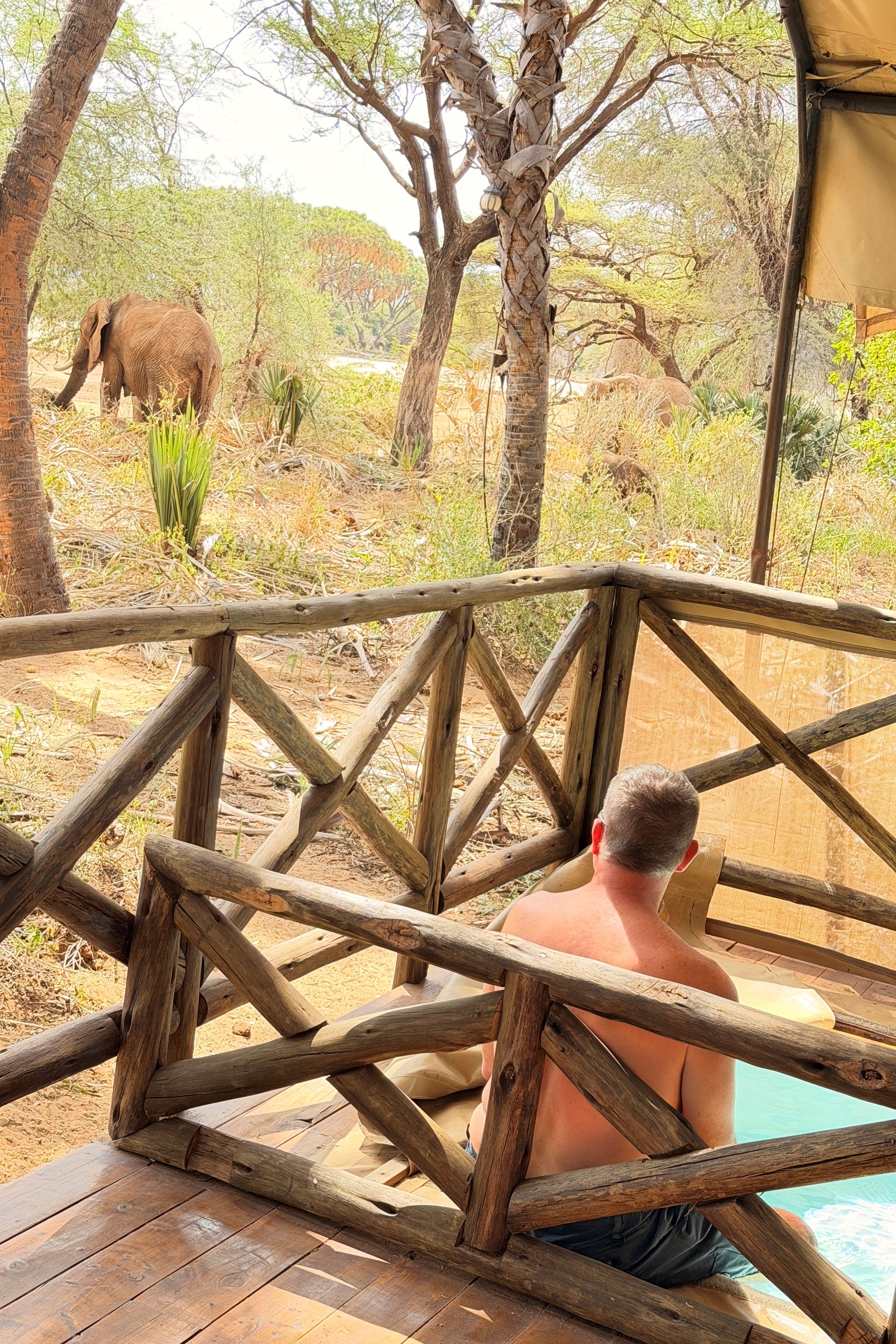
The camp earned its name honestly. Because there are no gates, the elephants wander freely through the grounds. We spent hours on our porch watching them strip branches from the trees right outside our tent. Our cottage even featured a small plunge pool, but we had to be vigilant; it wasn't just for us. We often watched as elephants, monkeys, and baboons approached the deck, trying to open the cover to snag a quick drink from the pool! At one point, we were "trapped" in the common area because a herd moved between us and our cabin!
The camp has a beautiful, rhythmic flow:
- The Schedule: We were up for a 6:15 AM game drive, returning around 9:00 AM for a full buffet breakfast. The heat of the day was spent relaxing at the cottage before heading back out from 4:00 PM to 7:00 PM.
- The Rituals: Because of the wild neighbors, you don’t walk anywhere alone at night; you wave your flashlight, and a Maasai guard—armed with a slingshot for the cheeky monkeys—guides you to dinner.
- The Dining: We loved the chalkboard menus that listed a few choices for starters, entrees, and desserts. You’d place your order in the morning for the dinner that evening. For all the meals we would be seated overlooking the riverbed—a truly lovely way to end a day in the bush.
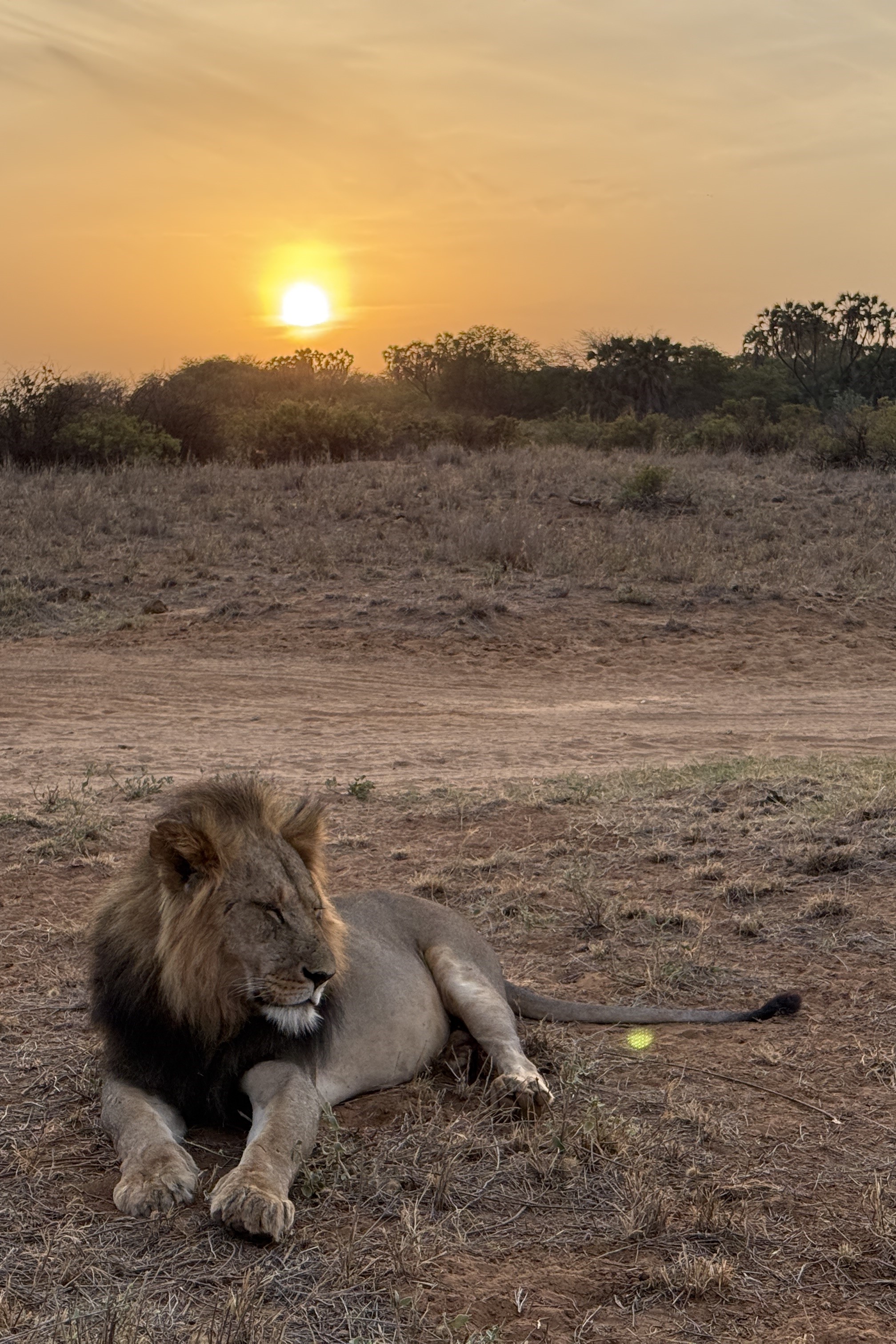
The Leopard Whisperer and the "Special Five"
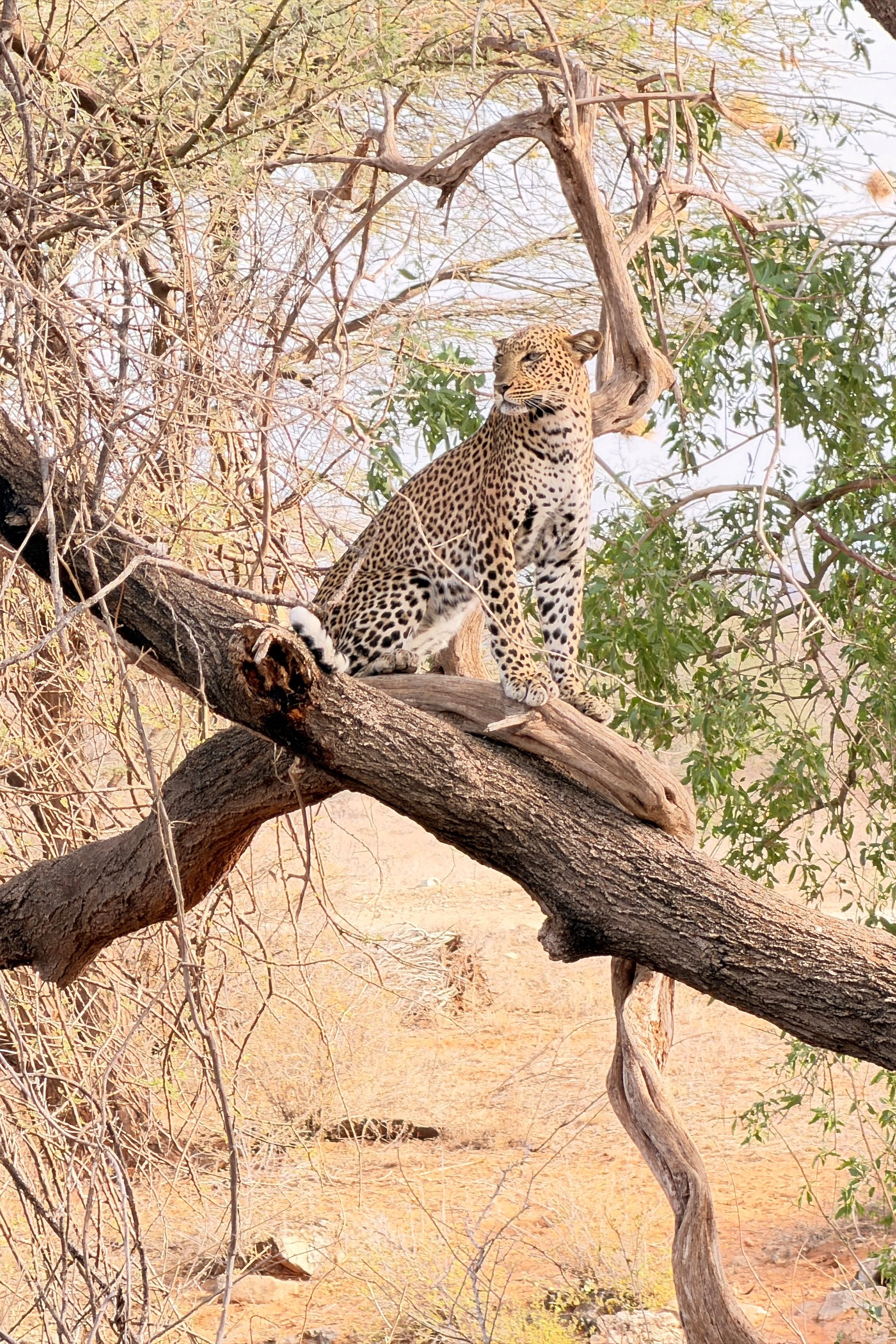
Our guide, Julius, was a legend. On day one, Tom jokingly told him that if we saw a leopard, we could "just go home," because that was the only one of the "Big 5" we didn’t see at Ol Pejeta. Julius took that as a challenge. Not only did we see a leopard on that first drive, we saw one on every single drive we took.
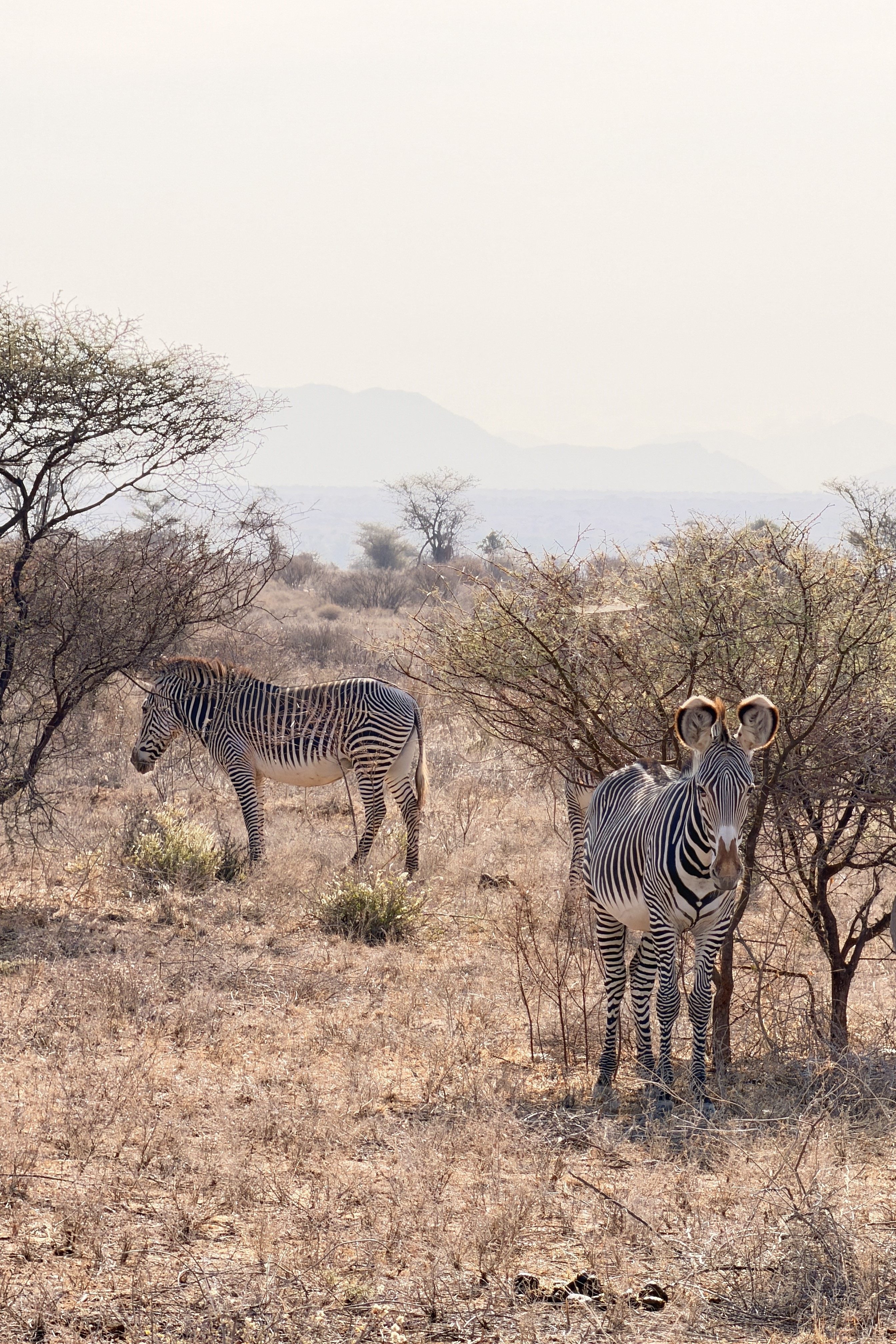
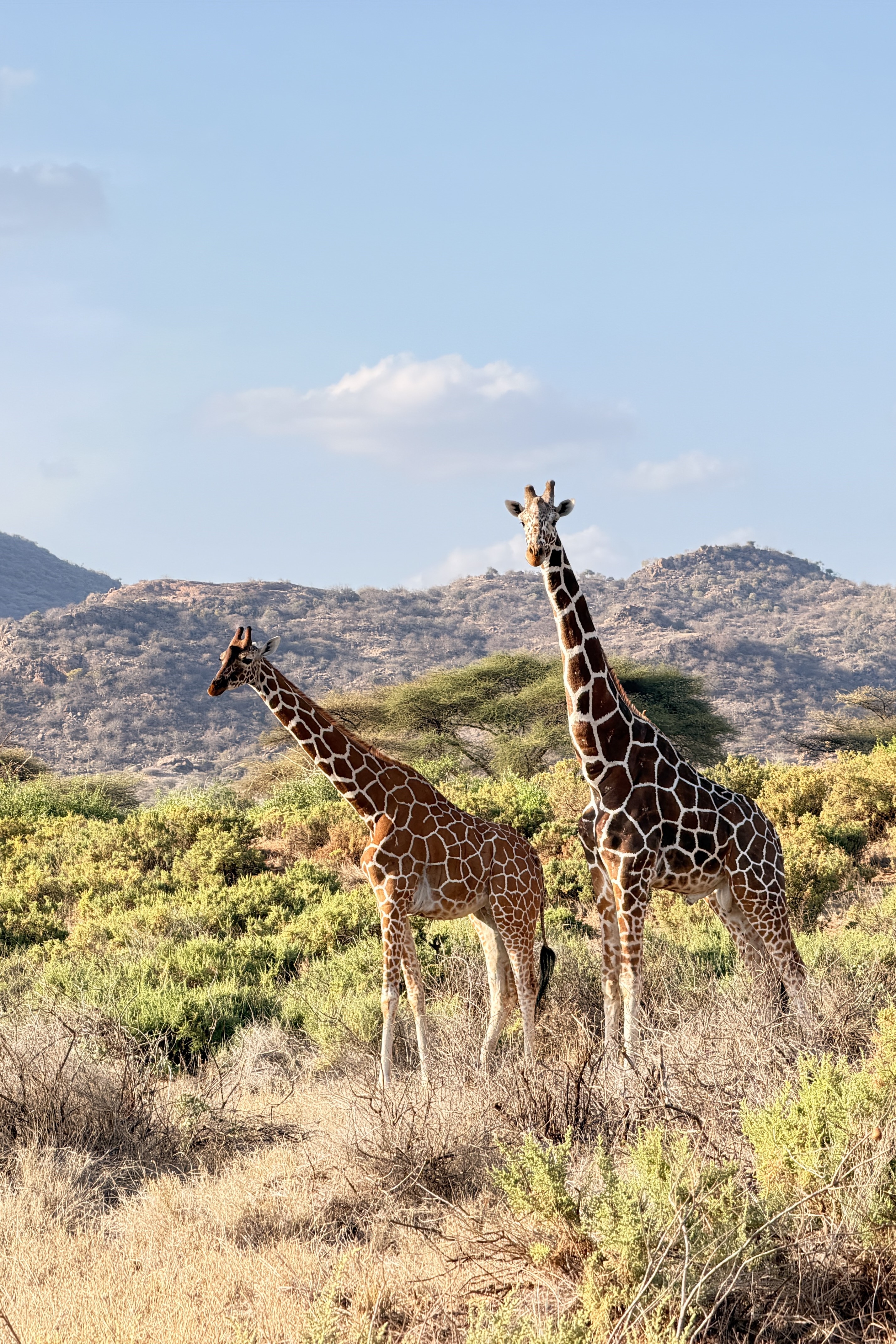
Samburu is famous for the "Special Five"—animals found only in this northern region. While we saw the familiar Reticulated Giraffes again, it was the Grevy’s Zebra that truly stood out as different from our time in Ol Pejeta. In Ol Pejeta, we saw the Common (Plains) Zebra, but here we encountered the rare Grevy's. They are much more striking: their stripes are thinner and set much closer together, stopping at a stark white, unstriped belly. They also have large, rounded, mule-like ears that give them a completely different profile.
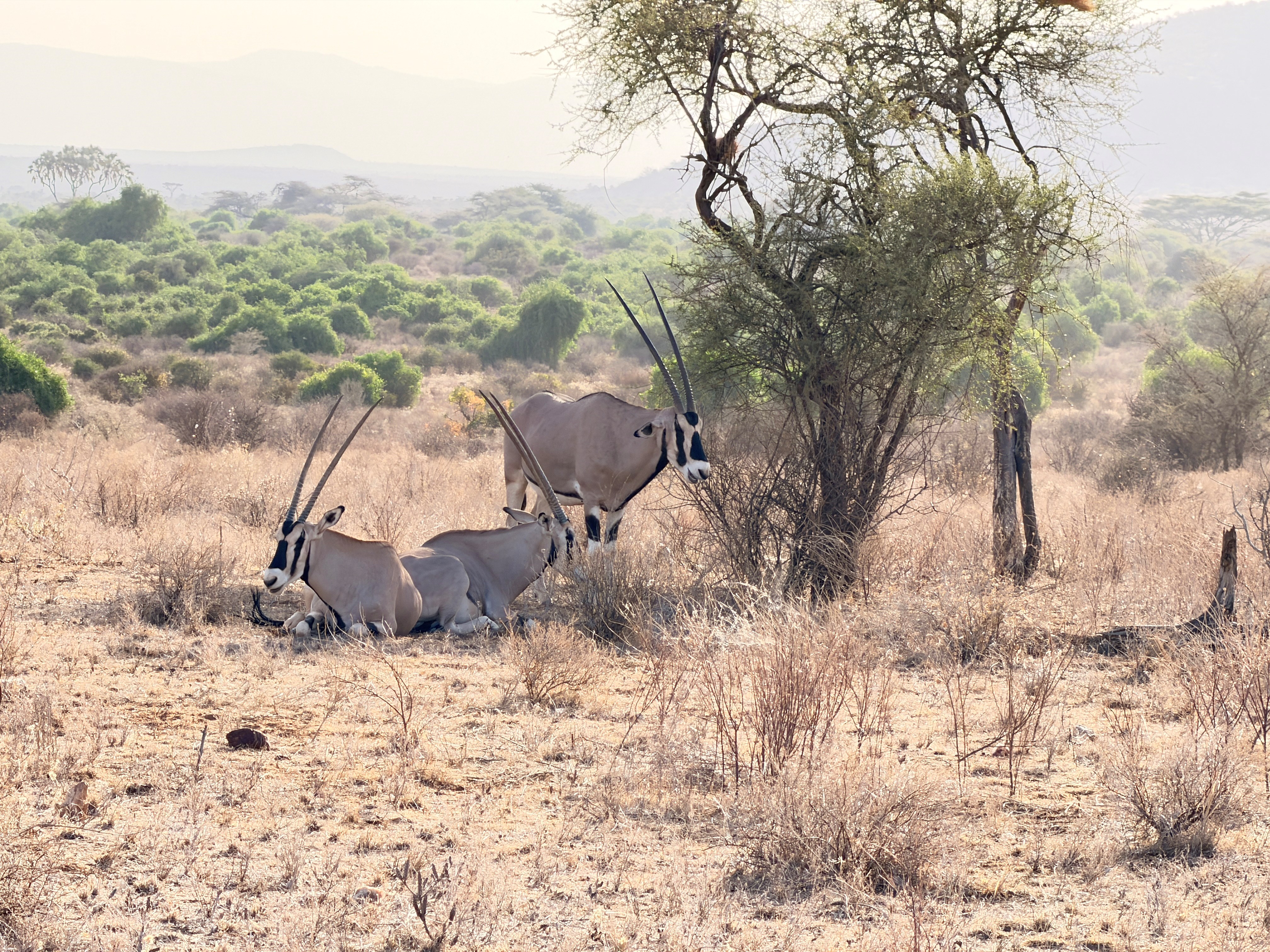
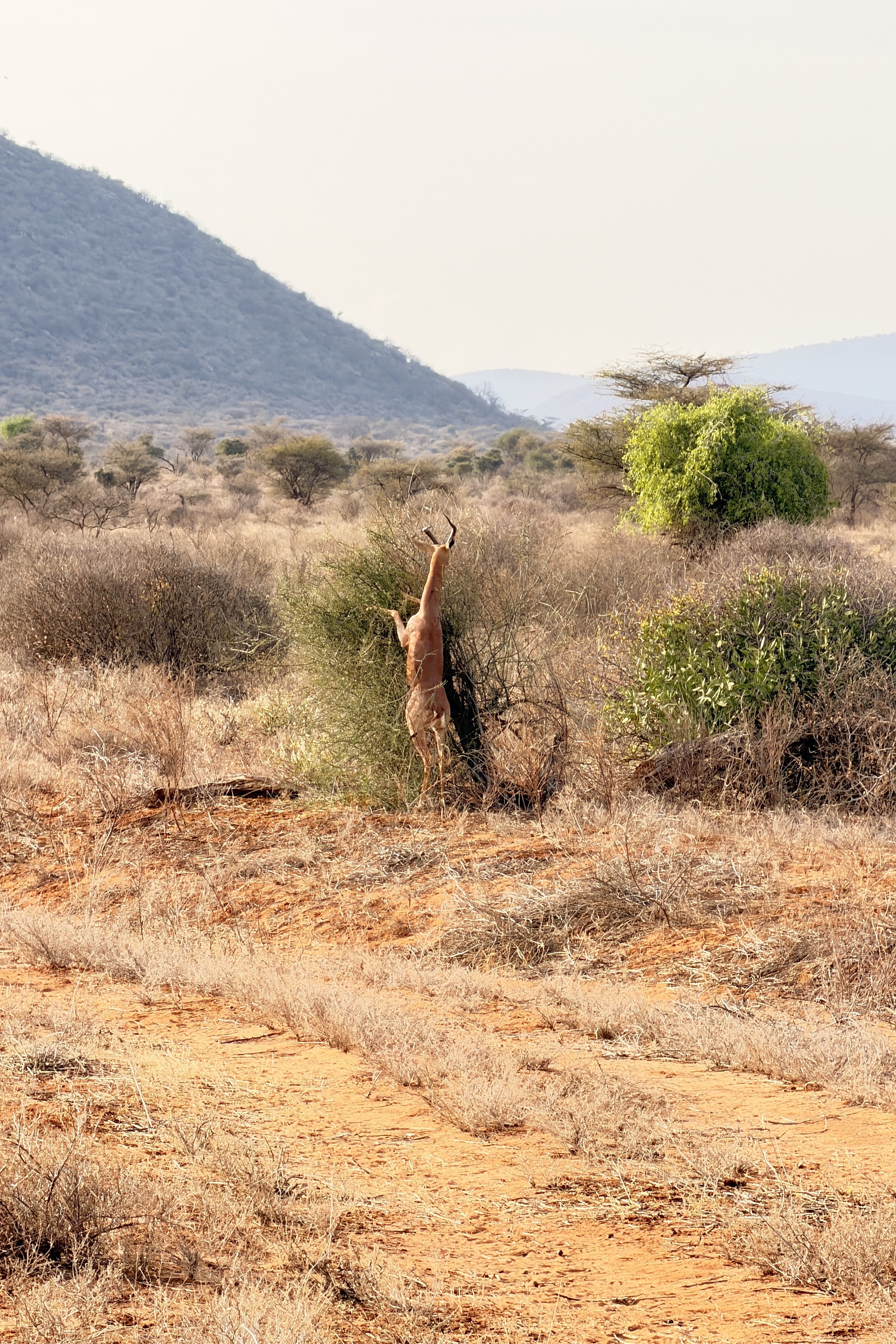
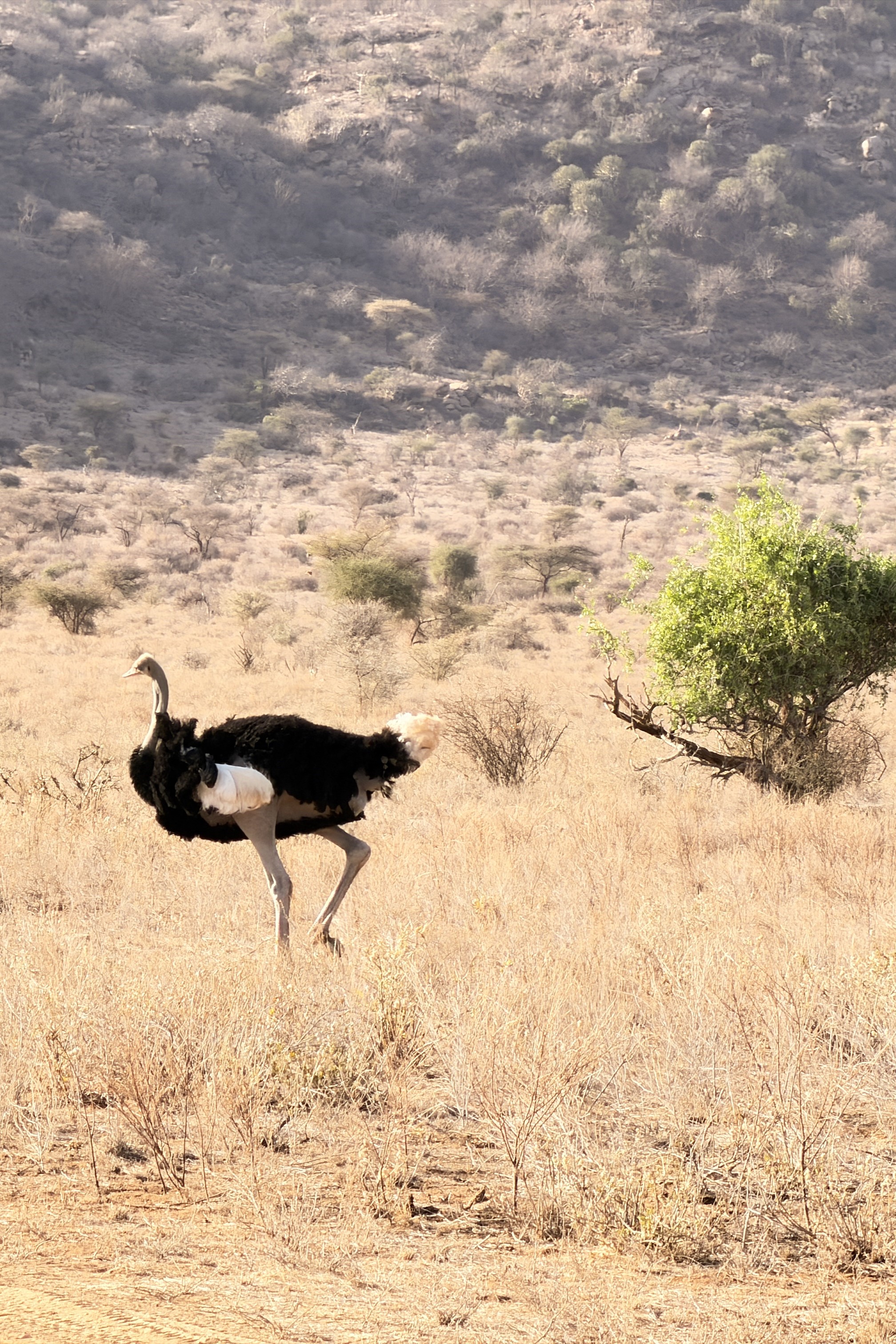
We managed to see the rest of the “Special Five”, including the Oryx with its long, rapier-like horns, and the Gerenuk, (nick named the giraffe antelope) which has a long neck and stands on its hind legs to reach high branches, and a whole family of Ostriches. We also spotted the Pygmy Falcon, and the Dik-dik, a very small antelope, who uniquelly mate for life. We learned a fascinating bit of "shift-work" trivia: the mother ostrich is a mottled brown to blend into the landscape during the day, while the father is black to stay hidden at night—they take turns sitting on the eggs based on who is best camouflaged for the hour!
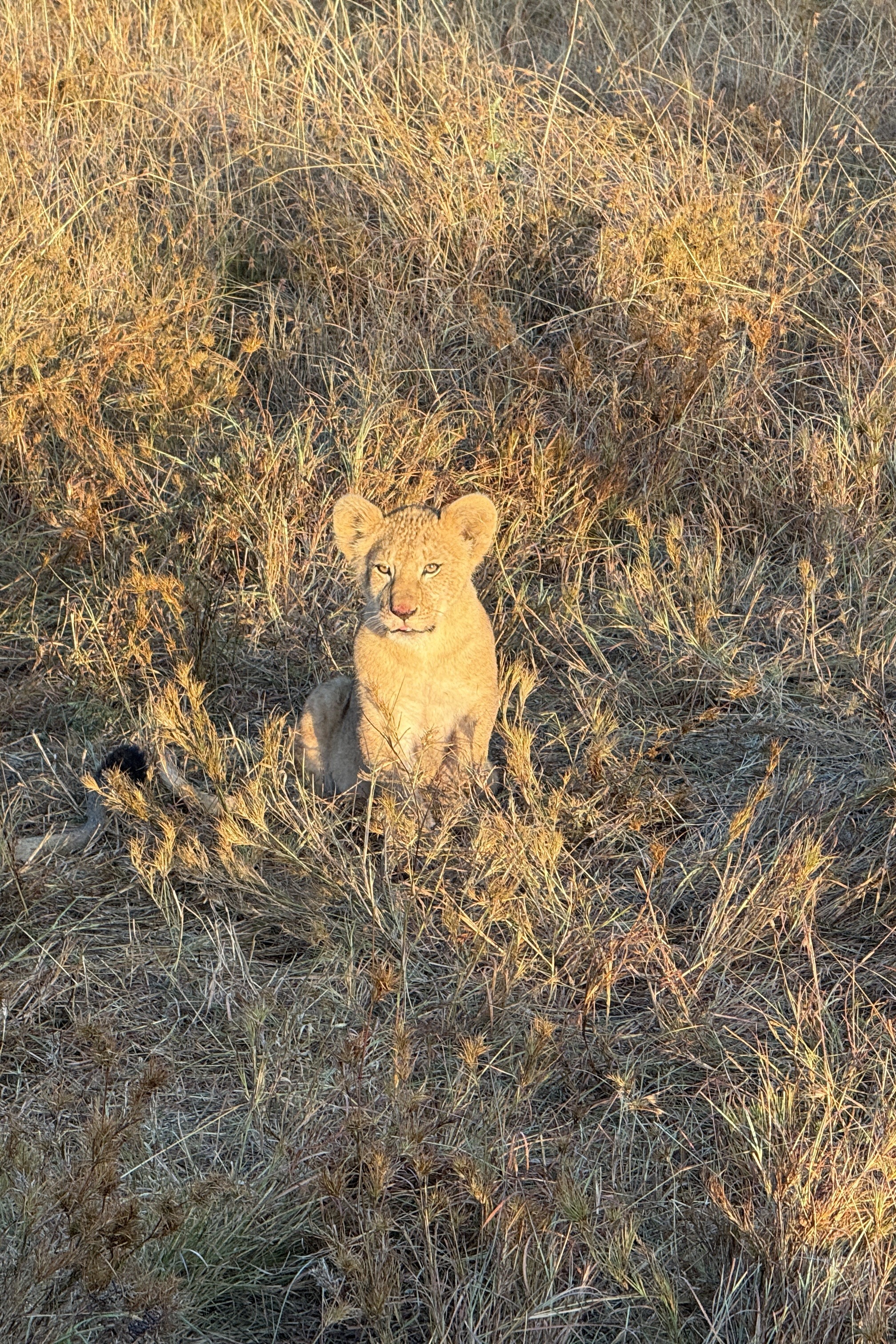
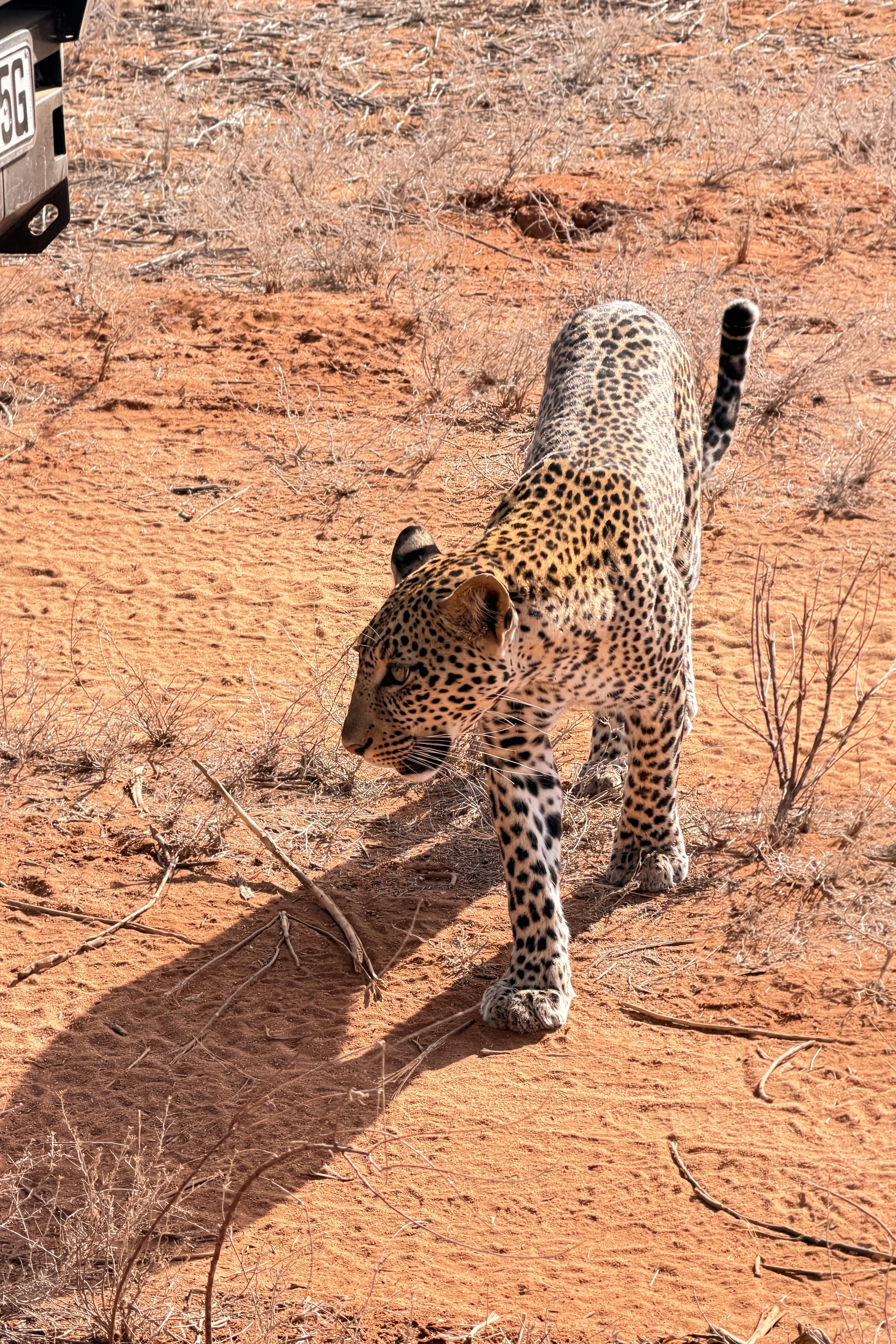
The leopards, however, remained the stars. One female walked so close to our vehicle that I felt I could have reached out and touched her fur (Tom had to whisper, “No, you can’t pet her,” because he knew exactly what I was thinking!). On our final day, we found a mother and cub in the trees eating a dik-dik. As soon as Julius cut the engine, they both emerged from the brush, walked into the open for about two minutes as if posing for a photo op, and then slipped back into the thicket so the mother could resume her meal.
Nature’s Drama: The Power of Animal Behavior.
What moved us most wasn't just seeing the animals, but witnessing their behavior.
- The Protective Circle: We watched a herd of elephants heading away from the riverbank. Suddenly, they caught the scent of lions. In an instant, the trumpeting started, and the adults formed a massive, outward-facing circle, physically shielding the babies in the center.
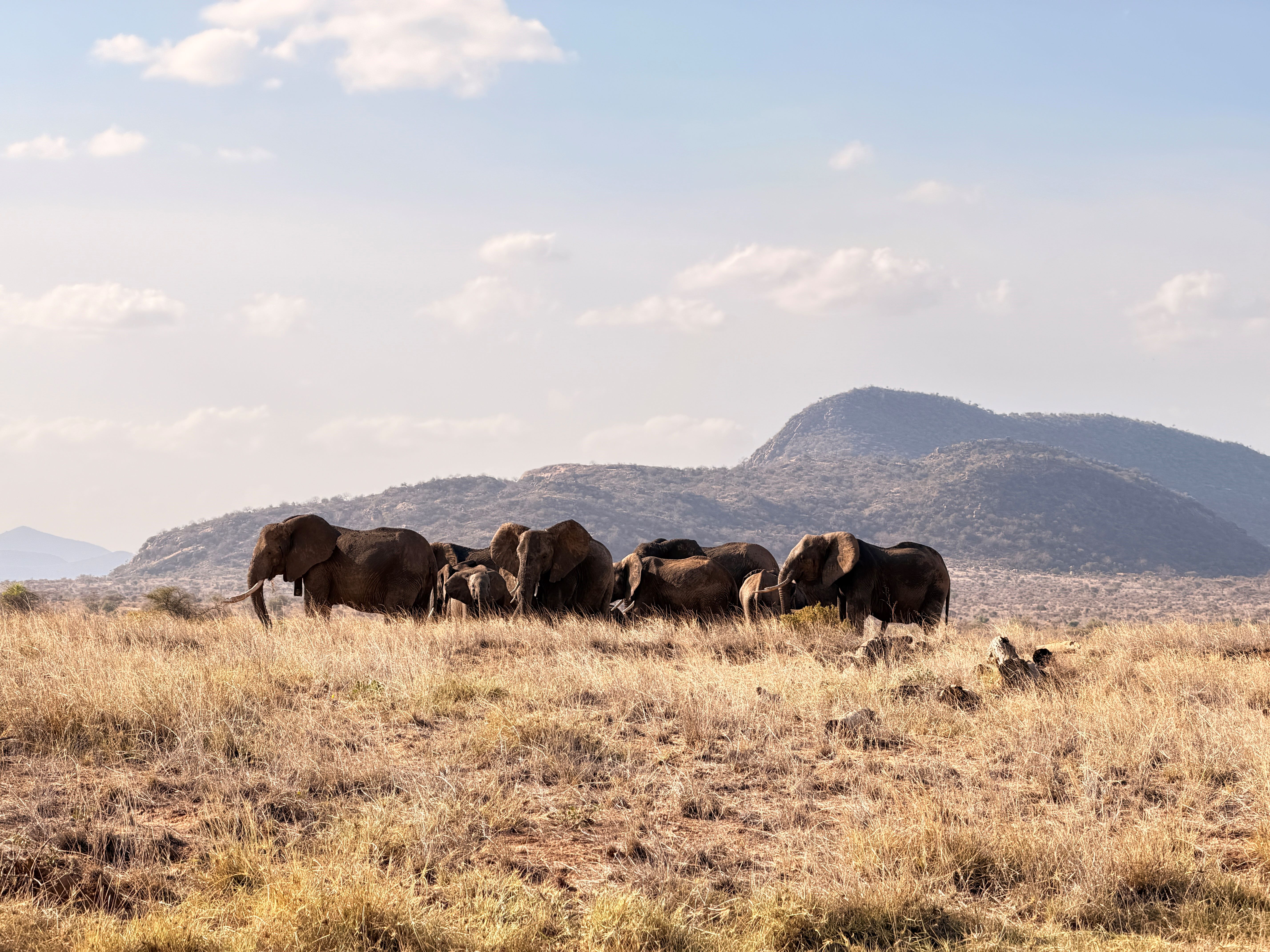
- The Sparing Adolescents: We witnessed two adolescent elephants engaged in a sparring match that quickly began to escalate in intensity. As the rest of the herd drifted toward the riverbed to drink, these two remained locked in a struggle where you could truly feel the animosity building. One adult stayed behind, patiently observing the confrontation until it became clear it was getting out of hand. The adult eventually walked over and seemed to communicate a final word, causing the pair to immediately stop and hurry to catch up with the group. It was a remarkable display of herd discipline and "parental" intervention that we were lucky enough to capture on video.
- The Efficiency of the Pride: We came across a small pride of lions with a domestic cow. Within 24 hours, there was almost nothing left but a ribcage and a bit of a skull. Watching the males assert dominance over the carcass was a sobering look at the hierarchy of the bush.
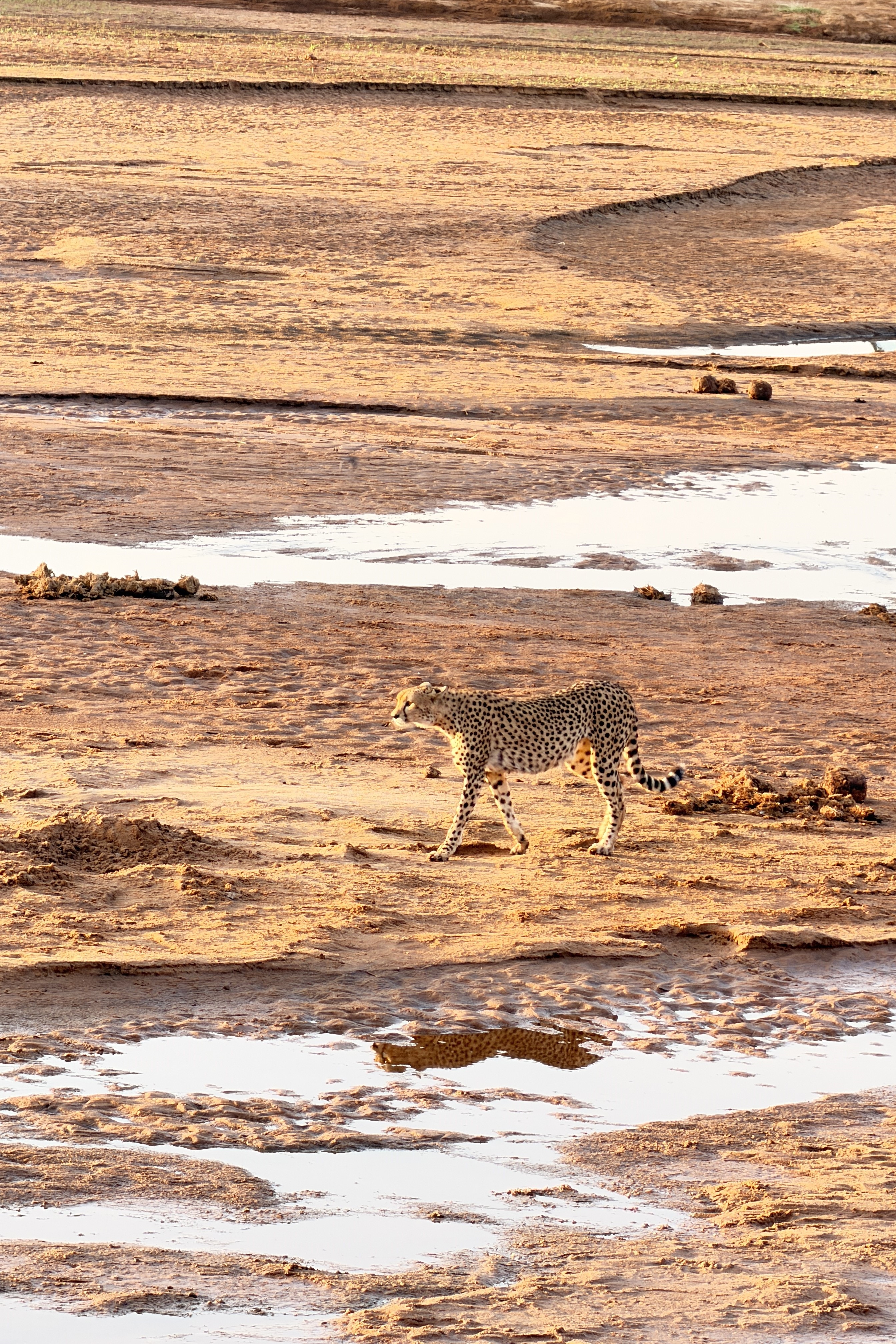
- The Audacious Duck: We followed a cheetah as it navigated the riverbank and leapt across the water with incredible agility. The most hilarious part, however, was a single duck that followed the cheetah across the riverbed, squawking at it the entire way. The cheetah didn’t even acknowledge its tiny heckler.
Shared Moments and Connections
Safari life is as much about the people as the animals. We shared our jeep with a few different travelers—a honeymoon couple from London and a couple from Bristol who, like us, were on their first-ever safari. It was wonderful to have that shared "first-timer" awe with them.
The "Imaged" Moment: Skipping the Drive
Before we even left for Kenya, I was asked what I truly wanted out of this safari. I said that while I wanted the game drives, I had this specific image in my mind: sitting on my deck with a glass of wine, simply watching the animals interact in front of me at a watering hole.
We had been told to never skip a game drive because you never know what you'll miss, but one afternoon, we decided to take the risk. We went to the elevated dining area, opened a bottle of wine, and just sat. It was exactly what I had imagined. We watched elephants, zebras, and gazelles gathered at the watering hole across the riverbed, while a single giraffe moved along the high ridge. Below us, a group of baboons completely took over the lower dining area, playing on the tables, chairs, and umbrellas.
We did eventually find out that we missed amother cheetah and two of her young during that drive, but for us, it was worth it. We got to live out the exact experience I had dreamed of, proving that sometimes the best "sightings" happen when you just sit still.
Reflections on the Journey
While Ol Pejeta was a lesson in the "now," Samburu felt like a lesson in interconnectedness. Watching the baboons play, the elephants protect their young, and the lions claim their place in the circle of life made us realize how small we are in the grand design of things. We didn't just leave with pictures of the "SpecialFive"; we left with a deeper understanding of how every living thing in this harsh, beautiful landscape relies on the other. We left Kenya with a profound appreciation for the "now," and a memory bank full of moments that no National Geographic special could ever replicate.
Links: More Trip Reports |
Up Next: Egypt Trip Report
Welcome to the new Touchpoint Wines
We’re blending our passion for wine with a love for global exploration. Join us as we journey through the world's most captivating destinations, uncovering hidden wine gems and offering unique workshop experiences for your team retreats. Whether you're seeking to enhance team dynamics or discover the art of slow travel, let us be your guide.