At a Glance
- Duration: 4-night stay.
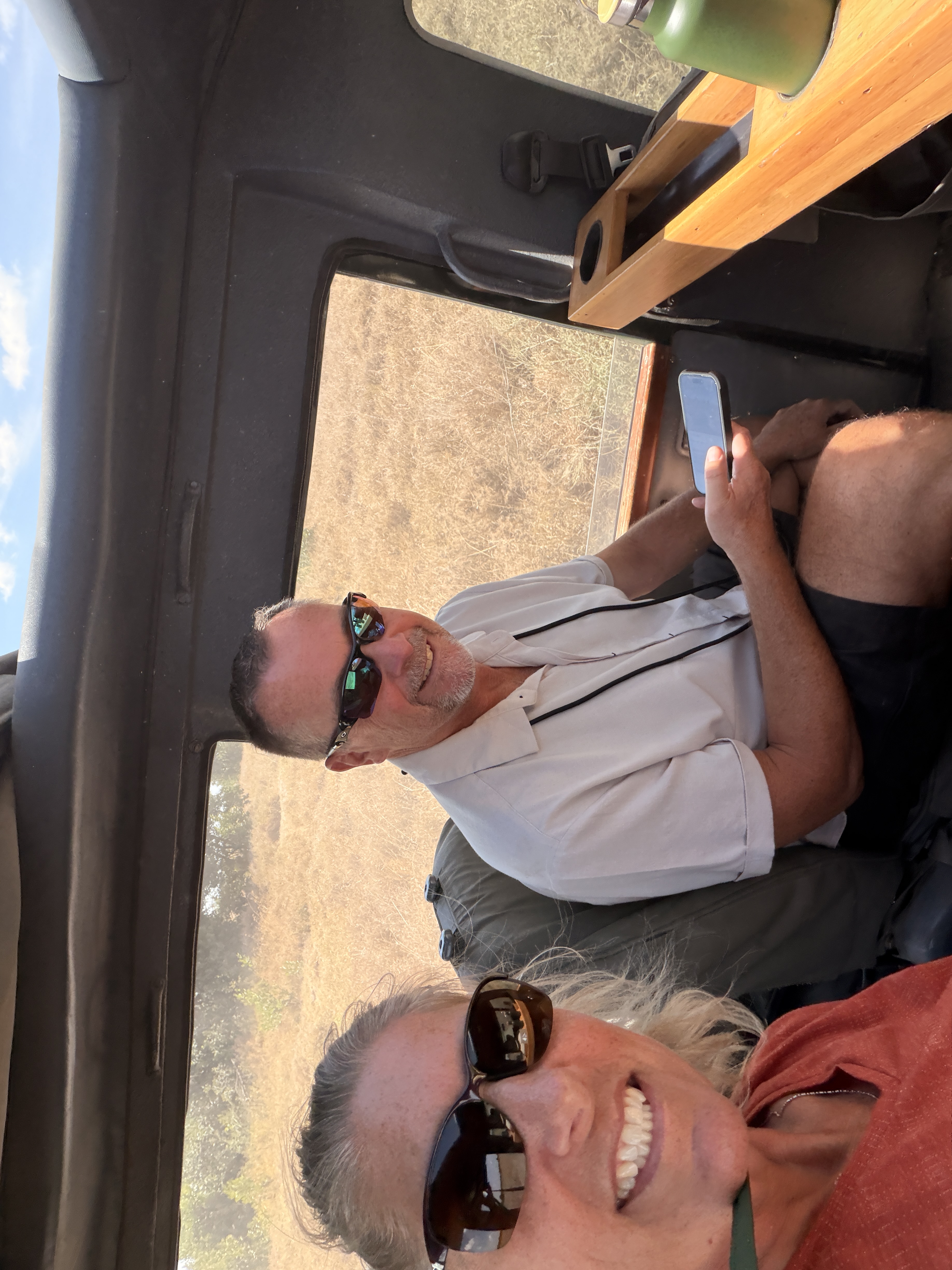
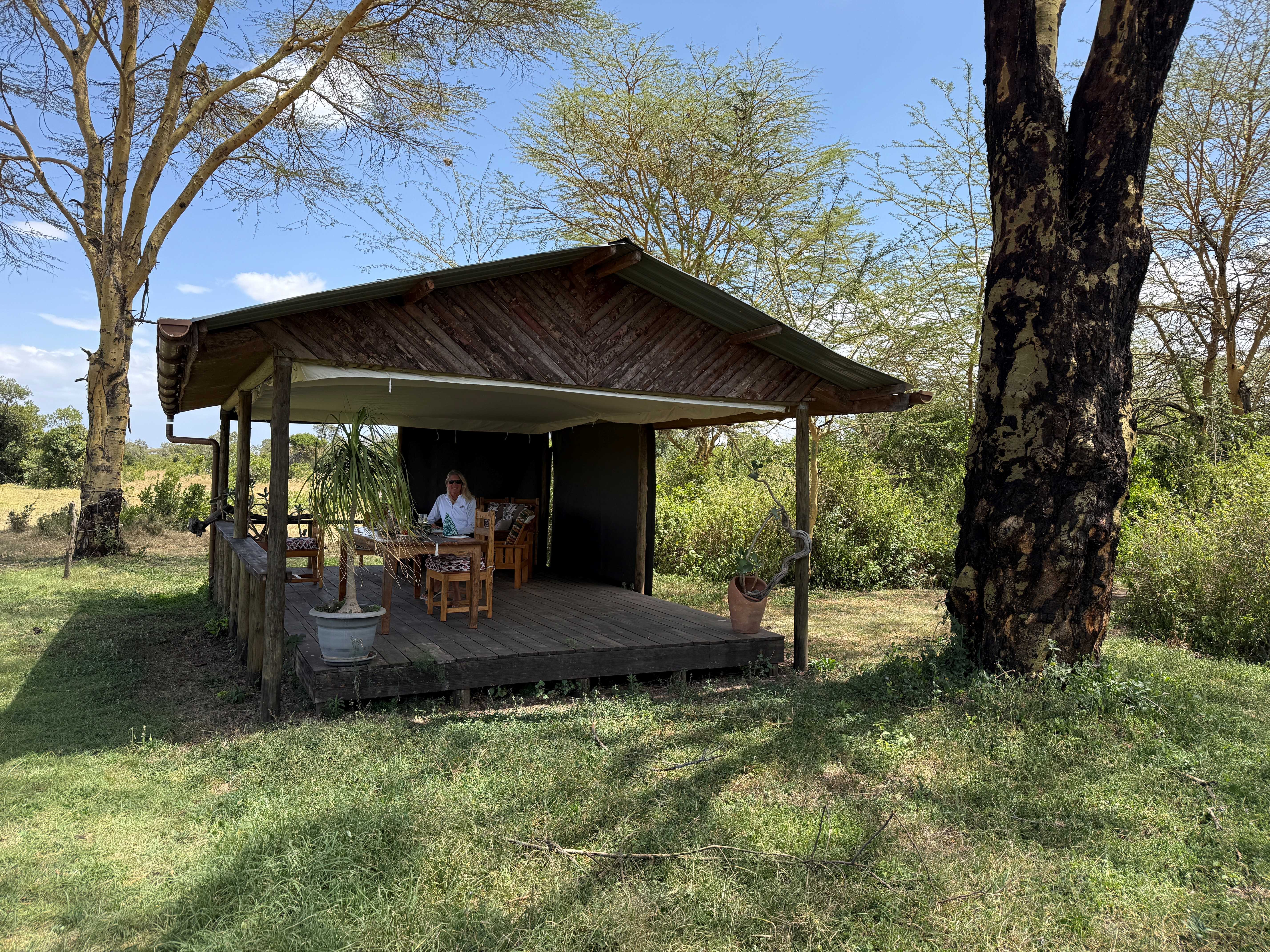
- Home Base: The Safari Cottages. A secluded group of cottages within the Ol Pejeta Conservancy, featuring a private deck and a dedicated team including our guide, James, our steward, Edwin, and our chef, Victoria.
- Top Wildlife Moment: Witnessing two lionesses stalk and take down a warthog right in front of our jeep.
- Memorable Quote: “Are you sure we are OK to get so close?” — “Yes, but remember, you are food!"
- Overall Vibe: Raw, wild, and incredibly educational. Unlike the more manicured national parks, Ol Pejeta felt like a vast, untamed wilderness where we were true observers of nature.
After spending a full month living as 'temporary locals' in Nyali Beach, we traded the soft sands of the coast for the high-altitude plains of the Ol Pejeta Conservancy. This was our first introduction to the Kenyan bush, and it was a complete shift in every sense of the word.
One of the Best Experiences of Our Lives
We have been lucky enough to see some incredible things on our travels, but our first African safari easily ranks as one of the best experiences of our lives. The sheer scale and raw beauty of the Kenyan landscape are overwhelming, but it was the immediate immersion into the animal kingdom that took our breath away.
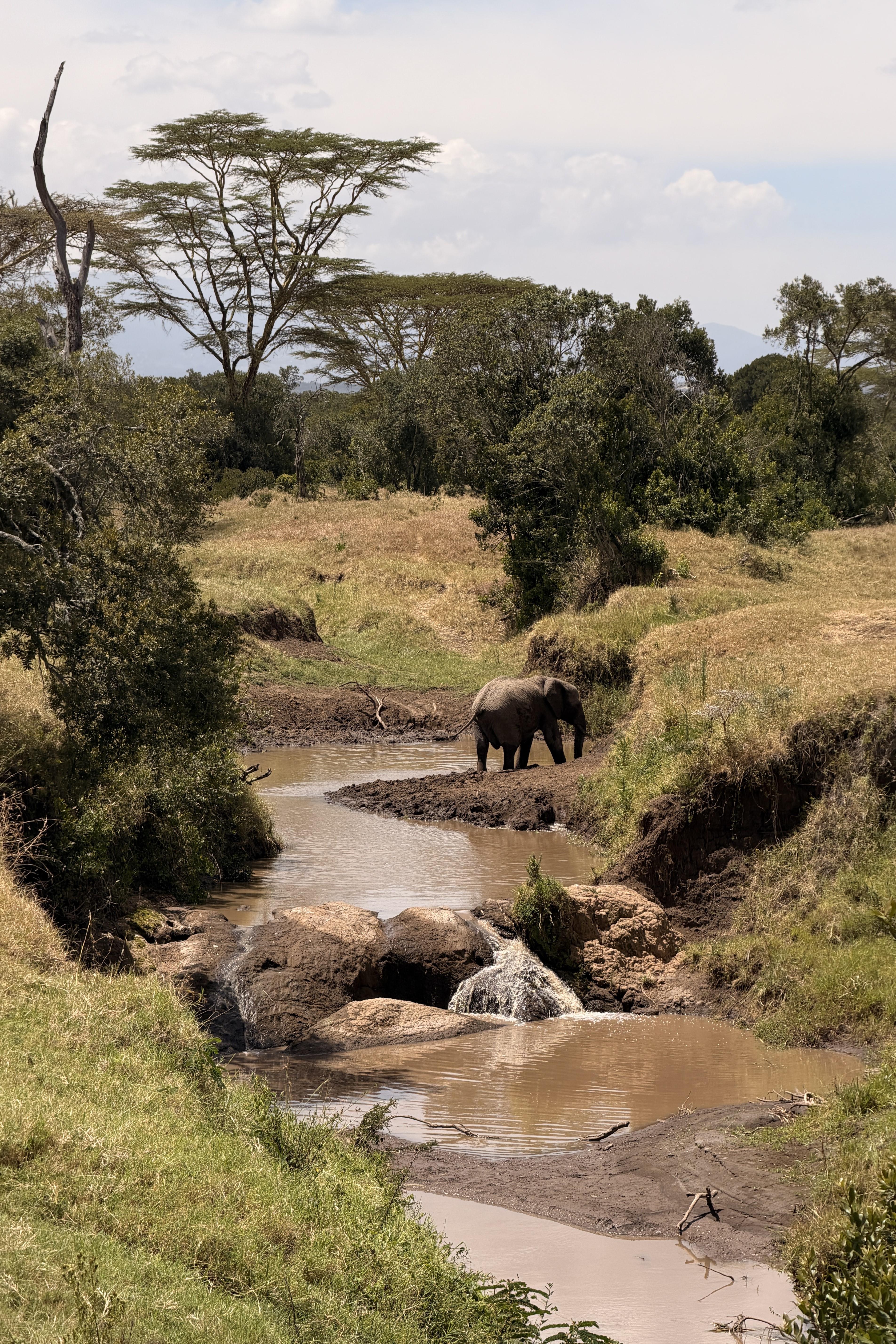
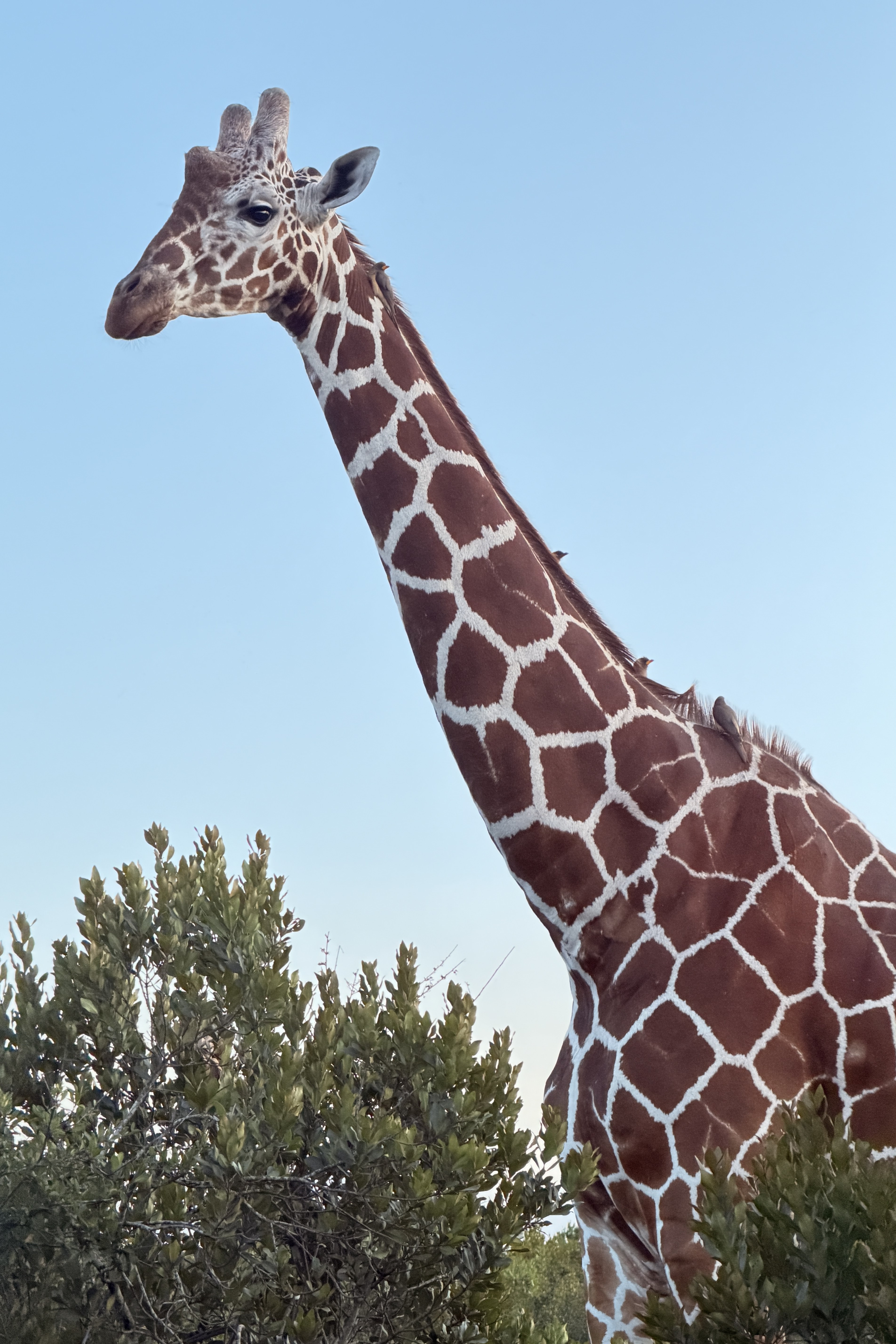
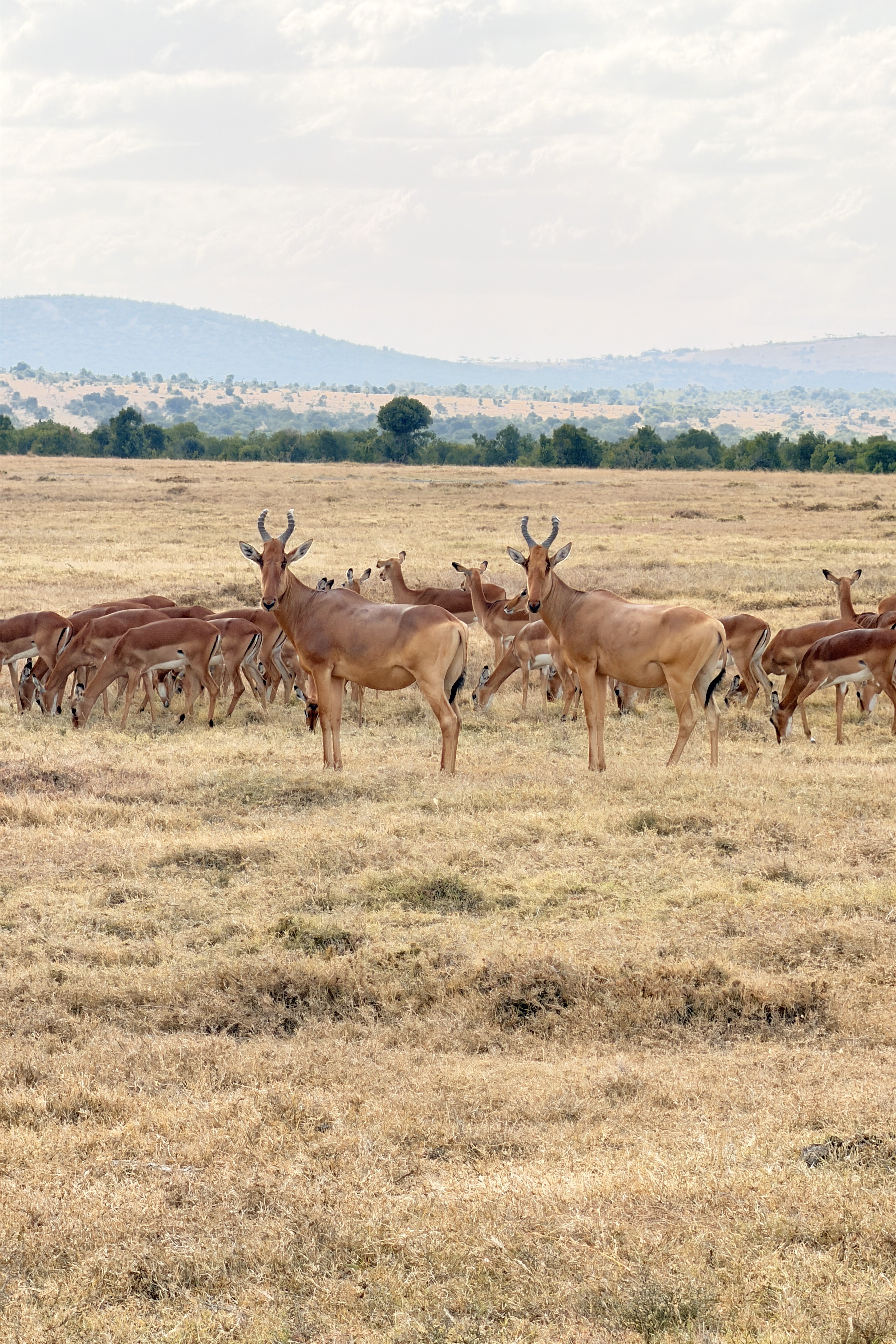
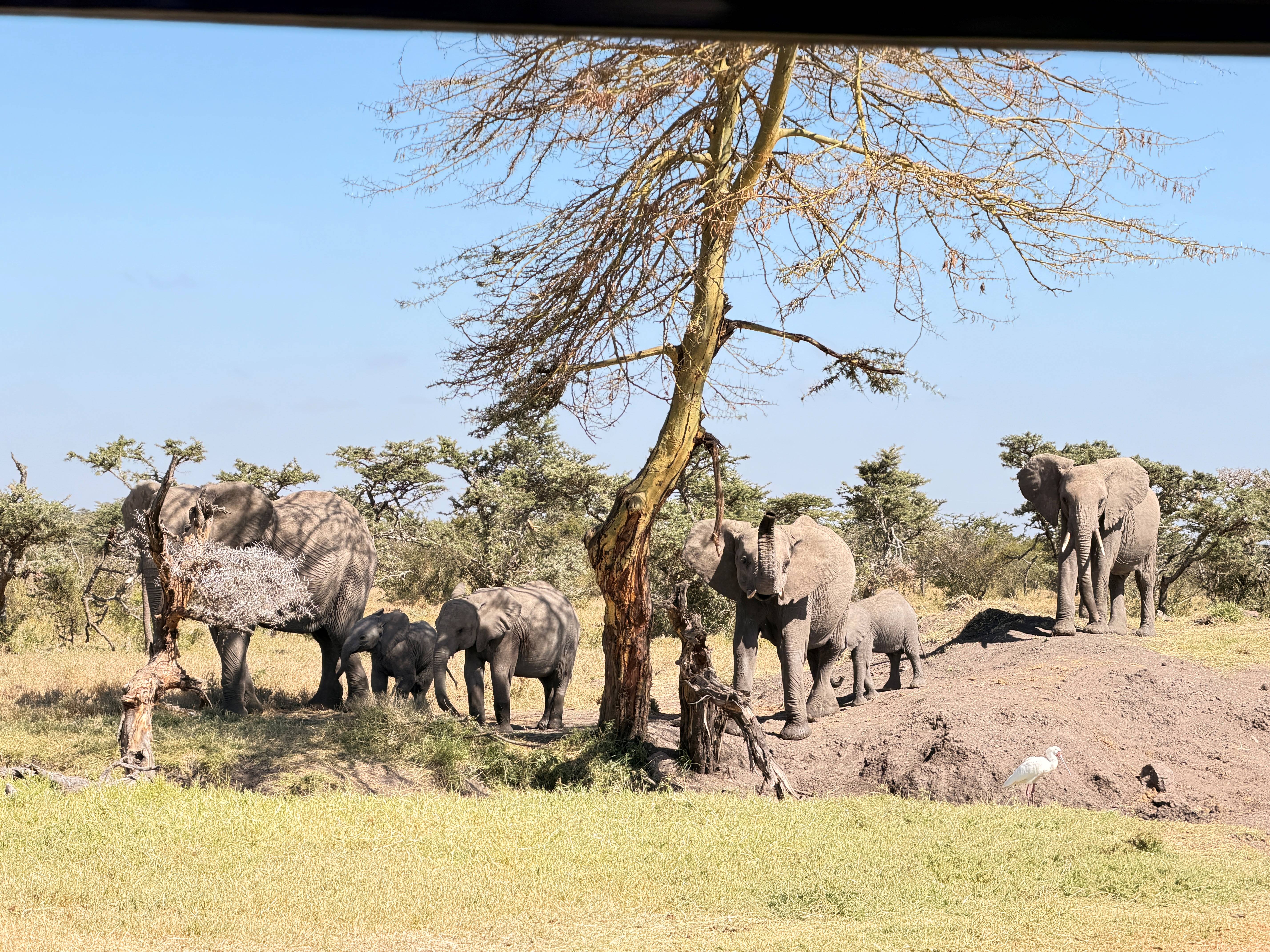
Within just 15 minutes of entering the gates of Ol Pejeta, we were hit with a "safari rush" that we never expected. We were suddenly surrounded by Elephants, Rhinos, Thompson Gazelles, Grant Gazelles, Zebras, Coke’s Hartebeest, and Baboons. But the standout was our first sighting of the Reticulated Giraffe. These are distinct from the giraffes you see in the south; they have a stunning, net-like pattern of large polygonal liver-colored spots outlined by sharp white lines. Native to northern Kenya, they are taller and more "articulated" than we imagined, moving with a prehistoric grace that made us feel like we had stepped into another era. Watching them work their way down to the riverbed and spread their legs in order to get close enough to the ground was something we never saw repeated and were grateful to experience that as our first introduction to the giraffe.
More Than a Park: The Mission of the Conservancy
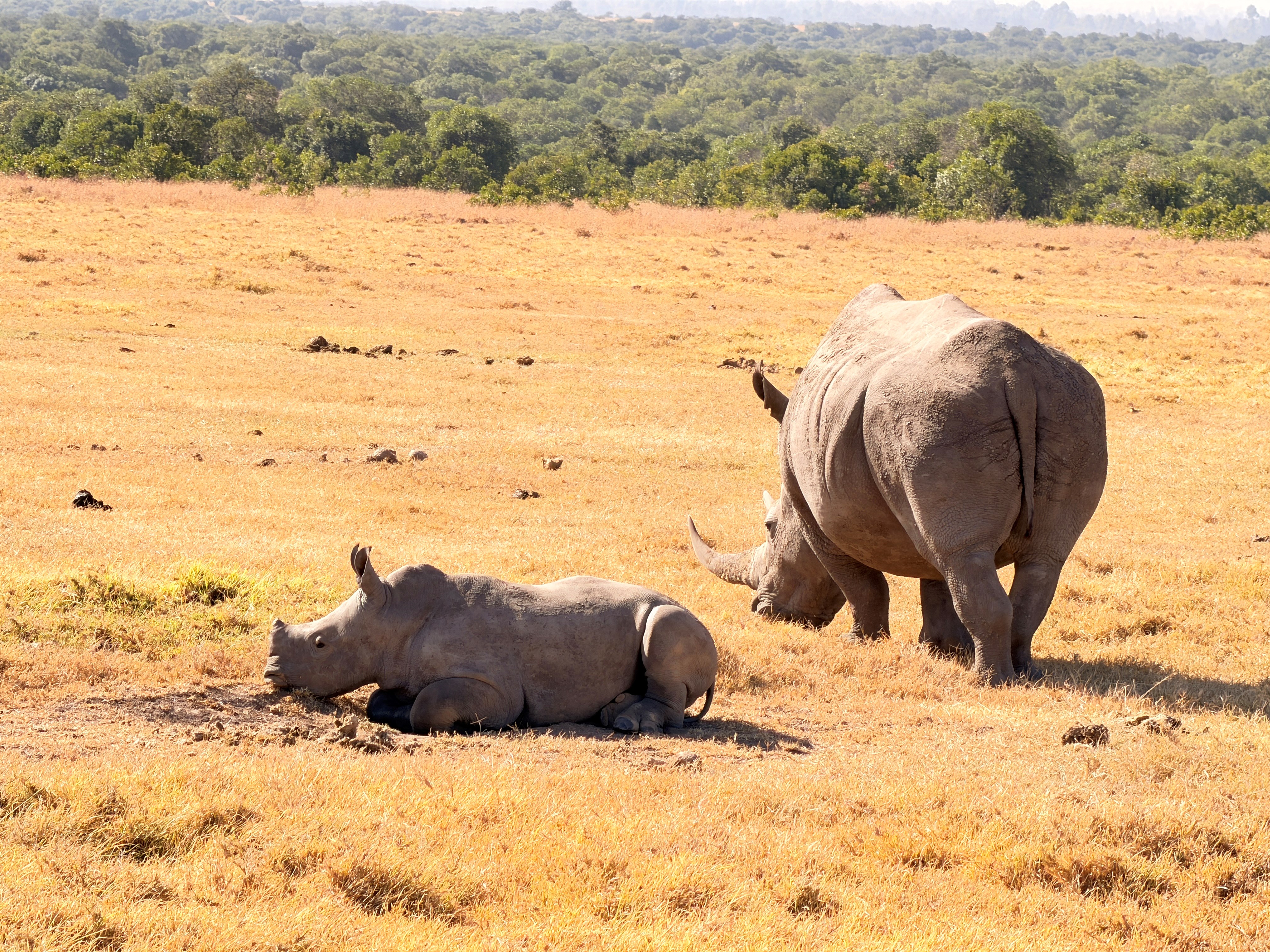
One of our first lessons was the distinction between a National Park and a Conservancy. While both are dedicated to wildlife, a conservancy like Ol Pejeta is a privately managed sanctuary with a deep focus on community and the protection of endangered species—specifically the Black and Southern White Rhinos.
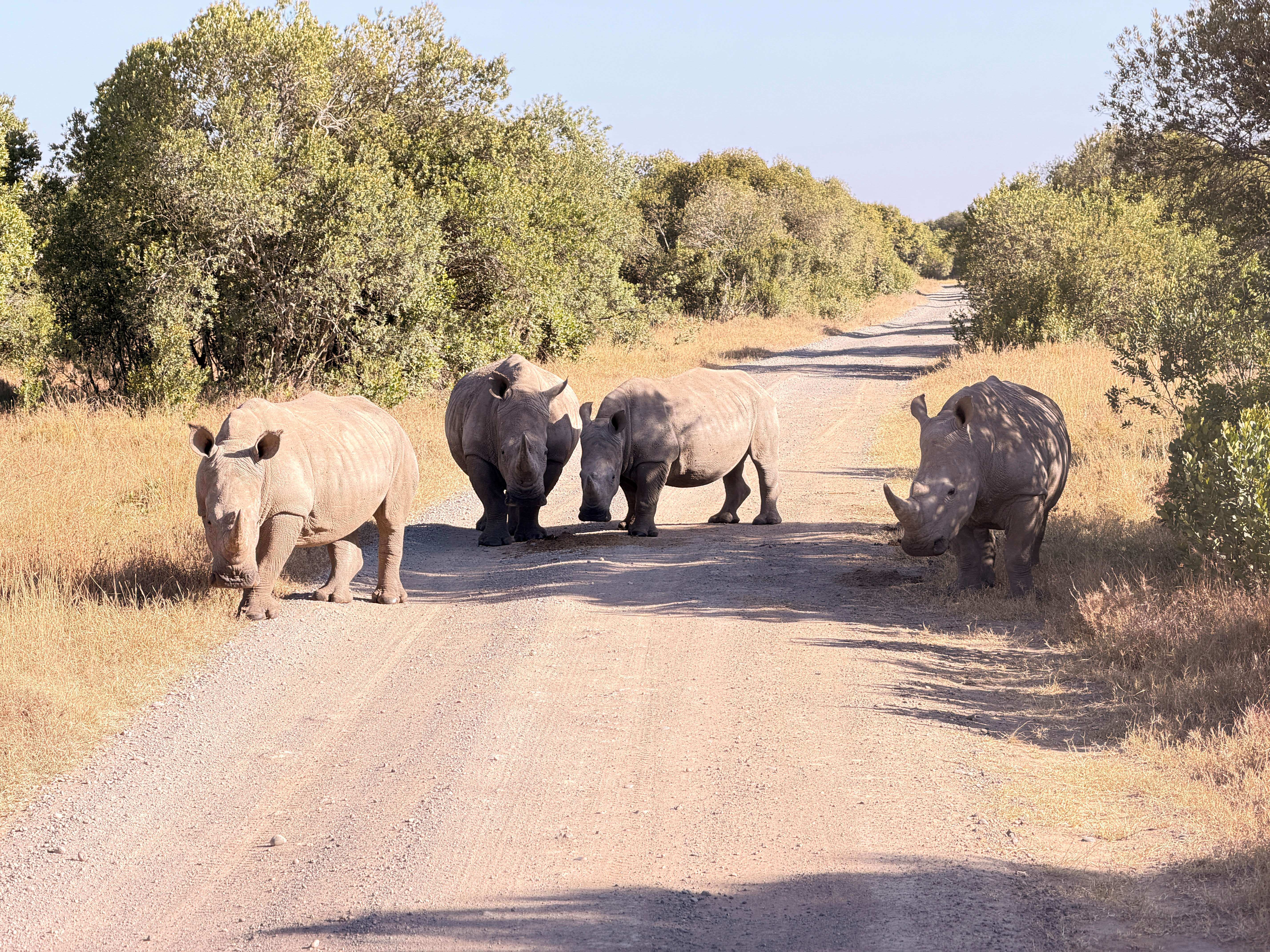
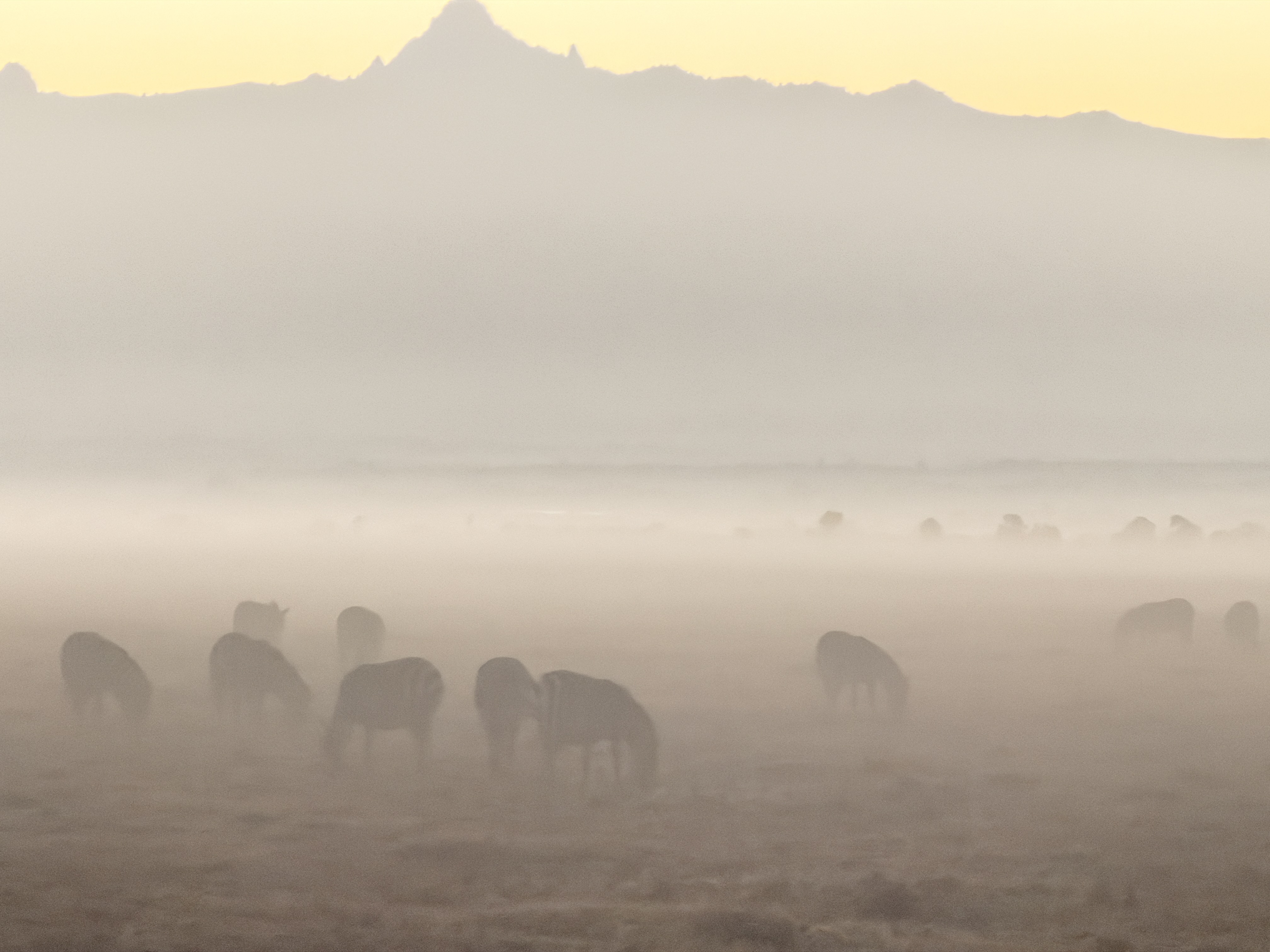
Ol Pejeta is a true strong hold for these giants. James taught us how to tell them apart: the Southern White Rhino is a grazer with a wide, square mouth for eating grass, while the Black Rhino is a browser with a hooked, triangular lip meant for pulling leaves off branches. We even witnessed a "crush"—the wonderful term for a group of rhinos—just lounging together in the sun. It was fascinating to learn about the "invisible" barriers used to keep them safe; because rhinos have such poor eyesight, the conservancy uses low stone walls that the rhinos perceive as impassable cliffs, keeping them within the protected zones without the need for high fences.
The Rhythm of the Wild: From Hot Water Bottles to Sundowners
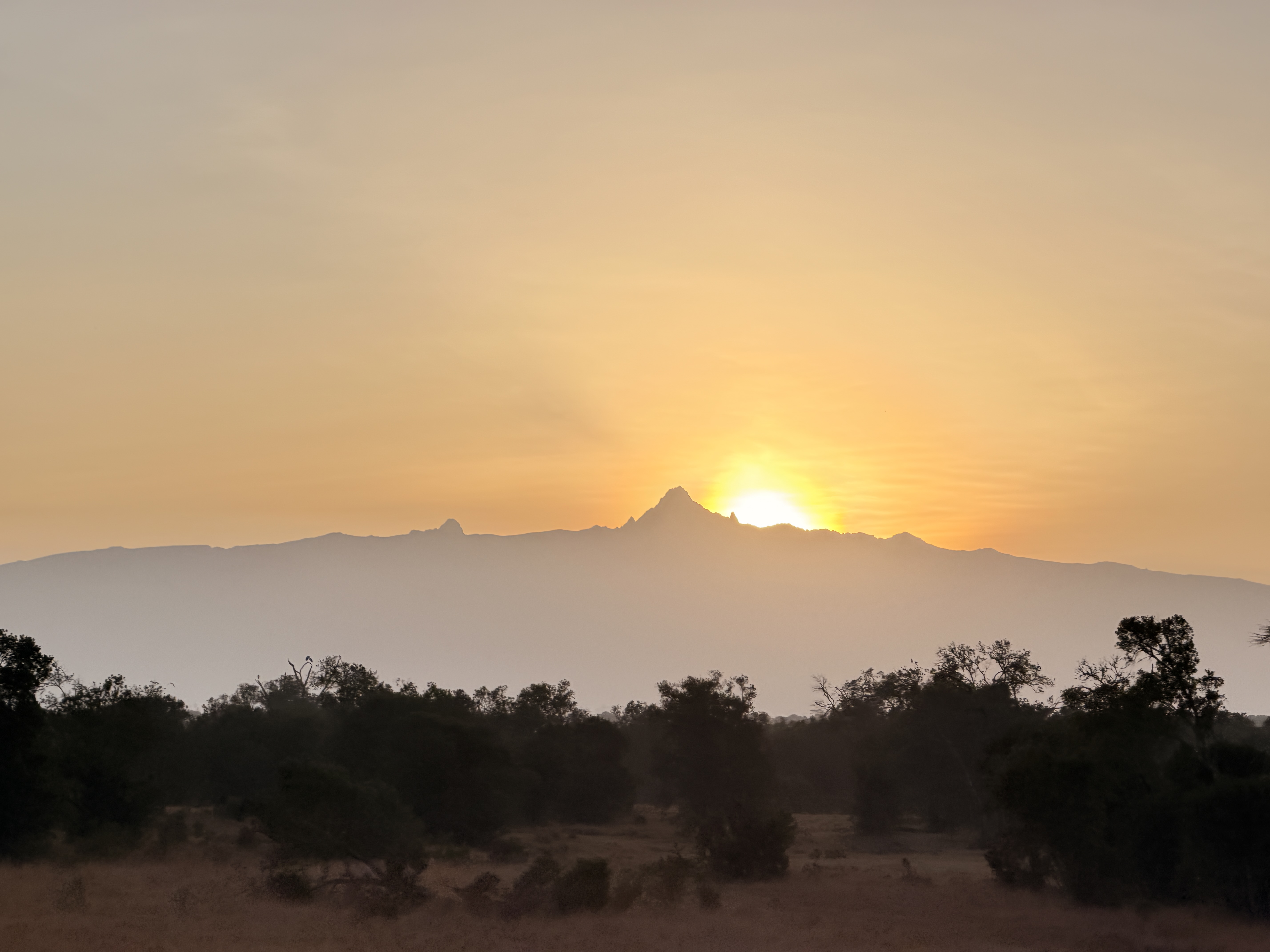
Life at the cottages followed a predictable, sensory-rich pattern. Our 5:30 AM wake-up calls happened in total darkness. We would be woken with someone delivering coffee and to-go mugs and a plate of cookies to get us going. We’d huddle in the jeep under layers of clothing and travel blankets, clutching hot water bottles to our chests to ward off the morning chill, as it was in the 50’s (°F) when we would start our drive. It was amazing to watch the sun rise behind the peaks of Mount Kenya.
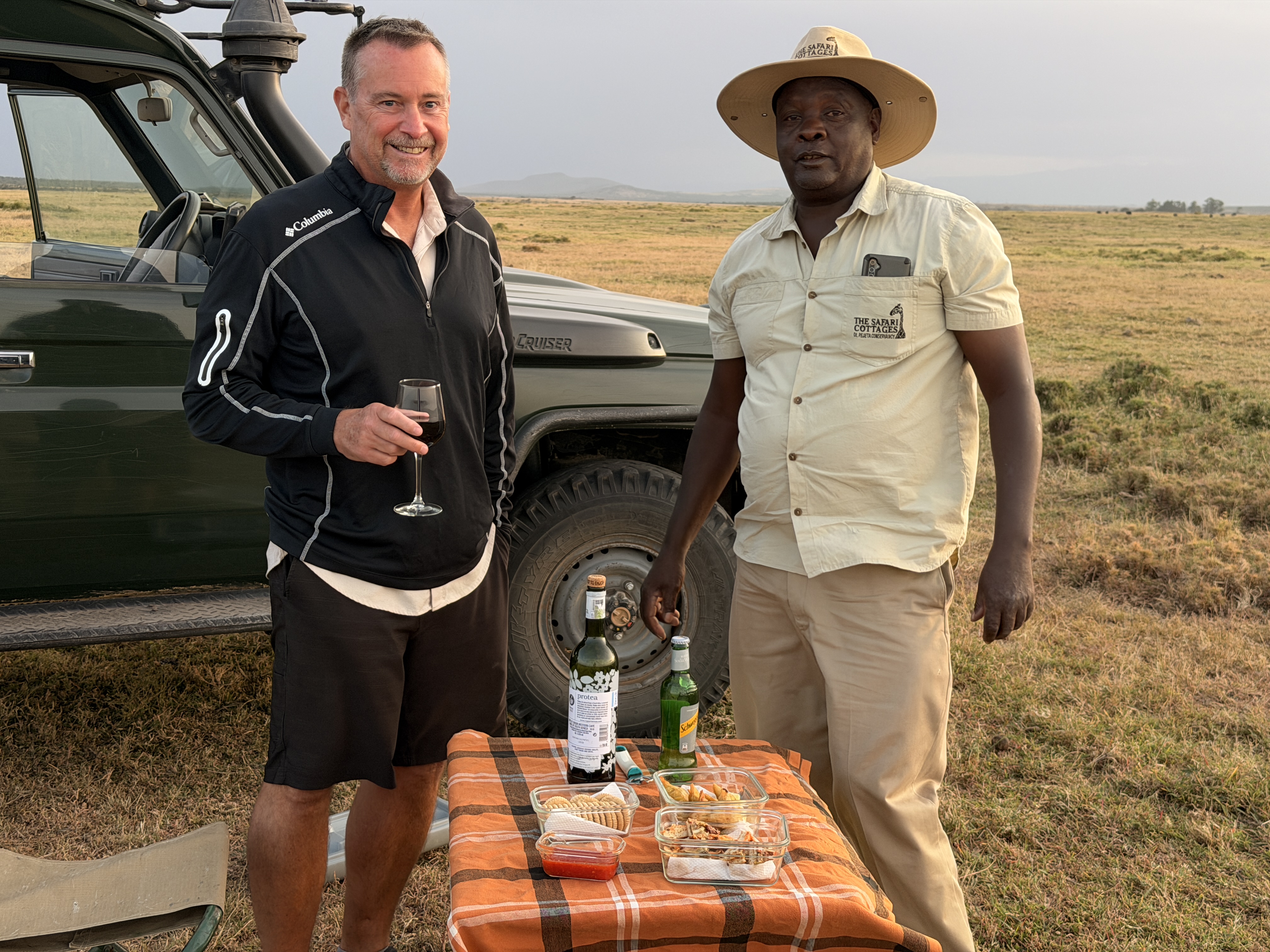
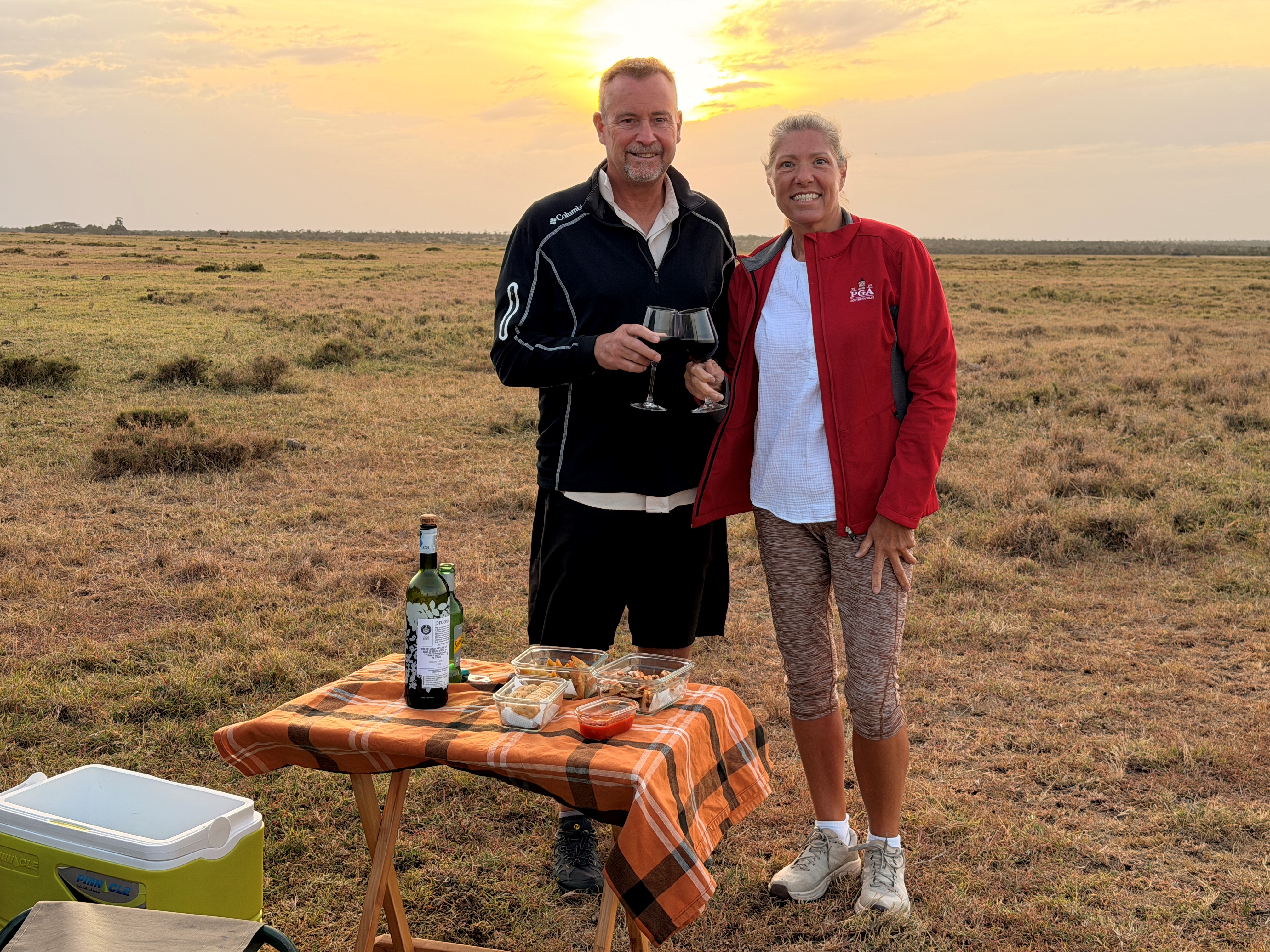
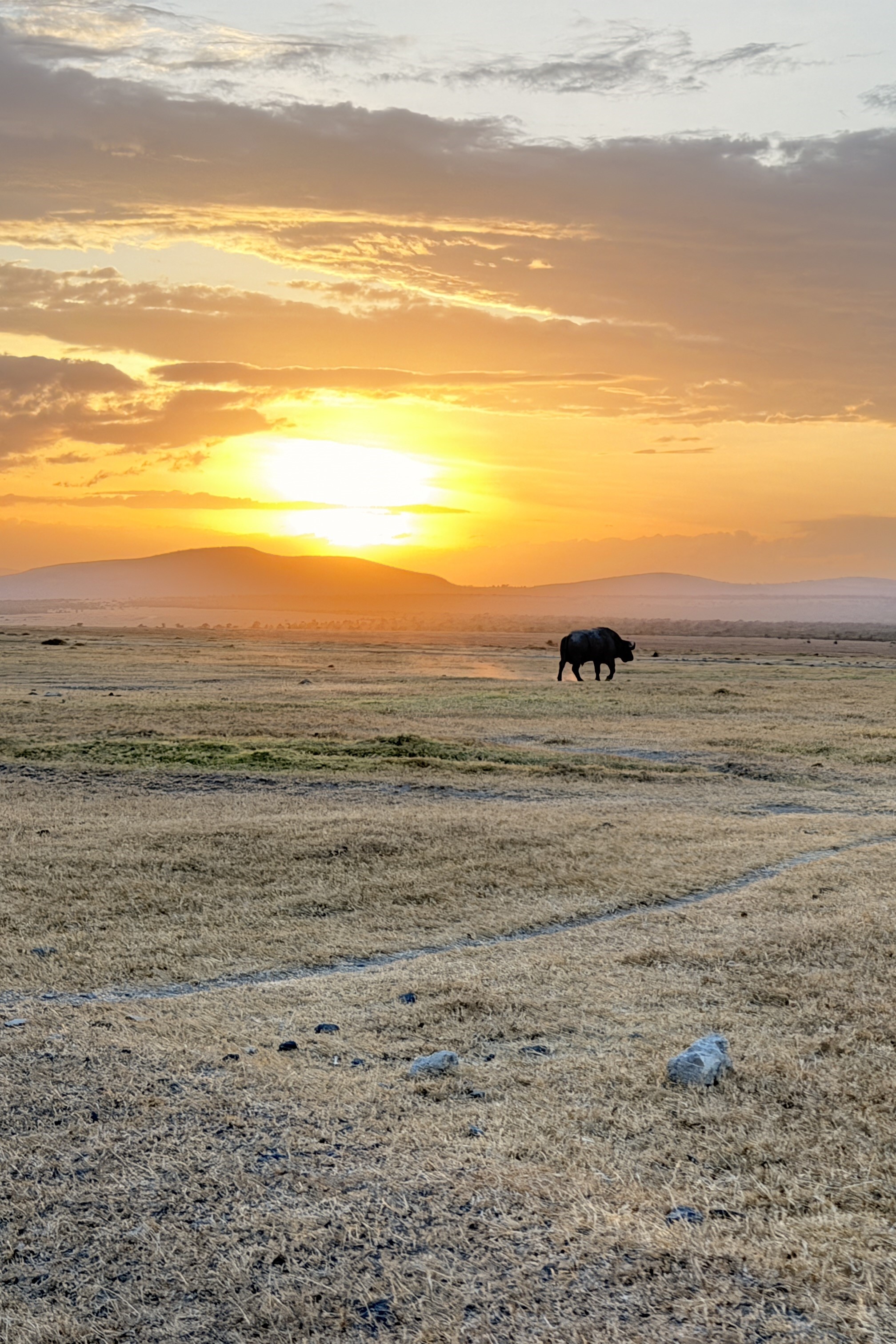
By 6:00 AM, we were out on the plains, trying to catch the lions while they were still active before the equatorial sun forced them into the thickets. We would stop around 8:30 to have our breakfast as a picnic in the bush; which was one of the special things I will always remember about safari at Ol Pejeta. Around noon, we’d head back to camp for a private lunch on our deck or at the observation platform just a short walk away. By 4:00 PM, we were back out for the evening drive, which always concluded with a "sundowner"—a bottle of red wine or Prosecco and snacks as we watched the sun set. We’d return to camp by 7:30 PM for a dinner of soup and a light salad, and even with a full moon for much of our time, we enjoyed a tour of the most brilliant night sky we have ever seen.
Beaded Treasures: A Unique Kenyan Souvenir
We generally don’t buy many things on our travels—partially due to luggage space and partially because we prefer experiences over items—but at the cottages, we were introduced to something we found absolutely clever. They use these beautiful glass and bowl covers made of fine netting material, decorated with intricate beadwork on the edges. The beads act as weights to keep the wind from blowing them away while keeping bugs out of your drinks and food.
They are lightweight, roll up to almost nothing, and are quintessentially Kenyan. We bought two wine glass covers and two bowl covers at the camp, but since they didn't have enough of the wine glass size left, James took us to the local craft store on our way out to meet our next driver. We met the local women who meticulously hand-bead these items and bought a few more. They are the perfect "useful" souvenir that will always remind us of our first safari and the craftsmanship of the Kenyan women.
Living "In It": The Rawness of the Cottages
What made this stay truly special was how unshielded we felt from nature. At night, the air was filled with a symphony of "woofs" from lions, the deep trumpeting of elephants, and the snorting of buffalo just outside our walls. Every evening, our guard, Ian—armed only with a flashlight—would build us a fire and stay with us to ensure no leopards or buffalo wandered too close to the cottage.
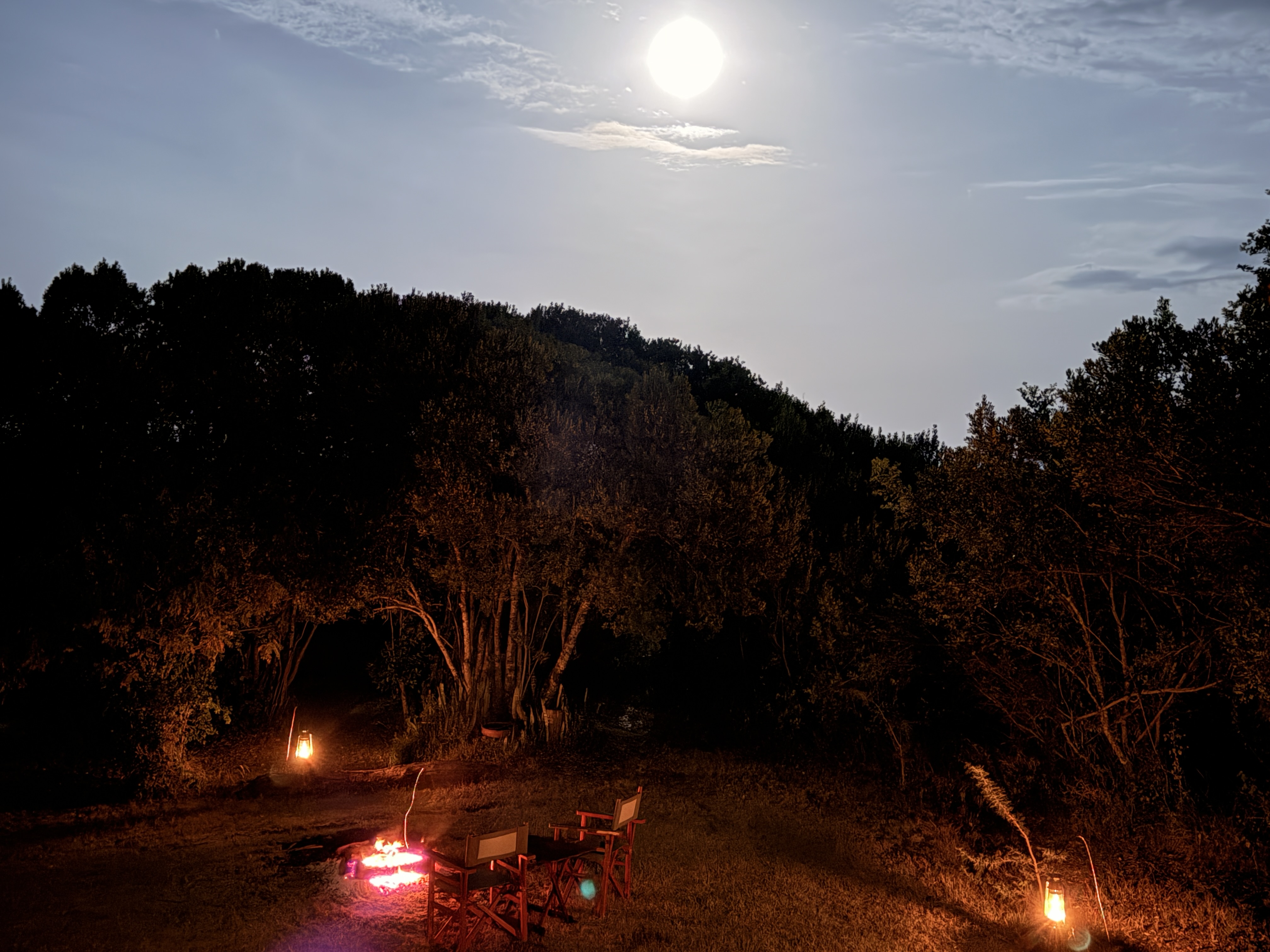
One night, Ian (who also happens to be a very knowledgeable amateur astronomer) gave us a mesmerizing tour of the constellations. Being on the equator, the sky looked completely different than it does back in North Carolina; even familiar sights like Orion’s Belt were situated differently. The sky was so crowded with stars it was actually hard to pick out the ones we knew. We saw a falling star and three satellites tracking across the darkness. However, I didn’t linger outside as long as I wanted—the night sounds were genuinely freaky. At one point, I heard a rustle and Ian calmly whispered, "Hyenas," and I was back inside the cottage in a heartbeat!
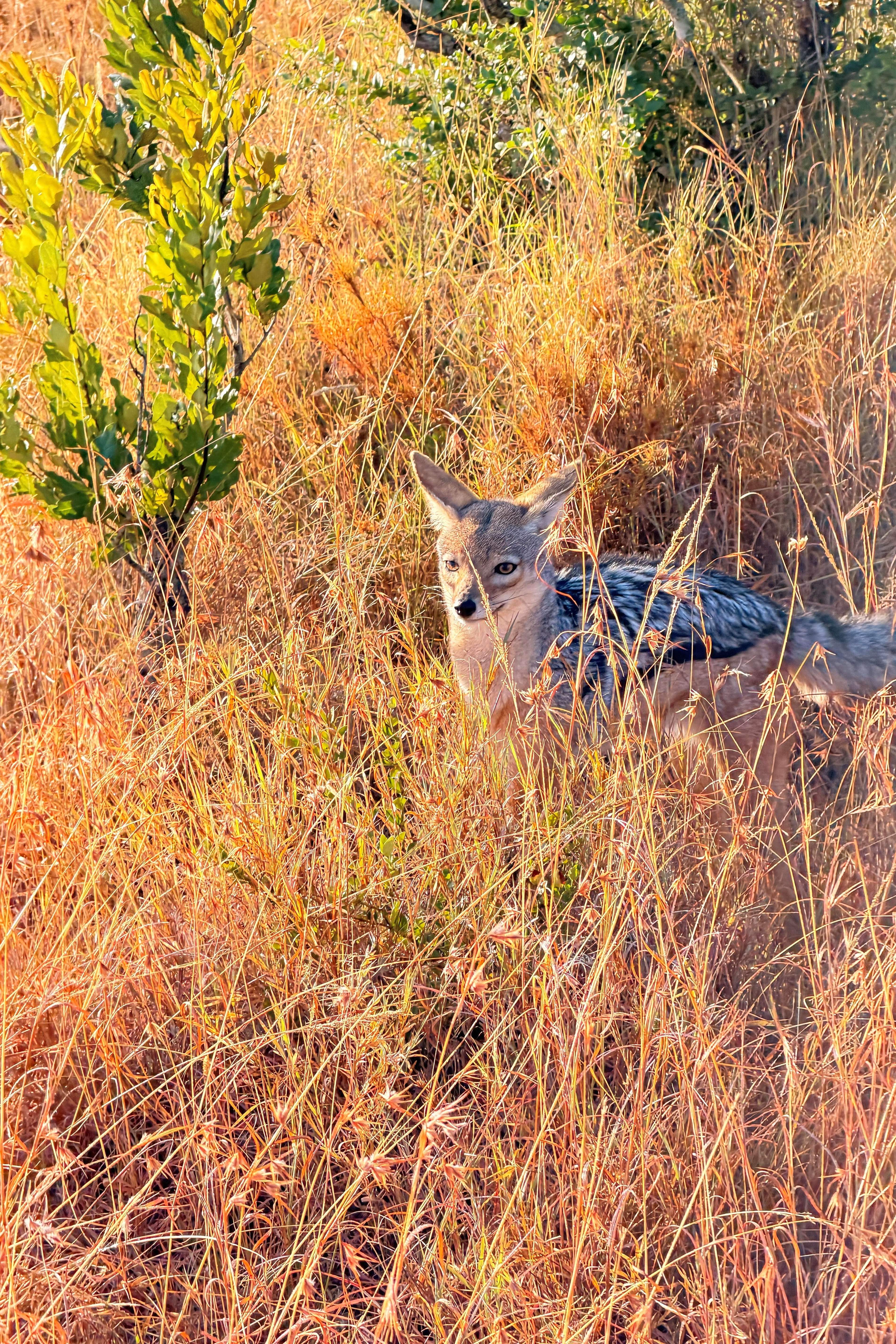

Standout Sightings and "Stump-Like Animals"
The wildlife sightings were nothing short of legendary.
Exceptional Sighting: On one drive, Tom spotted “something”, he wasn’t sure if it was an animal or a white tree stump in the distance. As James backed up to get a us closer, the "stump" stood up and started walking—it was a cheetah! This launched a recurring joke for the rest of the trip: "Can we find another stump-like animal today?" We followed the cheetah as he meticulously marked his territory, which visibly upset a nearby Hartebeest that actually tried to challenge the cat.
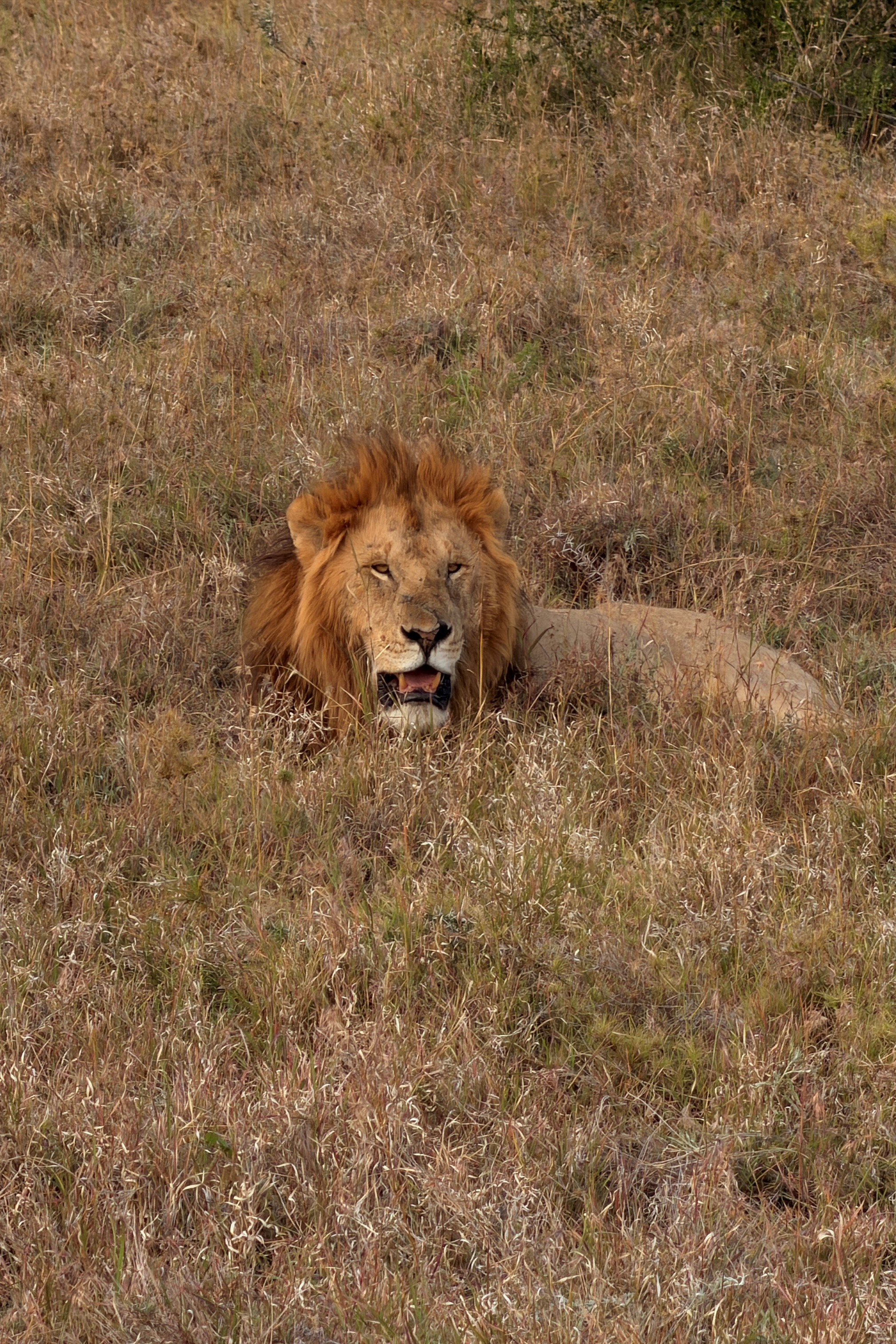
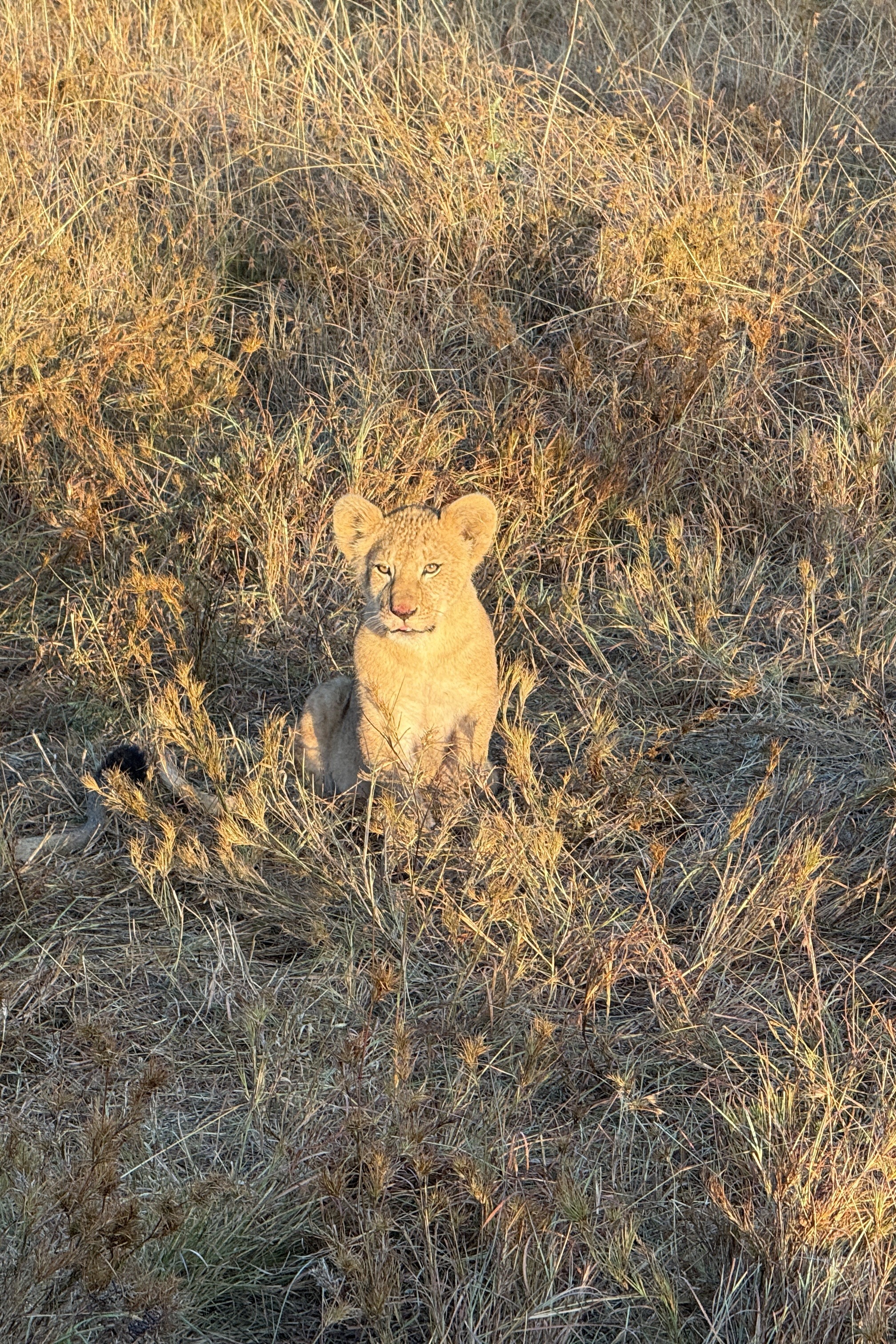
The "Off-Duty" Lioness: Following the intensity of the warthog hunt, we moved a short distance for our picnic breakfast and watched as the rest of the pride, including several cubs, joined the two hunters to settle in for the day. It was a comical "parenting" moment in the middle of the savanna. The lead lioness scouted a spot to escape the heat, but she was immediately besieged by two energetic cubs who used her as a trampoline. When she moved to a different spot for some peace, two more cubs veered away from the group to jump on her again. She lasted exactly five seconds before firmly nudging them away toward the other adults. It was a perfectly relatable moment of: “I caught the breakfast and I’m exhausted—go find someone else to jump on!”
Baby Animal Behavior: We were also incredibly lucky to see an abundance of babies. From tiny rhinos and buffalo calves to elephant calves, lion cubs, and gazelles, it felt like a season of new life. Watching the babies mimic the adults to learn was also something James pointed out to us; the elephants trying to rip up the top of the grass and leave the roots (they actually couldn’t pull it up, but it was fun to watch them try); the babies tussling and “play-fighting”, and the baby lions moving in around the buffalo kill mimicking the adults, and generally being tolerated, but getting a soft push when they got too much in the way.
Education of the Best Sort: James, who worked for the conservancy for 17 years before joining The Safari Cottages as guide, was amazing at sharing his knowledge about animal behavior. He pointed out the silent communication lions use during a hunt, showing us how they use the black markings on the back of their ears and tips of their tails to signal to the rest of the pride while staying hidden in the grass.
Fearful Moment: The most intense moment, however, was watching a conservation ranger walking down a road, completely unaware that a pride of lions was crouching in attack mode just yards away. We were terrified, waiting for the worst to happen, while James frantically tried to alert him. The ranger just waved us off with a smile, later telling us he had an "arrangement" with the cats. It was ten of the most emotional minutes of the trip.
The Night Drive and the Sentinel Bull
One evening, we headed out for a night drive, which provided a totally different perspective. We saw a massive herd of zebras suddenly take off running into the darkness. When we investigated with the spotlights, we discovered a pride of sixteen lions out in the savanna, fully mobilized for a night hunt.
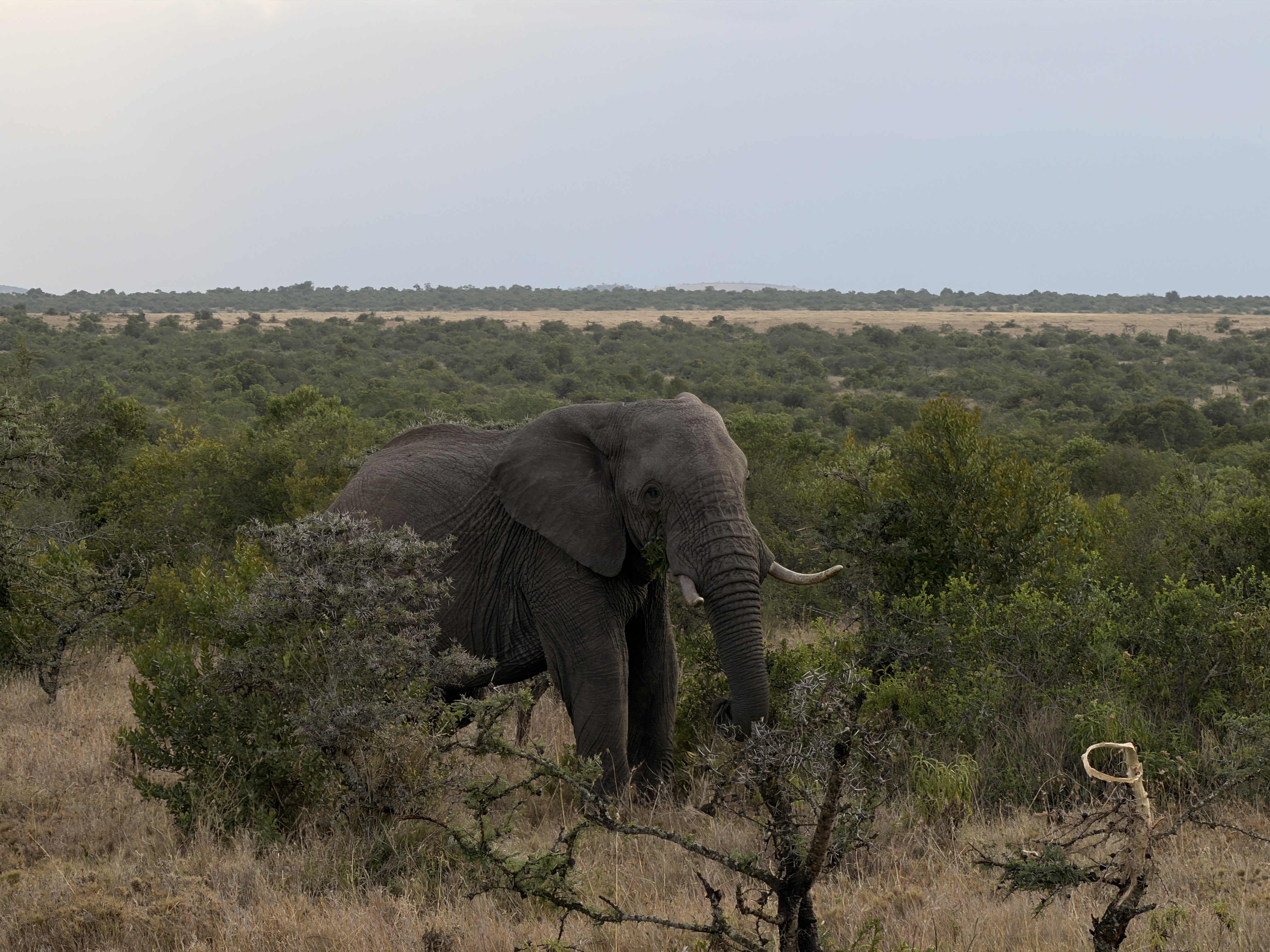
The animals here are less familiar with humans than in some other parks, and we felt that "raw" energy during a few stare-downs. A massive water buffalo gave us a very agitated look, and we encountered a bull elephant who stood like a sentinel minding the path. He stared us down, acting as a protector while the rest of his herd crossed the road in front of him. It made for some spectacular photos as the giraffes were simultaneously feeding along the same path in the background.
Culinary Excellence
Victoria, our chef, was a magician. Our highlight meal was the very first lunch: a vegetable lasagna served with three fresh salads, including a cucumber and mango salad in a homemade dressing. The food was so good I begged for the recipes. We also loved her butternut pear and garlic bean soups—so delicious that I ended up finishing my portion and Tom's!
Reflections on the Journey
As a chronic planner, this safari was a revelation. Out on a game drive, you can’t think about tomorrow’s itinerary; you have to be a spotter. You have to be present, looking for the flick of a tail or the shape of a "stump" in the brush. It was the first time I felt truly forced to appreciate exactly what was right in front of me. Kenya gave me the gift of the "now," and for that lesson in being present, I will always be grateful.
Links: More Trip Reports | The Wine Scene: A WSET 3 Perspective in a Non-Traditional Region | The Kenya Planning Guide
Up Next: Elephant Bedroom Camp
Welcome to the new Touchpoint Wines
We’re blending our passion for wine with a love for global exploration. Join us as we journey through the world's most captivating destinations, uncovering hidden wine gems and offering unique workshop experiences for your team retreats. Whether you're seeking to enhance team dynamics or discover the art of slow travel, let us be your guide.