For a WSET student, the Alsace region of northeast France is a masterclass in structural purity. It is a unique anomaly: a French region dominated by single-varietal labeling, protected by a massive mountain range shadow, and built upon a geological fault line so complex that it features the second most diverse patchwork of soil types in the entire world, runner-up only to Napa Valley.
When Tom and I established our 15-day slow travel home base in Colmar, our goal was to look past the fairytale façade of half-timbered houses and robust floral displays to map the logistics, the cellars, and the liquid architecture of the Alsace Wine Route.
The Logistics Playbook: Hub Colmar to the Spoke Villages
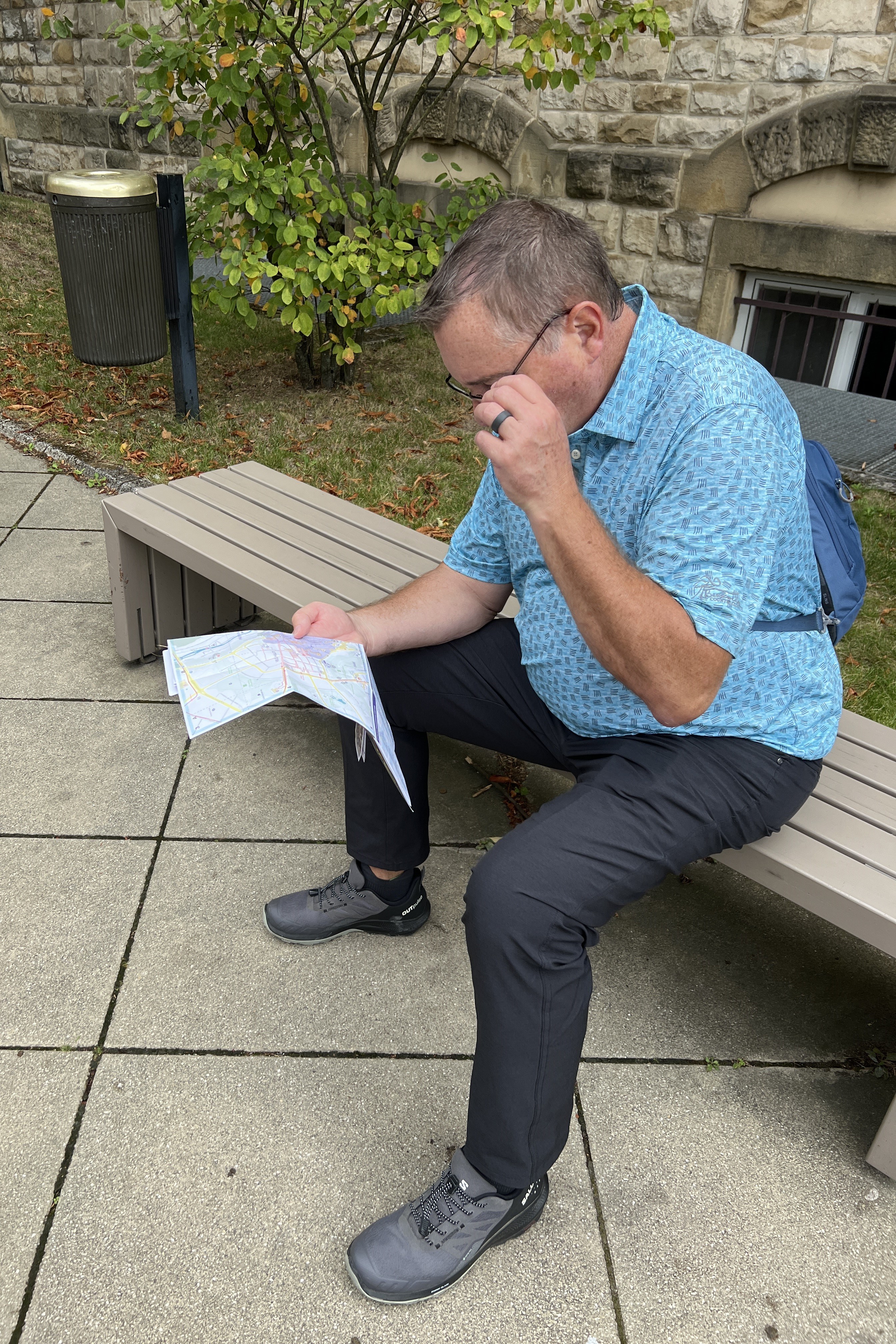
Choosing Colmar as our primary hub was highly strategic. (It was our winner for the best Slow Travel Hub location of 2025. Click here to see our Touchpoint Tally awards and nominees) It is large enough to provide excellent infrastructure, daily lifestyle comforts, and seamless transport links, yet intimate enough to allow early morning power walks along the local river paths. However, navigating the "spokes" of the wine route requires balancing flexibility against your budget.
For days when we had hard tasting appointments booked in advance, we relied on ride-shares like Uber or Bolt. It gives you total execution control over your morning, but it comes with a premium price tag, running between €30 and €40 for a one-way drop-off.
When time was on our side, the regional and local bus network proved to be a spectacular, budget-friendly alternative. For just €2 per person one-way, local buses (like Bus D running straight out to Turckheim) give you a two-hour transit window. For further spokes like Ribeauvillé, the regional 106 bus costs €4 one-way and gives you a four-hour window—ideal for linking two distinct wine villages in a single afternoon.
Our ultimate "Pro Move" for the Alsace Wine Route: Arrive early and respect the lunch block. The smaller villages get absolutely slammed with tour groups by midday. If you catch an early bus and land in a village by 9:30 or 10:00 AM, you can photograph the grand cru slopes in perfect morning light entirely by yourself. Crucially, you must cross the threshold of your first two wineries before 12:00PM, because the small villages completely lock down for lunch between 12:00 PM and 2:00 PM.
Regarding bottle logistics, the small villages are a buyer's paradise, with tasting fees usually sitting at a token €1 per pour, which is instantly waived if you purchase a single bottle. But a major warning if you are traveling on foot: do not buy bottles in your first village if you plan to walk through the vineyards to the next spoke. Carrying glass across rolling hills is a quick way to ruin a hike. If you plan to ship cases back home to the US, top estates like Domain Trimbach provide handy customs guides. Your true cost will be the shipping fee plus the wine tier, minus the 20% French VAT, which is legally deducted upon export.
The Spoke Report: Unzipping the Rhine Fault Line
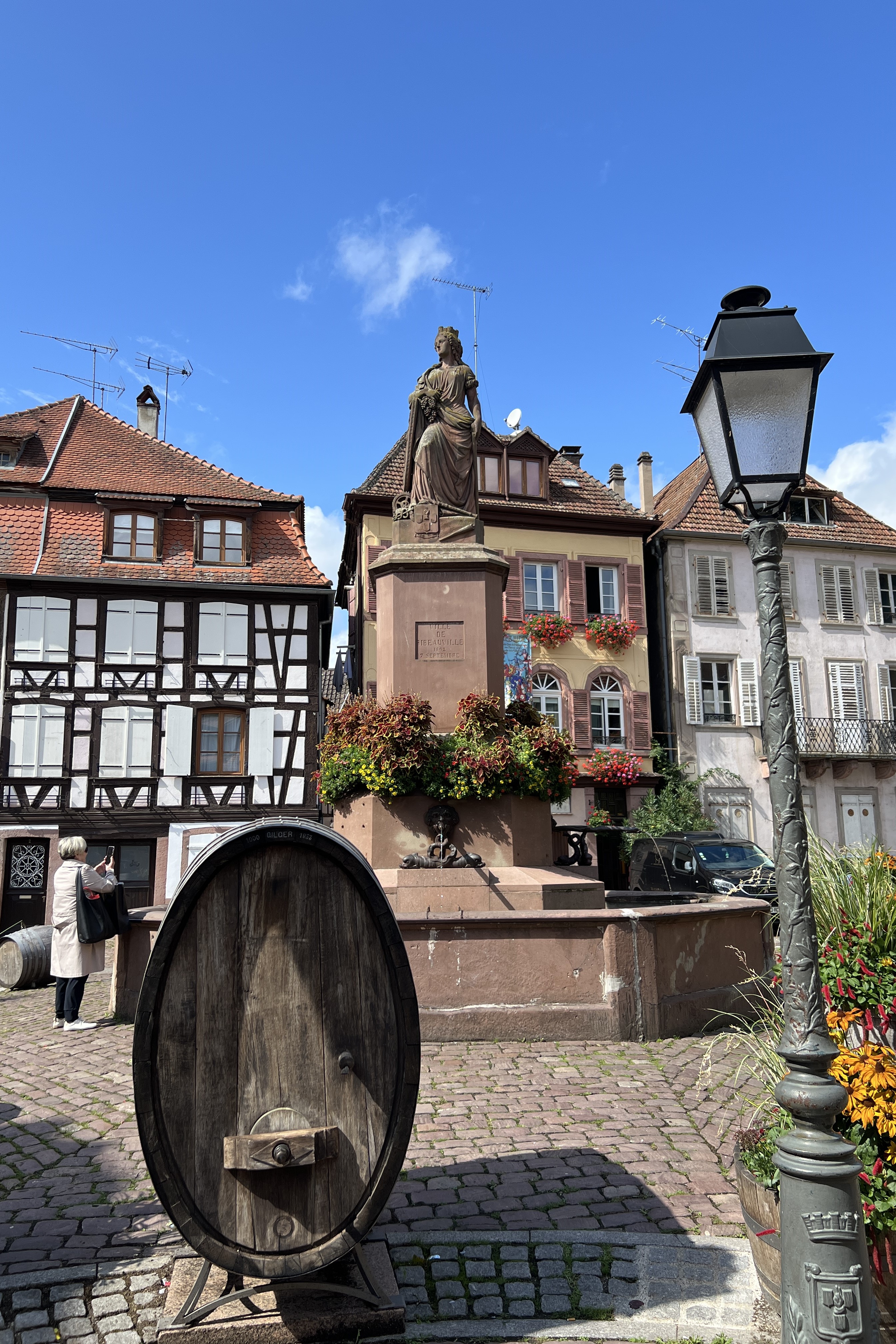
To understand Alsatian viticulture, a student must look to the Vosges Mountains. This range creates a profound rain shadow, making Alsace one of the driest, sunniest wine regions in all of France. Standing in the vineyards of Eguisheim and Ribeauvillé, the visual learning objective is immediately apparent: it is a lesson in aspect and slope.
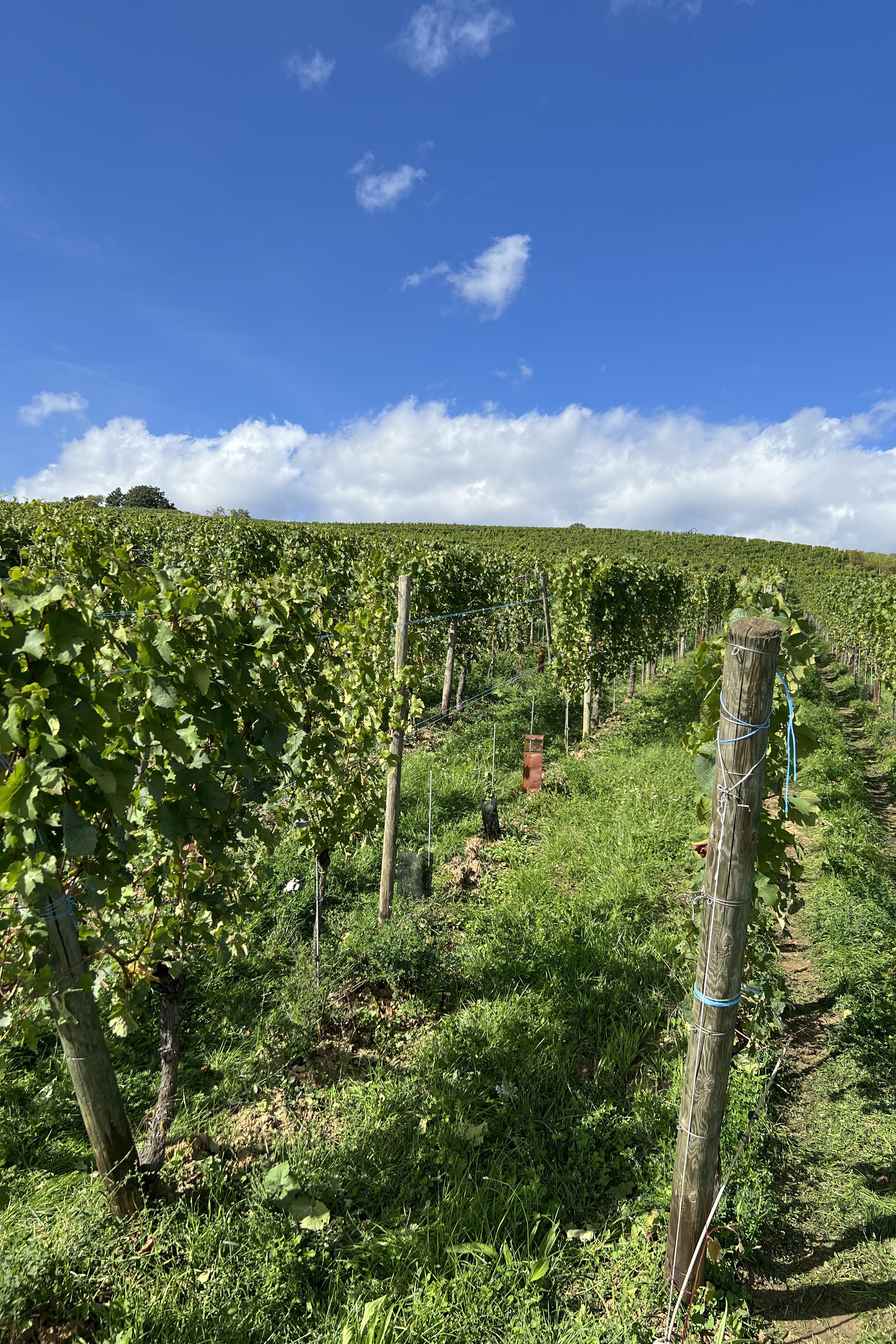
While the basic "Classic" regional wines are grown on the flat plains, the prestigious Grand Cru sites are exclusively pinned to the steep, south- and east-facing slopes of the Vosges foothills. These slopes maximize sun interception all day long, while the elevated altitude at night drops the vines into a deep rest, preserving the structural acidity required for late-harvest ripening.
The Producer Field Studies & Cellar Style
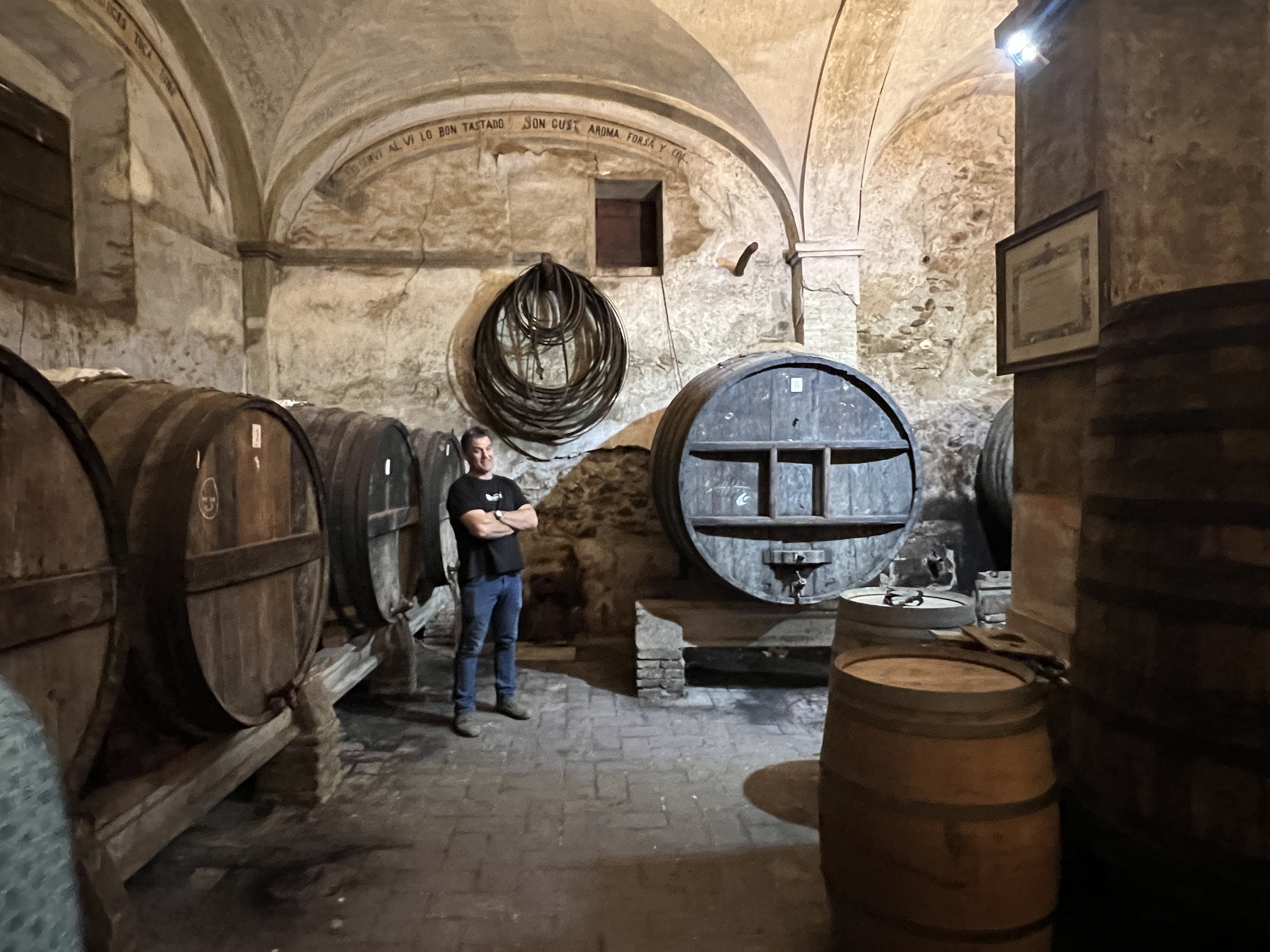
- The Biodynamic Modernist — Domaine Barmès-Buecher (Wettolsheim): We secured a private cellar consultation here with winemaker Sophie, diving deep into their rigorous biodynamic philosophy. In the cellar, the focus is entirely on natural balance and minimal intervention. Sophie shared a fascinating commercial reality for small European estates: servicing the US export market is highly inefficient because every single state operates under entirely different post-Prohibition distribution laws.

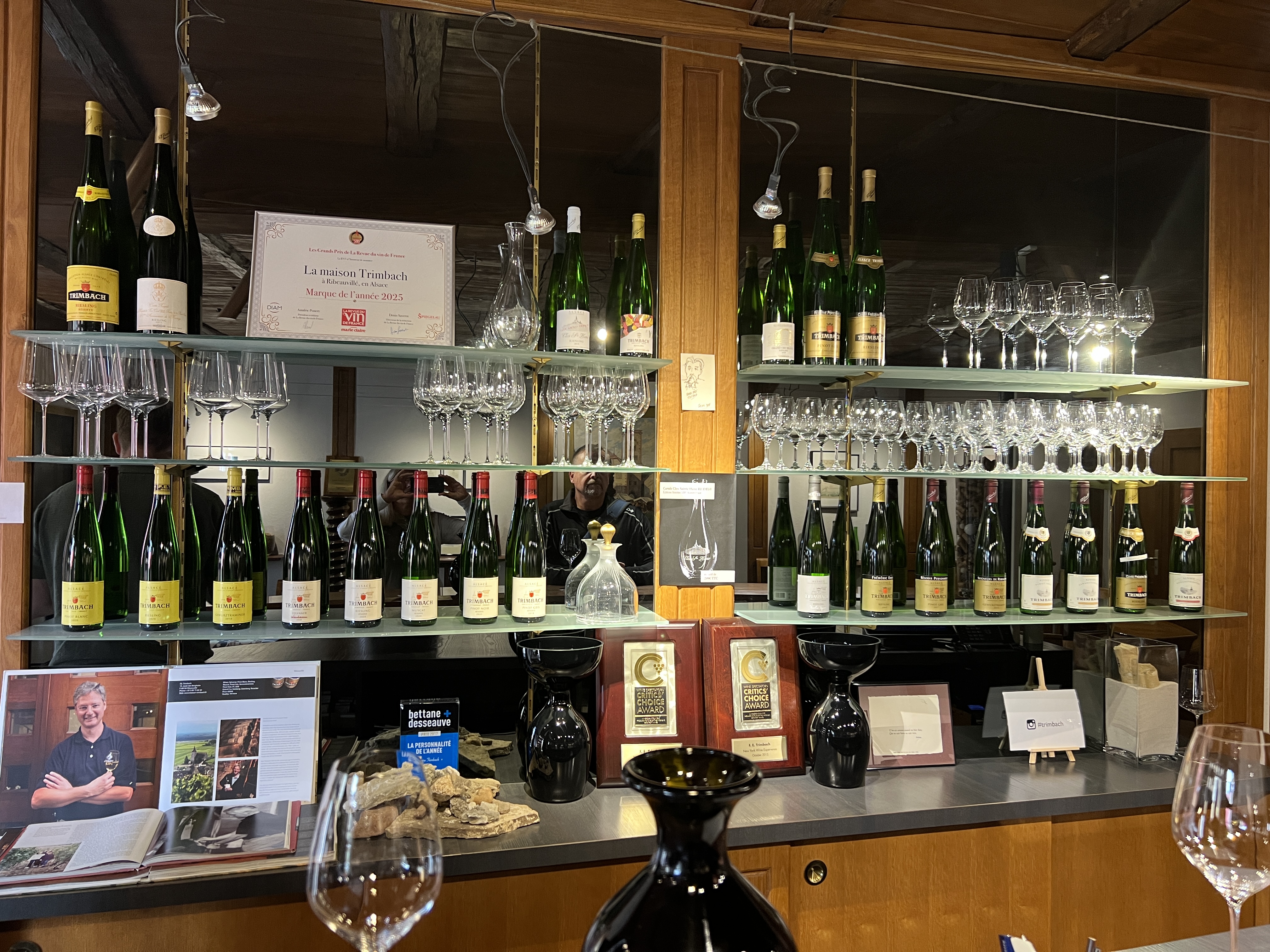
- The Terroir Purist — Domain Trimbach (Ribeauvillé): Trimbach is an absolute monolith of quality, requiring reservations months in advance. Dropping in at the bar, our host delivered a profound WSET takeaway: they keep their winemaking process exactly the same across their premium tiers. There is no variable oak intervention or cellar manipulation; the terroir of the individual vineyard block is the only variable that shapes the wine in the bottle.
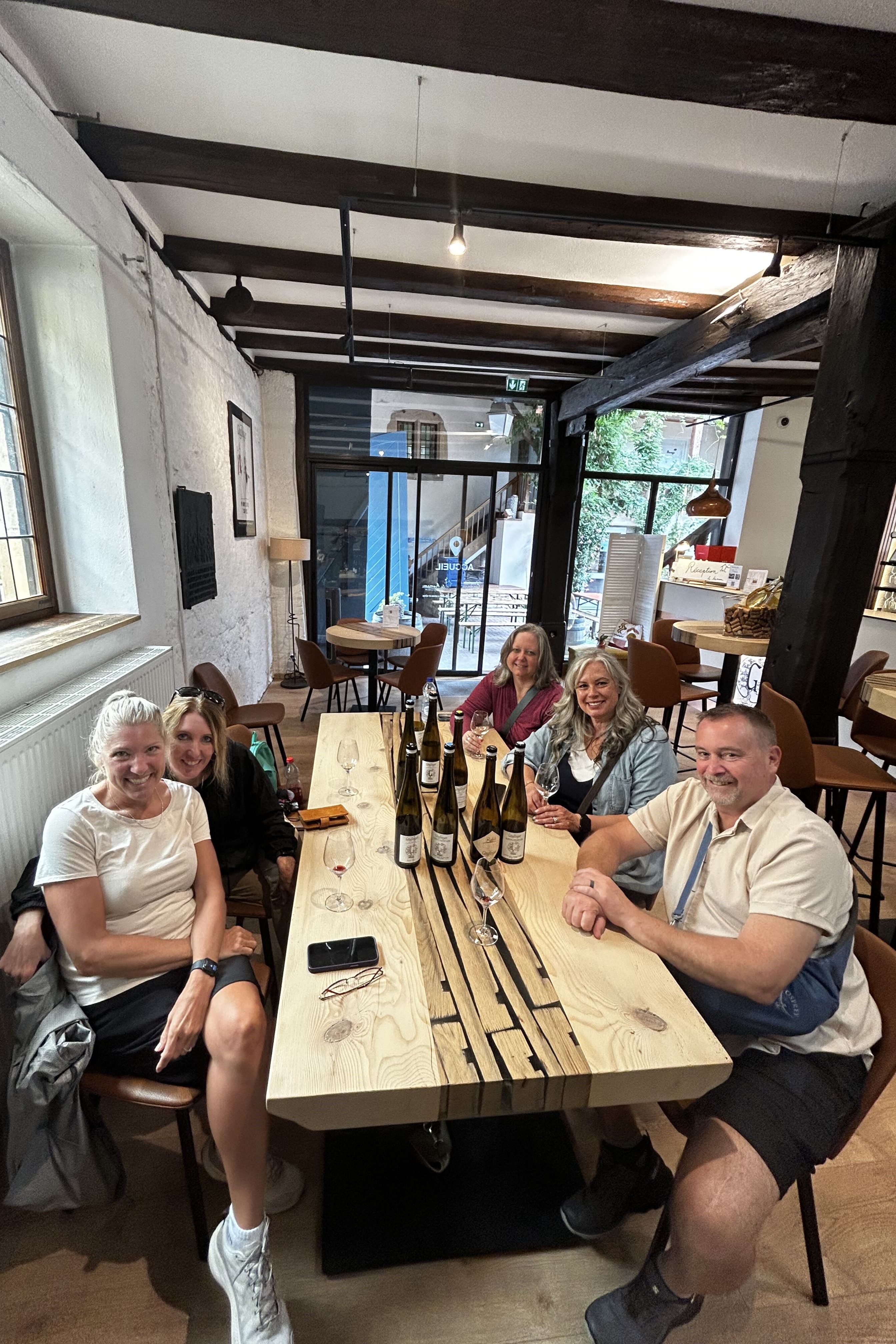
- The Educational Pairer — Ginglinger (Eguisheim): Tasting through this estate provided a masterclass in structural food pairings. The host systematically demonstrated how the piercing acidity of dry Riesling cuts through local fats, and how the rich texture of Pinot Gris matches the weight of Alsatian gastronomy.
- The Cooperative Benchmark — Caves de Ribeauvillé: This historic cooperative unites 40 local growers, offering a masterclass in regional affordability. Here, students can taste through prestigious expressions from the Kirchberg and Osterberg Grand Crus for free, with bottles priced symmetrically between an approachable €9 and €20.
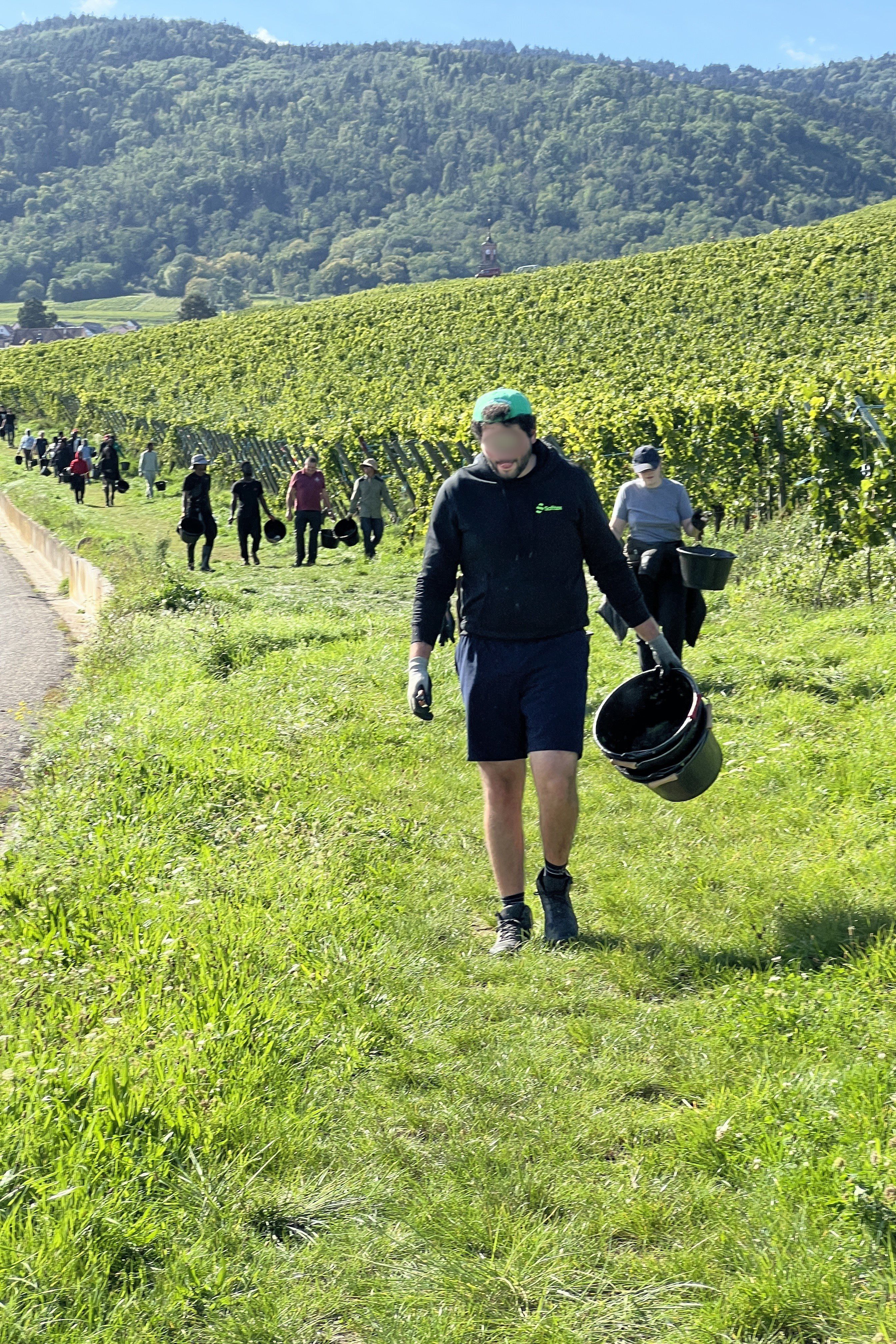
Because we were visiting in September, harvest was in full swing. We were lucky enough to view the crews going out to hand-harvest the grapes along the steep slopes of the sub-Vosges hills. For a WSET student, this striking visual carries immense legal and technical weight.
While mechanical harvesting is common on the flat valley floors for entry-level regional wines, hand-picking is a strict legal requirement for all 51 Alsace Grand Cru AOC wines, as well as all traditional-method Crémant d'Alsace sparkling wines.
On a purely logistical level, the steepness of the best Grand Cru slopes—such as the vertical incline of the Schlossburg granite terraces we explored—makes it physically impossible for heavy machinery to navigate the rows without damaging the vines or the soil structure.
From a quality and winemaking perspective, hand-harvesting gives the producer ultimate control over the integrity of the fruit. Pickers visually inspect each cluster on the vine, immediately eliminating any split skins, bird damage, or grey rot (Botrytis cinerea in its destructive form). Whole, uncrushed clusters are carefully placed into small bins and transported directly to the pneumatic presses. Keeping the grape skins entirely intact prevents premature oxidation and wild ambient yeast fermentation, protecting the pure, delicate, and intensely aromatic fruit profile that defines premium Alsatian winemaking.
Furthermore, hand-picking is absolutely essential for the region's famous late-harvest tiers: Vendanges Tardives (VT) and Sélection de Grains Nobles (SGN). To craft an SGN wine, crews must perform a highly meticulous process known as tries successives—passing through the exact same vineyard rows multiple times over several weeks to selectively hand-snip only the individual grapes perfectly shriveled by noble rot, leaving the healthy grapes behind to mature further. It is a labor-intensive, expensive gamble, but it represents the absolute pinnacle of Alsatian viticultural mastery.
The Regional Style & SAT Tasting Notes
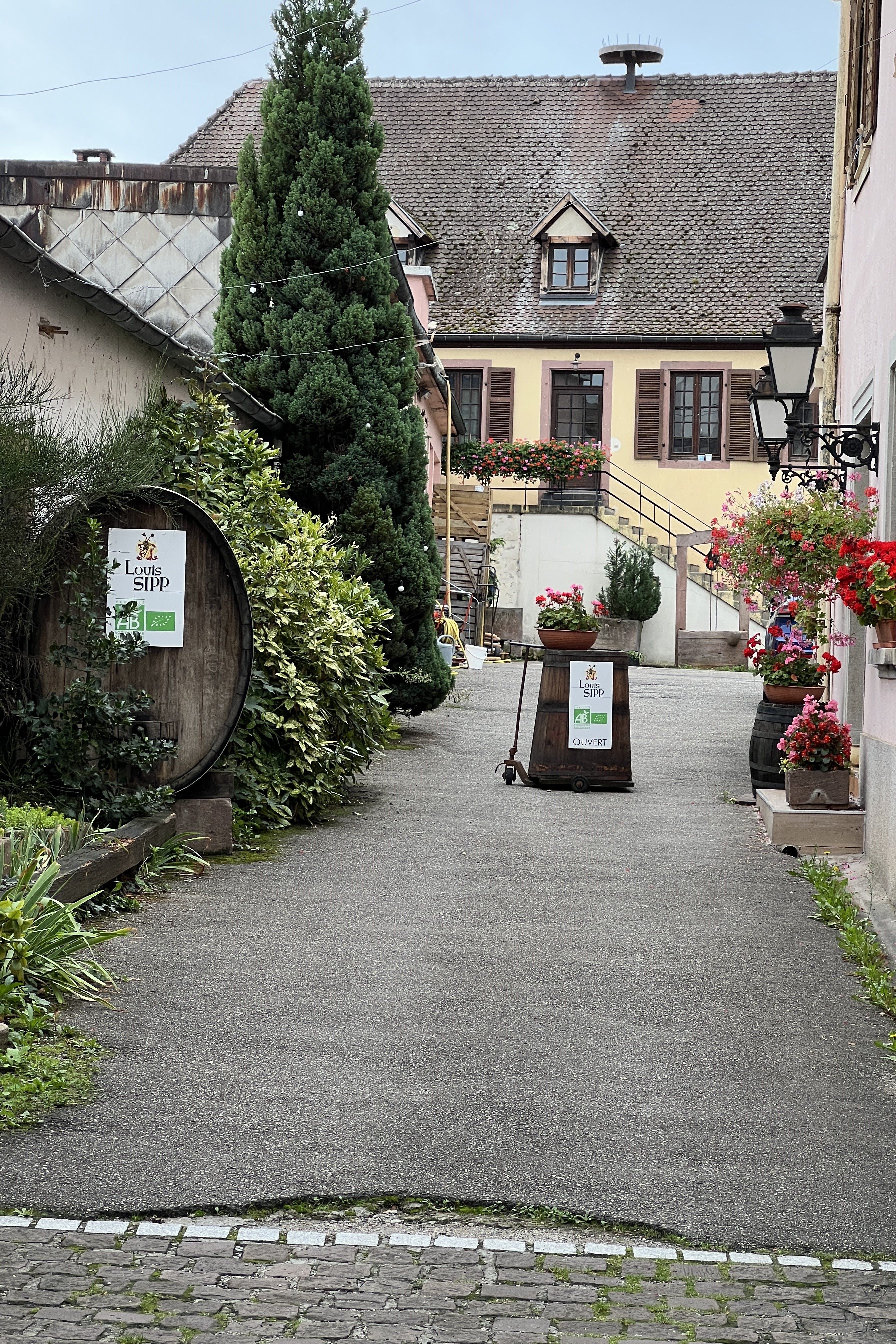
- 2016 Grand Cru Riesling (Louis Sipp — Ribeauvillé)
- Appearance: Clear, pale gold with bright, water-white highlights.
- Nose: Clean, pronounced intensity, displaying complex development. Intense aromas of gasoline/petrol (classic aged Riesling TDN), preserved lemon zest, bruised green apple, and damp slate mineral notes.
- Palate: Bone dry, with high, electric, structural acidity. Medium-bodied with a steely, intensely concentrated core of lime juice, gravelly minerality, and dried white flowers.
- Conclusion: Outstanding quality. The Why: Sourced from one of Ribeauvillé’s premier east-facing Grand Cru slopes, this 2016 vintage demonstrates the incredible aging potential of Alsatian Riesling. The steep slope profile allows for maximum phenolic maturity, while the cool mountain air preserves the high acidity required to sustain the wine over a decade, slowly turning fresh citrus into a complex, petrol-driven masterpiece.
- Grand Cru Schlossburg Riesling (Domaine Karcher et Fils— Tasted in Colmar Hub)
- Appearance: Clear, medium lemon-yellow.
- Nose: Clean, medium-plus intensity, flashing youthful stone fruit, fresh apricot, jasmine, and a prominent chalky undertone.
- Palate: Dry, full-bodied with a rich, slightly oily texture, beautifully offset by a high, mouth-watering acidity. Flavors of green pear, mineral salts, and white peach dominate a long, expansive finish.
- Conclusion: Very good quality. The Why: The Schlossburg Grand Cru is famous for its granite soils, which absorb daytime heat and reflect it back to the vines. This produces a much more muscular, weightier, and texturally rich expression of Riesling compared to the limestone-driven sites of neighboring valleys, balancing high alcohol with intense varietal typicity.
The Representative Vibe: Hotel Restaurant SPA Au Soleil (Wettolsheim)
Our absolute pinnacle "vibe" moment of the spoke regions didn’t happen at a commercial tasting counter, but over an unforgettable lunch at Hotel Restaurant SPA Au Soleil. Located in Wettolsheim, the journey there is half the experience: the regional bus drops you off in neighboring Wintzenheim after a short 30-minute ride from Colmar, and from there, you follow a path through the vineyards for a stunning 20-minute walk to reach this sleepy village. We wanted to enjoy the peaceful walk, explore the town, and find a great local bite. Unlike the heavily touristed stops along the route, Wettolsheim is wonderfully quiet, offering just a few restaurants to choose from before our private tasting down the road at Domaine Barmès-Bucher.
The kitchen delivers an exceptional masterclass in traditional Alsatian cuisine; their specialty, Veau en Vol-au-vent drenched in a rich mushroom and cream sauce, showcased the execution of a highly experienced chef and easily earned its spot as a top contender in our Touchpoint Tally awards. But it was the knowledgeable—and coincidentally, the only English-speaking—waiter who turned this lunch into a WSET textbook come to life. He guided us through a curated selection of other local wines, proudly highlighting them as benchmark representations of the immediate terroir. Sitting among the locals, watching daily life unfold in this tiny town, and pairing complex local whites with the weight and richness of an authentically prepared Alsatian cream dish perfectly encapsulates the soul of the region—where technical viticultural excellence is never divorced from the dining table.
The Global Wine Lab: Sourcing Alsace in the Marrakech "Cave"
While we spent our days in Colmar exploring the traditional white varieties of the region, the most surprising technical breakthrough of our study actually occurred thousands of miles away during our stay in Morocco.
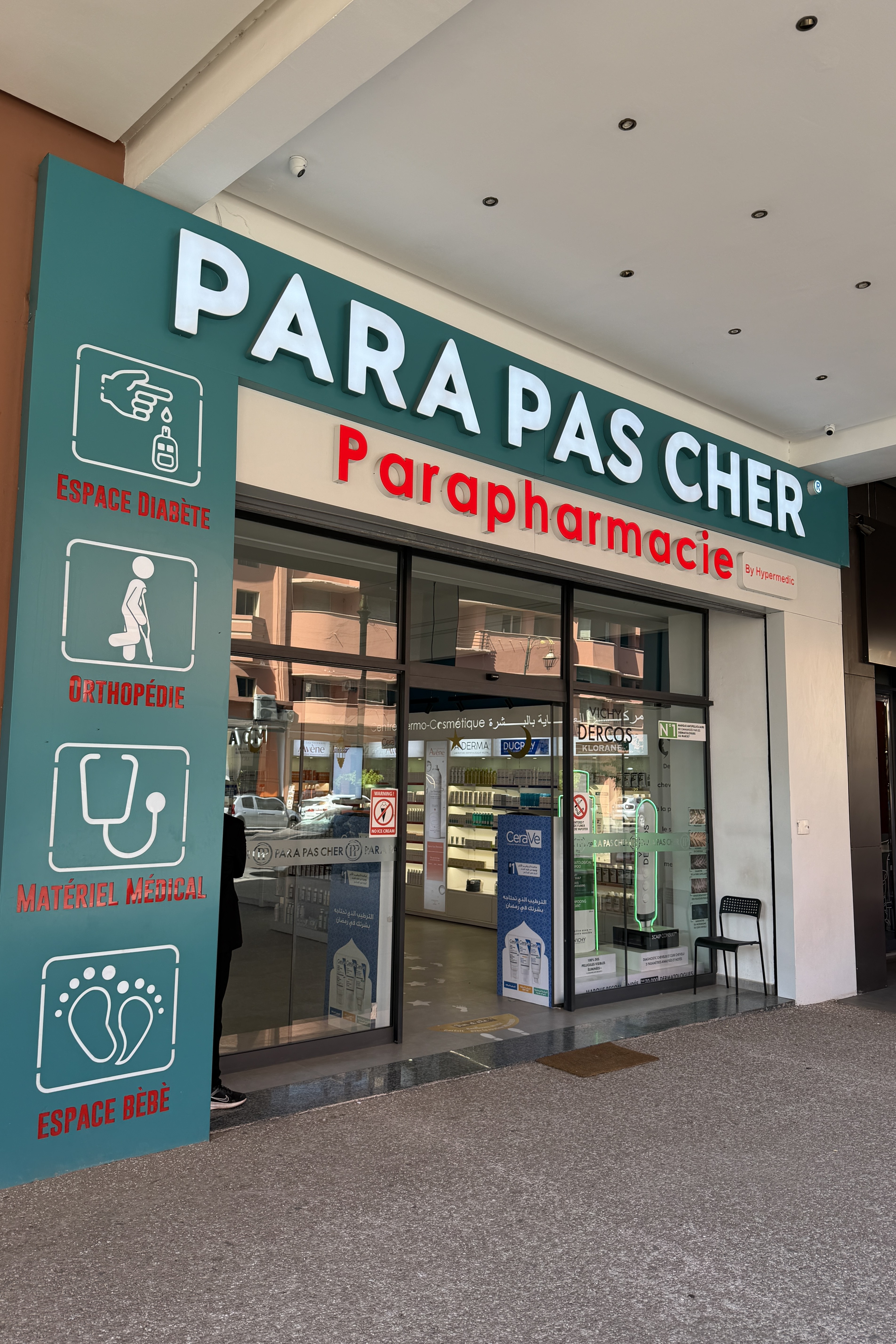
We were navigating the independent retail landscape in Marrakech, exploring the shelves of a local wine shop when we spotted a familiar label tucked into a corner: Domaine Trimbach's Pinot Noir Réserve. Sourcing a bottle of cool-climate Alsatian red in the blistering heat of North Africa was too good an opportunity to pass up, so we bought it (actually, all three bottles they had left in stock!) on the spot to conduct a comparative tasting right in our apartment.
For a WSET student, Alsace Pinot Noir is a critical region to watch. While the area is historically synonymous with white wines, climate change is driving a quiet red wine revolution along the Rhine. As the sub-Vosges foothills experience hotter, drier summers, Pinot Noir is achieving a level of phenolic ripeness and flavor concentration that was unimaginable a few decades ago, prompting top producers to dedicate their premium limestone and granite slopes to red varieties.
- Trimbach Pinot Noir Réserve
- Appearance: Clear, medium garnet with a bright, water-white rim.
- Nose: Clean, medium-plus intensity, displaying a taut, youthful old-world profile. Vibrant aromas of tart pie cherry, wild red currant, and sour cranberry are underlined by delicate savory nuances of iron oxide, licorice, and a faint hint of damp forest floor. There is no evidence of new oak.
- Palate: Bone dry, light-to-medium bodied, with high, mouth-watering acidity and tightly wound, crunchy, medium-minus tannins. The palate mirrors the nose with an athletic, linear drive of pure, vivid Morello cherry and red forest fruits, balanced by an elegant streak of herbal spice and mineral tension. The finish is smooth, refreshing, and clean.
- Conclusion: Very good quality. The Why: Trimbach’s handling of Pinot Noir is an education in structural purity. To preserve the wine’s precise fruit profile and old-world finesse, the juice is fully destemmed, undergoes a brief cold maceration for color extraction, and is vinified entirely in stainless steel vats and foudres (Massive Wooden Vats). Crucially, this is the only wine in Trimbach’s entire portfolio that undergoes malolactic fermentation (MLF). Because Alsatian Pinot Noir naturally retains aggressive, sharp malic acid from its cool-alpine nights, the winemakers employ MLF in-tank to convert it into softer lactic acid, giving this athletic, zero-fat red just enough supple silkiness to balance its piercing, refreshing structure.


The Hub Scene: Urban Wine Labs and "Hobbit Doors"
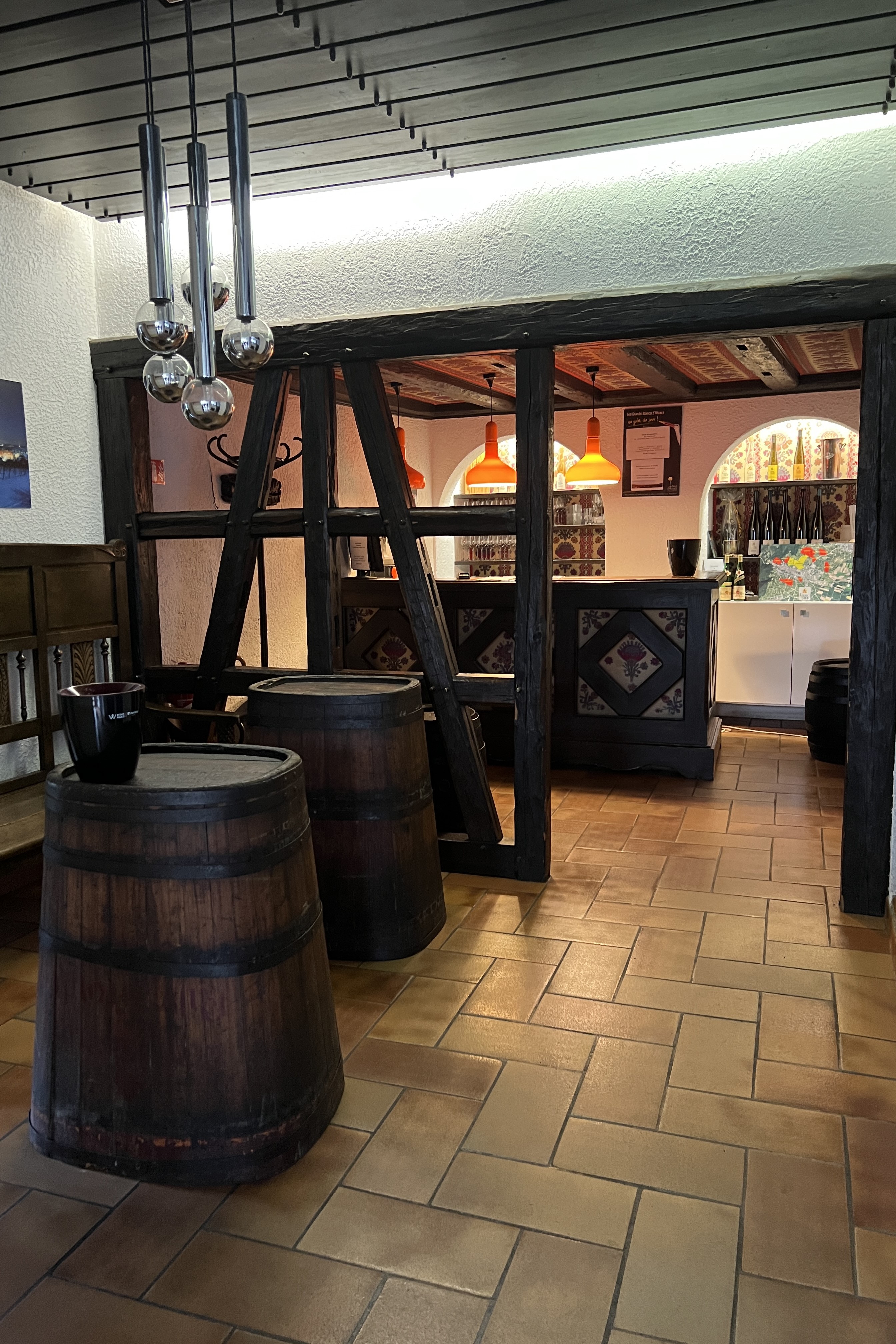
When you retreat from the foothills back to your primary base in Colmar, the wine scene shifts from primary producers to curated specialty bars. Tasting directly at a cellar's tasting room in Colmar is a completely different animal than in the villages; an urban house like Domaine Karcher charges a flat $25 tasting fee, which they will only waive if you purchase a minimum of six full bottles.
Instead, turn Colmar into your personal wine lab by visiting its elite wine bars and specialty retailers. For a "Serious Study" vibe, Sommelier is a brilliant merchant boutique that sets up a few select tables directly overlooking the Cathedral. They inventory the absolute top-tier producers of the entire region, making it the perfect destination to buy a benchmark bottle, sit outside, and people-watch.
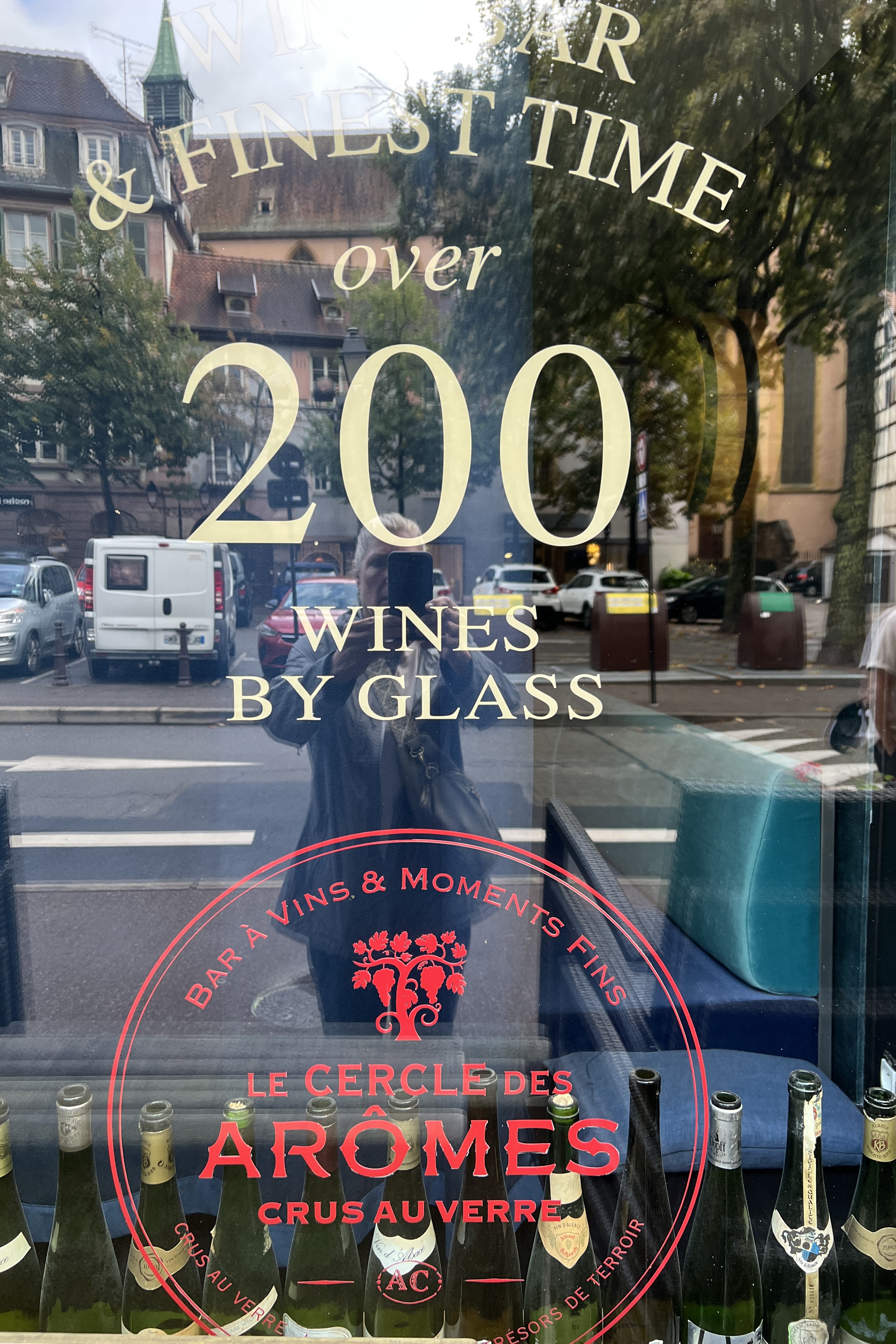
For an immersive, analytical evening, Le Cercle des Arômes is an absolute must. The sommeliers here engage in deep varietal conversations, pouring phenomenal flights of local Pinot Gris alongside elite out-of-region benchmarks, including exceptional Premier Cru Burgundies and aged Bordeaux. Pair your flight with their smoked trout appetizer for a spectacular study in texture and oil integration.
Our "Quality Index" for navigating Alsatian wine lists: look for the entry-level Pinot Gris from top-tier houses to judge the baseline quality of an establishment. Be warned, however, that much of the dining in the core historic center is explicitly geared toward tourists. If you want authentic Alsatian cuisine, seek out L’un Des Sens, a local favorite tucked into a quiet square slightly off the main tourist trail, serving a brilliant, avant-garde Japanese-French fusion tapas menu.
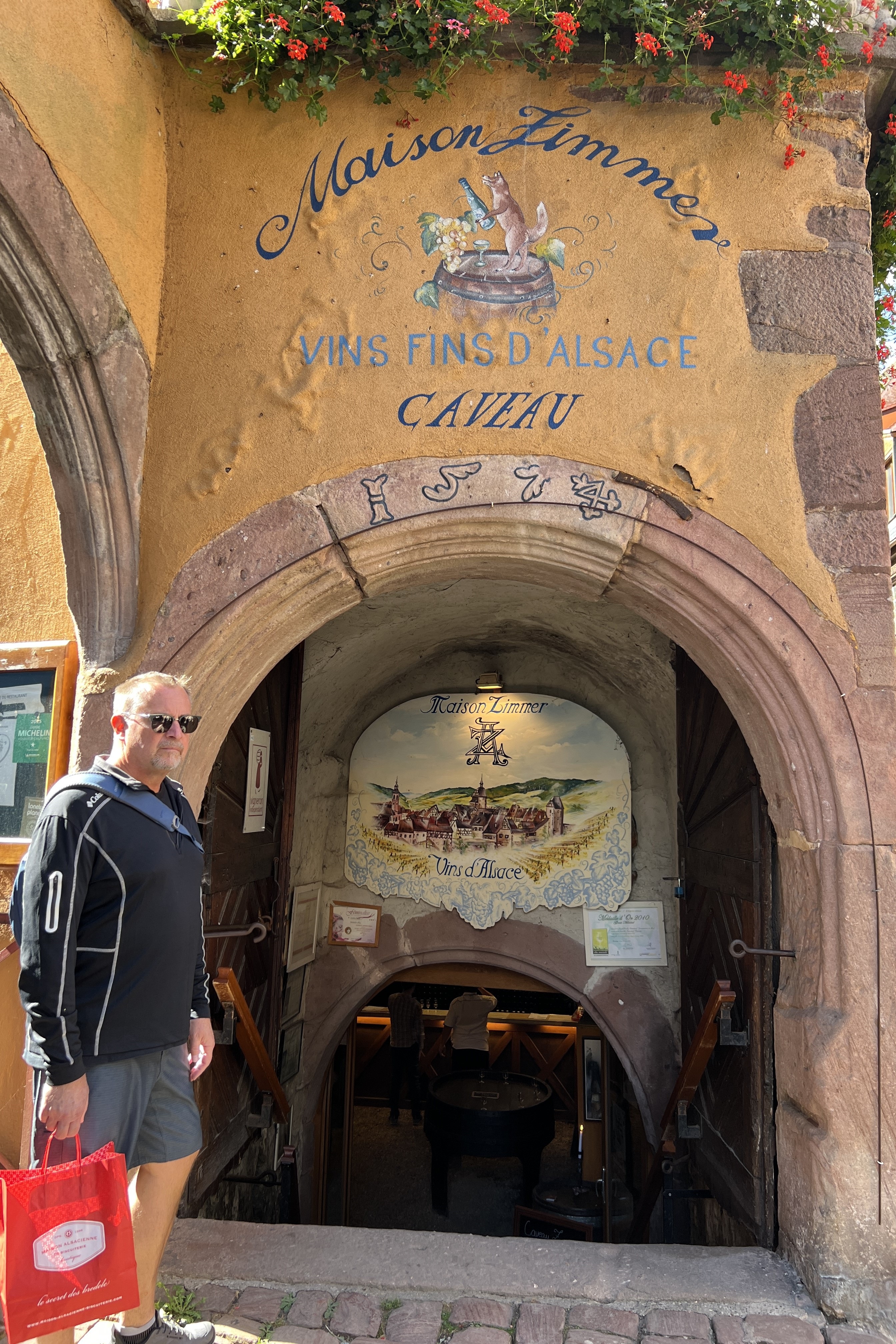
And for an engineering laugh between tastings, keep an eye out for what we affectionately dubbed the "Hobbit Doors" of Eguisheim. Tom actually used the measure app on his phone to measure one of the 16th-century structures: you climb three stone steps only to confront a primary winery entrance door that measures exactly 5’11”!
The WSET Study Corner
- Label Anatomy (The Alsace Exception): Unlike the rest of France where geography dominates the label (e.g., Chablis, Margaux), Alsace is the only major French AOC that mandates varietal labeling. If a bottle says "Riesling," it must be 100% Riesling. However, look closely at the bottom of the label for the words Grand Cru paired with one of the 51 designated vineyard names (like Geisberg or Schlossburg)—this legally guarantees the wine was harvested by hand from a protected slope tier.
- The Tasting Path Hierarchy: As we observed across every single tasting menu along the route, Alsatian flights follow a rigid, textbook hierarchy designed to showcase sugar and structural complexity. You always begin with the Classic/Traditional bone-dry styles at the top, working your way down through the texturally rich Grand Crus, before culminating in the ultra-concentrated, small-batch Special Cuvées or sweet late-harvest styles.
- Flashcard Moment — The Color of Commerce: True or False? The historic colors of the half-timbered houses in Alsace were chosen purely for fairytale aesthetics. Answer: False. The colors historically indicated the professions of the guild members living inside. Yellow represented the bakers and farmers; Blue was for fishermen and weavers; Green denoted carpenters and cooper barrel makers; and Red explicitly flagged the butchers and the winemakers.
The Exam Cheat Sheet
- Climate: Cool continental, heavily modified by the Vosges Mountains, which create a sunny, dry environment with low rainfall but a constant threat of spring frost.
- Soils: An incredibly fractured, diverse geological mosaic including granite, limestone, clay, sandstone, and volcanic soils.
- The "Noble" Varieties: Riesling, Pinot Gris, Gewurztraminer, and Muscat (the only four varieties legally permitted to carry a Grand Cru status).
- Harvest Mandates:100% manual hand-harvesting is legally compulsory for all Alsace Grand Cru AOC, Crémant d'Alsace AOC, and late-harvest designations (VT and SGN).
If you are interested in learning more about the WSET Certification in Wine. I received my Level 2 from Johnson & Whales University in Charlotte, NC and my Level 3 from the Napa Valley Wine Academy in Napa Valley, CA.
Links:
Colmar Trip Report | Equisheim Trip Report | Ribiville Trip Report | The Alsace Wine Route Planning Guide | Wine Guides | Next Up: Beaune Burgundy Wine Guide
Welcome to the new Touchpoint Wines
We’re blending our passion for wine with a love for global exploration. Join us as we journey through the world's most captivating destinations, uncovering hidden wine gems and offering unique workshop experiences for your team retreats. Whether you're seeking to enhance team dynamics or discover the art of slow travel, let us be your guide.