At a Glance
- Duration: 21 Days (April 2026).
- Home Base: The historic Marshan neighborhood, high up on the hill.
- Top Day Trip: The blue-washed mountain town of Chefchaouen paired with the Spanish-influenced alleys of Tetouan.
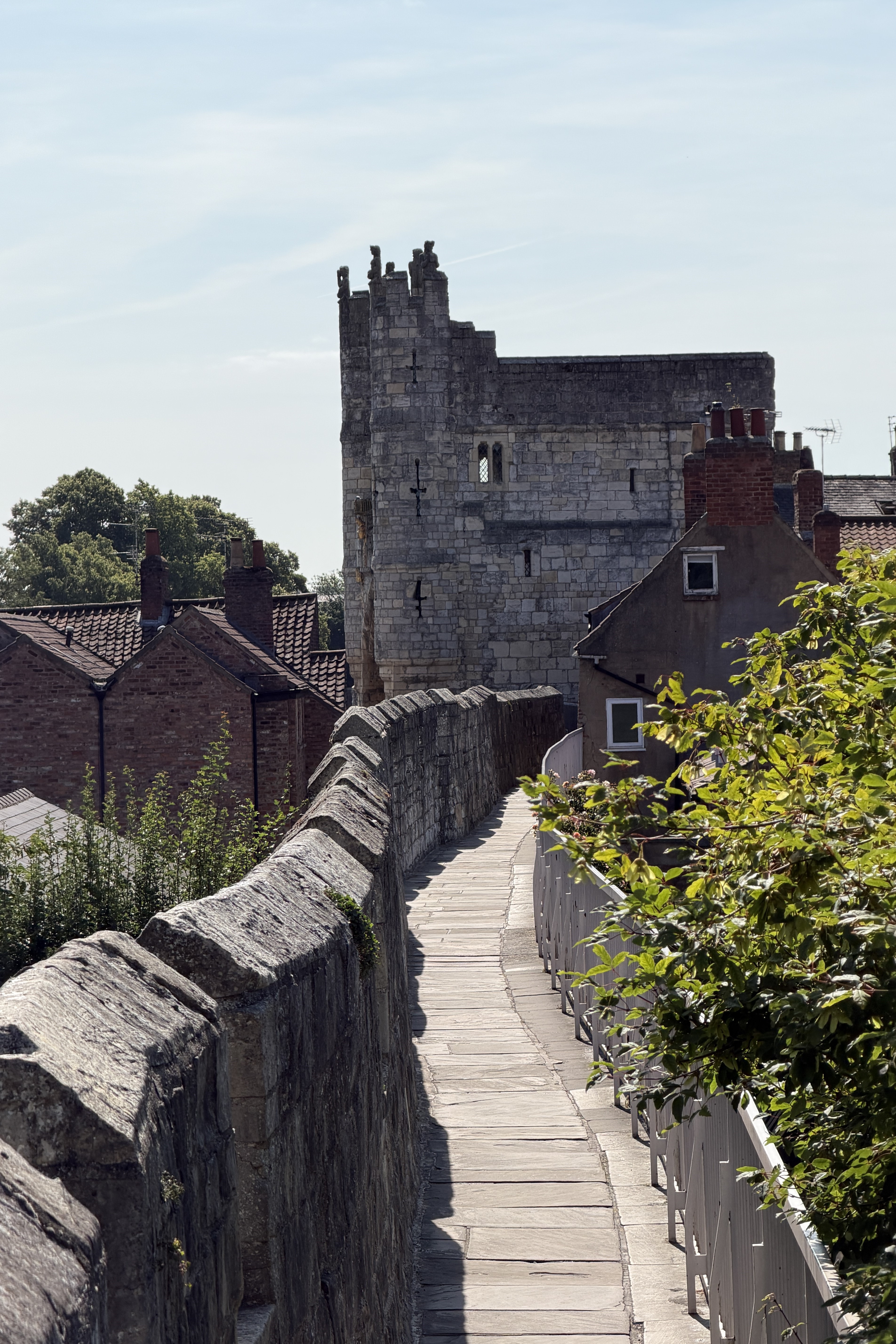
- Memorable Moment: Stepping out onto the ancient ramparts of Bab El Bahr within the Kasbah, looking out over the roaring Strait of Gibraltar to see the southern coast of Spain rising clearly across the water.
- Overall Vibe: Bohemian, coastal, and cleaner and more organized than the southern medinas—a place where daily life beautifully unfurls along a dramatic coastline.
This Town is Special Because...
Tangier is a city defined by its relationship with the water and its legendary bohemian history. Situated precisely where the Atlantic Ocean pounds into the Mediterranean Sea, it has served as a sanctuary for artists, writers, and expats for generations. We chose Tangier as our final three-week Moroccan hub because we wanted a slower, more immersive coastal experience, and its convenient location served as the perfect launching pad for our next stop in Southern Spain. Coming from the intense interior cities like Marrakech and Fes, we hoped Tangier would present a unique cultural meld between Moroccan tradition and European sensibility. It did not disappoint; the city immediately greeted us with a refreshing coastal clarity and an approachable, cosmopolitan soul.
Our Home Base: The Sun-Drenched Heights of Marshan
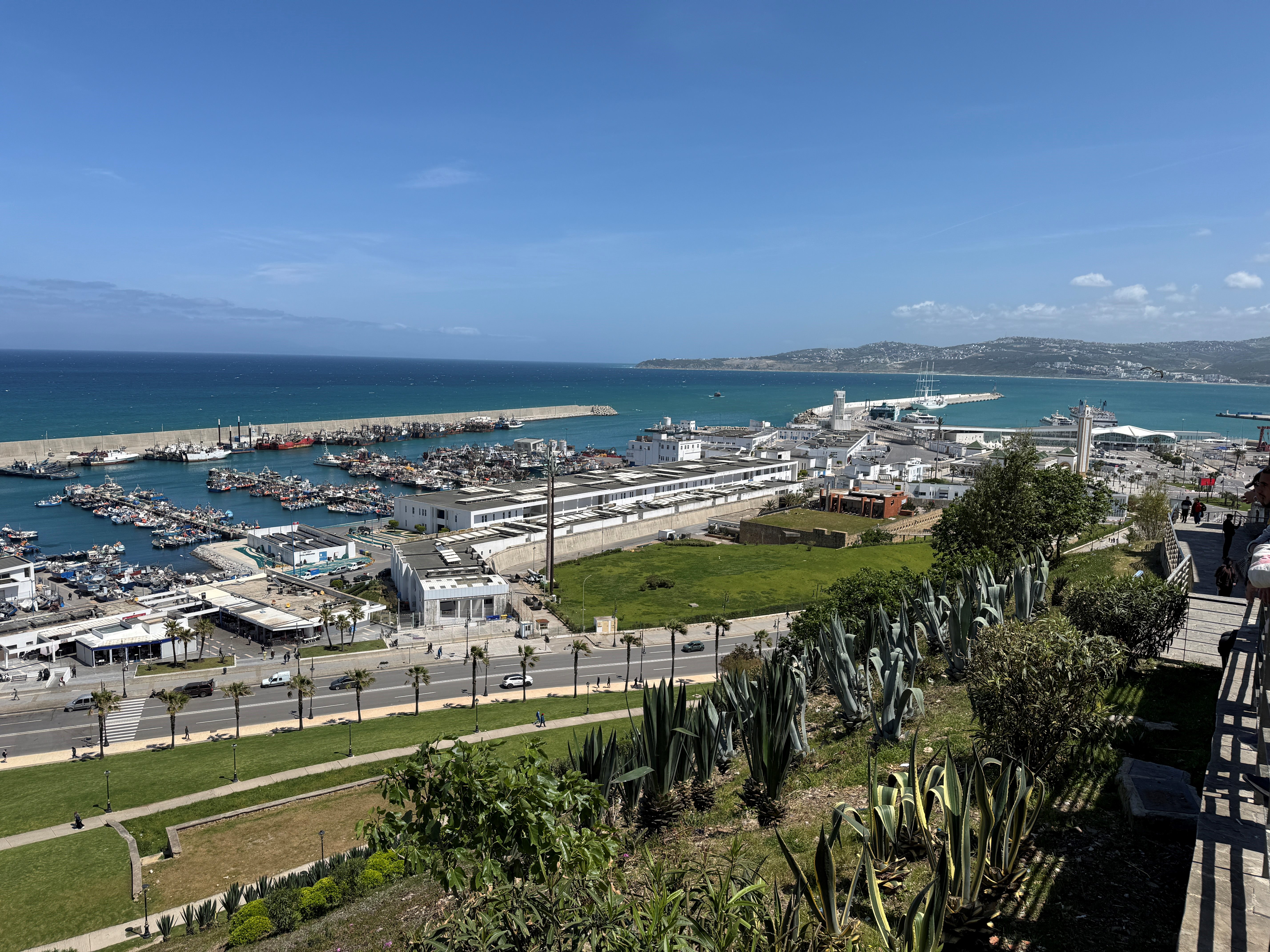
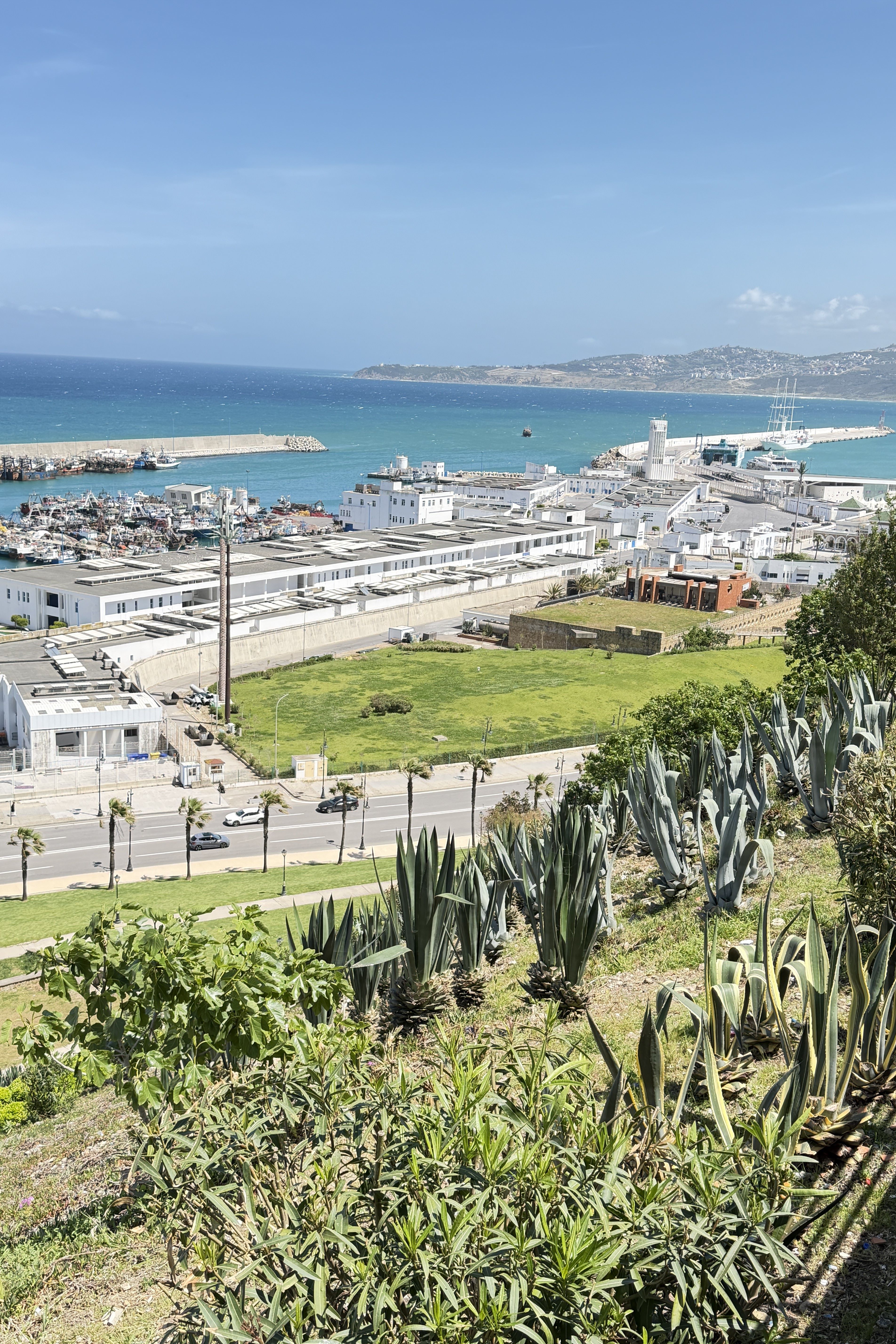
For our extended stay, we settled into the beautiful Marshan neighborhood. Marshan is an upscale, residential enclave positioned high on a hill right next to the historic Kasbah and the Royal Palace, and it turned out to be the absolute perfect choice for our slow-travel lifestyle. Our apartment was incredibly sunny and spacious, treating us to a lovely peek of the ocean right from the kitchen window.
Living in Marshan did mean navigating a serious daily workout; the neighborhood is incredibly steep, requiring us to climb countless stairs and steep inclines whenever we walked down to the waterfront promenade. However, the area feels distinctively local and safe, full of striking whitewashed buildings that repeatedly reminded us of the cliffside charm of Santorini or the old historic quarters of Lisbon. It provided a peaceful, bright sanctuary for our stay.
Our Tangier Experience: The Day-to-Day
The Coastline Cadence
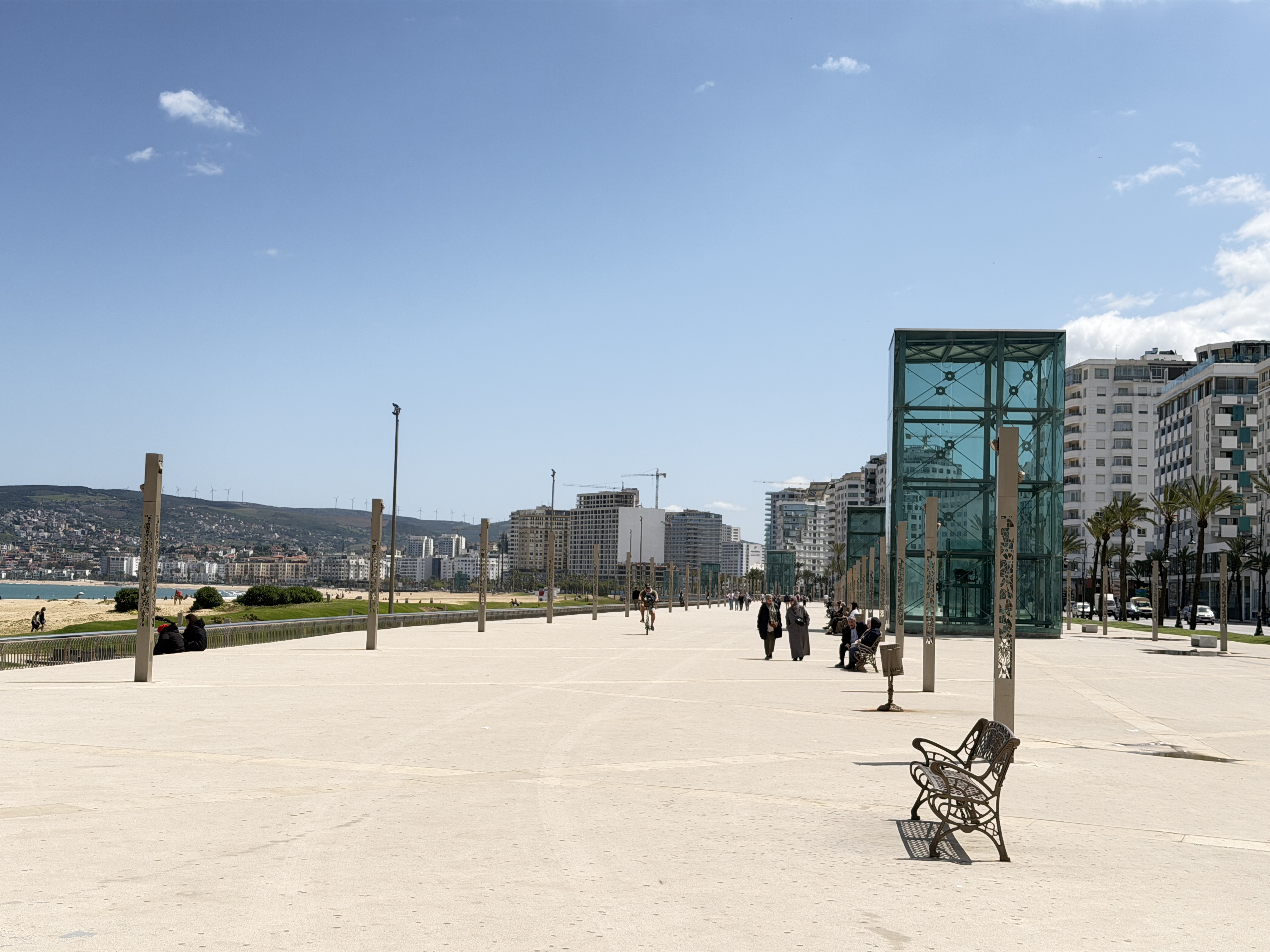
Having three full weeks allowed us to establish a wonderfully relaxed rhythm, balancing daily work and travel planning with deep neighborhood explorations. Our fitness routine adapted beautifully to the local terrain. Rather than a traditional green park, our daily power walks took us down to the massive, paved waterfront promenade—the Corniche—which hugs the coastline for kilometers, stretching past sweeping beaches, the bustling marina, and the ferry port.
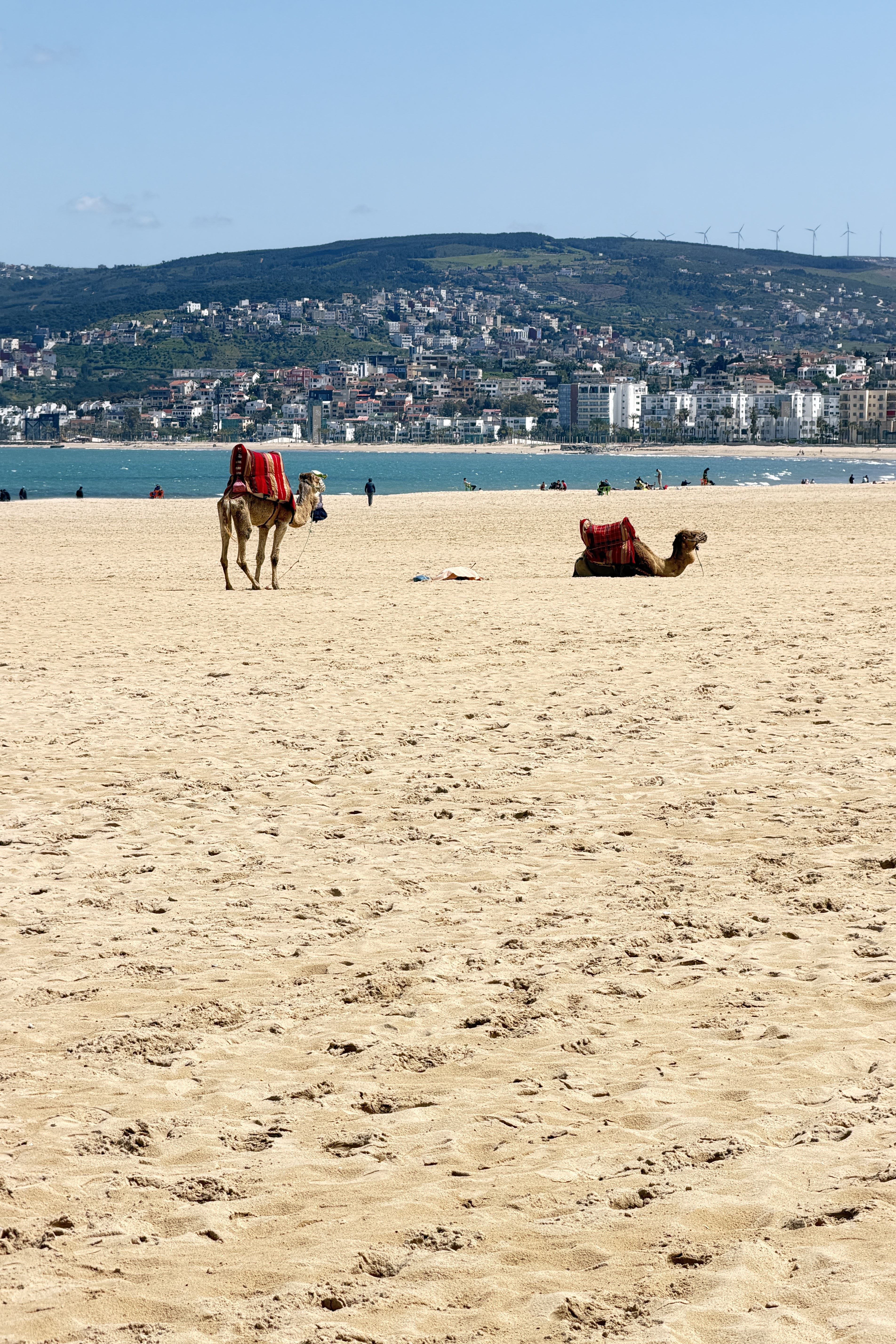
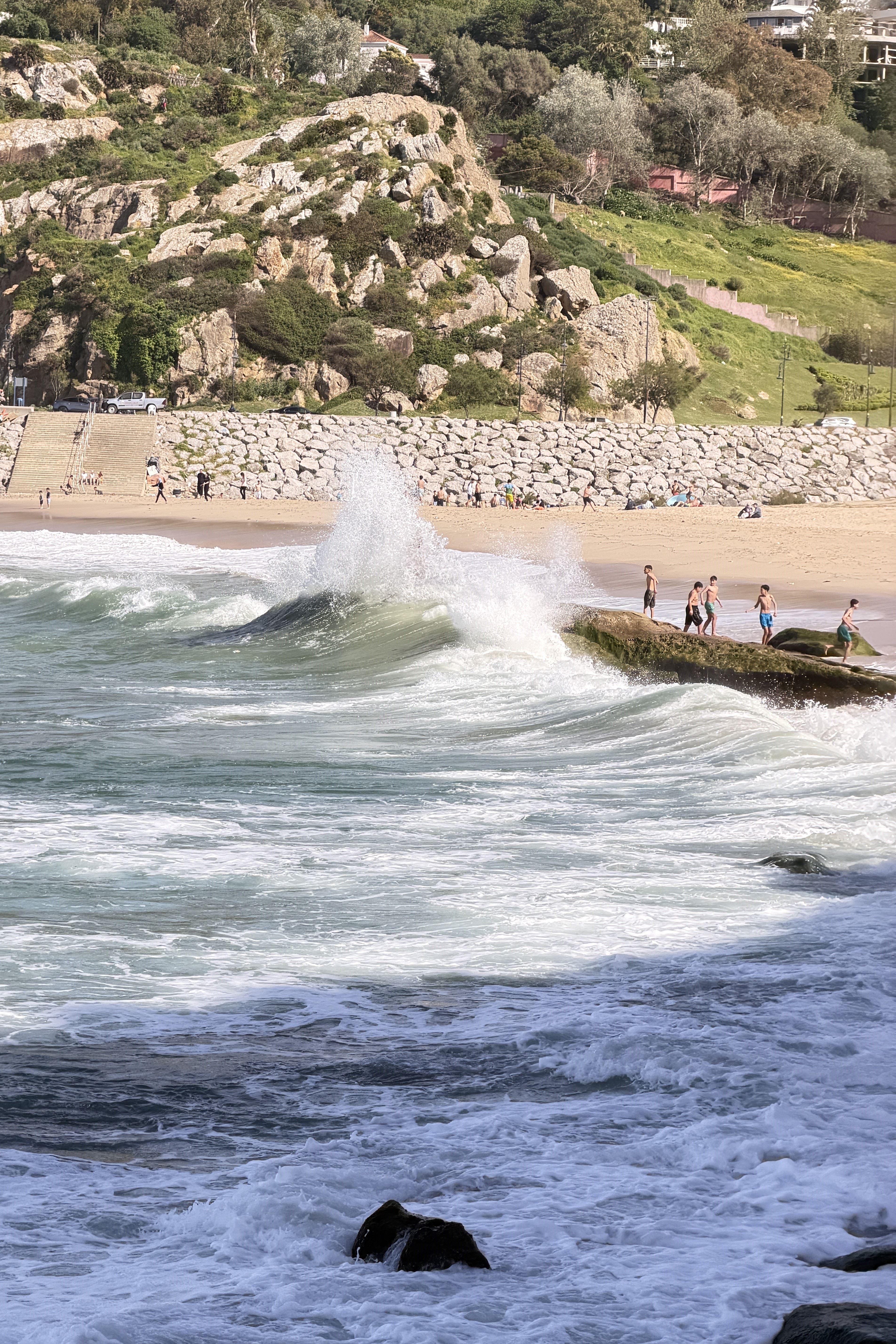
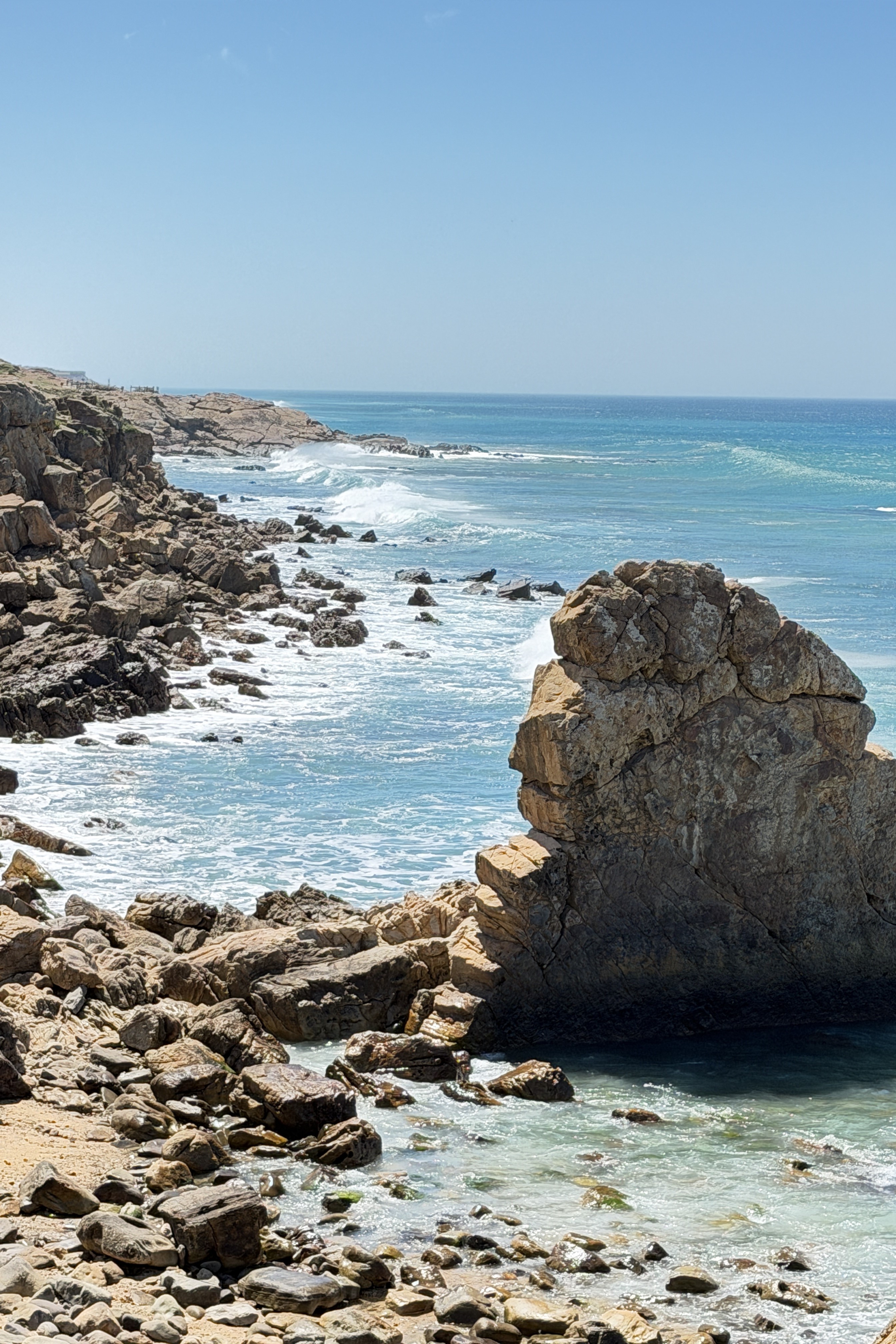
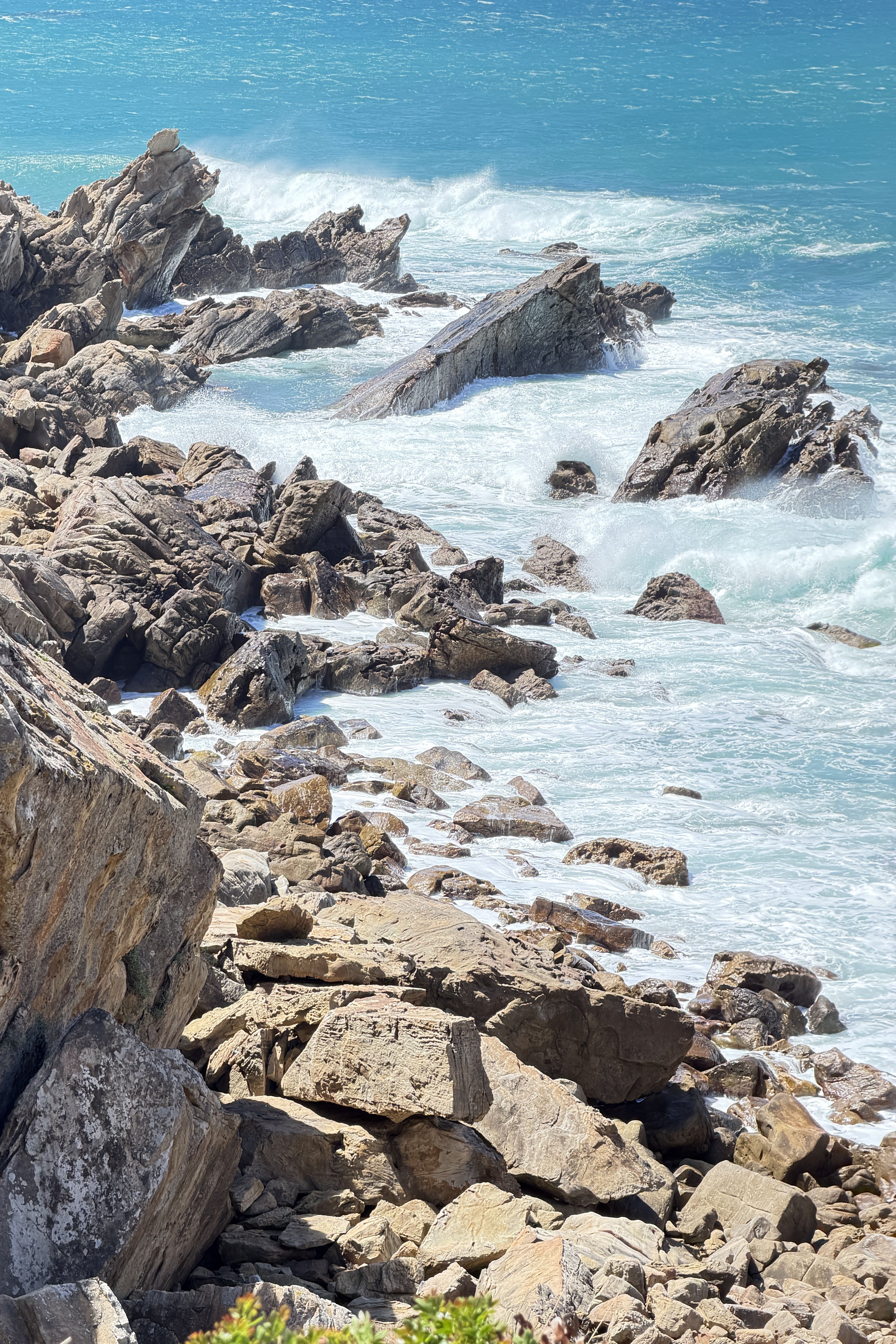
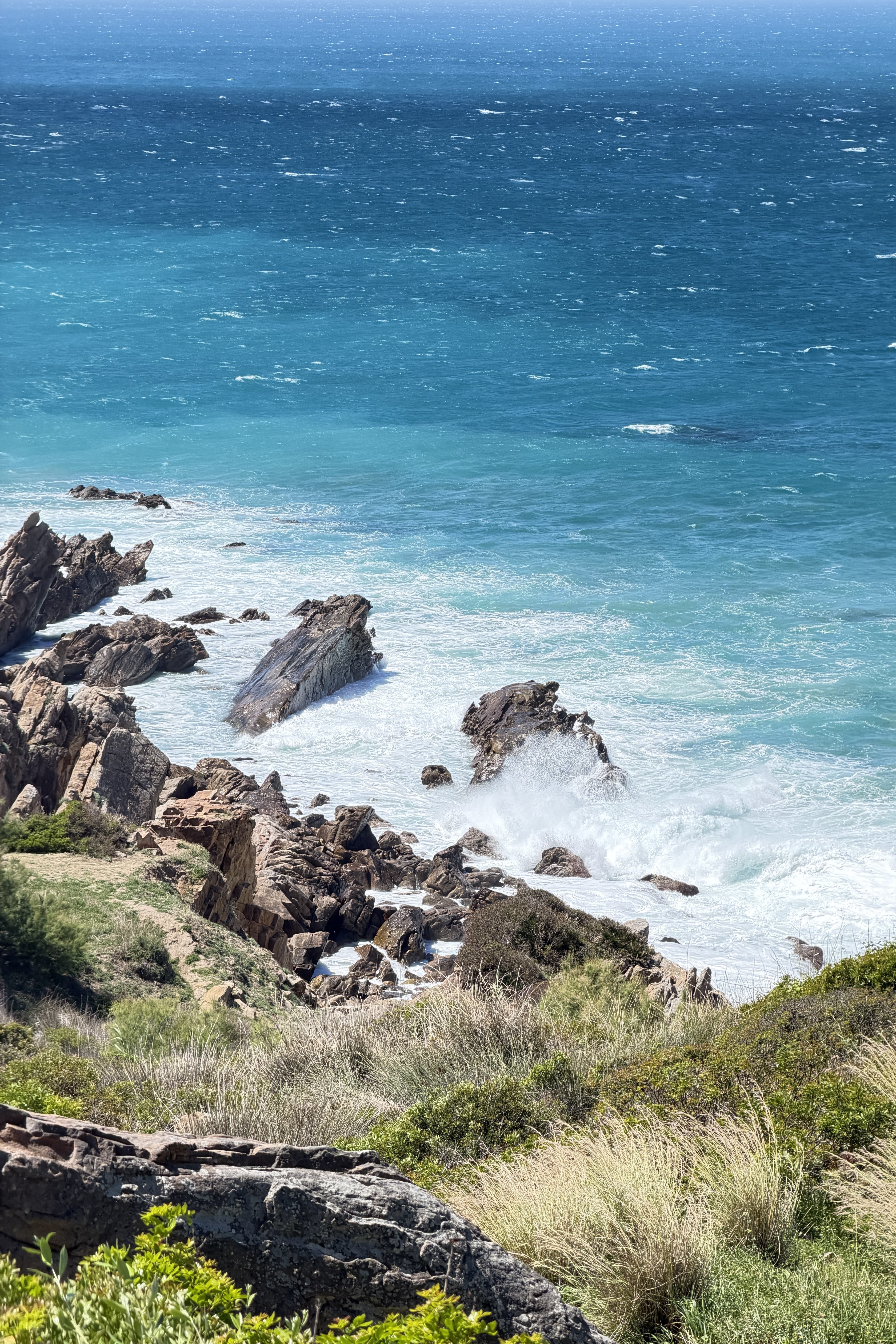
One of our absolute favorite daily walks took us along the path to Merkala Beach. Winding around the point, we discovered a stunning cliff walk where we could sit on the stone steps for hours, completely mesmerized by the massive Atlantic waves crashing violently against the rocky shore. It was local life in its purest form: watching fishermen skillfully casting their nets from the rocks, families enjoying the sun, and packs of local kids playing high-energy beach soccer or a unique foot-volleyball game over the nets. We couldn't help but compare it to our time in Ayia Napa, Cyprus; while Cyprus had identical dramatic beauty, it felt completely removed from the town, whereas Tangier’s coastline is the literal living room of the community.
IconicCafés and "Gold-Plated" Pastries
No slow-travel stay in Tangier is complete without paying homage to its historic café culture. We kicked off our first official morning at the legendary Gran Café de Paris. Operating since 1927, this iconic institution oozes retro bohemian ambiance, complete with dark leather seats and a cigar-smoky indoor atmosphere that feels frozen in a mid-century spy novel. Sitting there with a morning espresso and a hot chocolate felt like stepping directly into the city's history, made even more memorable by a quintessential local encounter where the waiter confidently told Tom what he was having for breakfast, completely ignoring Tom’s initial order.
Our daily culinary quests also led us to explore bakeries in different section of town. I had researched a patisserie called La Banquise, famous for its legendary "cheese slippers" which routinely sell out by noon. While the cheese slipper itself wasn't quite to my personal taste, the pure quality of the pastry dough was an absolute revelation—rivaling the unforgettable croissants we used to buy from the French baker at the Lucerne farmers' market. We eventually found our ultimate pastry home at L'Italienne Boulangerie Patisserie, where we regularly treated ourselves to open-faced dough pastries layered with rich pastry cream and thinly sliced apples, alongside a few chocolate-filled treats that Tom absolutely loved.
Walking the Kasbah and Neighborhoods with a Goal
We spent hours exploring the different neighborhoods to try and view the daily life of the people who call Tangier home, including the vibrant expat communities. We used our tried-and-true method of programming specific historical targets, cultural spots, or wine shops into our Google Maps. We would walk down the Corniche, then weave inland to find places such as La Librairie des Colonnes, Tangier's most famous historic bookstore. Established in 1949 on the central Boulevard Pasteur, it served as an iconic gathering hub for legendary writers and artists of the Beat Generation, including Paul Bowles, William S. Burroughs, Truman Capote, and Tennessee Williams.
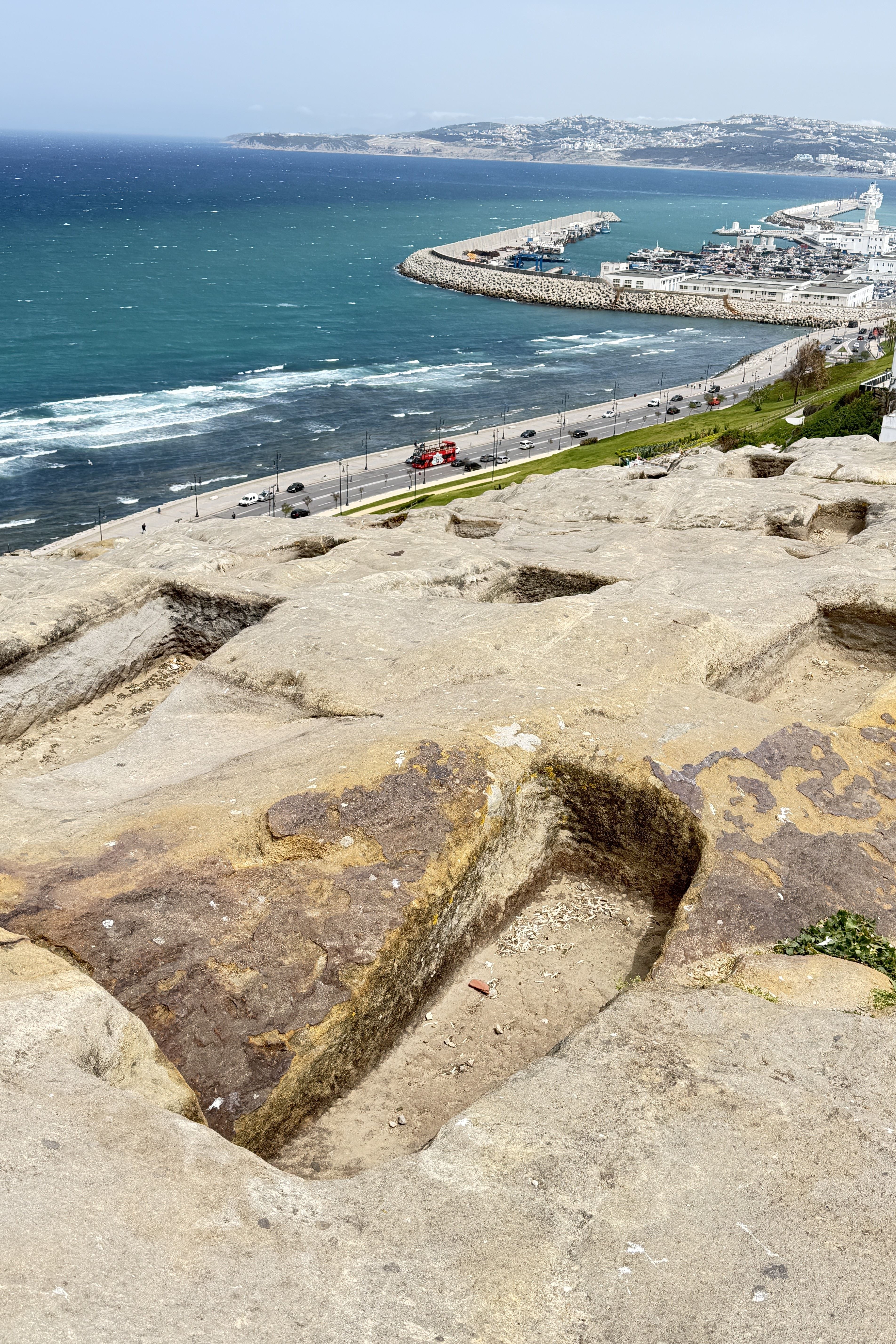
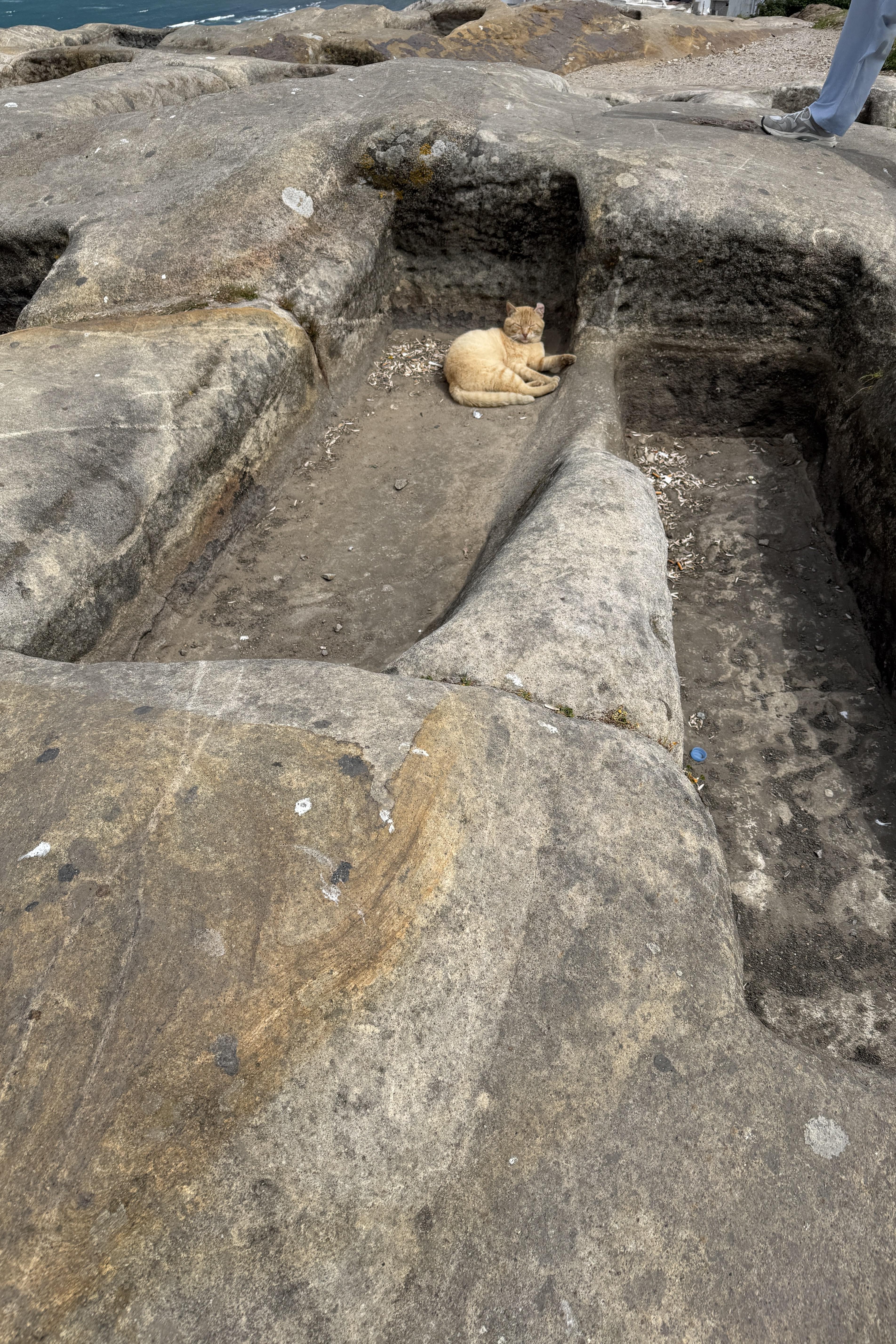
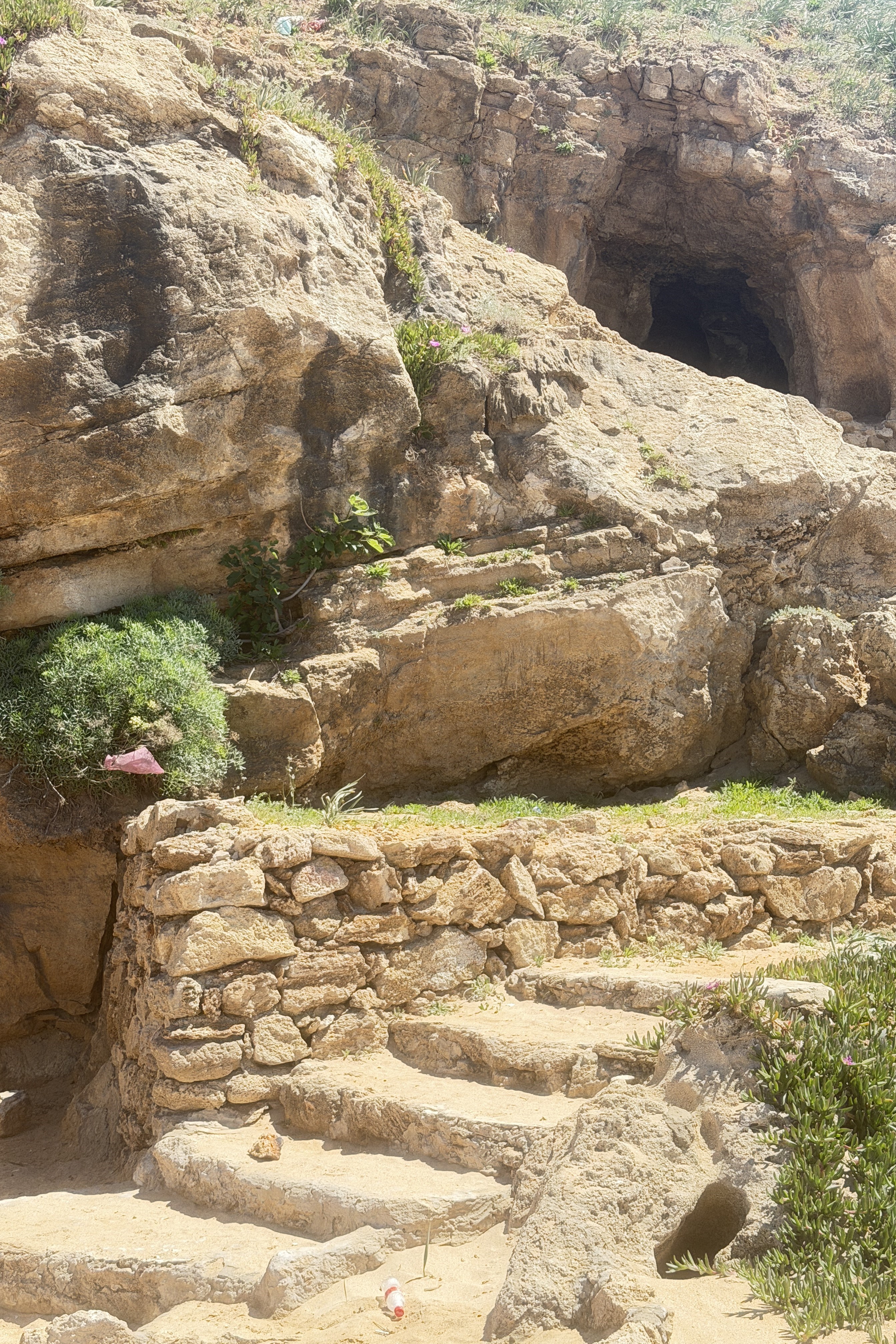
Our day exploring the Kasbah had us winding our way through the narrow, immaculate streets to the Kasbah Museum and the historic American Legion landmark. It was there we picked up a fantastic piece of historical trivia: Morocco was actually the very first country in the world to officially recognize the United States as an independent nation. Another path along the main Boulevard Pasteur takes you to the Terrace Des Paresseux (The Terrace of the Idle). This grand square sits high on the hill lined with rows of antique cannons facing out over the Strait of Gibraltar, providing a popular place for city residents and tourists to gather and people-watch. A particularly popular trek took us past Marshan Park and the ancient Phoenician tombs before winding through the residential alleys and steps toward Hafa Garden and the path back down to the Corniche Sitting atop Hafa Garden or at the Phoenician tombs, quietly enjoying the views of the fishing boats on the Atlantic, became a lasting memory of our time here.
Day Trips: Escapes from the Hub
The Blue City of Chefchaouen & Historic Tetouan
To venture into the Rif Mountains, we utilized our USAA credit card points for a day trip partnered with Viator, which connected us with a local minivan excursion. Our group included a lovely couple from Leeds and two girls from Porto, Portugal. While the driver was a bit of a trial—operating with a classic Moroccan style of high-speed wheel-jerking, hard accelerating, and abrupt braking—the destinations were spectacular.
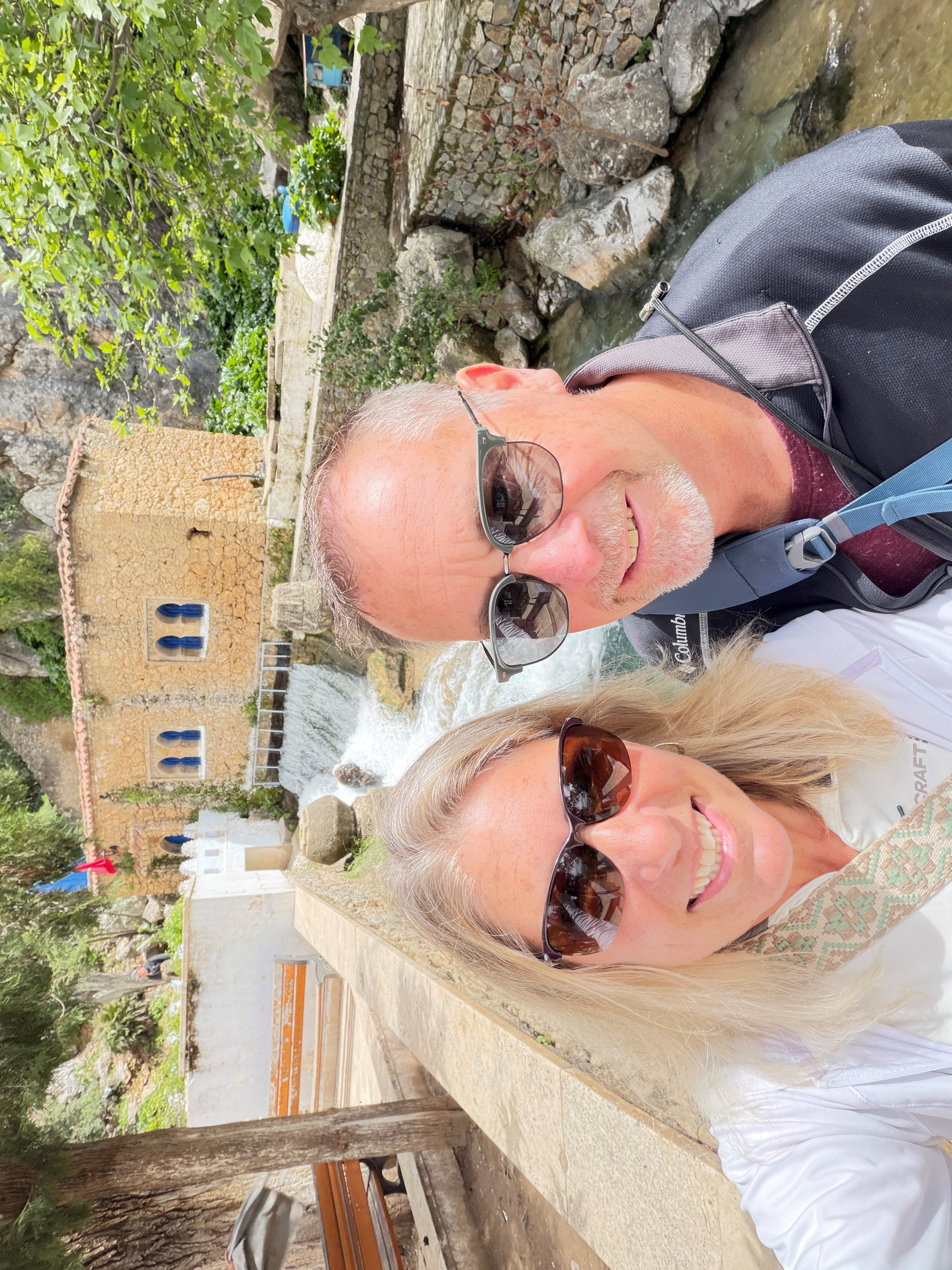
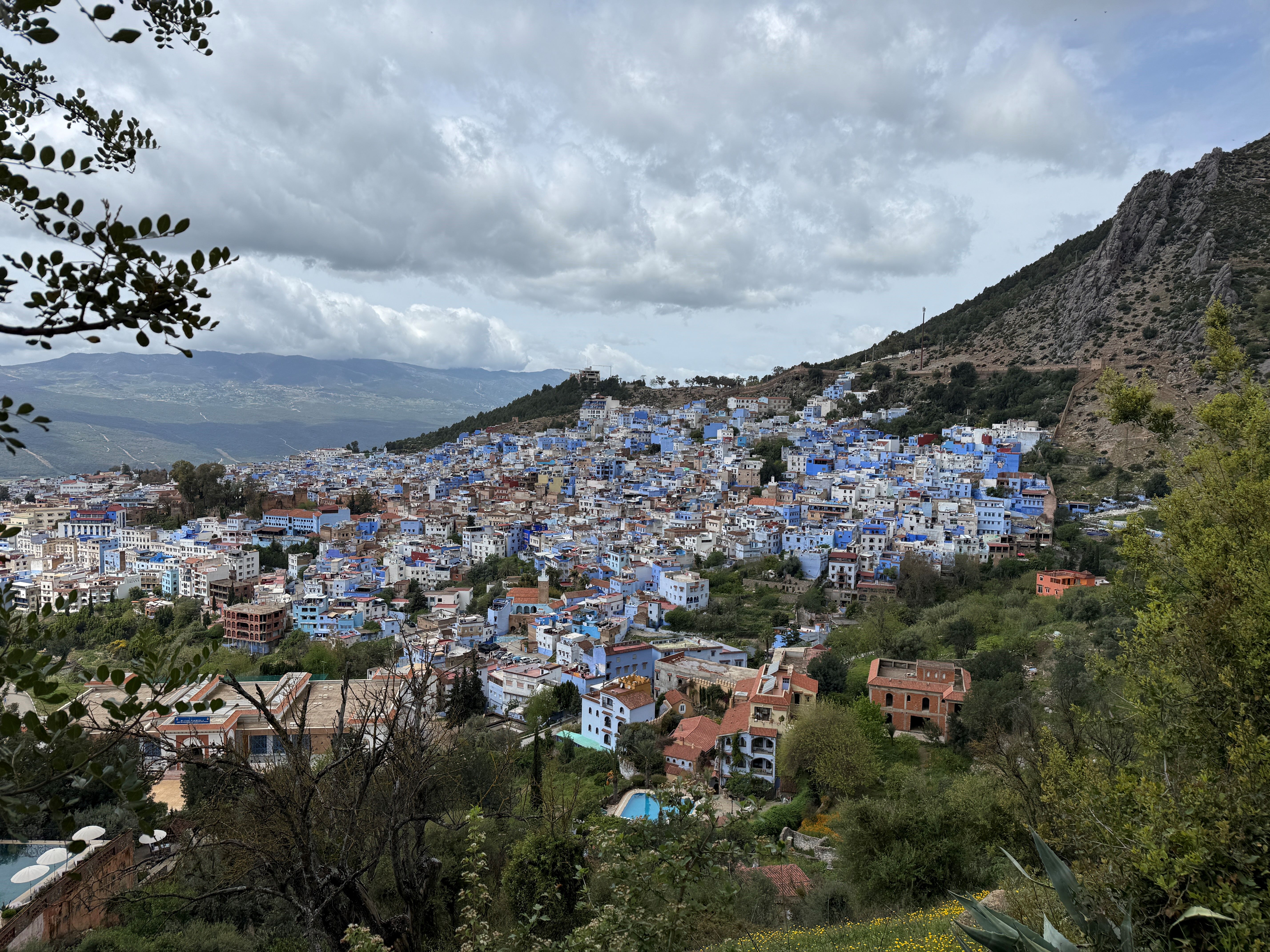
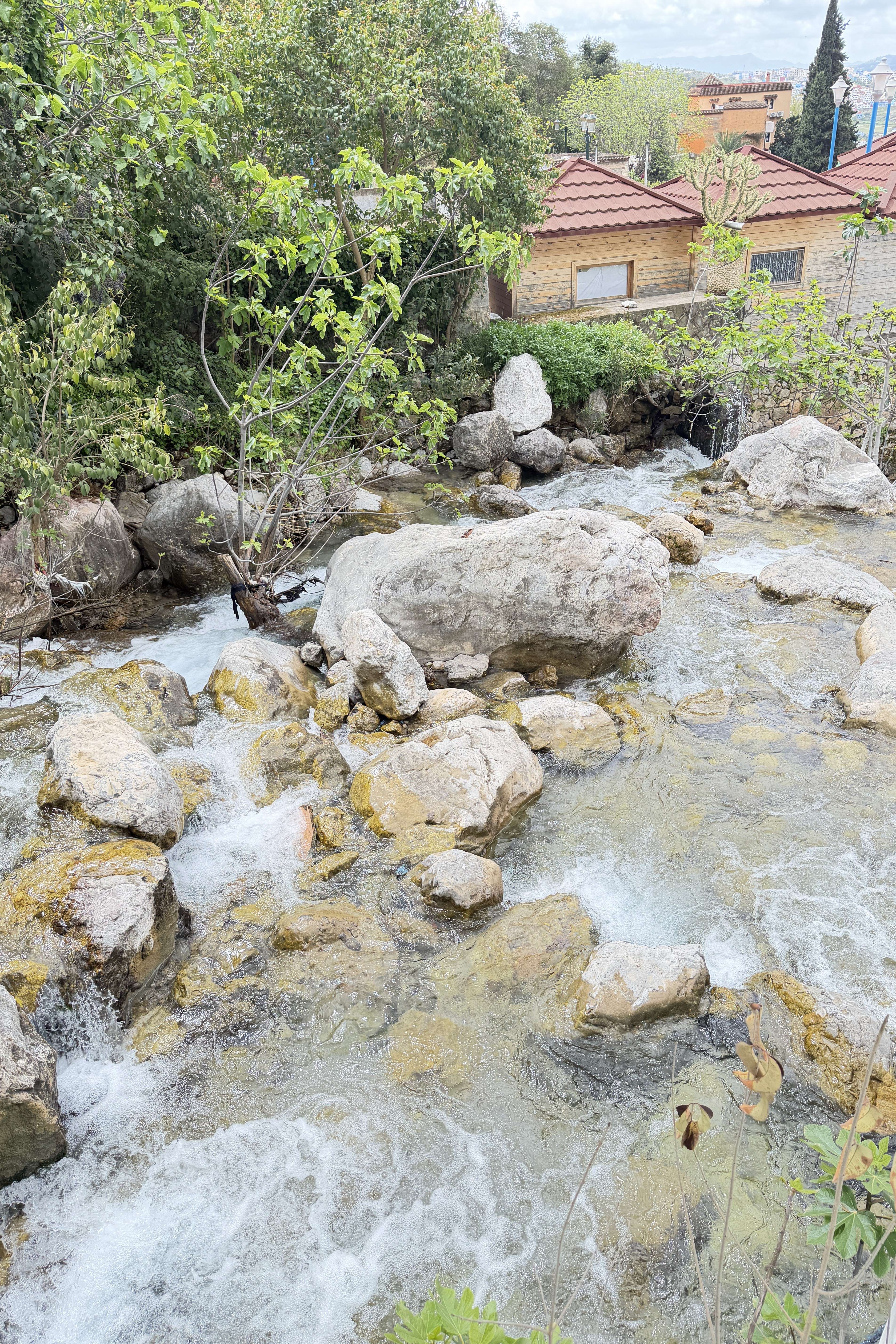
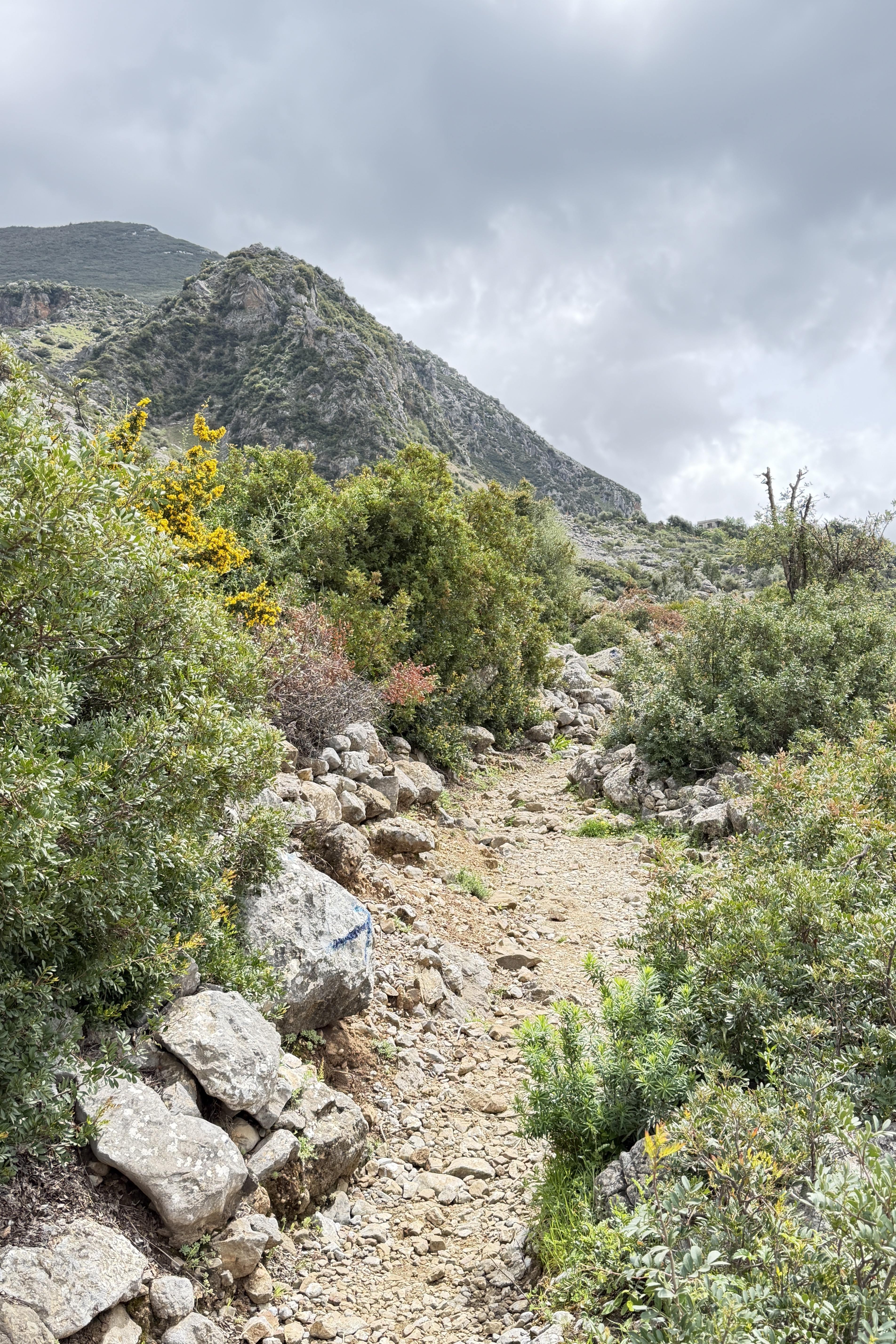
In Chefchaouen, we elected to break away from the main guided group to explore entirely on our own, which was the best decision we could have made. We dropped digital pins for the main Medina square and the waterfalls on the far side of town, using them as a loose guide while letting our eyes steer us through the mesmerizing, winding alleys of brilliant blue. Craving nature, we hiked for an hour up a true mountain trail to a breathtaking lookout point. Being entirely alone in the quiet mountain air, far from the tourist crowds, looking down on the blue city and the surrounding mountains, was an absolute highlight of our time in the region.
Our second stop, Tetouan, revealed a fascinating Spanish-influenced Medina. This historic quarter is completely unique because, in addition to the typical markets, it has an extensive offering specifically geared toward traditional Moroccan weddings. Alleys upon alleys are packed with glittering wedding gowns and massive displays of engagement and matrimonial jewelry. We wound up resting at a hyper-local coffee shop for a quick espresso, which provided a funny "seasoned traveler" memory when I went to use the restroom upstairs. The waiter had to hand me a key to a tiny, padlocked utility closet containing a non-working toilet with no paper towels or toilet paper. Because it was right next to the very open men's water closet, I had to strategically avert my eyes while unlocking my makeshift facility. It was explicitly clear they do not serve many women there, but it was an authentic glimpse of local life.
Cap Spartel to the Caves of Hercules: A Coastal Hike
We tackled this classic excursion as a completely independent DIY project using the local Hop-On Hop-Off bus. We caught the bus down at the main pier roundabout at noon. Though the ticket agent initially tried to tell us the bus was completely full until1:00 PM, as soon as we stood our ground and said we would just take a taxi, he made a quick phone call and suddenly let us right on—proving that logistics in Morocco always require a bit of flexible patience .
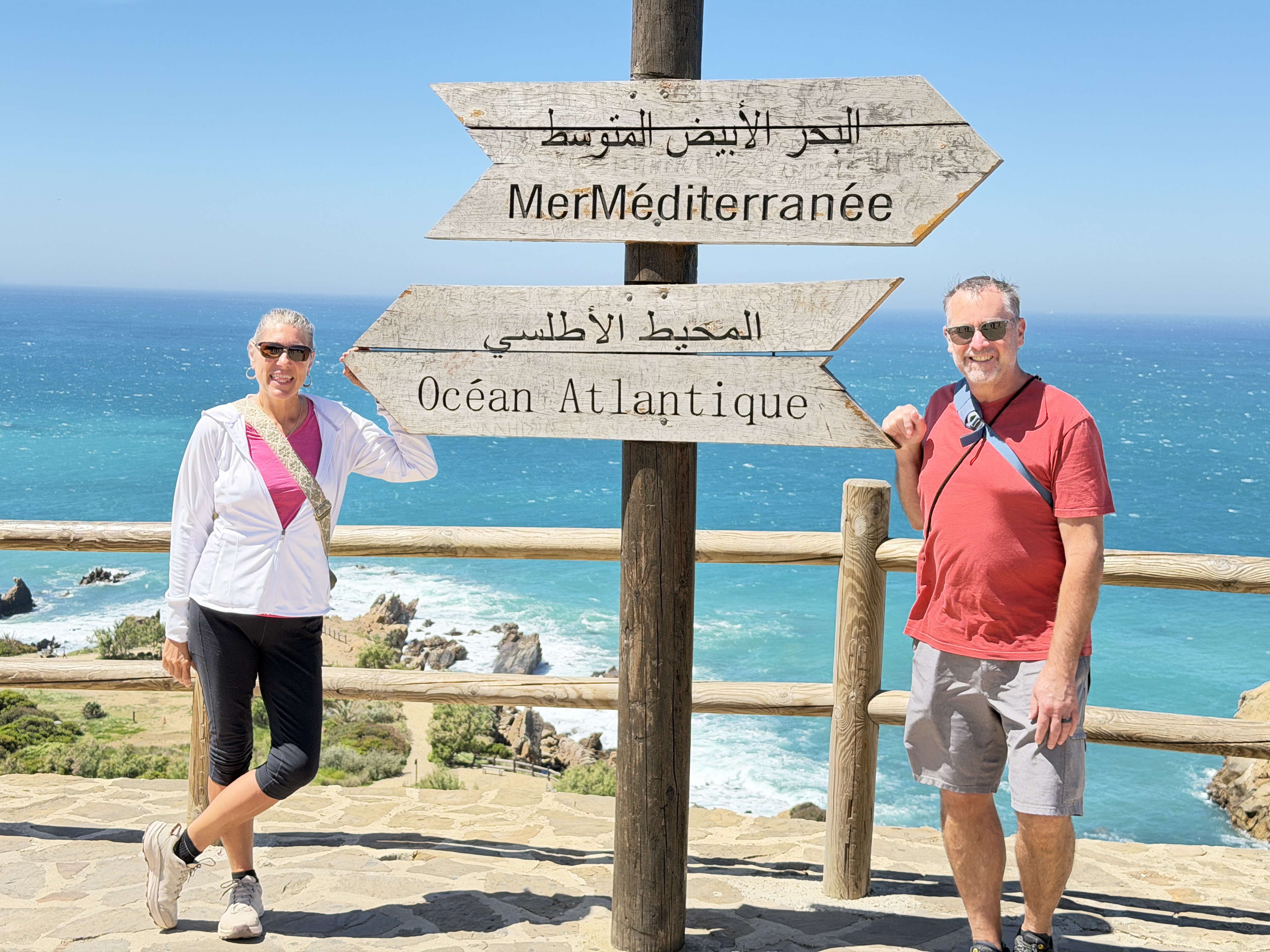
The bus dropped us off in the car park right at Cap Spartel, a dramatic promontory featuring a beautiful, modern-style lighthouse. Right below the lighthouse, there is a legendary geographic marker indicating exactly where the Atlantic Ocean meets the Mediterranean. Watching the massive Atlantic rollers relentlessly pounding into the dramatic rock formations was spectacular.
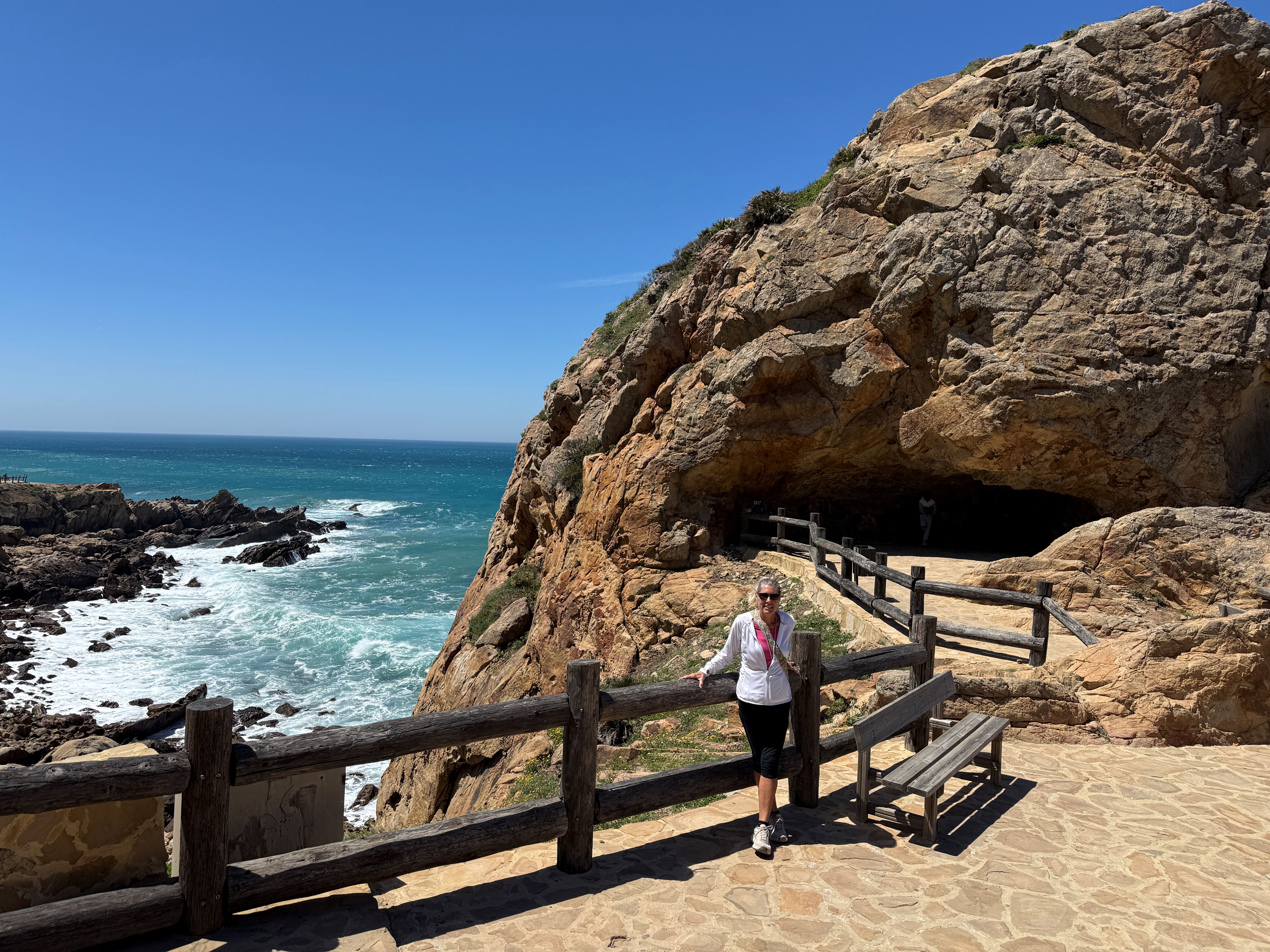
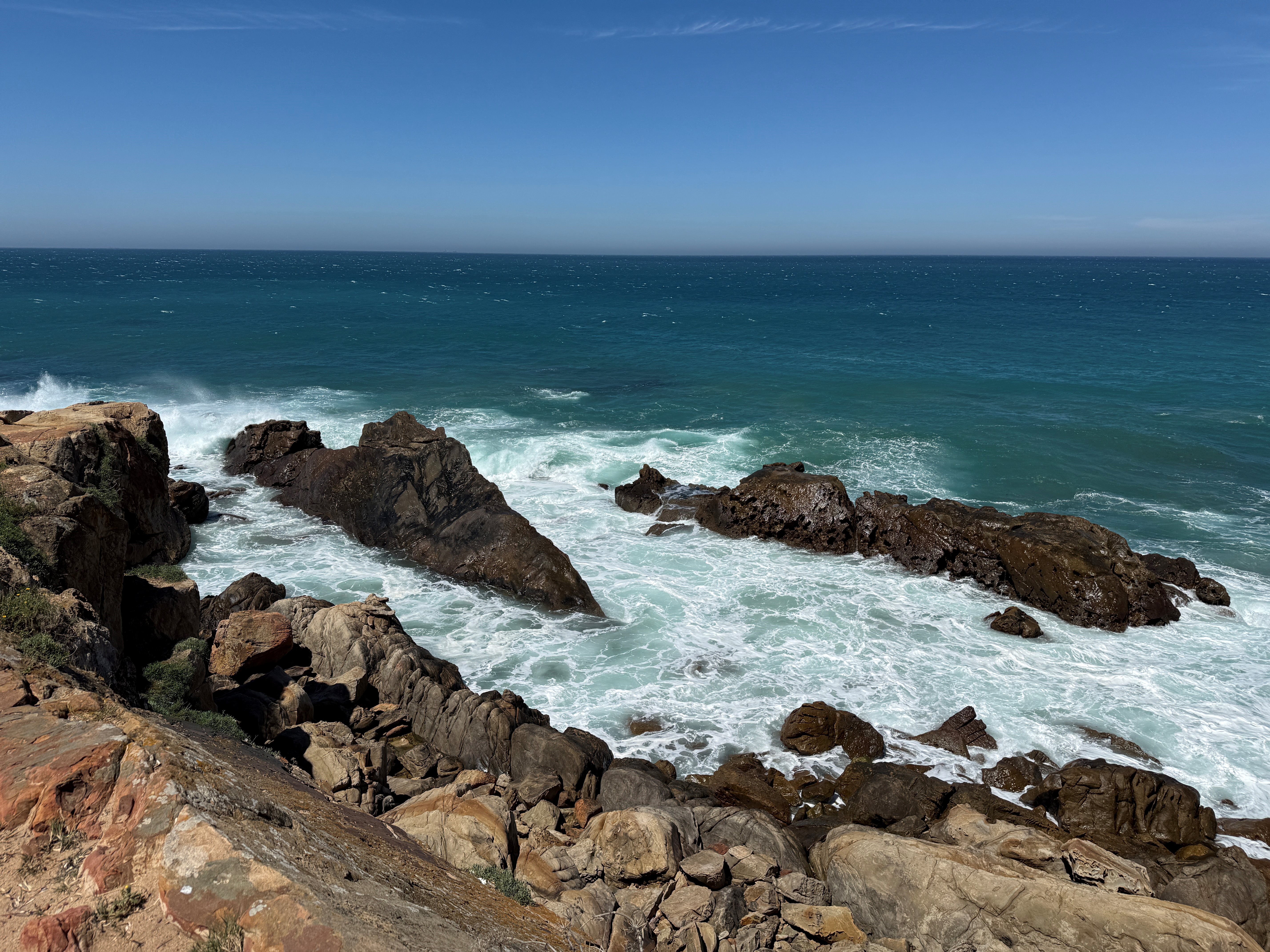
Rather than waiting for the next hourly bus, we decided to hike the 5 kilometers down the coastline to the Caves of Hercules, where we could catch the bus back to the pier. The trek started beautifully on a paved pedestrian sidewalk winding between the main road and the crashing surf. When the sidewalk abruptly ended, we tried a bit of precarious scrambling over the coastal rocks before retreating to the safety of the main road. We then cut down directly onto the shifting sands of Achakar Beach, trekking along the edge of the water for a couple of kilometers before walking the final stretch along the asphalt.
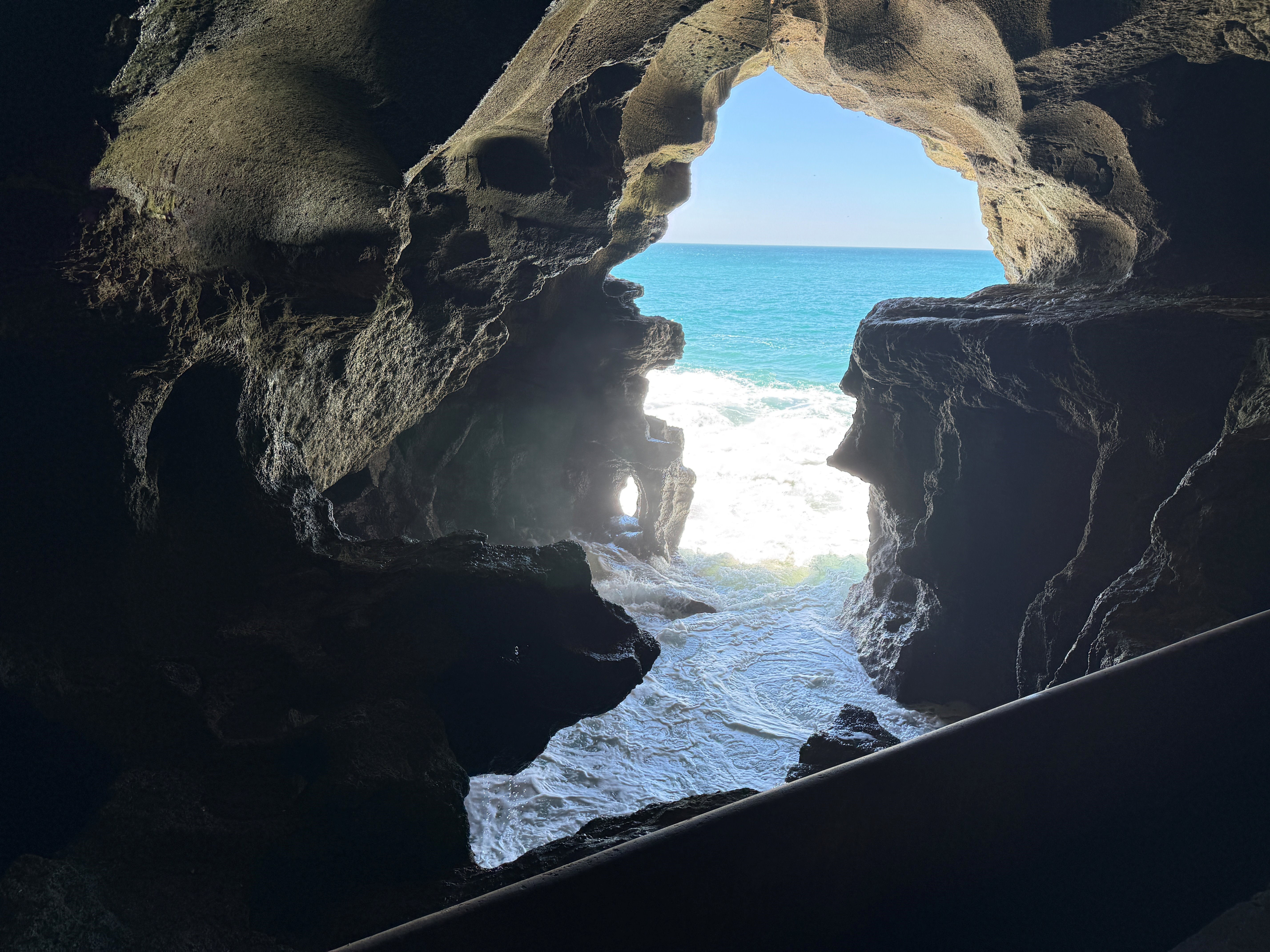
While the coastal hike itself was stunningly dramatic and well worth the effort, the Caves of Hercules were undeniably underwhelming. We paid 160 MAD ($16 USD) each to enter, spending perhaps five minutes walking through a big cavern to look at the famous "Map of Africa" sea opening before heading right back out to wait for our return bus.
Golf at Royal Tangier Golf Club
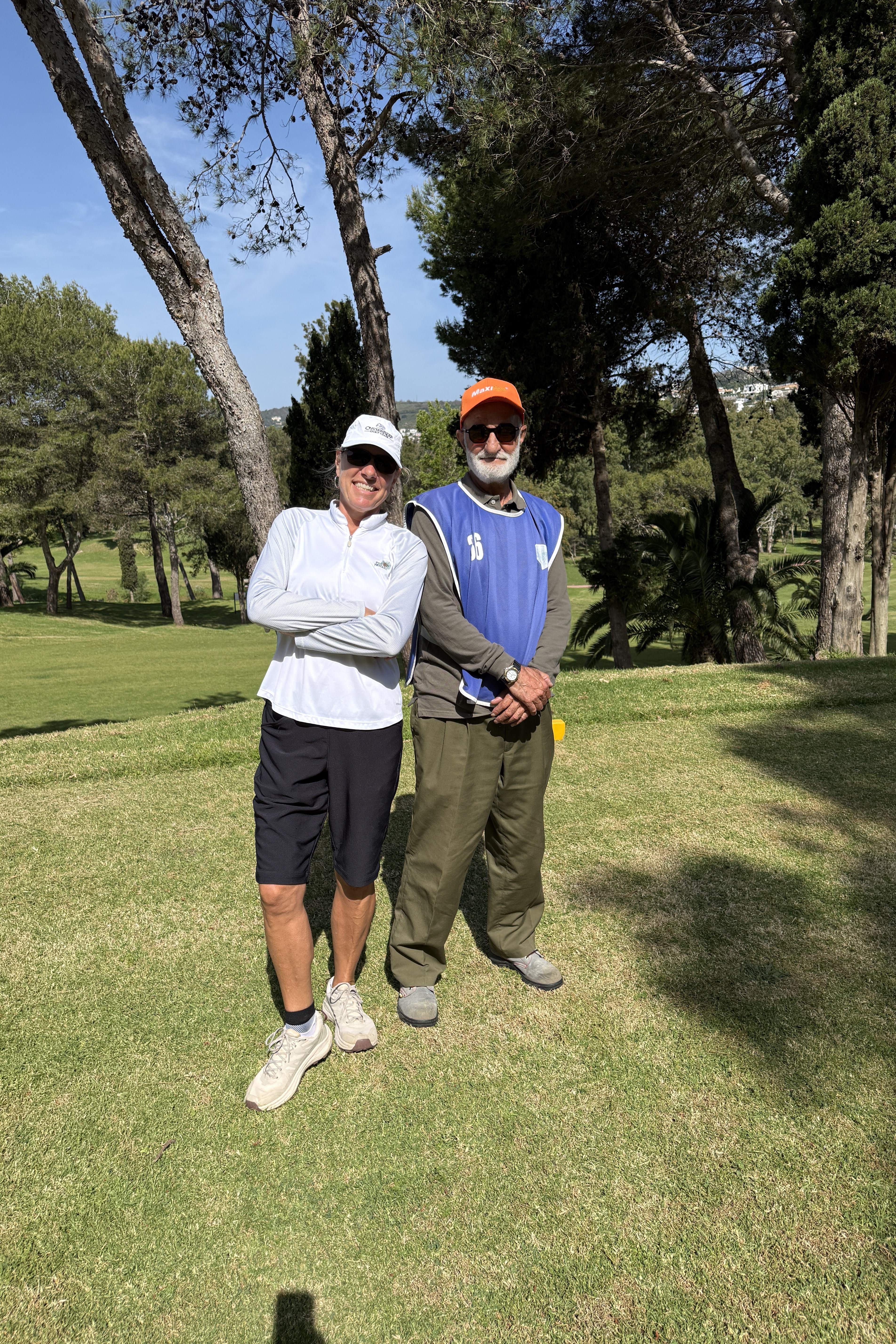
One of our favorite afternoons in Tangier actually centered around a round at the Royal Country Club of Tangier. We had booked a 10:00 AM tee time and were paired with a delightful couple visiting from the Netherlands. The course requires a caddy (150MAD per person), and our caddy, Said, essentially turned into my personal walking golf coach for the day. Because my back was aching from our apartment mattress, I could barely swing, but Said took it upon himself to realign my stance, adjust the ball position, and slow down my rapid backswing. We also laughed over the concept of "Moroccan Tee"—the hilarious caddy tradition of using his foot to flip up a perfect little tuft of grass to give your golf ball a flawless, elevated lie on the fairway.
After an incredibly fun round, we moved into the country club's gorgeous, sunlit restaurant, which features a sophisticated full bar and a beautifully diverse Mediterranean menu. We enjoyed a fantastic afternoon of drinks and tapas set to ambient music, making it one of our top recommended culinary experiences in the city—and a spot we recommend eating at even if you don't golf.
Culinary Discoveries: Epicurean Shops and Cuisine Exploration
Tangier has a wonderful mix of local Moroccan eateries and international dining options. Utilizing our slow-travel trick of picking a restaurant to explore a new neighborhood, we regularly let our dinner destinations dictate our evening walks.
On our walks toward the historical center, we really enjoyed stopping for drinks and free tapas at Le Coeur de Tanger. Located right next to the Sour Meegazine area with its historic cannons, we were continually amazed at how unique and plentiful the complimentary tapas plates were when you ordered a drink or two. Down along the modern waterfront, Nono Sea Taste became a favorite. The restaurant offers a beautiful level of elegance with sweeping sea views, serving unique pastas, great steaks, and inventive seafood. We enjoyed a wonderful meal of steak and octopus here, perfectly paired with an exceptional Pouilly-Fumé Sauvignon Blanc surrounded by a lively, sophisticated crowd.
For traditional Moroccan flavors, Chez Hassan is an absolute local institution. It is always packed, so expect to wait for a table, but their skewers of chicken, beef, and their famous seafood kabobs are well worth the patience. Just remember that they only take cash. We also went on a dedicated search for the city's best shawarma, and out of all the local snack shops we tried, Shawarma Al Haram took the crown. Their chicken shawarma plates are incredibly plentiful, served over flavored rice with a fresh tomato-cucumber salad, ensuring you will walk away with plenty of leftovers. When we craved Italian, our trek led us to Parmigiano, a lovely spot where the Caesar salads, burrata with pesto, and wood-fired pizzas were excellent. It was a restaurant we wished we had discovered much sooner in our stay.
For our at-home dinners, we regularly frequented the local epicurean shops to build our own custom charcuterie boards to pair with our wine discoveries. We loved rounding out our everyday market shopping from the local Carrefour by stopping at Petra Épicerie Fine, a fabulous shop right down the street from our apartment packed with high-quality meats, cheeses, and foie gras. Another incredible find for specialty items was In Finé - Maison Gourmet. The shop is absolutely beautiful inside, complete with an artisanal chocolatier and a perfumery upstairs, though the staff practices an intensely high-pressure sales approach. We walked away with a magnificent spread of truffle-infused cheese, a sharp Spanish Manchego laced with hot peppers, and gourmet crackers. While local patisseries are wonderfully cheap, these imported epicurean items are highly expensive, but they provided the perfect accompaniment as we relaxed in our living room watching the Masters tournament unfold.
The Tangier Wine Scene
Navigating the wine scene in Tangier was a breath of fresh air after the strict dry restrictions of Ramadan we encountered in the south. For dining out, Tangier makes it incredibly easy to find independent options beyond the standard resorts that include a robust selection of wine, beer, and cocktails.
When it comes to retail, our absolute favorite discovery was a wonderful boutique called La Patrice Market. Unlike the rest of Morocco, which focuses almost exclusively on domestic labels and French imports, Patrice boasted an exceptional, curated selection of Spanish wines, allowing us to stock our apartment with superb bottles from Rioja and Riberadel Duero. For a quick stop, Chez Ali has a small but reliable selection of wines and liquor if you don’t need a massive, sprawling inventory.
We also checked out Rojito Tanger, a multi-level wine and liquor shop located downtown. On the first level, you will find an expansive display of Moroccan labels, while the upstairs level is where we successfully tracked down our reliable French favorites. Additionally, the Carrefour Market in the Marshan neighborhood features a very nice, well-stocked wine cave with a large selection of beer, wine, and spirits, making it incredibly convenient for our day-to-day slow-travel routine.
Reflections on the Journey
- The things we loved the most: The pure, unadulterated beauty of the ocean views and the extensive coastlines. Tangier’s everyday rhythm was on full display in the Marshan neighborhood, where being able to mix with locals and visitors alike, catch a youth soccer game along the shore, and wander the organized Medina made it perfect for a long-term stay.
- The things we didn’t: The high import duties and luxury taxes mean that hitting the high-end epicurean shops or ordering an international bottle of wine at a sit-down lunch can easily rack up a bill north of $135 USD very quickly.
- What we learned: The historic influence of the international zone—when Tangier was a separate territory managed by a collection of colonial powers—is still incredibly evident in the architecture and culture. We loved diving into the legendary stories of the writers, diplomats, artists, and spies who converged here and left a lasting impact on what Tangier is today.
- Unexpected Learnings: Unlike the intense, aggressive environment we experienced with teenagers and children in the public parks of Fes, Tangier felt entirely safe, relaxed, and mature. The local youth are completely focused on their own lives, sports, and families, allowing us to read, walk, and sit along the sea incomplete, unbothered peace.
Links: Morocco Day Trip and Safari Planning Guide | The Touchpoint Blueprint: Planning Guide for Morocco | More Trip Reports |
Up Next: Malaga, Spain
Welcome to the new Touchpoint Wines
We’re blending our passion for wine with a love for global exploration. Join us as we journey through the world's most captivating destinations, uncovering hidden wine gems and offering unique workshop experiences for your team retreats. Whether you're seeking to enhance team dynamics or discover the art of slow travel, let us be your guide.