At a Glance
- Duration: 21 Days (April – May 2026).
- Home Base: An apartment located in the vibrant heart of Malaga’s Old Town, just two minutes from historic landmarks.
- Top Day Trip: Nerja—an absolute masterpiece of a day that won our hearts through its breathtaking prehistoric caves, a vibrant local festival, and a classic Spanish tapas crawl.
- Memorable Moment: Tears springing to our eyes during an intimate Flamenco performance, completely overwhelmed by the raw, improvised passion of the guitar, the song, and the rapid footwork.
- Overall Vibe: Energetic, coastal, and culturally rich. While the city center is unashamedly geared toward tourism, Malaga truly shines as the ultimate logistical launchpad for some of the most spectacular day trips in Europe.
This Town is Special Because... (Introduction & Our Why)
Malaga is a city that has brilliantly engineered its own renaissance. Historically a gritty beach town where travelers merely landed to party in the summer, it completely transformed its identity by leaning into its heritage as the birthplace of Picasso. Going from virtually zero museums to 39 distinct cultural institutions, it has successfully turned itself into a year-round travel destination.
We chose Malaga as a three-week hub because we wanted an Andalusian anchor that perfectly balanced coastal living with seamless connectivity for our "hub and spoke" strategy. What we found was an atmospheric paradise: a city where ancient Roman ruins sit right beneath Moorish fortresses, and where the air smells of sea salt and grilled sardines. It is a place that feels deeply alive, though it requires a seasoned traveler's eye to peek past the cruise-ship crowds and find the authentic pulse of local life.
Our Home Base: Old Town Malaga
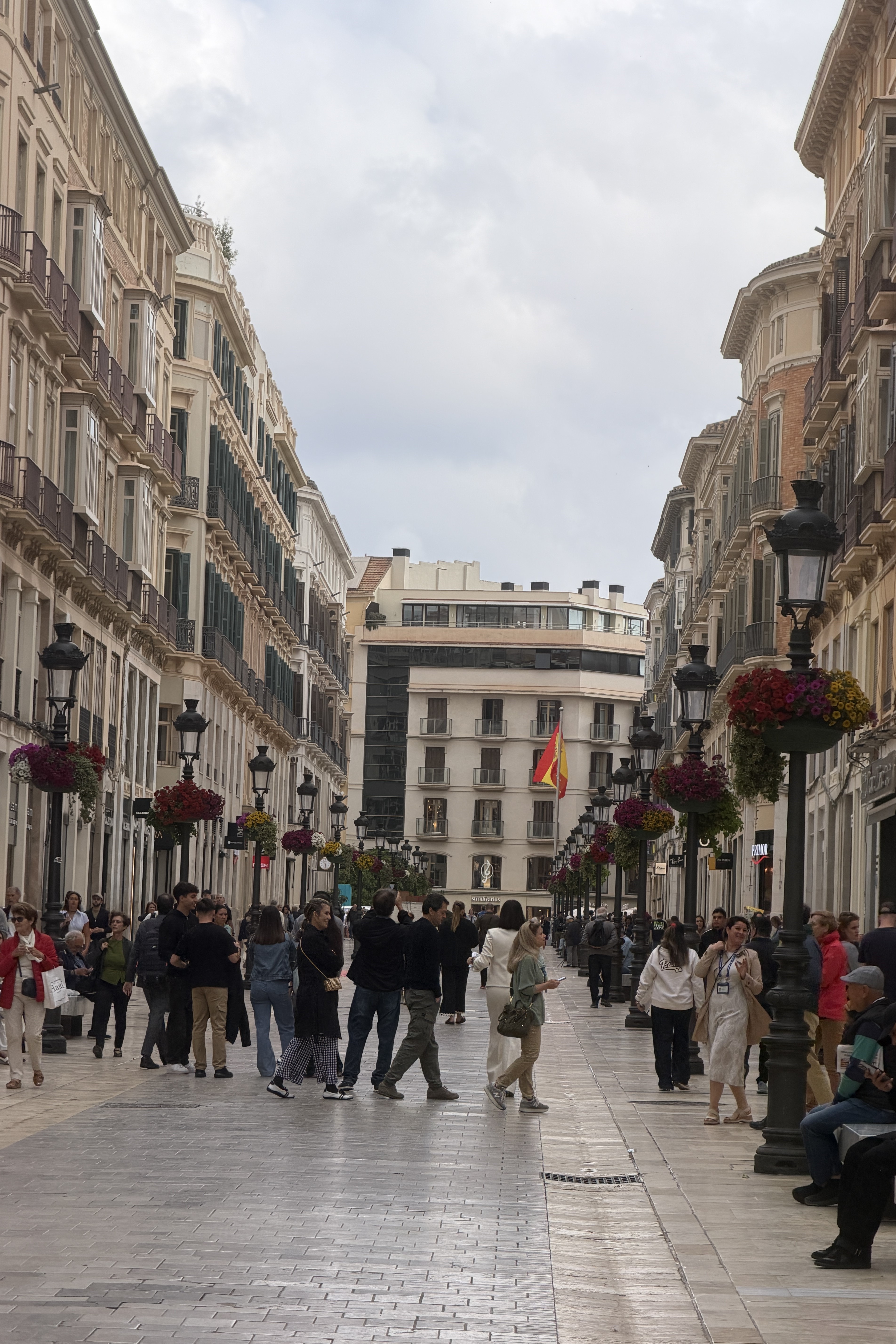
For our three weeks on the coast, we stayed in a nice apartment tucked right into the historic center. Structurally, the neighborhood is incredibly charming; our walking tour taught us that the streets are intentionally narrow, winding, designed by centuries of defenders to limit sight lines. We learned they are flanked by beautiful curved architecture that serves to trap cool breezes and whisk away unwanted odors. The streets are even decorated with specialized stone layouts that help evaporate rainwater quickly.
Living in the center meant we were steps from iconic bodegas and dramatic historic pathways. However, we quickly noticed the pricing divide: the historic core has become so premium that locals rarely shop. Because we had some major retail needs, we took a cue from the residents and headed to the outlet shopping complex out near the airport, and also visited the mall near the train station, to avoid the steep tourist premiums of the central high streets.
Our Malaga Experience: The Day-to-Day
The Fairway and the Fortress
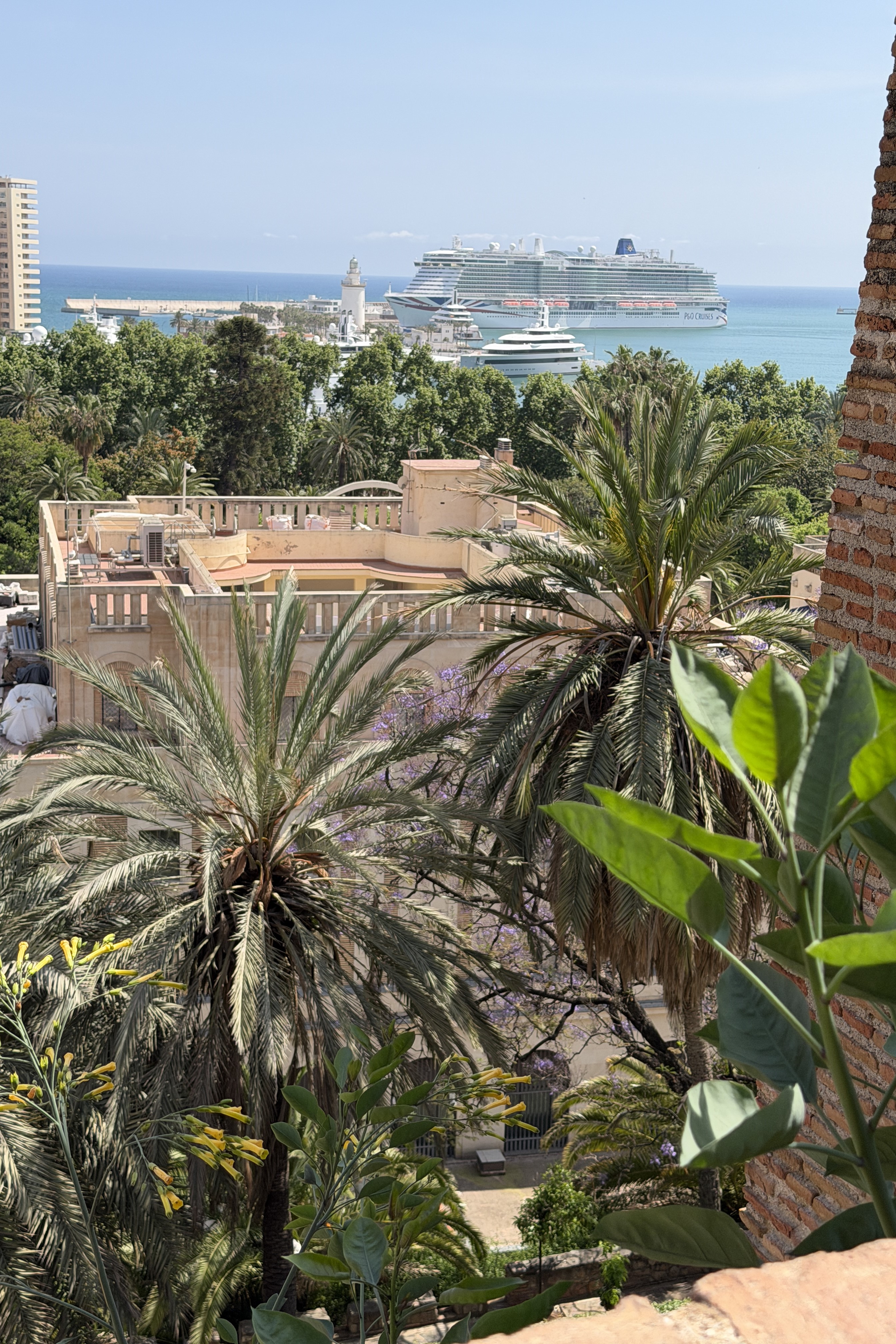
Our slow-travel rhythm in Malaga beautifully blended dedicated work mornings with highly active afternoons. Our daily fitness routine took on a dramatic flair, as we regularly tackled a great powerwalk straight up the steep, winding path to Gibralfaro Castle, or a long, brisk stroll along the beach promenade. Heading out early allowed us to beat the heat and the crowds, capturing the quiet before the city fully woke up.
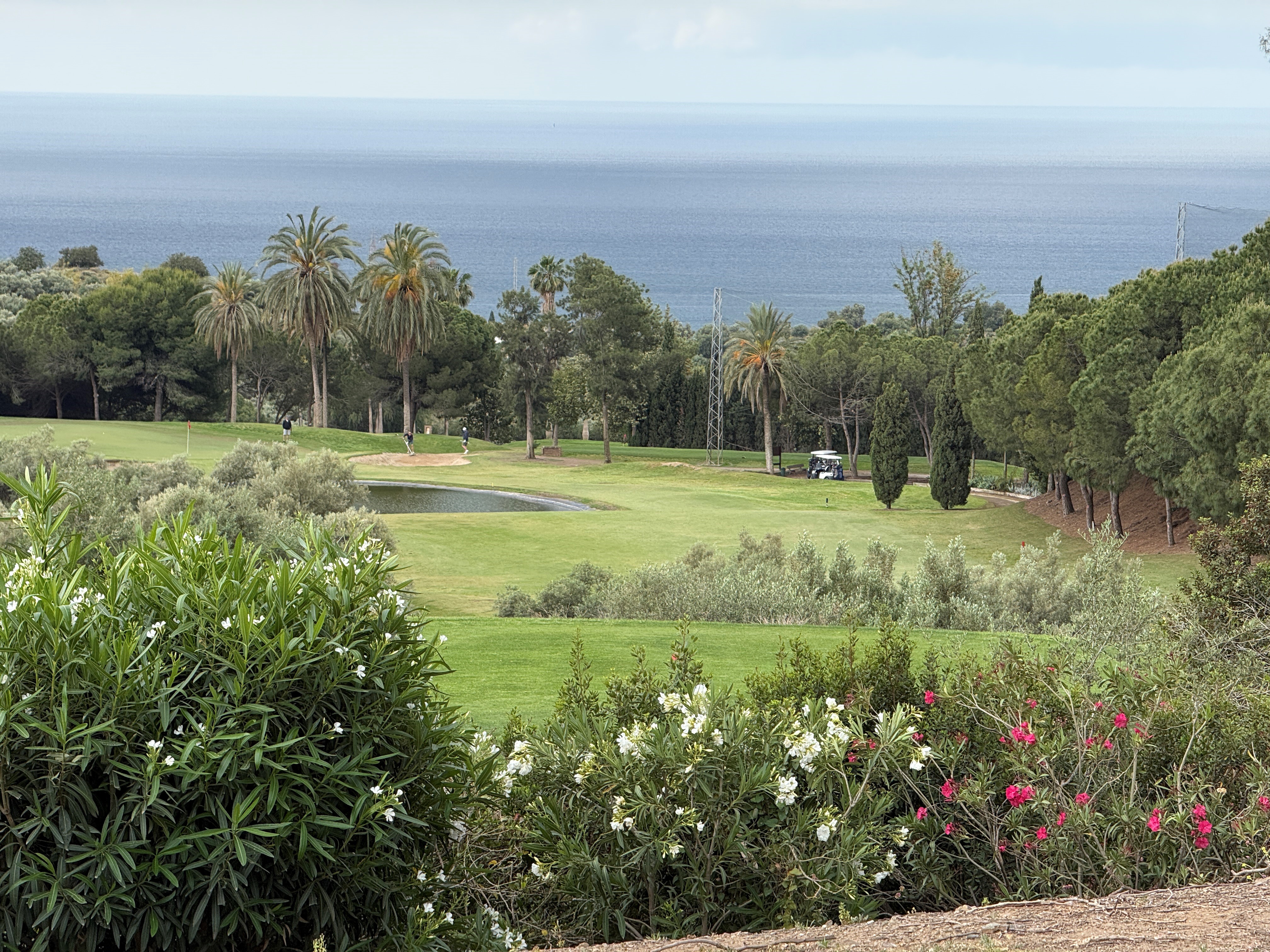
When we weren't scaling castle paths, we were exploring the local fairways. We booked a round at the Añoreta Golf Resort via Tee Times, taking a taxi from the central plaza stand. The course itself is a beautiful, highly walkable layout popular with local expats from the UK, Australia, and Belgium. The logistics were a bit unique—the driving range is oddly positioned all the way up by the second tee, making a pre-round warm-up impossible, so we had to rely strictly on the putting green. But it was a fantastic, social day on a very busy course. Our taxi ride back even provided a classic travel memory: our driver used Google Translate on his phone to ask if we minded a quick 10-minute detour to a local café to pick up some keys for a friend, promising to cut our fare in half for the trouble. Naturally, we happily agreed.
A Local Culinary Exploration
During our stay in Malaga, we decided to step away from our normal routine of balancing out with cooking for ourselves, and instead committed to eating out for lunch and dinner. We used our time here to actively seek out the international food scene, local empanada retailers, vibrant wine bars, and the exact spots where a resident would proudly bring their own friends and family. I also became a frequent purchaser of the highly salted boiled almonds sold on nearly every street corner.
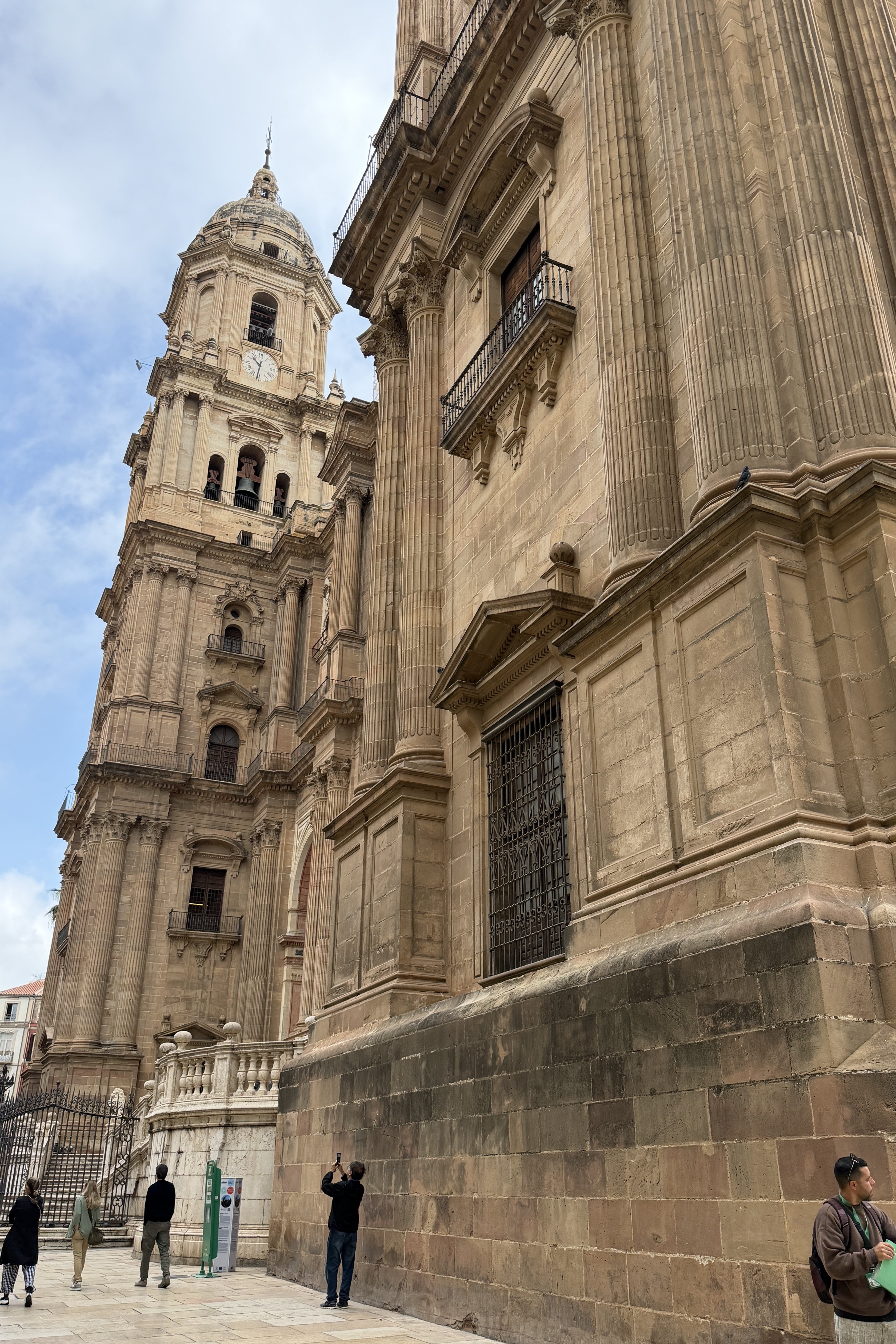
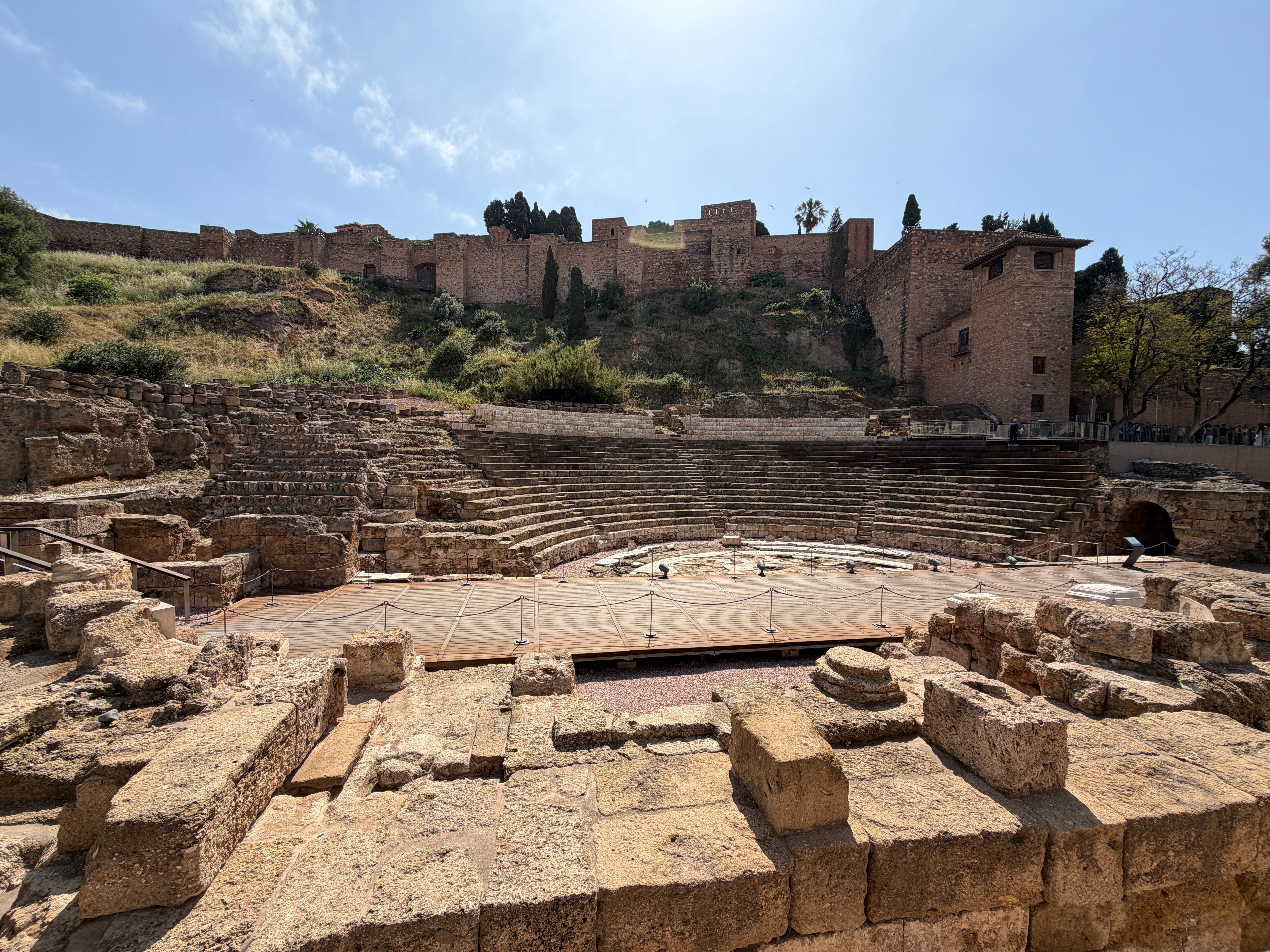
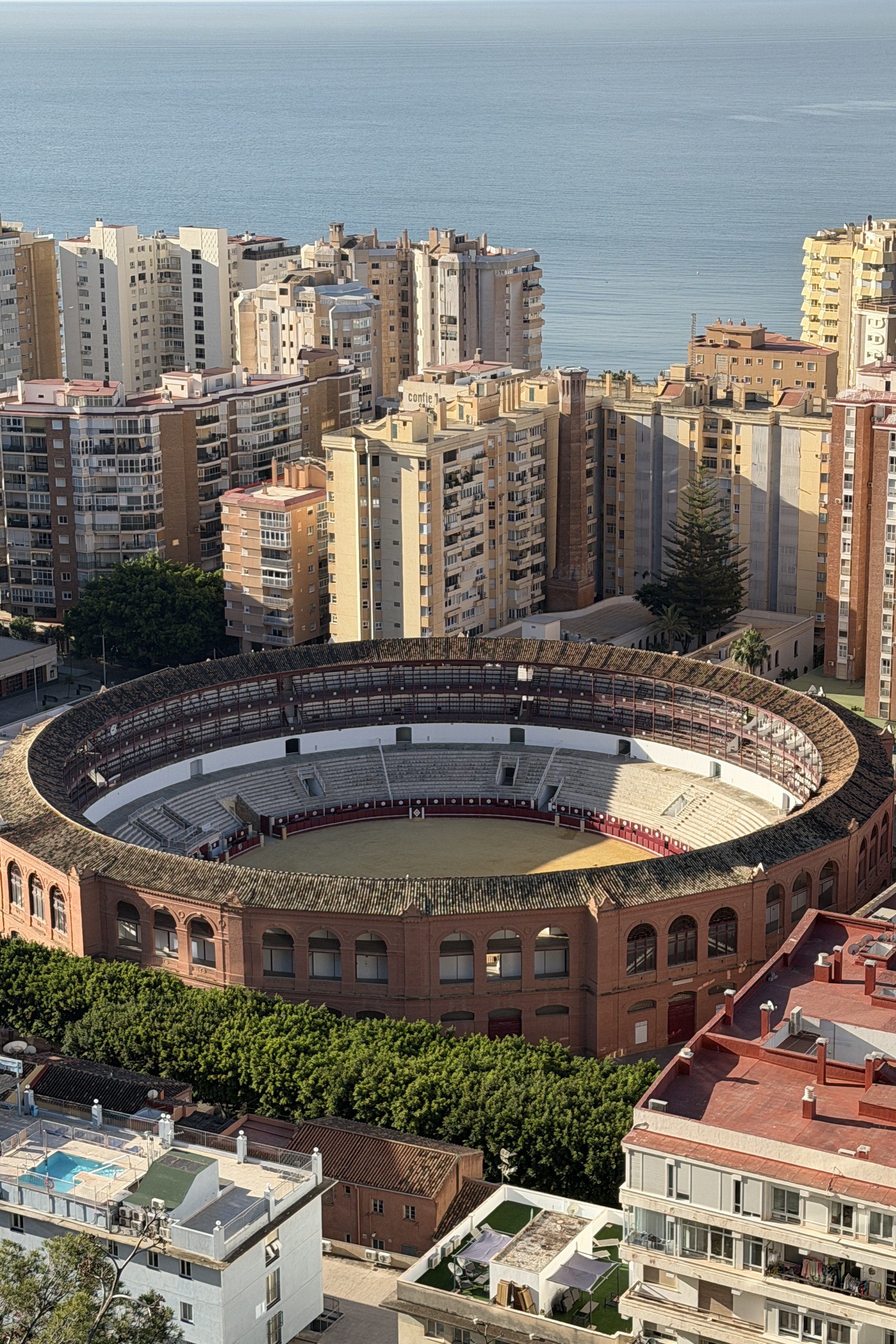
Between meals, we made sure to balance our epicurean adventures with the city's rich history. We spent afternoons exploring mandatory landmarks like the majestic Alcazaba fortress, the ancient Roman Ruins situated right downtown, and the stunningly detailed Santa Iglesia Catedral Basílica dela Encarnación de Málaga.
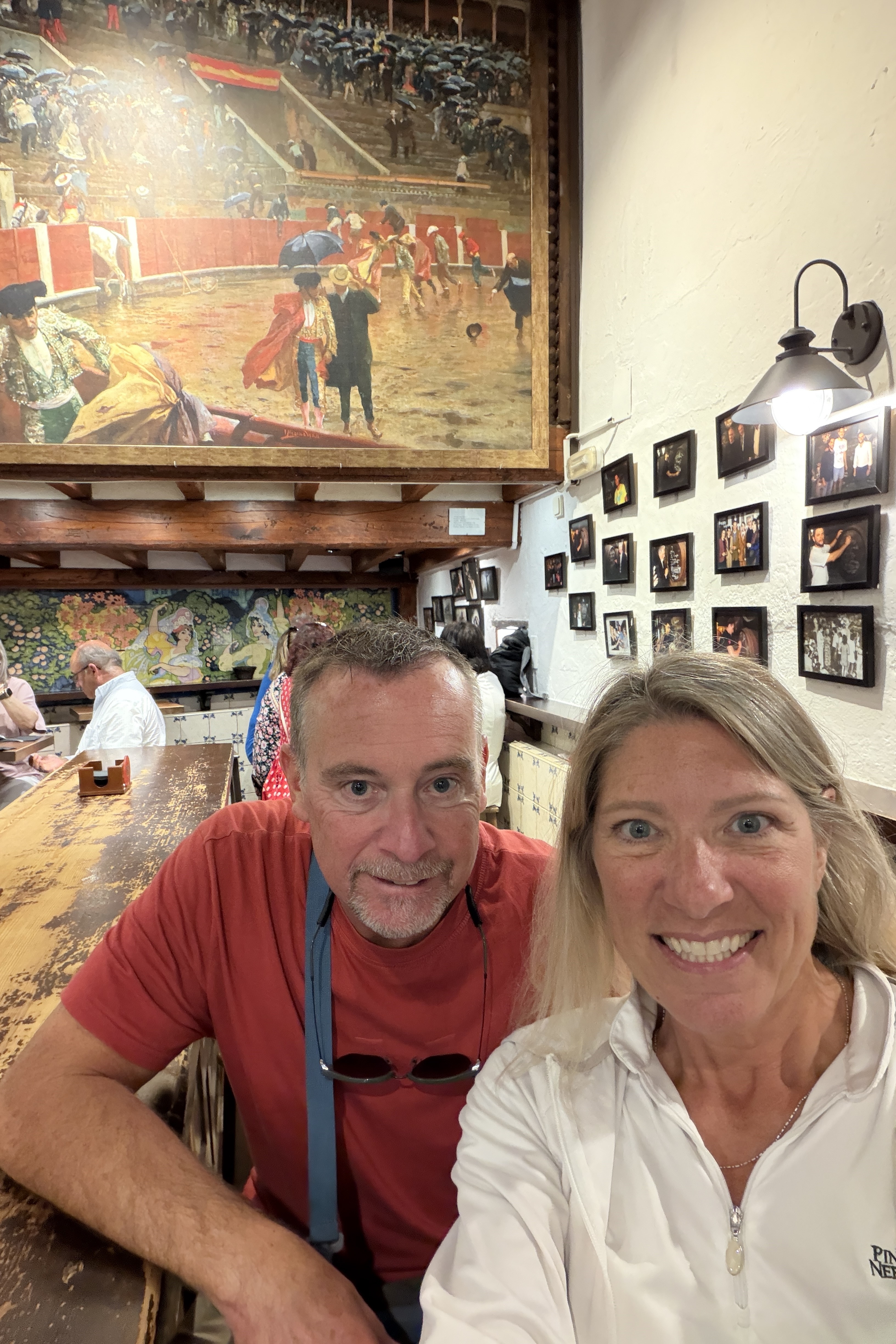
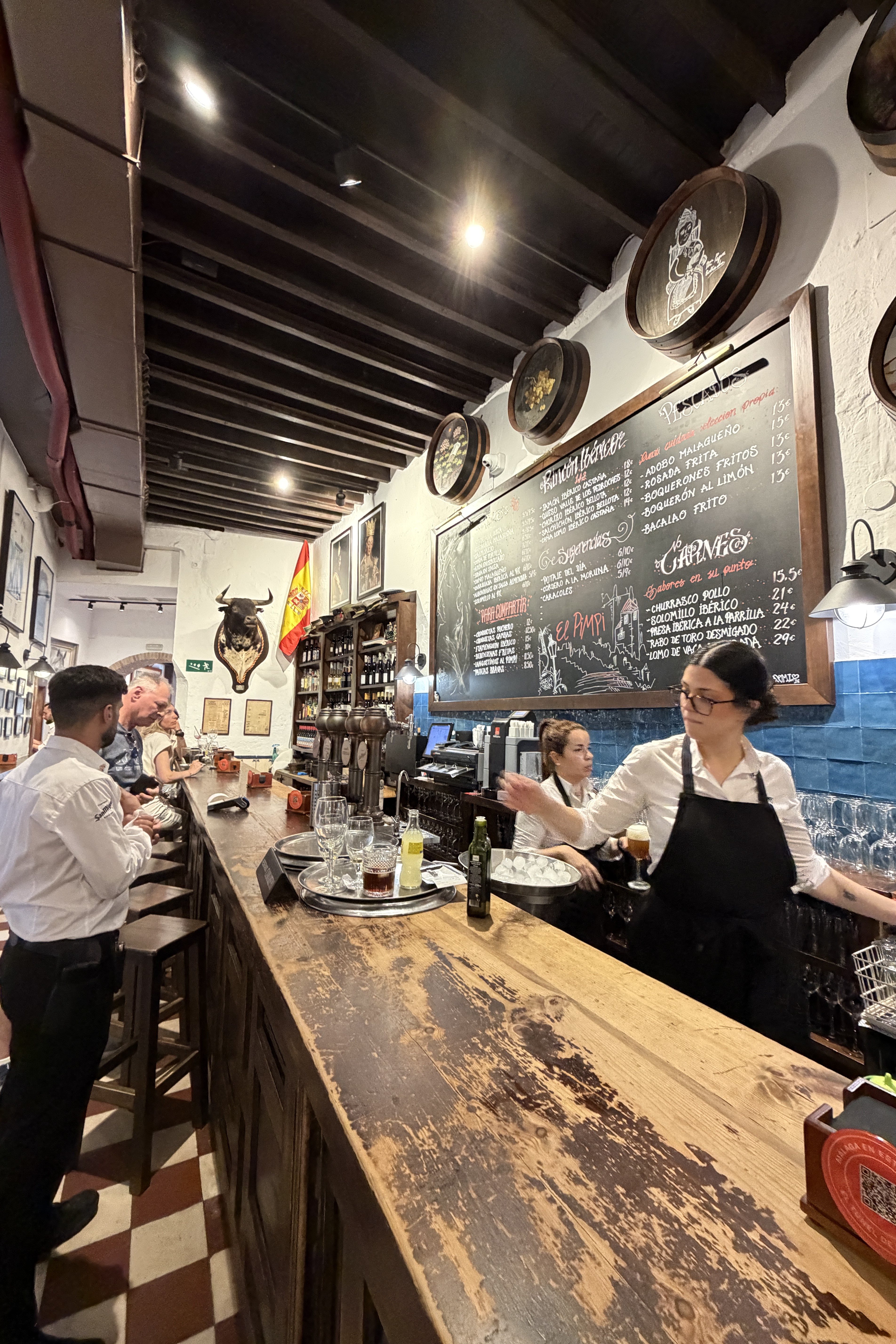
For refreshments, we stopped in at the iconic Bodegas El Pimpi, a magnificent 17th-century building that began life as a brothel before transforming into a legendary wine cellar in 1971 (now co-owned by Malaga's own Antonio Banderas). Sitting in that historic space and sipping a glass of wine from Emilio Moro—a fantastic winery I previously toured in 2024—felt like a beautiful full-circle moment. We also tracked down Antigua Casa de Guardia, a historic wine bar established in 1840. It is an incredible experience where the bartenders serve local Moscatel, Pedro Ximénez, and Pajarete wines directly from antique wooden casks. Keeping perfectly with tradition, your tab is calculated and written in chalk directly onto the wooden bar counter before your eyes.
Cultivating Connections: The Purposeful and the Unexpected in Andalusian Culture
Travel catches its truest, most profound meaning at the intersection of purposeful exploration and completely unexpected grace. When we slow down our pace and stay in a city for weeks, we give ourselves the space to deeply study a culture ahead of time, but we also leave the door wide open for the destination to surprise us. Our time in Malaga was defined by these two beautiful extremes: a deeply moving, highly researched night of Flamenco, and a breathtaking, unscripted street procession that stopped directly beneath our balcony.
For our Flamenco evening, we intentionally sought out an intimate, professional tablao performance rather than relying on the casual, improvisational buskers you frequently see on tourist street corners. Flamenco is not merely a structured dance; it is a complex, raw dialogue of Spanish history, passion, and sorrow conveyed through three distinct elements: the cante (song), the guitarra (guitar), and the baile (dance). Because we had done our research ahead of time, we didn’t just watch a performance; we understood the hidden mechanics of the art form.
We knew that it is actually the dancer who structurally leads the performance, using sharp heel strikes and body language to dictate the tempo to the musicians in real-time. We listened closely for the palmas (the intricateh and-clapping), recognizing how the sharp, piercing palmas secas signal a different emotional urgency than the muffled, deep palmas sordas. Armed with this understanding, it felt as though we were watching a deeply personal story unfold right before our eyes. The intense, laser-focused connection between the artists was so raw and spiritual that tears spontaneously sprang to our eyes—a transcendent experience that proved just how vital it is to pay for a professional show if you want to glimpse the true soul of the art form.
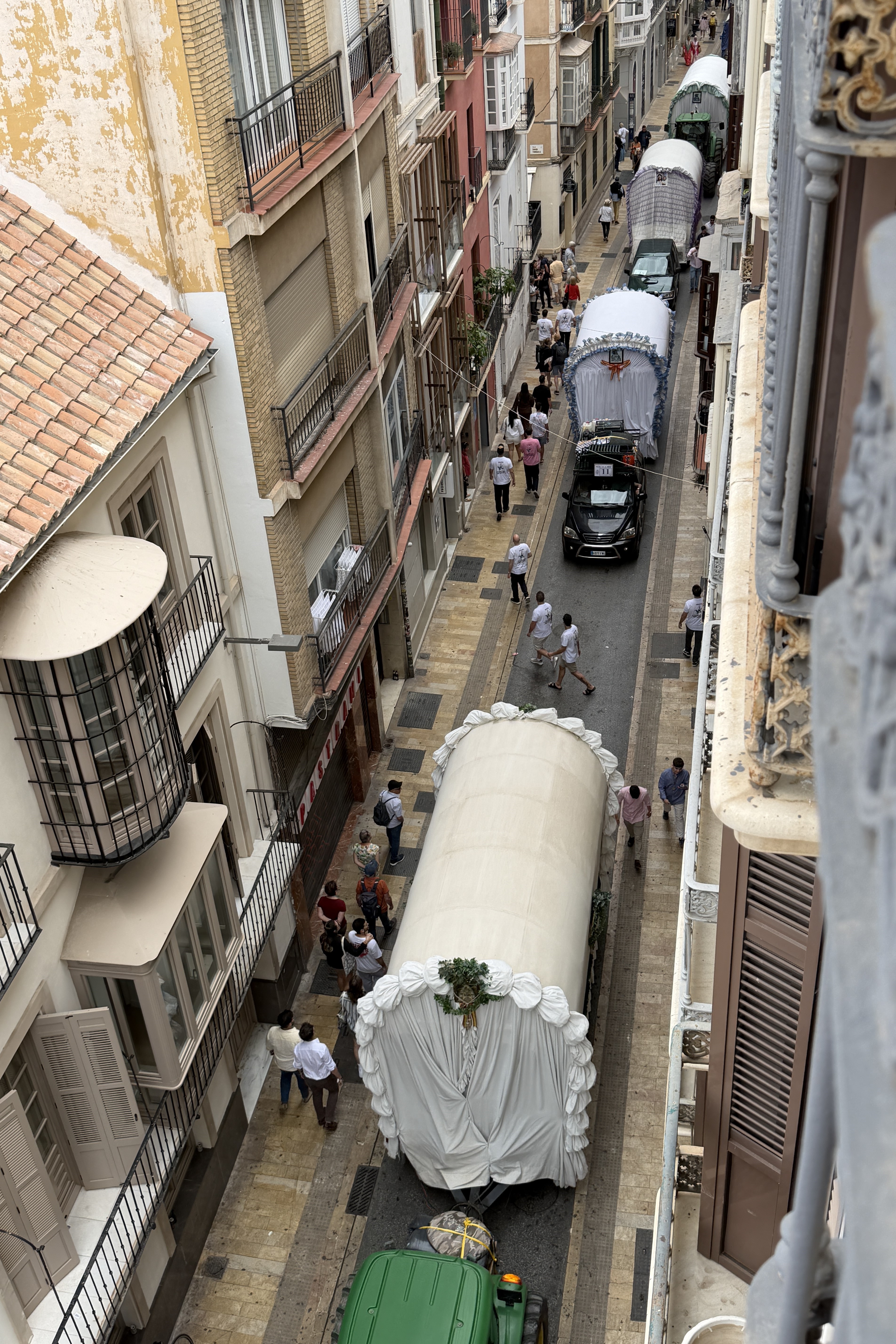
But while Flamenco was a piece of culture we purposefully sought out, Malaga had an entirely unexpected masterpiece waiting for us on our final afternoon. Standing out on our apartment balcony, we were completely blindsided by the magnificent, booming spectacle of the departure of the Hermandad del Rocío de Málaga. We watched in absolute awe as a pair of massive, decorated oxen slowly guided the Simpecado—a sacred, gold-embroidered velvet canopy float smothered in fresh spring flowers—through the tight, historic stone lanes beneath us.
The surrounding crowd erupted into rhythmic, passionate chants of "¡Viva!" as the holy caravan paused. Suddenly, thousands of fresh flower petals rained down from the balconies in a breathtaking, cascading petalada, sending off over 570 local pilgrims and 95 traditional wagons on a grueling 12-day pilgrimage across the Andalusian wilderness.
It was an unforgettable slice of pure, un-touristy community pride. Standing there, watching the petals drift down onto the cobblestones, we realized that this is exactly why we travel: to achieve that perfect, harmonious balance between the cultural stories we actively seek to understand, and the beautiful, unexpected glimpses of local life that find us along the way.
Day Trips: Escapes from the Hub
Malaga’s true superpower is its geography; it serves as a gateway to some of the most jaw-dropping landscapes in southern Spain. Here is how we tackled our spokes from the hub:
Nerja: Prehistoric Marvels and Tapas Crawling (Our Top Pick)
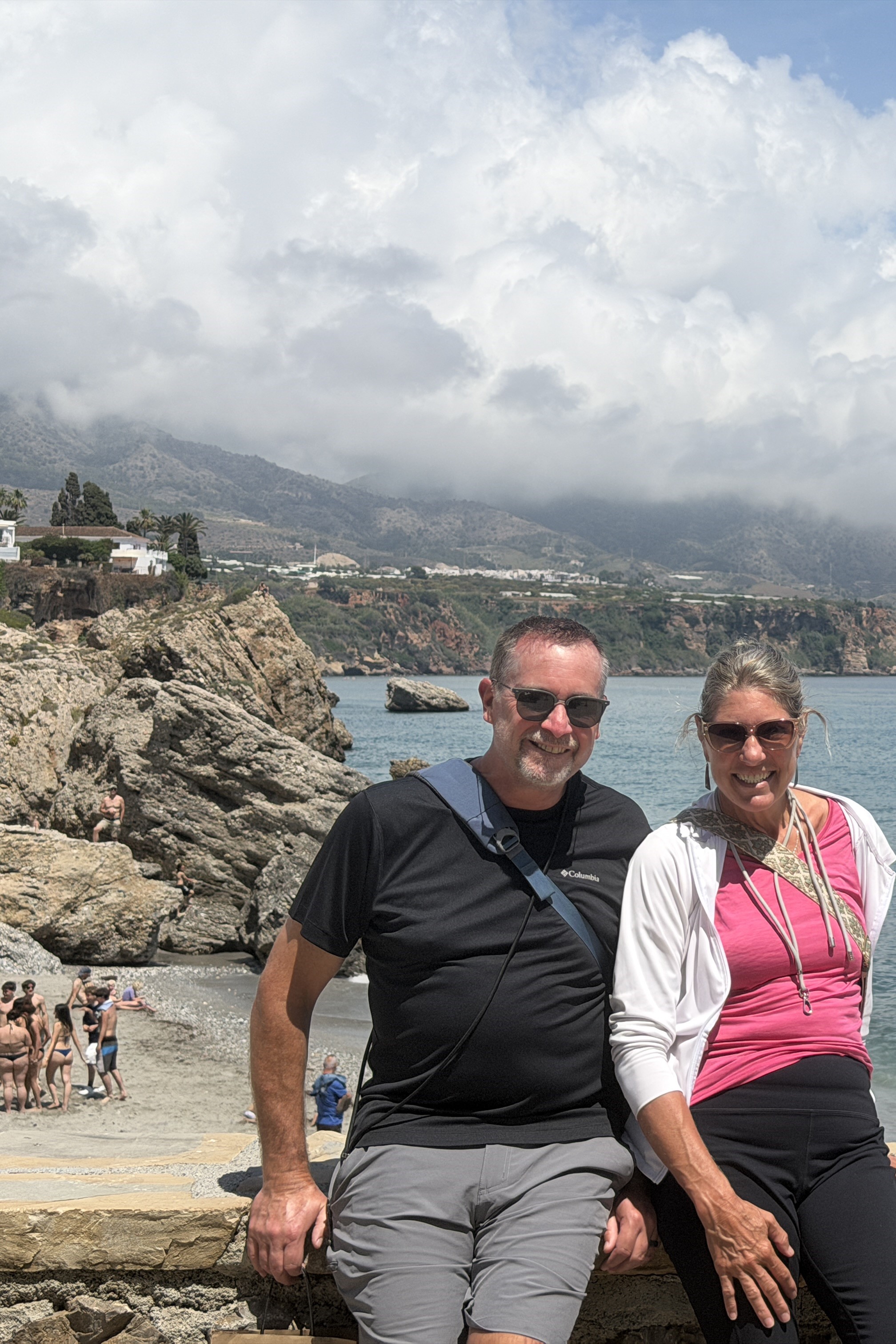
Nerja easily won the crown for our favorite day trip of the entire stay. We caught the morning Avanza bus from the main station (which sits conveniently right next to the train terminal) and thank goodness we pre-booked because the vehicle was packed to capacity. Our first stop was the magnificent Nerja Caves. We had pre-purchased tickets for an 11:53 AM slot, but the staff kindly let us enter at 11:00 AM. Walking inside was an otherworldly experience—it is an absolute cathedral of nature, maintaining a crisp, constant 66 degrees. I found myself in a constant mental battle: wanting to drop the phone to just stand in the absolute prehistoric gravity of a place where humans lived thousands of years ago, yet feeling utterly compelled to whip out the camera every sixty seconds to capture another mind-blowing angle of the stalactites and stalagmites. We were incredibly glad we entered early, because when we emerged, we walked past a massive queue that stretched all the way down to the parking lot.
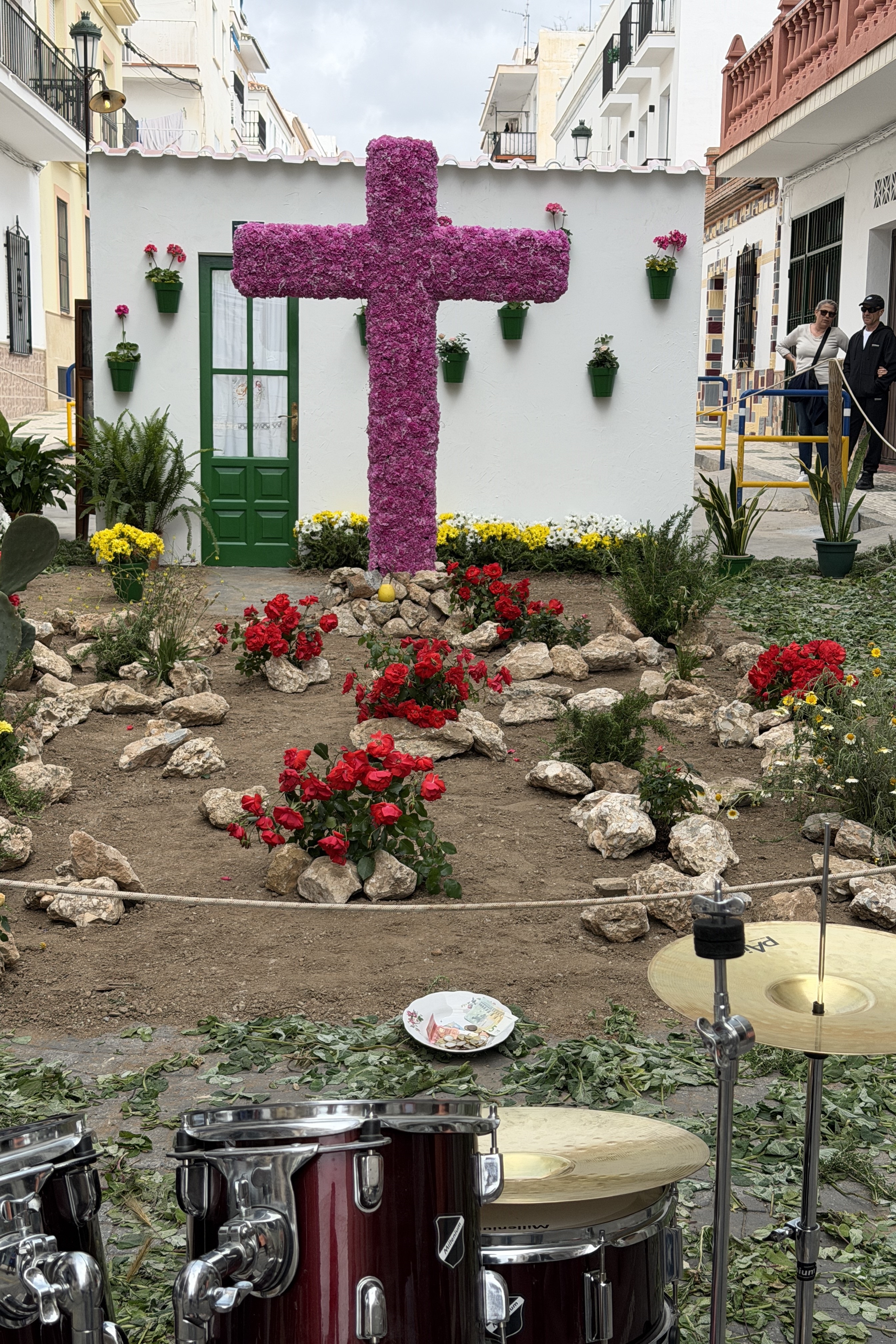
We then took a short local bus ride into the old town to explore Nerja’s old town, coast line and adjacent neighborhoods. One of the core reasons this became our top day trip is that our visit coincided with Las Cruces de Mayo (The May Crosses), a century-old Andalusian festival where neighborhoods compete by building massive, flower-strewn crosses surrounded by offerings. It was a wonderful time for dancing and celebrating, and we were so thankful to participate, even giving a small donation, listening to the music, and receiving a beer and plate of potato chips.
While you won’t get free tapas in Malaga city center when you order a drink, it is still a proud tradition in places like Granada and right here in Nerja. We used that custom to plot out a few tapas bars that would bring us to completely different areas of Nerja to see more of the town. We started at Cervecería El Pulguilla right in old town, a boisterous local favorite known for serving a complimentary tapas from a chalkboard menu with each single drink ordered. From there, we ventured into Bar Dolores El Chopsa, which was advertised online as an authentic "men's bar". Intrigued by what that actually meant, we scored two seats at the packed bar along side plenty of local men and women, pairing a cold beer and a chilled red wine with spectacular plates of fresh paella and grilled fish. I found out a men’s bar just signifies a historic gathering spot. A spot that retains its old-school aesthetic and local nickname, they are completely public, family-friendly, and open to everyone.
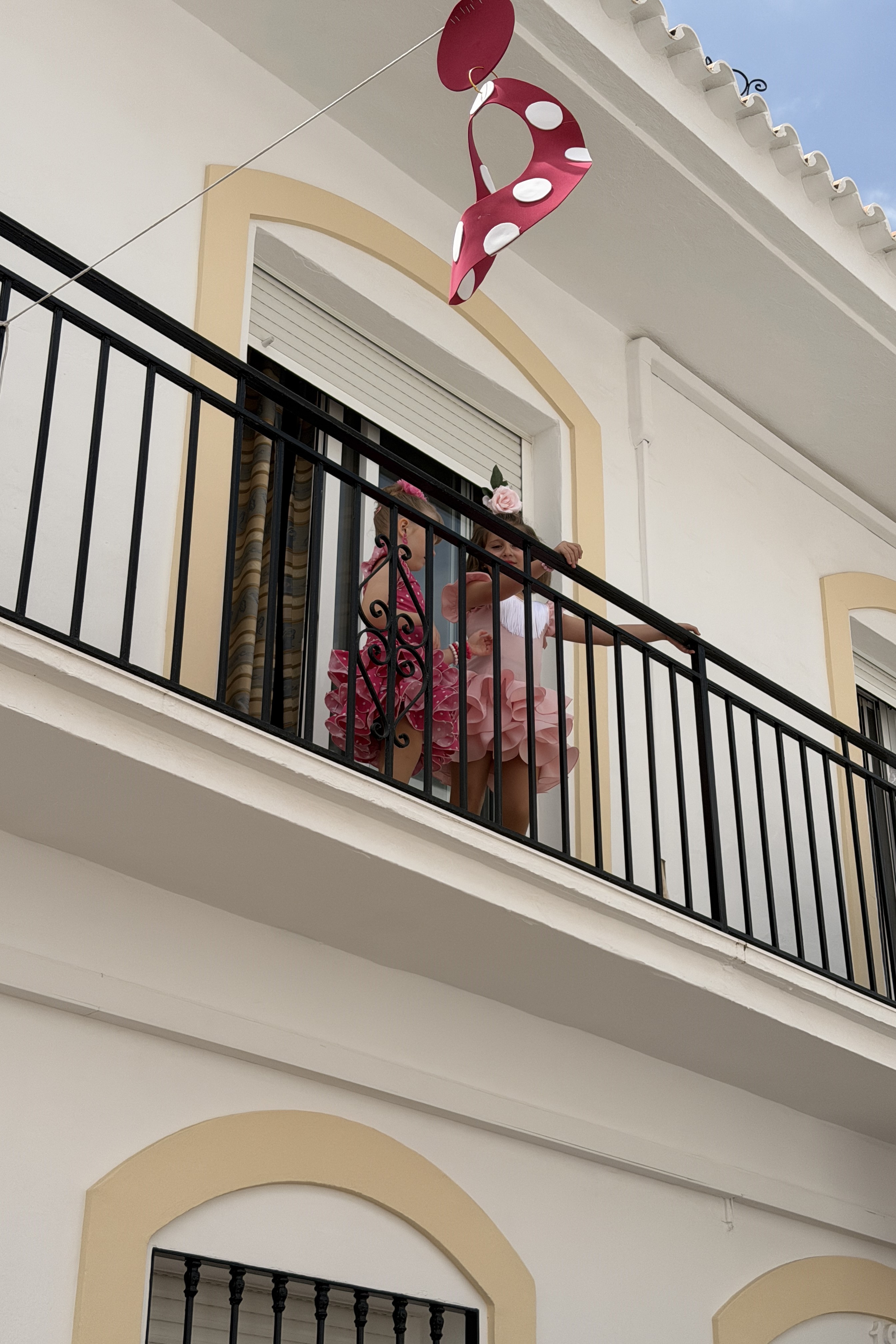
We spent the rest of the afternoon meandering past squares looking for the different Las Cruces displays, where we found women in vibrant Flamenco dresses swaying to music in front of brilliant red crosses while locals handed us tiny, complimentary shots of anise liqueur. We watched a little boy use finger cymbals in absolute rhythm while dancing with his mother, and spied the pure excitement as two little girls in their flamenco dresses looked at the festivities from a decorated patio—a picture-perfect moment.
Granada: Moorish Splendor and a Wine Sovereign Secret
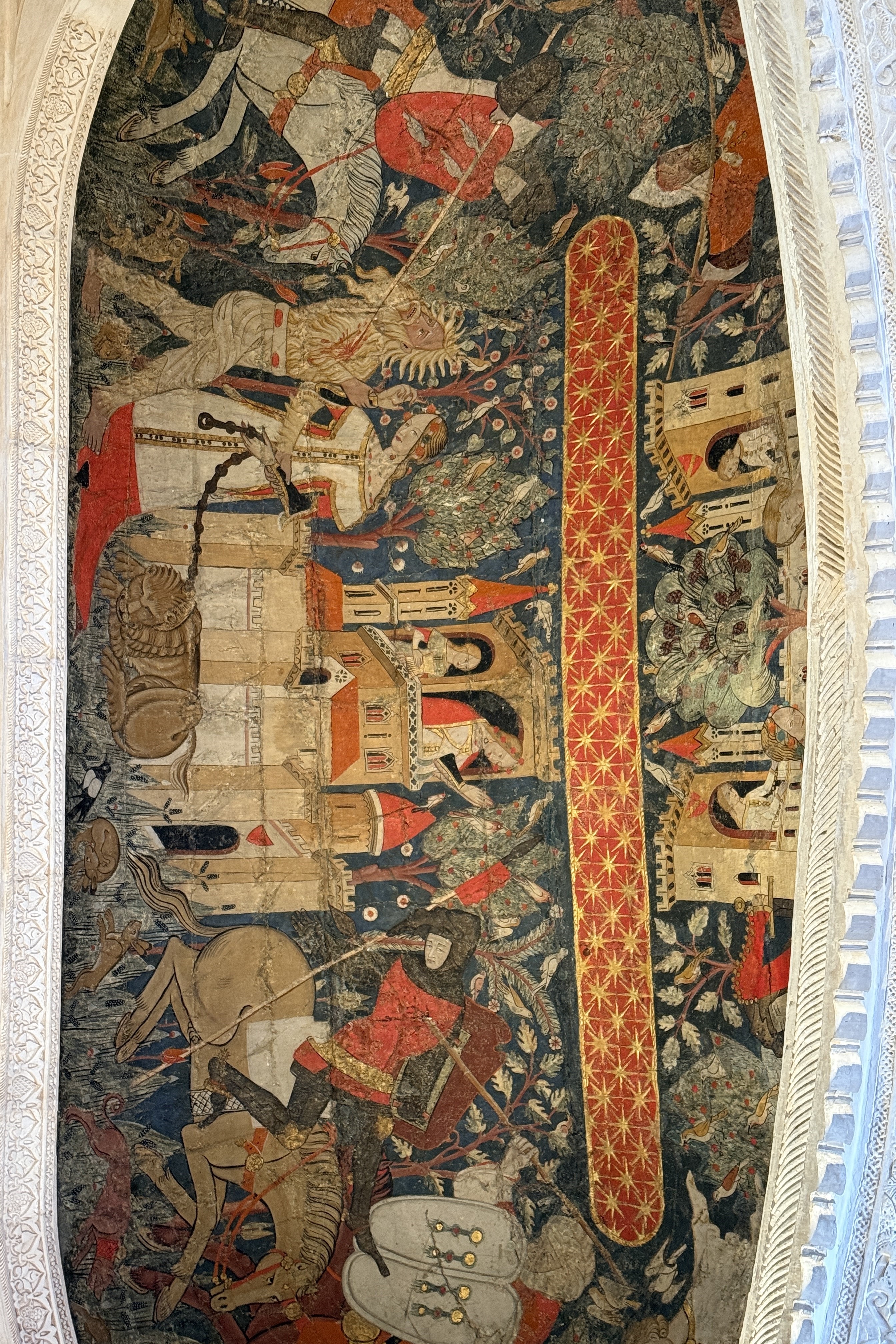
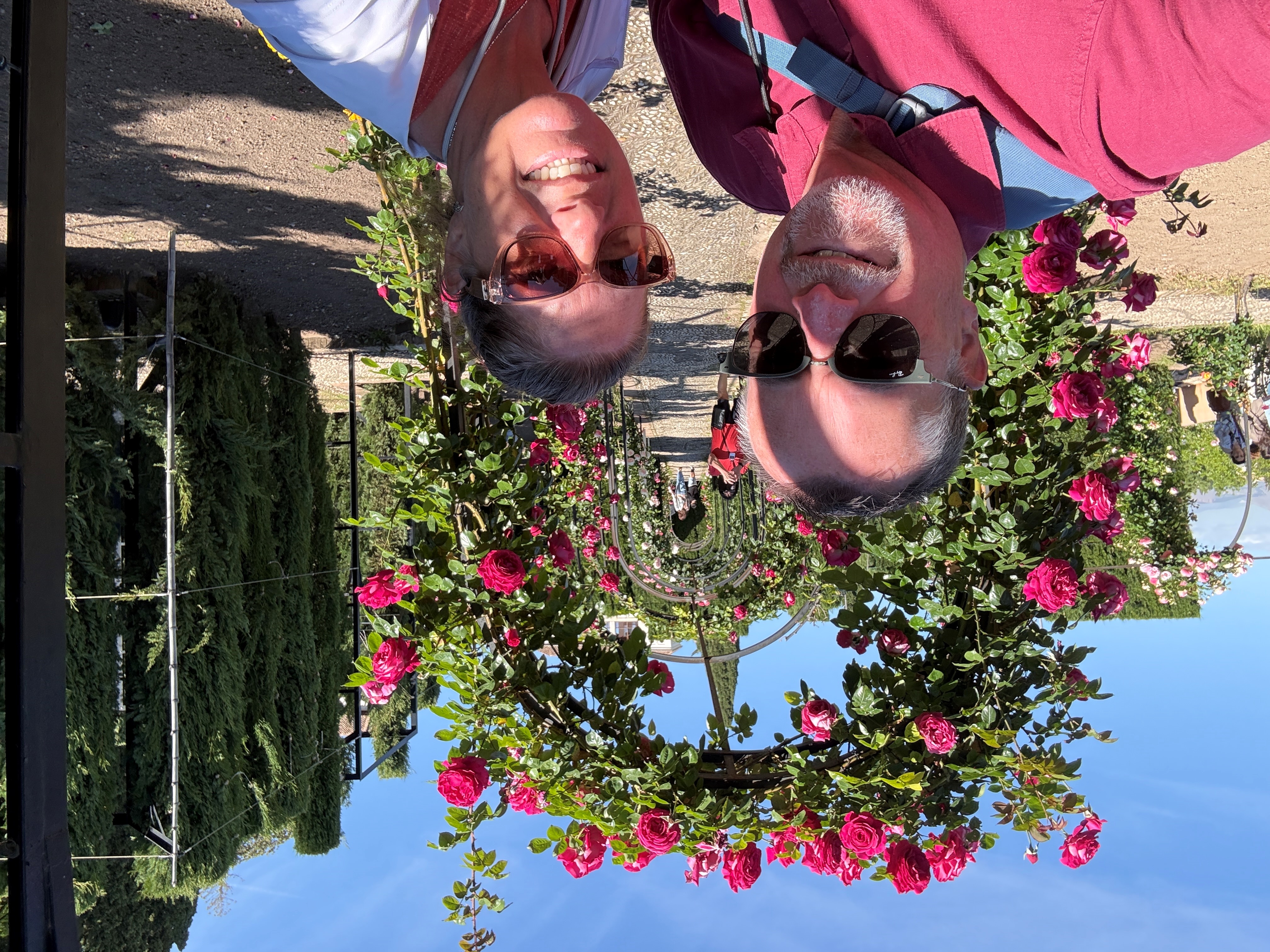
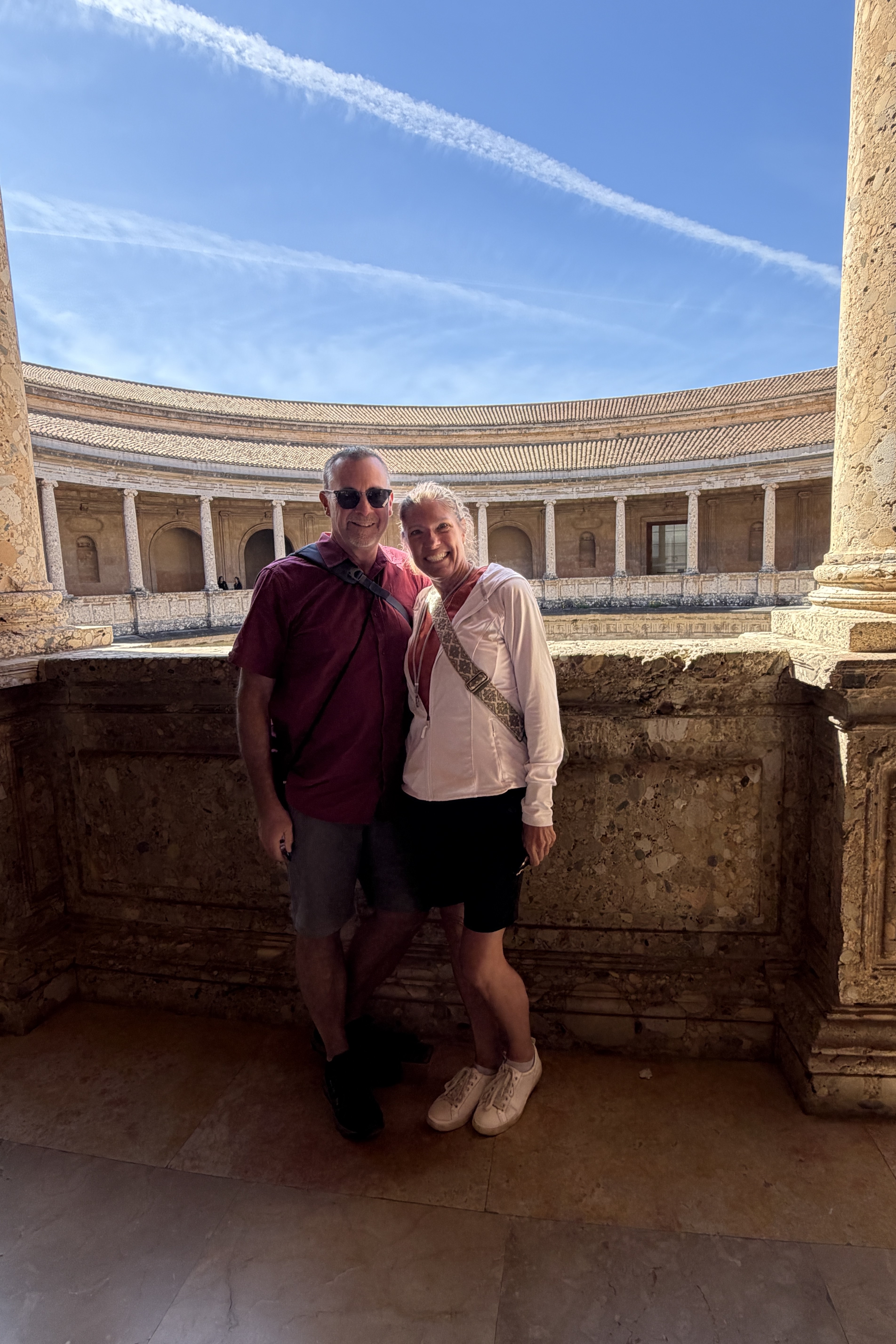
Our spoke day trip to Granada was a beautiful lesson in Moorish artistry. We booked our Alsa bus tickets through the Omio app, catching an 8:30 AM departure that landed us in the mountain city by 10:15 AM, where we immediately zipped up to the Alhambra via taxi. The Alhambra is an absolute marvel of Islamic architecture, built by the Nasrid dynasty with an intricate network of public baths, offices, and wood-carved ceilings. We had booked a strict 12:00 PM slot for the Nasrid Palaces, spending our early morning wandering through the breathtaking Generalife Gardens, which were heavily in bloom with bush roses and trellises framed by whispering fountains. Wandering through the palace, we smiled as we utilized the architectural context we had learned from our guide Said back in Marrakech—understanding exactly how the sultans designed side-entrance corridors to disorient foreign dignitaries and keep the private harem areas completely hidden from the outside world.
Following our descent from the palace into the old town, we headed straight into a local Mercado entirely packed with tiny farm-to-table eateries and wine stalls to catch the vendors before they closed for the day. We sat at a tiny stall called De Gusta, Casa Carmina, where we struck up a wonderful, non-English conversation with an incredibly knowledgeable sommelier. Using wine labels and pure passion as our shared language, he opened a spectacular bottle of Inici (2022 vintage) from the Priorat region, serving it alongside a rustic bruschetta piled high with savory jamón and local cheese. It was an unexpected, fun memorable moment.
Tom's Trek: The Caminito del Rey
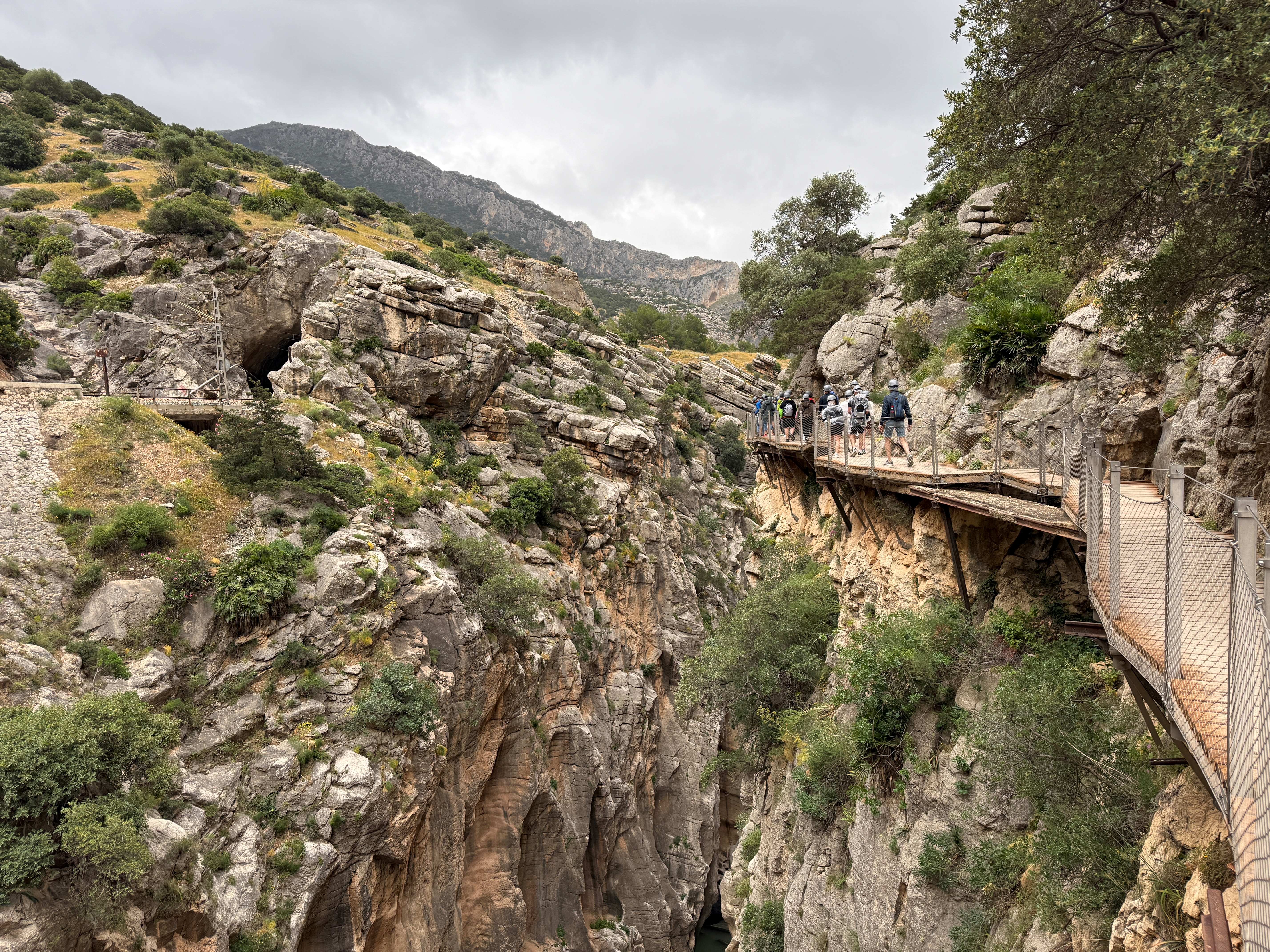
While I handled some administrative tasks, Tom tackled the legendary Caminito del Rey on his own. He took the morning train from Malaga to El Chorro, catching the connecting shuttle bus right outside the platform up to the trailhead. After a 1.5 km walk to the official checkpoint, his guided group was outfitted with helmets and receivers.
The trail traces a stunning path pinned directly to the sheer walls of a massive gorge, featuring a robust wood-and-metal walkway with 54-inch safety rails that feel completely secure. Tom noted that it isn't until the final quarter-mile that the true adrenaline kicks in. The path narrows dramatically into a secondary canyon, culminating in a suspension bridge made of open metal grating that wobbles gently over a terrifying 100-meter drop to the riverbed below. It is a white-knuckle grand finale that he absolutely loved.
El Torcal: A Wonderful Hike in a Lost Sea
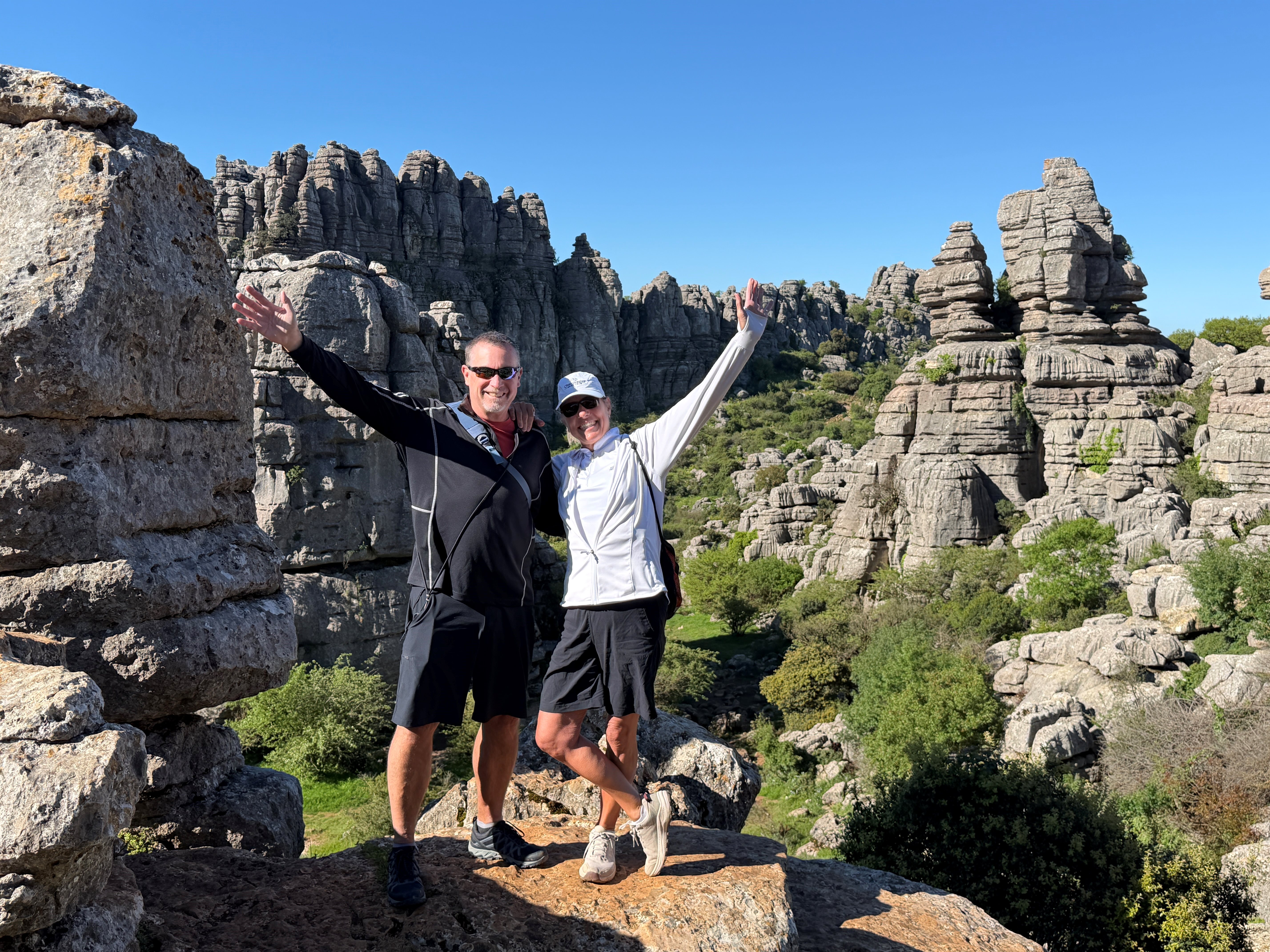
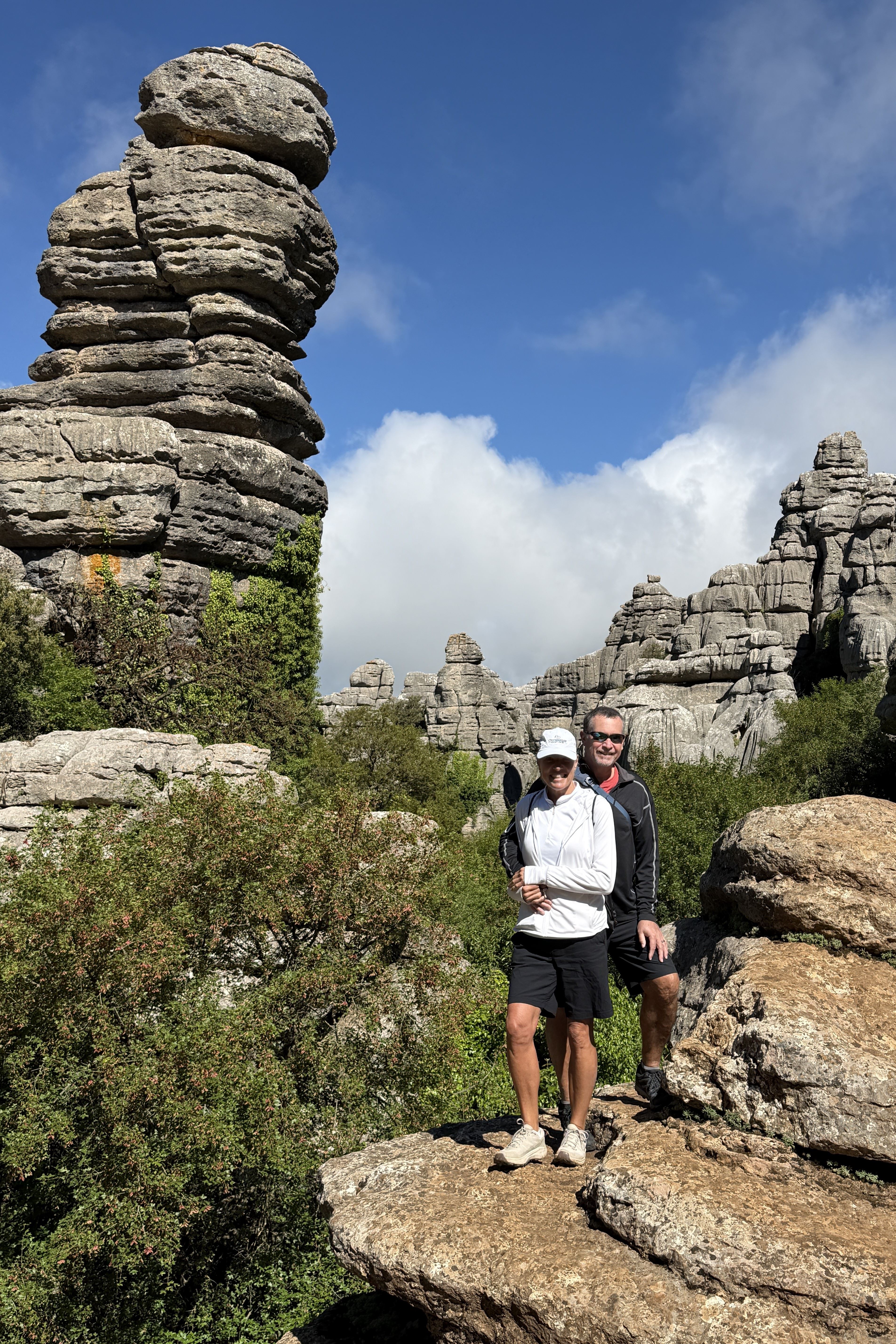
Our excursion to El Torcal de Antequera with Malaga Activa Tours turned into one of our favorite mountain hikes of all time. A 50-minute drive out of Malaga landed our group of seven deep in a UNESCO-listed karst landscape that looks like a prehistoric seabed lifted into the clouds. The rock formations are incredible, and the design of the tour had us hiking for a short time, then stopping to take it all in and learn something about the area. We were fascinated to learn how farmers traditionally planted potatoes in the rocky plateaus, and how rebel soldiers and tobacco smugglers used the caves for cover—making it a wonderful way to navigate the terrain while experiencing the history firsthand.
The 3.5-hour hike is physically demanding, at times requiring serious scrambling over massive, striated limestone rock formations along a clay path that was still slick from recent rains. It is a technical walk where you must constantly watch your footing to avoid twisting an ankle or dropping into an animal burrow. The spring timing was immaculate—the valleys were bursting with vibrant wildflowers and budding green pathways before the intense summer heat turns the entire mountain brown. Our guide even introduced us to an ingenious bird-watching app called Merlin, which listens to local calls and identifies the species in real time.
Gibraltar: A British Outpost on the Mediterranean
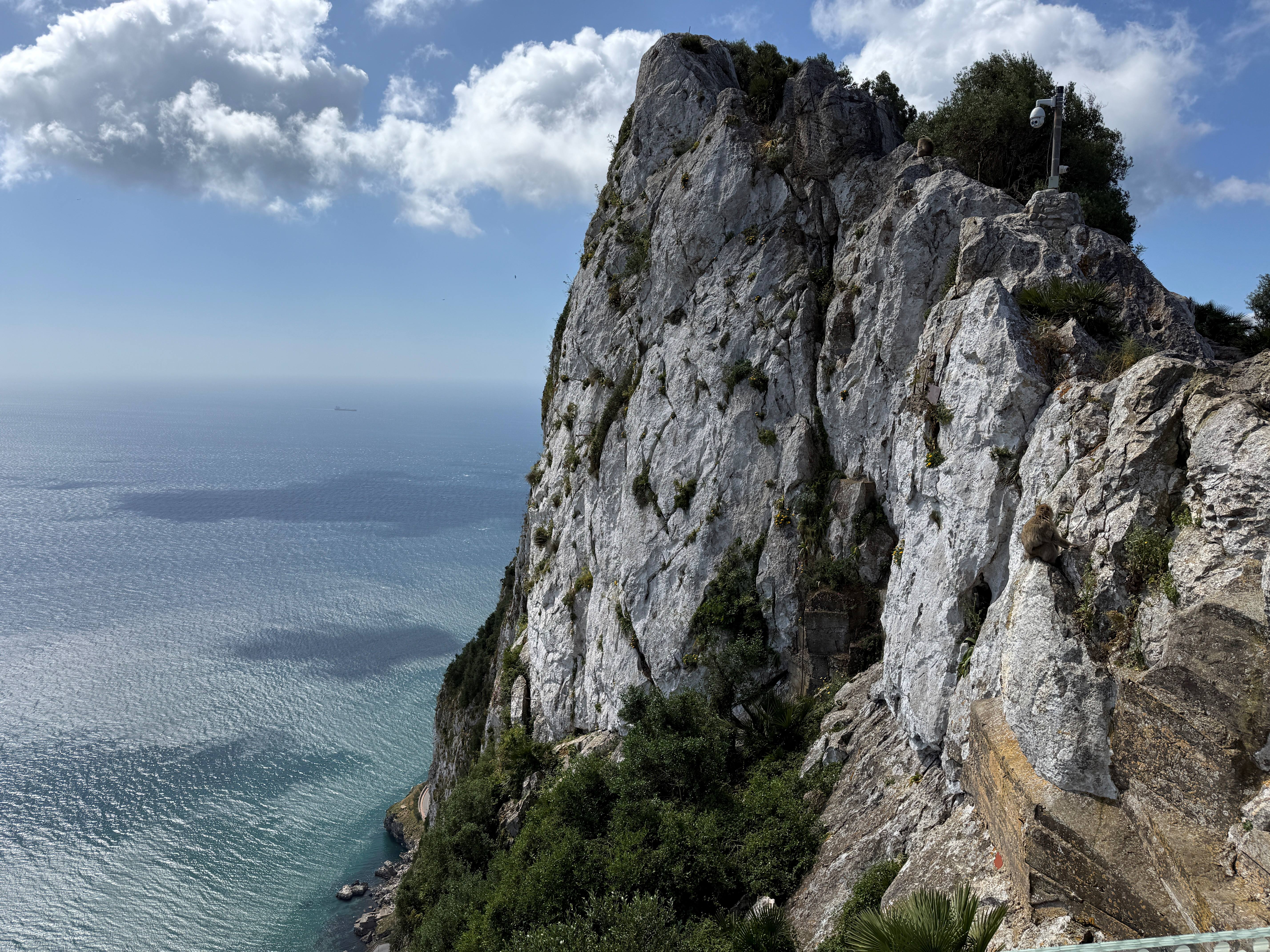
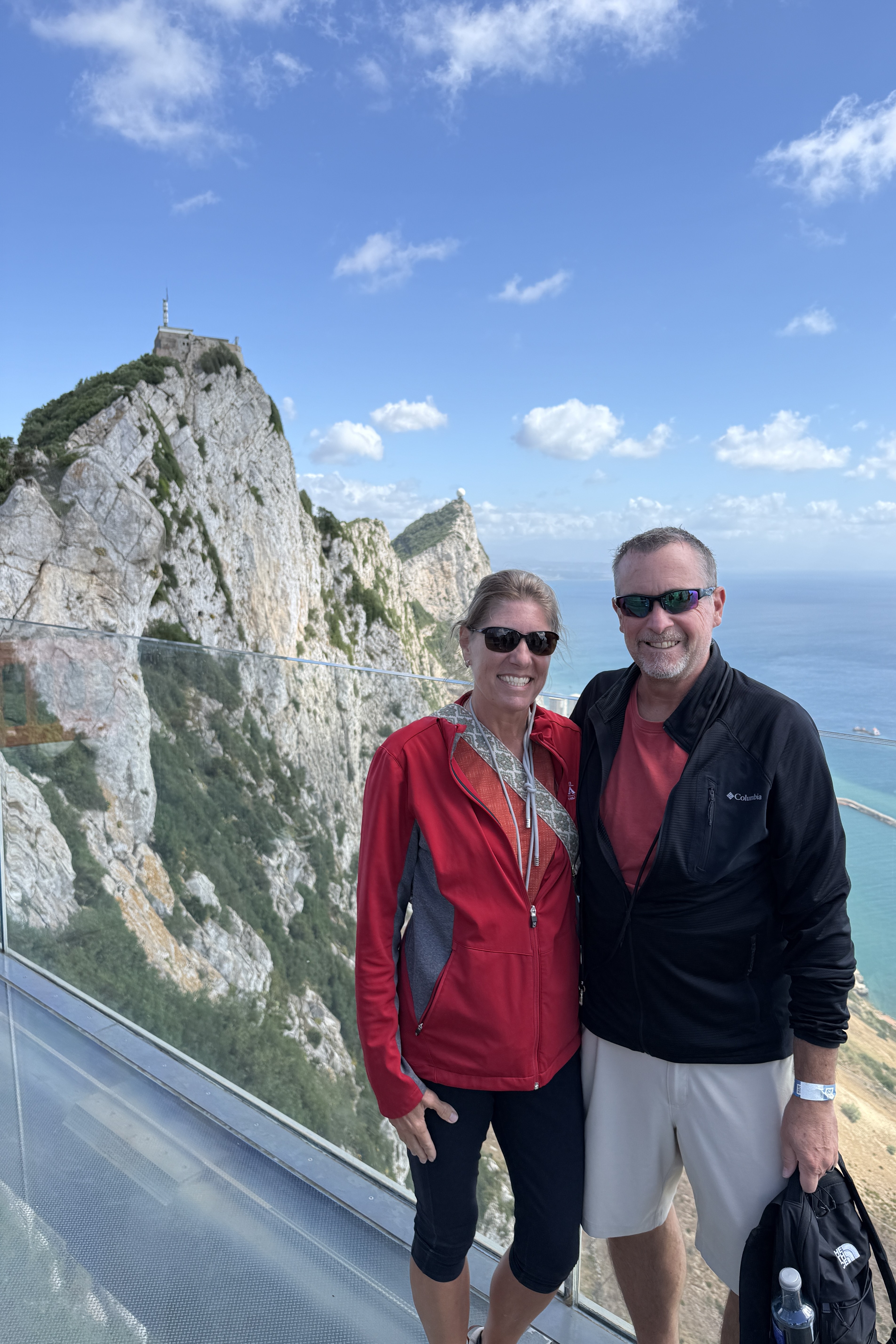
Our spoke day trip to Gibraltar required packing our physical passports to clear border customs into the British territory. We booked a transport tour that essentially gives you a ride to and from Malaga and guides you through border control, leaving the rest of the day as an independent, DIY adventure. Because the iconic cable car was out of commission, we pre-purchased our national park passes online and arranged for a shared taxi van to navigate the steep tracks to the summit of the famous Rock.
Our first stop was the Pillars of Hercules for panoramic photos looking across the strait to the Rif Mountains of Morocco, before moving into St. Michael’s Caves. This cavern is a tighter, highly theatrical cousin to the Nerja caves, bathed in dramatic colored lights and featuring a built-in auditorium that hosts an immersive light show called The Awakening every seven minutes. From there, we left our driver to explore some of the 34 miles of historic military defense tunnels on foot. Walking beneath the solid stone, we were deeply moved by the espionage strategy rooms and the raw history preserved in the personal letters of civilian evacuees. We capped off the day by navigating the endless stone steps back down to Casemates Square, stopping at a local pub called Roy's for fish and chips and a pair of cold San Miguel beers, before meeting back up with our bus group for the ride home.
The Sierras de Málaga Wine Scene
As part of the on going mission of Touchpoint Wines, diving into the local Sierras de Málaga DO was a core element of our stay. While Malaga is historic for its sweet, fortified wines made from Pedro Ximénez and Moscatelgrapes, the region is undergoing an exciting evolution, utilizing high altitudes and limestone-rich soils to successfully craft intense, high-powered dry red wines. You can read our full Andalusia Wine Guide and Ronda Trip Report on the site.
To stock our apartment cellar for our three-week stay, we organized a dedicated two-day overnight stay in Ronda, a stunning town split in two by a plunging river gorge. We took a local bus to the city, rented a car at the Ronda terminal, and drove 25 minutes into the surrounding valleys to visit three distinct wineries.
- Bodega Doña Felisa (Finca Chinchilla): A world-class estate with Roman ruins scattered throughout the vineyards. The wines were wonderful, so we walked away with an aged Chardonnay and a few bottles of their beautifully mature 2019 Double 12 to enjoy back at the apartment.
- Bodega Excelencia: Our private tour and tasting showcased fields where the topsoil is rich with iron deposits After a vertical tasting, we purchased three bottles of their spectacular 2022 Cabernet Franc, which showed incredible balance.
- Bodegas Morosanto: Positioned on 15 hectares of high-altitude calciferous soil, this property yielded the most superior wines of the trip. We bought six bottles of what Benjamin, our host, poetically termed "talk talk wines"—complex, structured bottles meant to be shared slowly over deep conversations with good friends.
Culinary Discoveries
Malaga’s food scene is a massive playground of international flair and historic taverns, meaning we never ran out of phenomenal options to test. Here are our absolute standouts:
- Araboka Plaza: Our first major late lunch took us outside the tourist center into a local business district. The owner greeted us warmly and sat us at a beautiful horseshoe bar facing an open kitchen. We enjoyed a lovely sea bass alongside a premium, incredibly tender cut of acorn-fed Iberian pork that is expertly marinated, grilled, and served with a rich red pesto sauce and roasted potatoes. It was honestly one of the best pork dishes we’ve ever tasted, paired beautifully with a bottle of Monastrell wine from the Jumilla region. A world-class hospitality experience.
- Casa Lola: A fantastic spot where the tapas are remarkably tastier than the standard central mainstays. I fell completely in love with their Cantinflas—a brilliant beef taco layered with sweet fried onions and a smoky chipotle sauce. We also highly recommend their Galician-style octopus served over baby potatoes with a rich herb-flavored butter. Come between 3:30 PM and 4:00 PM to catch the calm gap between local lunch and dinner rushes.
- Cortijo de Pepe: Located two minutes from our front door, this tavern is legendary for its massive local portions. We ordered a spectacular vegetable salad loaded with shrimp, and a plate of six massive Kalahari meatballs served with thick-sliced potatoes. Paired with two glasses of house red, the entire bill landed under $30 per person—unbelievable value for the historic center.
- El Taller de Larios: A great restaurant vibe with a very nice wine list. It features an open deck area for seating that was unfortunately closed when we were there due to rain, but the interior layout is lovely. They encourage you to linger, so we had a glass of wine to start, then picked a different wine to pair with our shrimp pil-pil croquettes and entrees. I had the Caesar salad with crispy chicken and Tom had a very nice chicken and vegetable teriyaki. The wines by the glass were excellent, with options from not only Sierra de Malaga, but also Ribera del Duero and Rioja.
Reflections on the Journey
- The things we loved the most: The incredible ease of logistical connectivity. Malaga is the ultimate hub for travelers who want to unpack their bags once for three weeks yet wake up every few days to explore world-class canyons, Moorish architecture, Roman ruins, or high-altitude mountain vineyards.
- The things we didn’t: Of course, immersive travel means experiencing a city in all its dimensions, and our historic center location provided a front-row seat to the fact that modern Malaga still fiercely holds onto its ancient reputation as a place that loves to party. While the late-night revelry outside our windows thankfully never disrupted our sleep, it did rewrite the script for our early morning routine. Heading out for our power walks meant navigating the immediate, gritty aftermath of the night before, and the telltale signs of a long night out.
- What we learned: The "Vale" Revelation: A piece of linguistic flavor we will never forget is the ubiquitous Spanish word Vale (which we kept hearing phonetically as balior valet). It is woven into every single layer of Andalusian conversation. We heard it casually from taxi drivers as a simple "OK, I agree," but we also witnessed it yelled out with deep, driving passion by musicians during our Flamenco show, signaling profound emotional agreement with the dancer's movement. It is the true verbal heartbeat of Malaga.
- Unexpected Learnings: The sheer power of Andalusian cultural performance. We were absolutely amazed by the pure, heightened spirituality of the Flamenco show.
Links: Spain Planning Guide | More Trip Reports | Andalusia Wine Guide
Up Next: Seville Trip Report | Ronda Trip Report
Welcome to the new Touchpoint Wines
We’re blending our passion for wine with a love for global exploration. Join us as we journey through the world's most captivating destinations, uncovering hidden wine gems and offering unique workshop experiences for your team retreats. Whether you're seeking to enhance team dynamics or discover the art of slow travel, let us be your guide.