At a Glance
- Duration: 5 Nights (May 2026).
- Home Base: An apart-hotel located in the vibrant, traditionally local neighborhood of Triana.
- Top Day Trip: While we stayed local to the city boundaries, exploring the massive, history-drenched grounds of the Real Alcázar Palace and Gardens felt like an unforgettable journey into another world.
- Memorable Moment: Sitting on a shaded park bench in Maria Luisa Park, quietly drinking a bottle of contraband wine while reading and watching the local residents escape the soaring Andalusian heat.
- Overall Vibe: Historically majestic, architecturally staggering, and deeply social. A city where life is lived out in the open air, and where the intense summer heat is brilliantly met with chilled glasses of the local wine culture.
This Town is Special Because... (Introduction & Our Why)
Seville is a city that shimmers under a blanket of historic grandeur and intense Andalusian sun. It is a place deeply defined by its seafaring heritage—the very launchpad where legendary explorers like Magellan and Columbus set sail to map the contours of the globe. We chose Seville as our final five-night Spanish destination because we wanted a deep, immersive pause in a capital that seamlessly blends a grand, imperial past with an authentic, neighborhood-driven street culture.
Arriving by bus from Malaga, our first impressions were instantly captivated by the sheer beauty of the winding Guadalquivir River and the ancient, cobblestone lanes that wind past sun-bleached plazas. Seville is a city built for slow observation, where the local eating culture dictates a beautifully social rhythm: morning work gives way to a long afternoon lunch, followed by late-night tapas crawls beneath a canopy of historic orange trees.
Our Home Base: The Authentic Soul of Triana
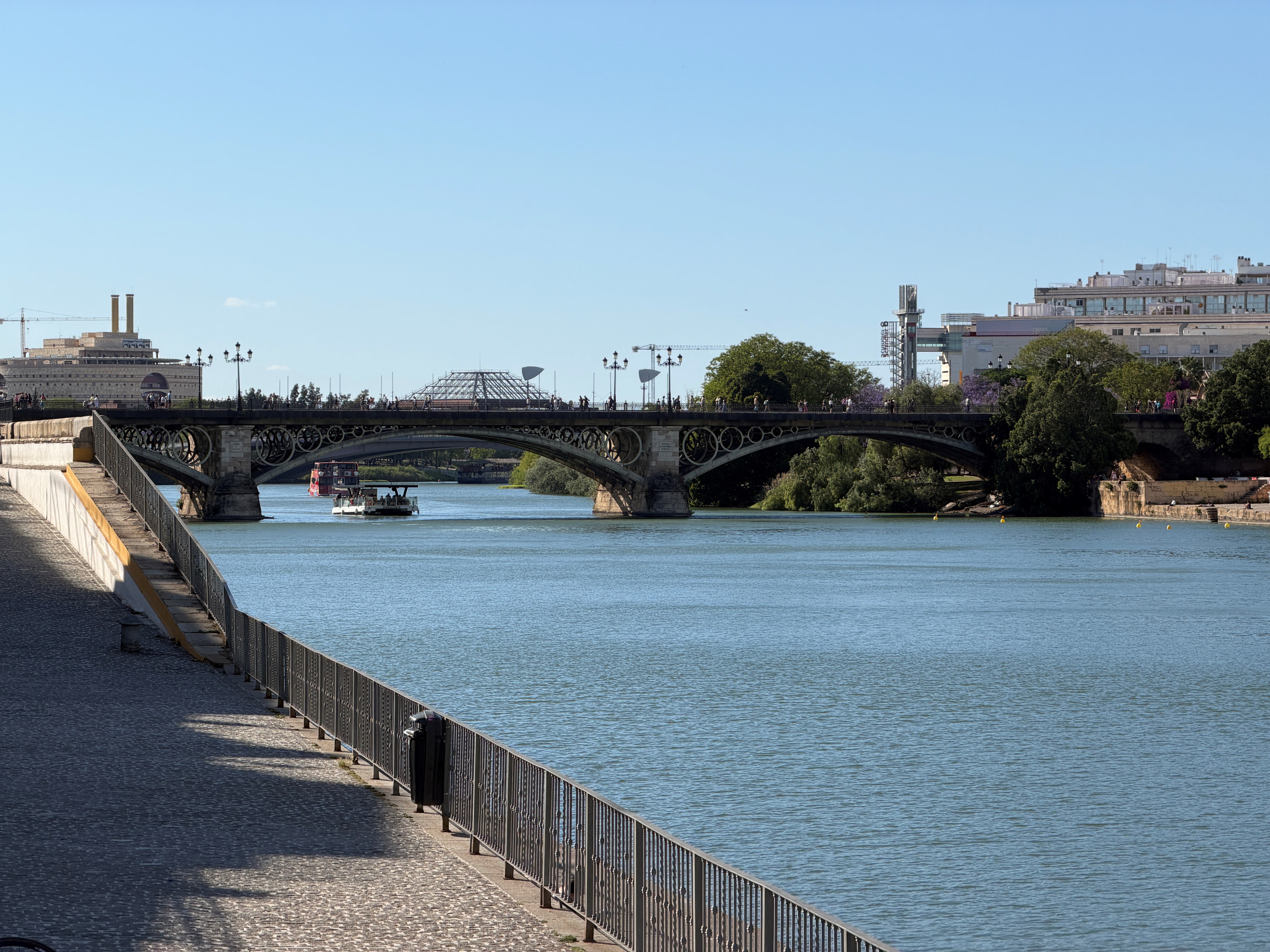
For our five nights in the capital, we crossed over the river to set up our hub in the historic neighborhood of Triana. Choosing an apart-hotel here was the absolute right decision for our travel style. Triana is a fiercely proud, traditionally working-class enclave that feels distinctively separate from the commercialized tourist center across the bridge.
Living here allowed us to step into the role of daily observers, experiencing a Sunday evening where the quiet residential streets contrast beautifully with the bustling waterfront promenade packed with families. We loved watching groups of local mothers' push strollers together, laughing and sharing an evening drink at an open-air table.
Triana gave us the neighborhood sanctuary we often seek out, offering high-quality local interactions just a short walk from the primary historical core.
Our Seville Experience: The Day-to-Day
Towers, Cobblestones, and History Lessons
Our daily cadence in Seville balanced dedicated active mornings to see the most important sites, with leisurely afternoons in the parks or along the river searching for the perfect shady spot to relax and let the intense peak heat of the day pass us by. We kicked off our exploration with a history-focused walking tour. Because a portion of the main plaza near the Ferdinand statue was blocked off by construction, we gathered directly on the stone steps of City Hall to meet our guide, Chet.
Chet, a passionate history major, led us on a deep verbal journey through the city's complex past. While it was an incredibly educational afternoon, it leaned heavily on spoken lectures rather than a physical overview of the key sites. For our style of travel, we usually prefer a city tour to function as a visual orientation so we can strategically map out our days, but it still gave us a wonderful foundation in the local lore.
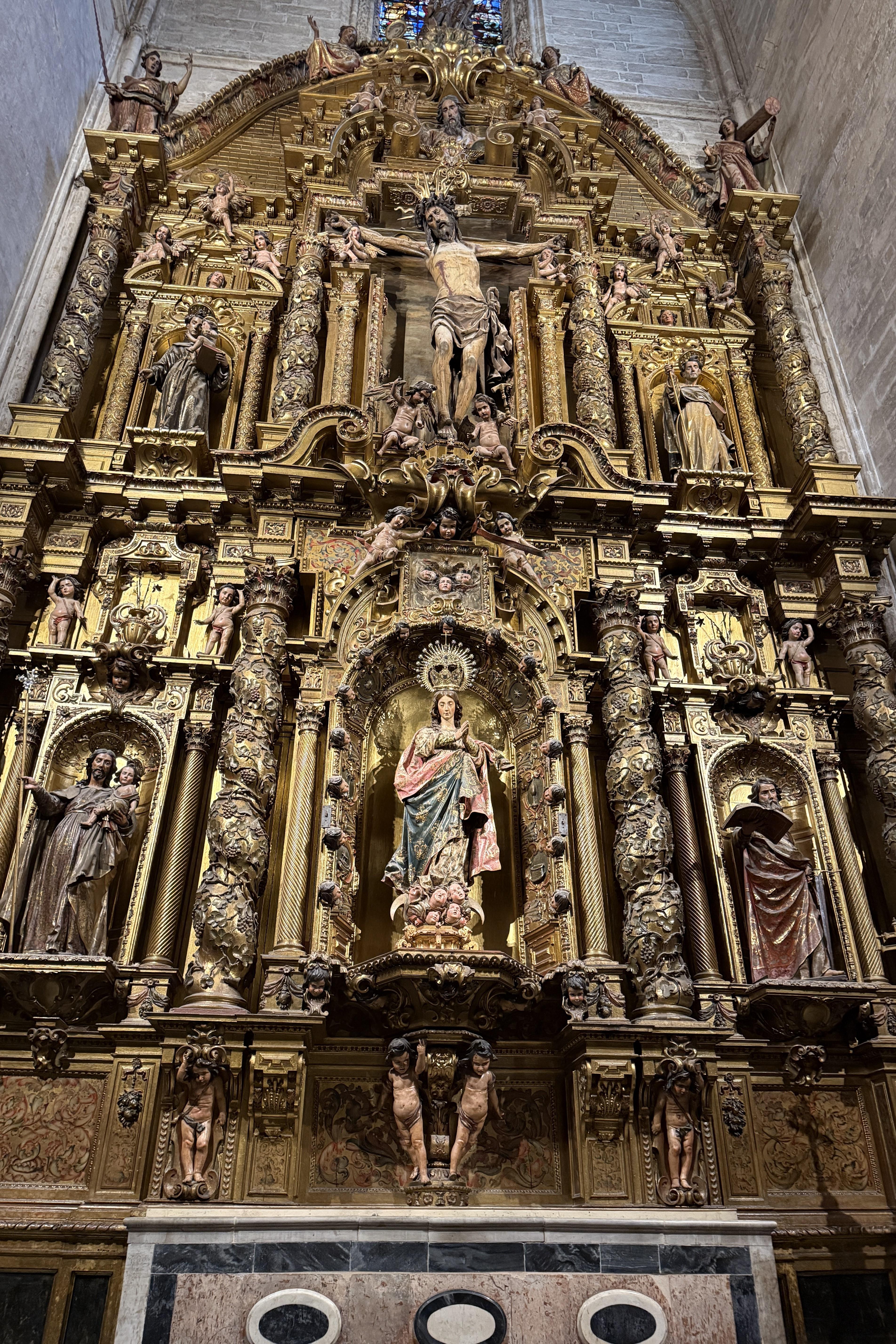
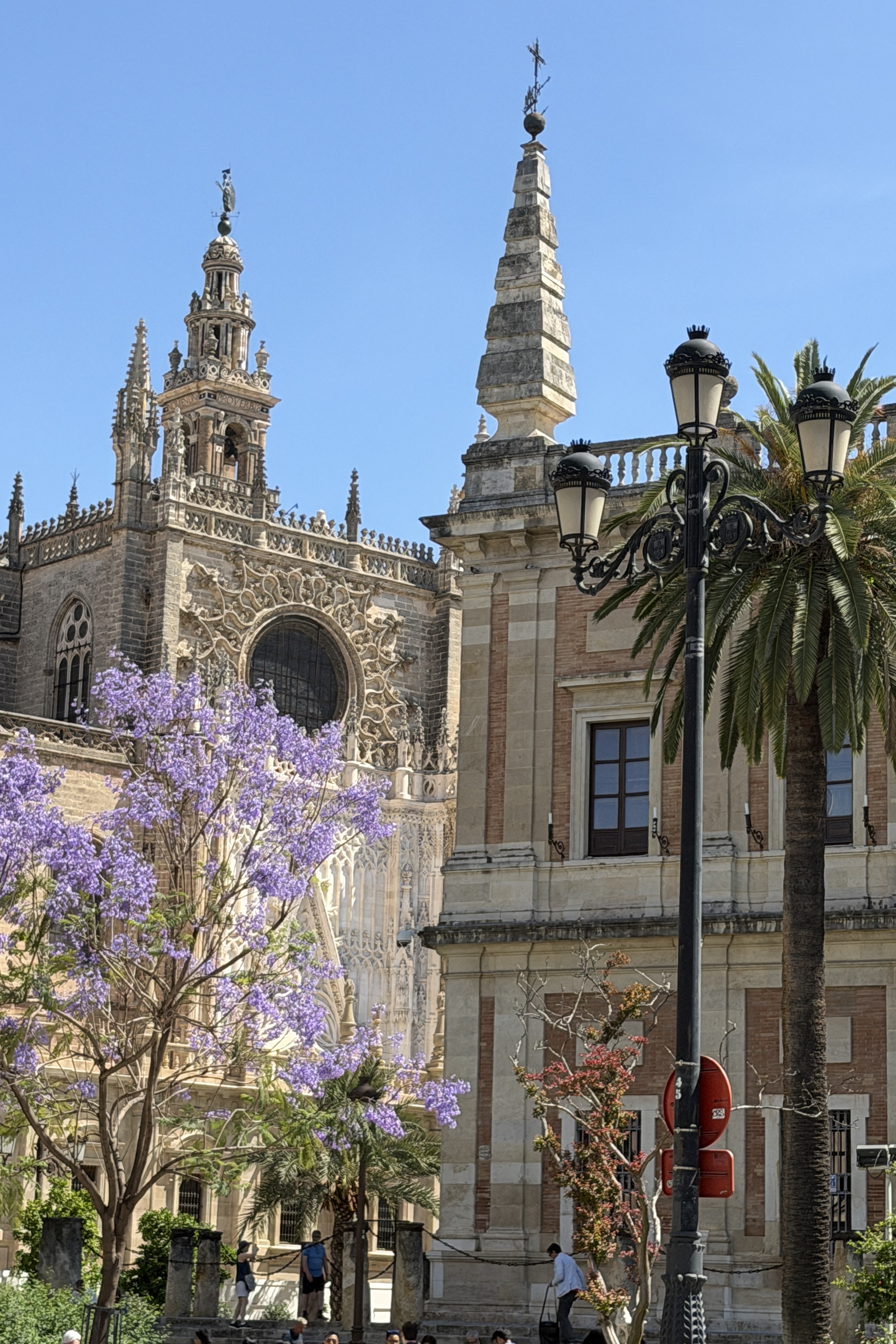
Following a quick beer to break up the afternoon heat, we headed to our pre-booked slot at the massive Seville Cathedral. We quickly discovered that even with timed tickets in hand, the queue wrapped entirely around the stone building, threatening to completely derail our afternoon timeline. A bit of strategic traveler resilience saved the day: I began chatting with visitors along the line and discovered the staff had quietly formed a second, accelerated queue for those with immediate time slots, allowing us to clear security with moments to spare.
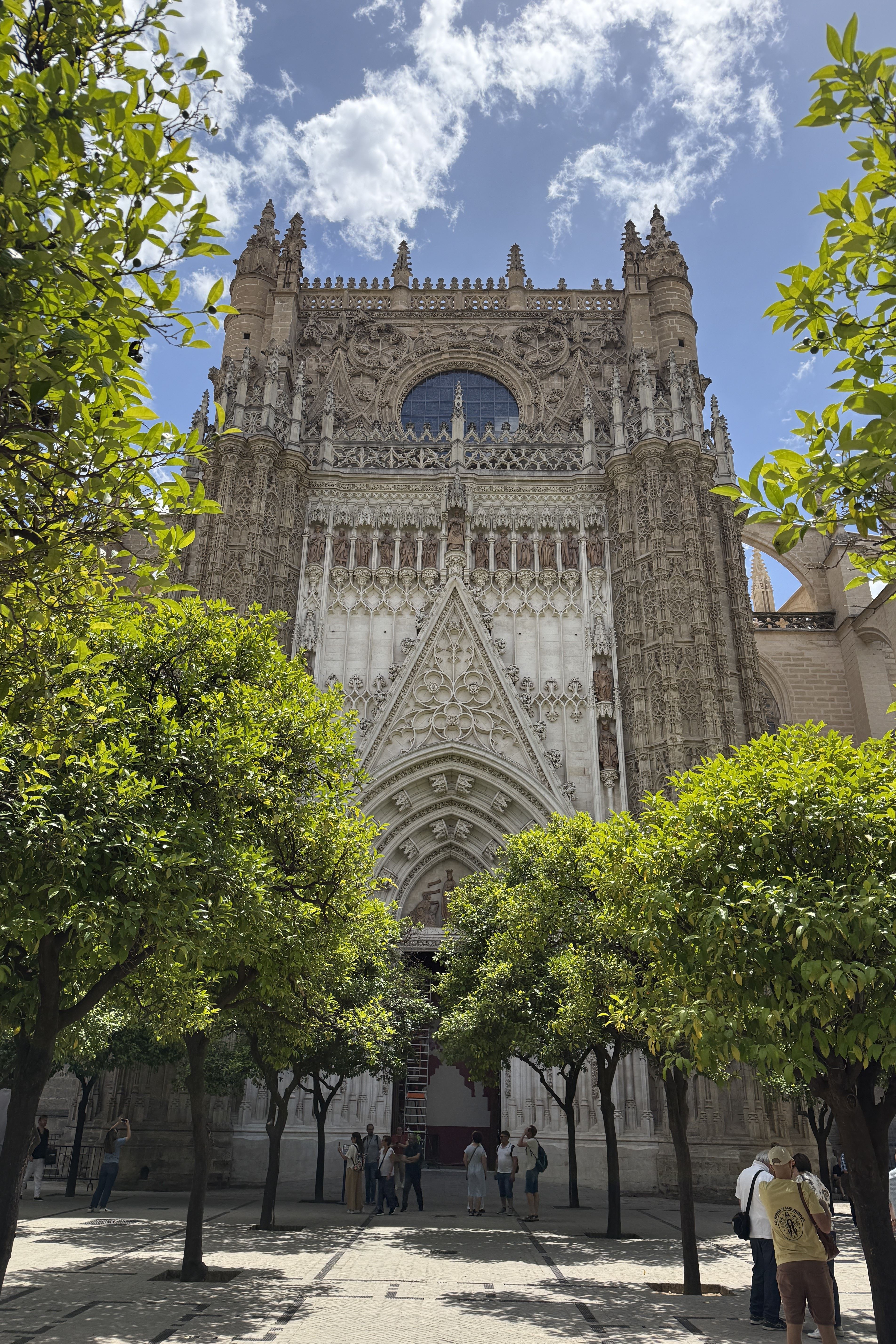
The cathedral itself is historically staggering but structurally unique; because it functions primarily as an international landmark rather than an active house of worship, it lacked a bit of the central cohesiveness and altarpiece intimacy we’ve felt in other historic cathedrals. However, the architectural history is magnificent.
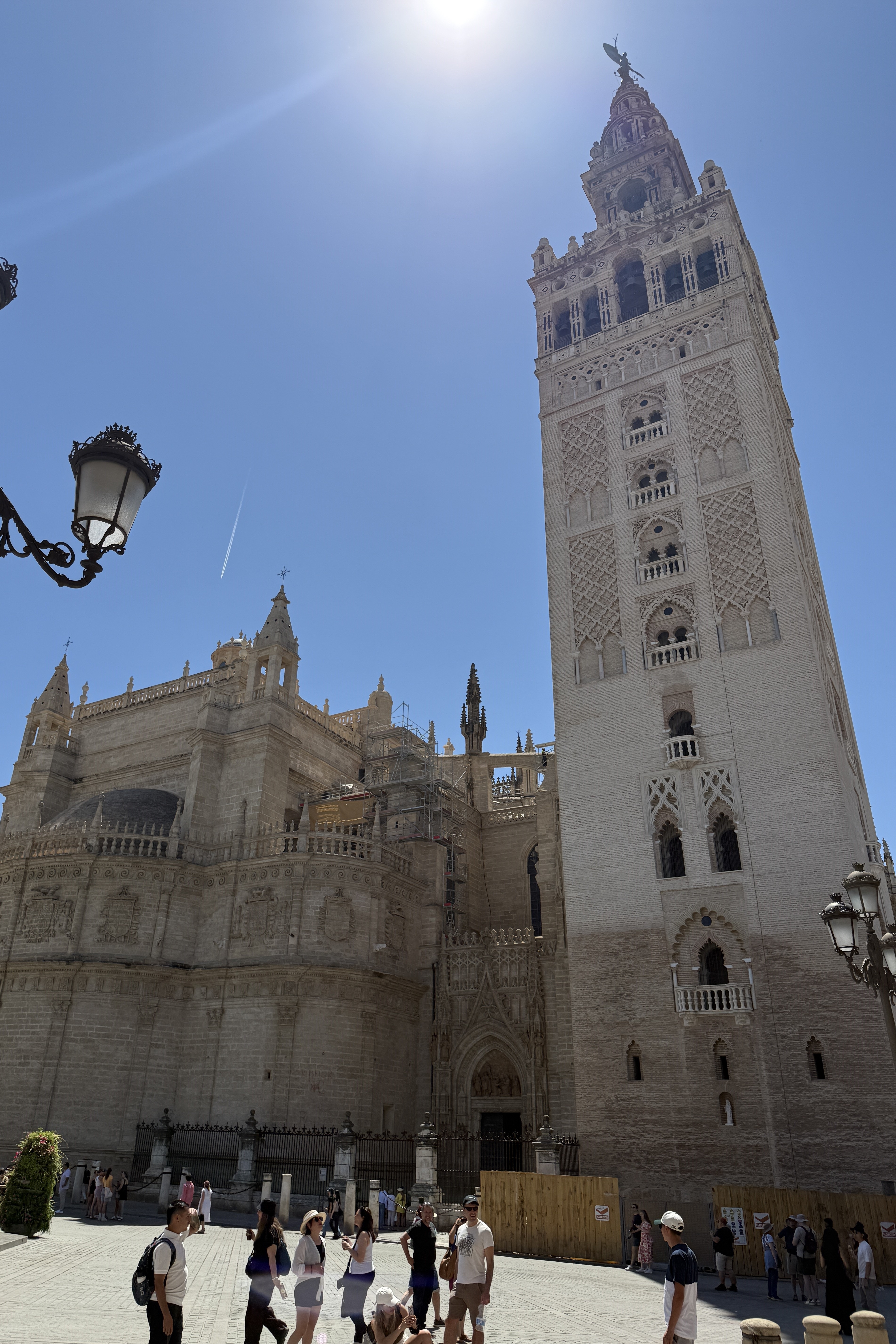
Built upon an ancient Moorish platform, it stands as the largest cathedral in the world configured as a square rather than a traditional cross. We climbed the winding ramps of the Giralda Tower—a pristine remnant of the Moorish minaret designed to amplify the ancient call to prayer—navigating the dense stream of visitors to find small stone crevices that framed breathtaking, panoramic views over the clay-tiled city rooflines.
The World's Largest Wooden Mushroom
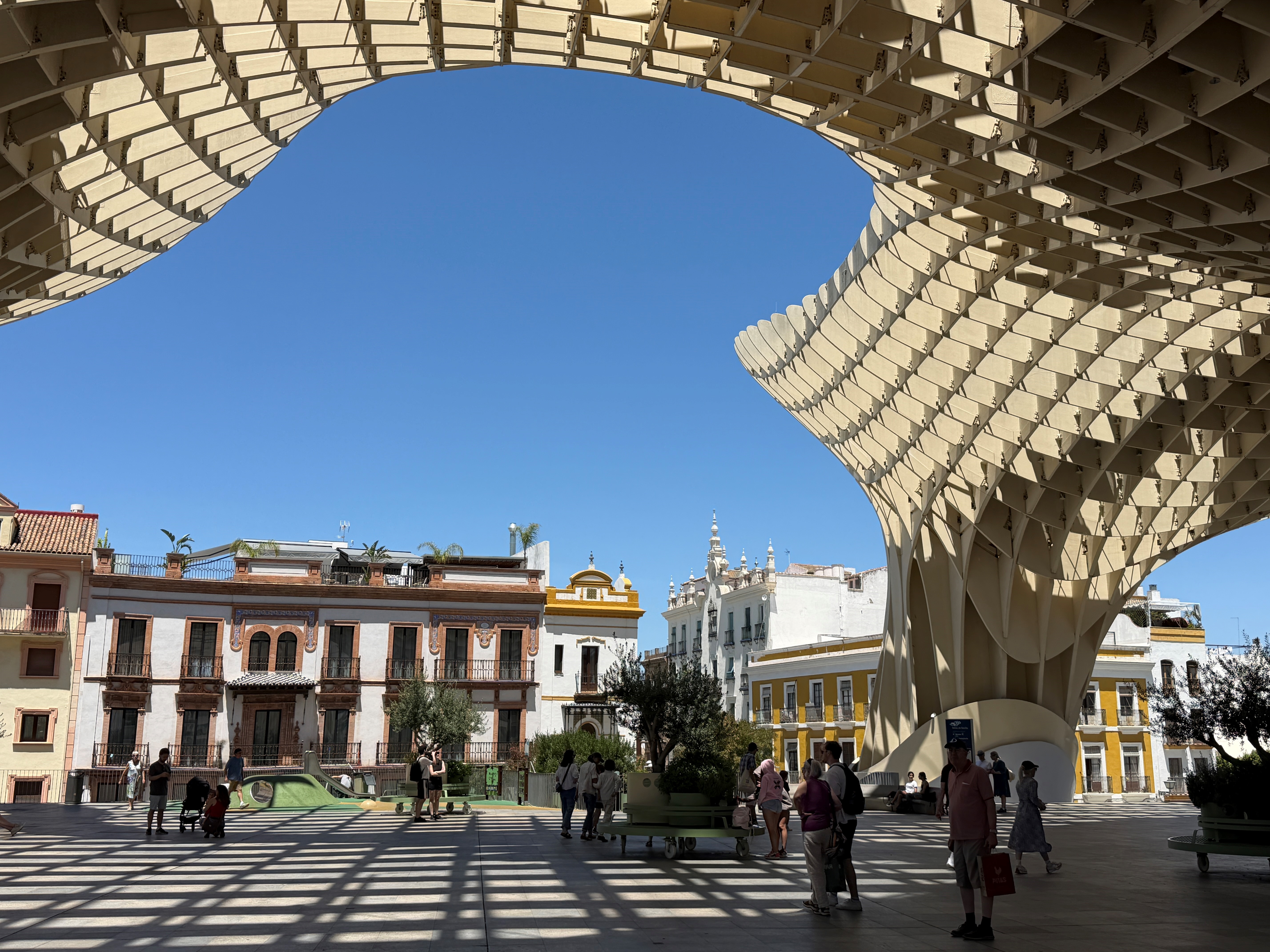
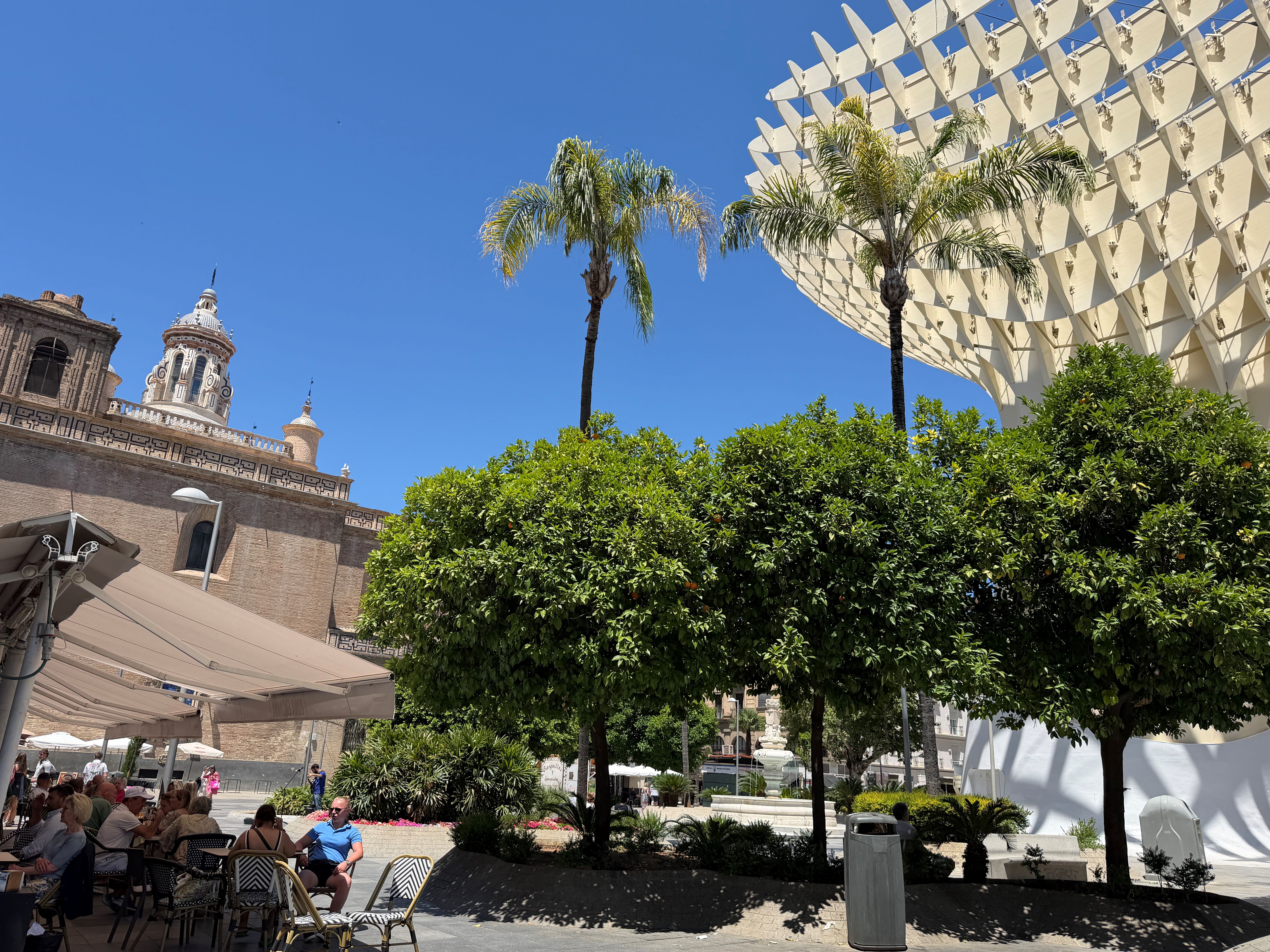
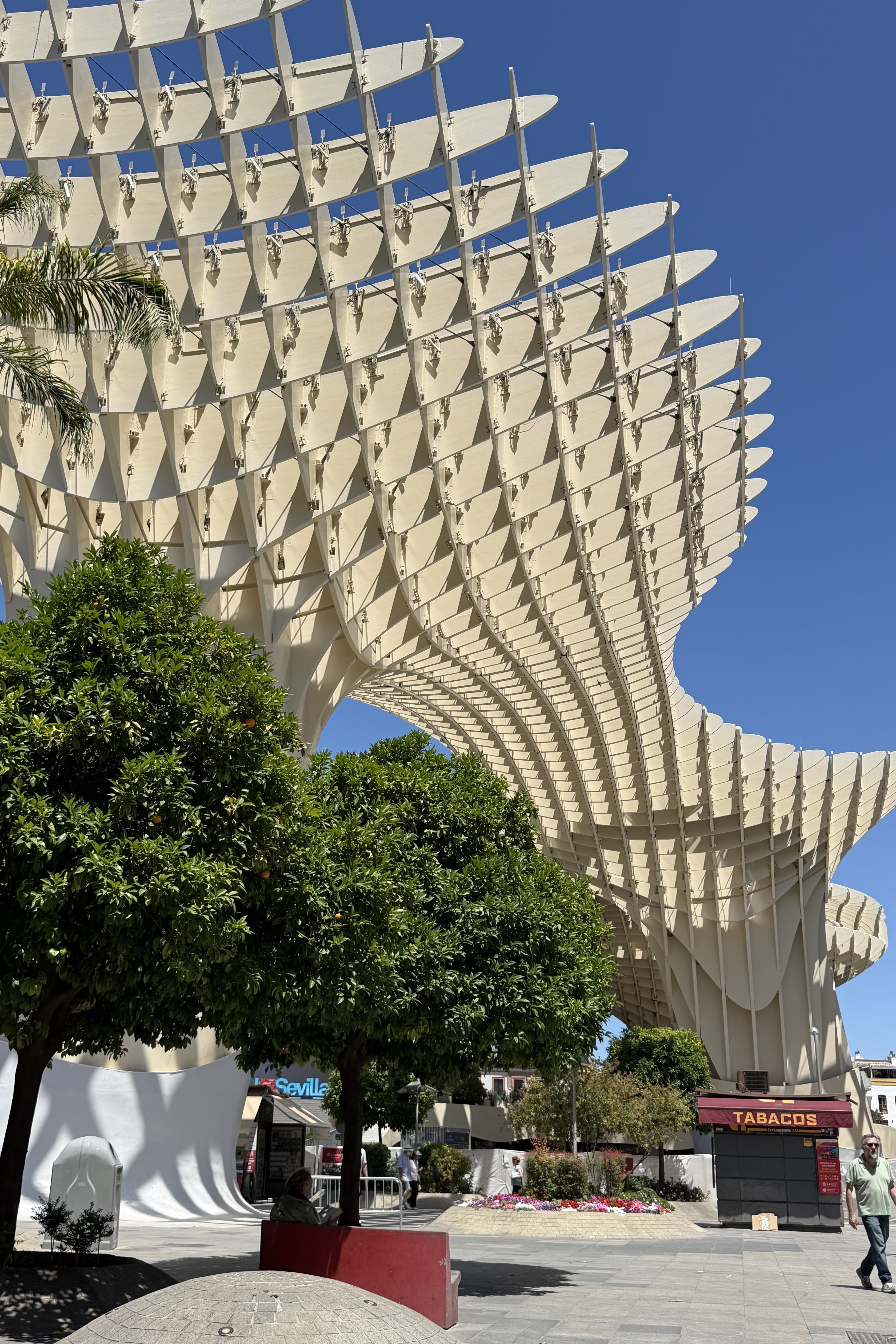
Our walks also led us deep into the historic Plaza de la Encarnación to view the massive Metropol Parasol, known universally by locals as Las Setas (The Mushrooms). This jaw-dropping, fluid wooden lattice structure is the largest of its kind in the world. It was born out of a design competition after archeologists unexpectedly struck ancient Roman ruins while excavating for a downtown parking garage, engineering a beautiful canopy that simultaneously protects the delicate stones below while offering a striking public plaza above.
While the upper ticket ramparts were closed during our afternoon visit, preventing us from walking the rooftop walkways, the experience of the surrounding square was magnificent. We snagged an outdoor table at a lively bar called Nudo directly facing the structure and the central water fountain. As a local guitarist strummed beautiful Spanish melodies nearby, we sat back to watch the city stroll past, enjoying a perfect moment of slow retirement in the heart of Seville.
The Real Alcázar: Seville's Oldest Royal Treasure
Our fourth day was entirely dedicated to the breathtaking Real Alcázar Palace, an absolute triumph of landscape design and a UNESCO World Heritage Site. Tracing its ancient roots back to a 10th-century Moorish fort, it has evolved over a millennium into the oldest active royal palace in Europe, still officially hosting the Spanish royal family during their state visits to Seville. It stands easily as the finest and most masterfully integrated palace complex we have ever toured.
The architecture is a seamlessly fusing of Islamic, Gothic, Renaissance, and Baroque styles. While the vaulted halls of the Palacio Gótico are adorned with massive, towering tapestries, it is the Palacio de Don Pedro that completely steals your breath away. Every room is replete with mesmerizing, intricate tile work, delicate plaster arches brought directly from the craftsmen of the Alhambra, and magnificent, towering gold ceilings.
The most personally impressive space was the majestic Ambassadors' Hall, where the scale of the golden dome leaves you standing in absolute silence. The audio tour was exceptionally well-crafted, interweaving historical commentary with a dramatized perspective from an actor portraying the King, who explained how the labyrinthine layouts and rooms were meticulously designed to shield his mother and provide a swift escape route incase of a palace coup.
For Tom, the highlight was standing in the actual room where the King and Queen had signed off on Christopher Columbus's voyage, granting him the official commission to sail to the New World. It was incredibly powerful to stand in the exact space where the explorers plotted out the journey and planned what would happen on the expedition. Tom sat there for a few moments, entirely transfixed, just imagining the monumental history that had unfolded within those very walls.
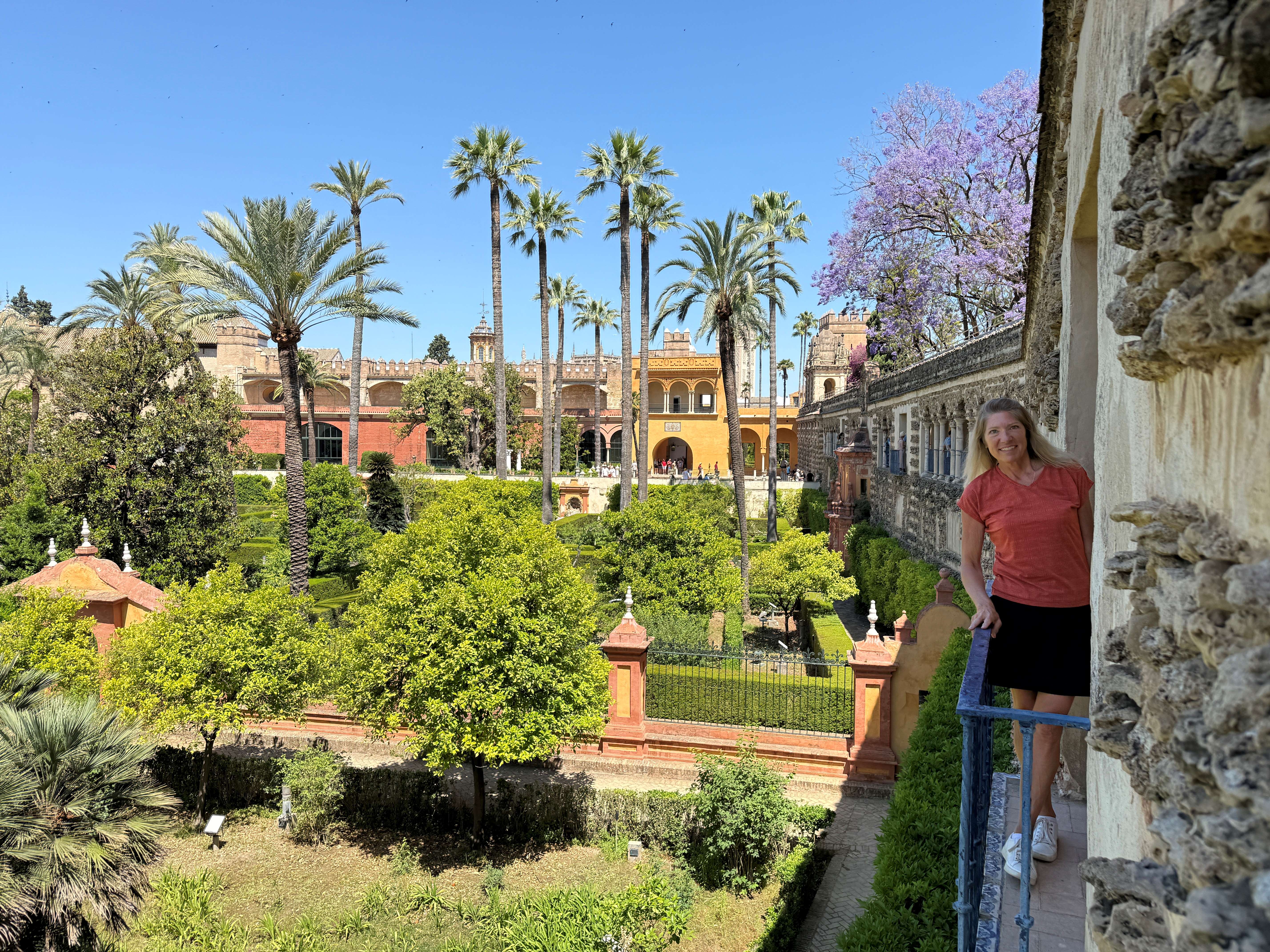
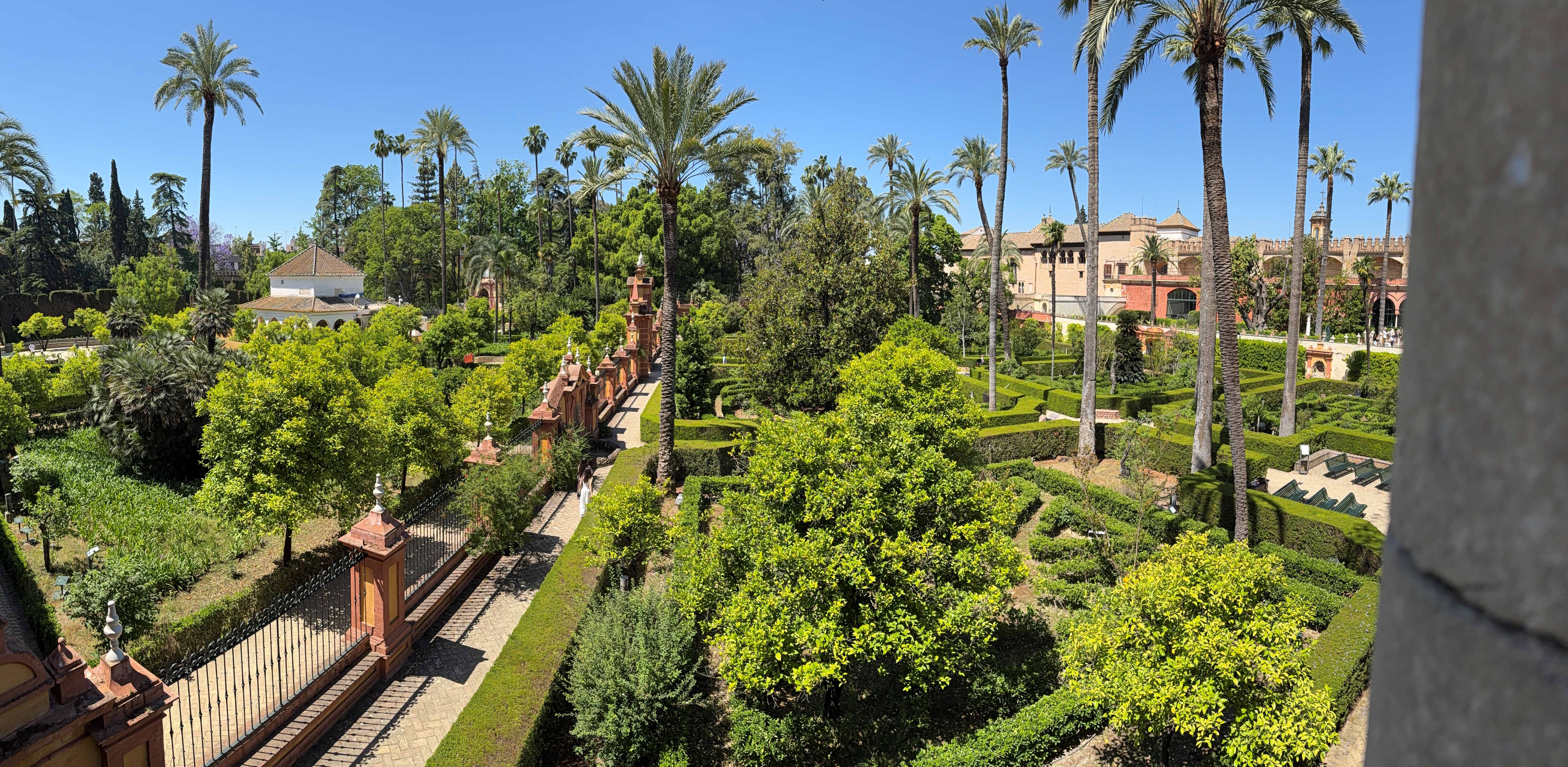
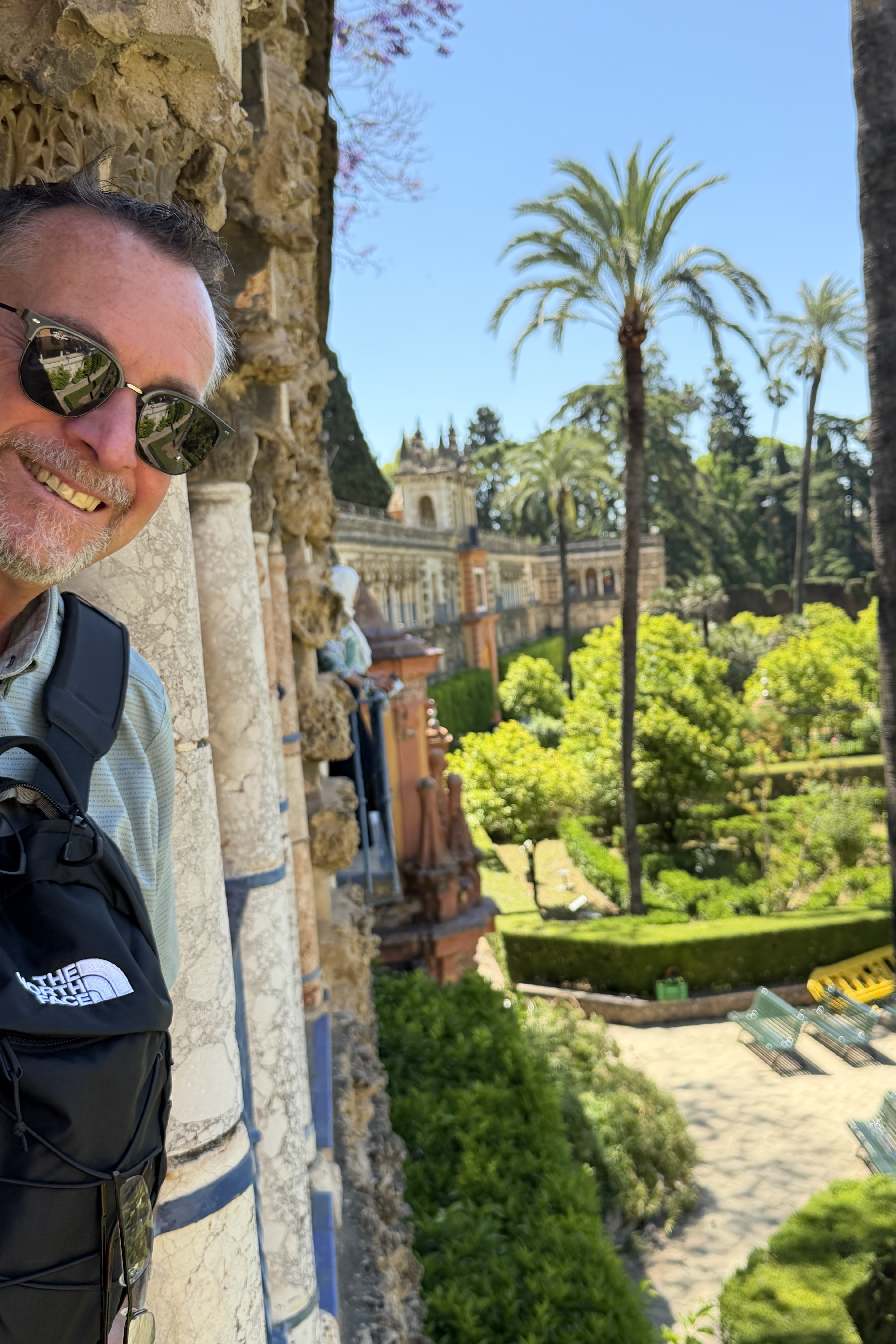
The integration of the palace with the towering Alcázar Gardens is nothing short of spectacular. These massive, walled green spaces keep unfolding on and on, making it hard to believe that such an expansive wilderness exists directly in the urban core of the city. We climbed the high stone walls flanking the grounds, enjoying a stunning elevated perspective over the manicured hedges and orange groves.
Historically, these gardens serve as a living library of exploration; they hold the descendants of the very first botanical specimens brought back from the Americas and the New World by the seafaring expeditions of explorers like Magellan and Columbus.
Culinary Discoveries and Summer Wine
The Local Tintillo Protocol
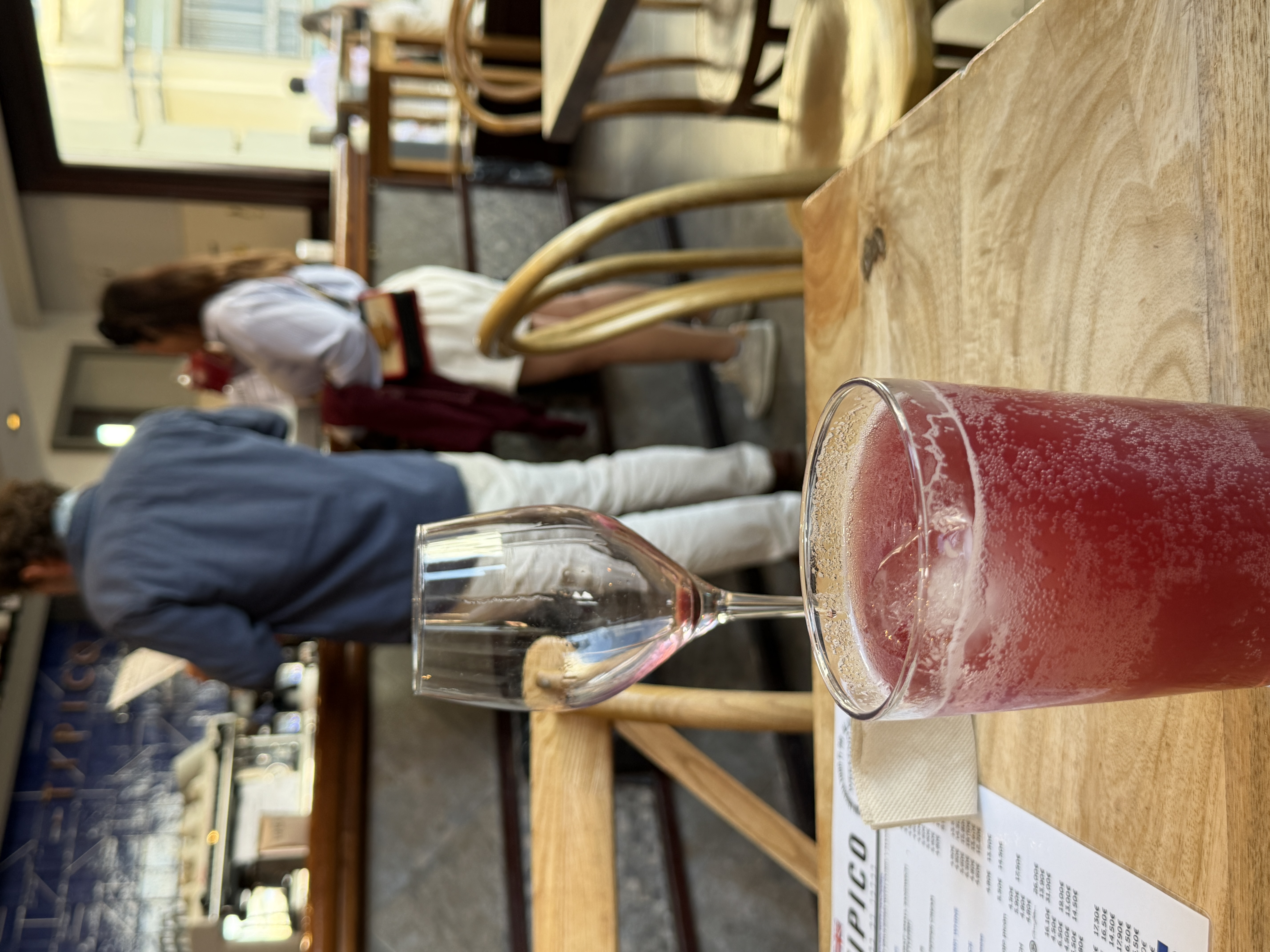
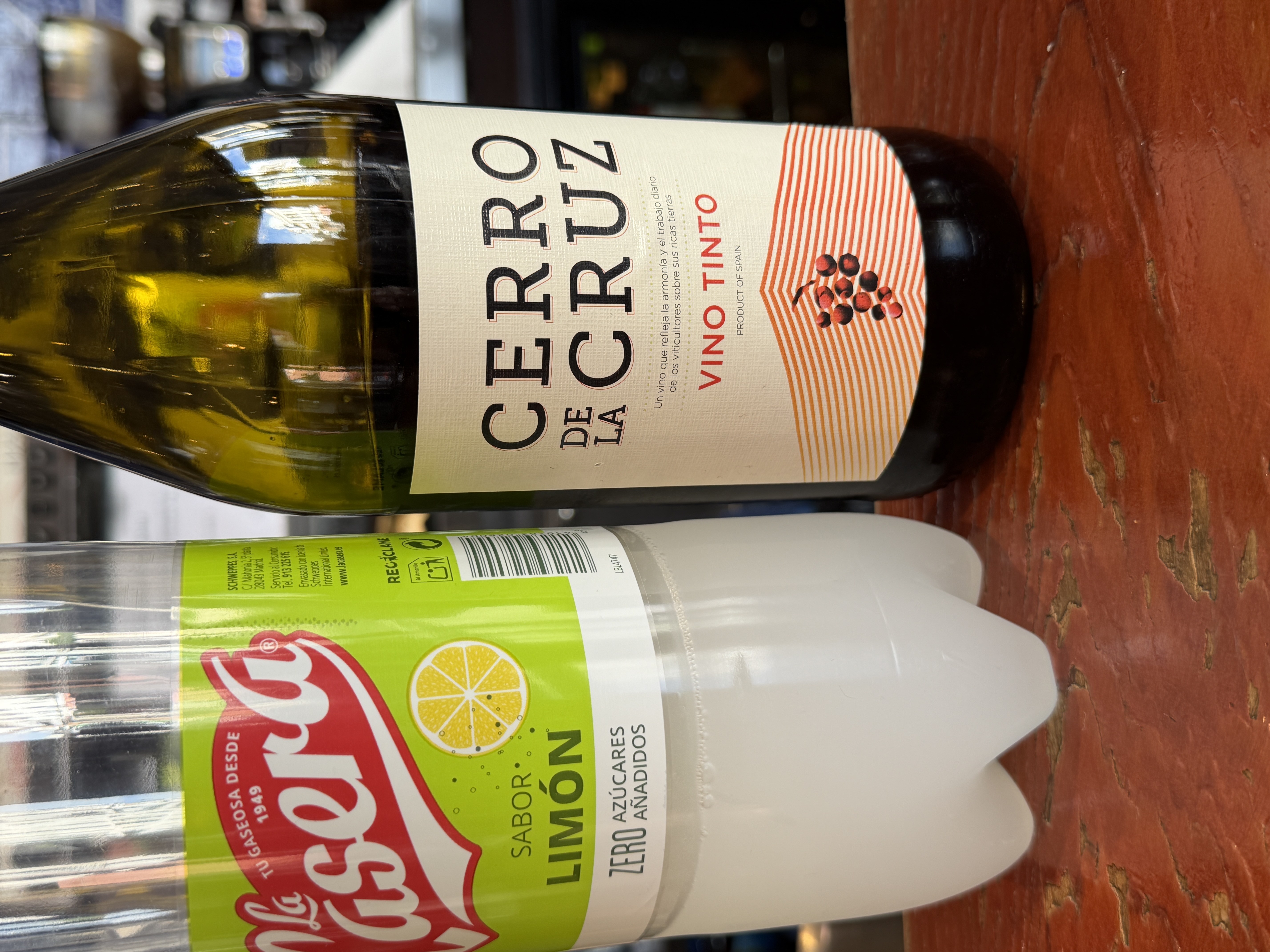
Navigating the wine culture of Seville in the high heat of May introduced us to an local choice in refreshment: Tintode Verano (Summer Wine). While most tourists order Sangria, we read that locals will order Tinto de Verano instead. This local cocktail is a beautifully simple, blend of red wine (Vino Tinto) mixed with either a lemon or orange soda. Served over ice with a fresh slice of citrus, it is incredibly crisp and refreshing—the ultimate antidote when the local temperatures soar.
For me, this local tradition carried a profound wave of personal nostalgia. Growing up, my Italian grandfather would always share a splash of red wine diluted with 7-Up with us kids at the dinner table from the moment we could pick up a cup, slowly decreasing the soda ratio as we grew older. Discovering that an entire country had elevated my grandfather's kitchen protocol into the defining cocktail of the Andalusian summer was a beautiful full-circle moment.
Tapas in Triana and the Pedestrian Alleys
Our undisputed culinary home in Seville was Bar Típico, located right in our home neighborhood of Triana. This vibrant, quintessential tapas bar quickly earned the crown as our absolute favorite eatery of the entire Andalusian stay. The culinary quality, and welcome friendliness of the staff here, is exceptional.
We fell in love with their signature tomato salad topped with smoked mackerel on our first night, returning later to try the version topped with fresh tuna. Both iterations were spectacular, elevated by rich local olive oil, red onion, garlic, and sea salt. Their Patatas Bravas are a masterclass in execution—arguably the best we have ever tasted across Spain—served with an unbelievably addictive, rich, spicy red sauce. Tom also raved about their glazed chicken wings finished with a flourish of sesame seeds.
We also enjoyed a beautiful outdoor lunch at Alimentari e Diversi, sitting in the warm air to share a rich eggplant parmigiana appetizer, a wood-fired pizza, and a homemade ravioli stuffed with fresh ricotta, shrimp, and a bright kiss of lemon that tasted like summer pasta personified.
Following our tour of the Alcázar, we meandered through the narrow, windy stone streets of the historic Jewish Quarter—a neighborhood we absolutely loved for its lively courtyards, boutique shops, and outdoor tables. Just on the edge of the quarter, we found a pedestrian street lined with tapas bars to enjoy a late lunch at Doña Rufina.
We snagged an outdoor table positioned directly outside the main restaurant doors, catching a glorious blast of indoor air-conditioning against our backs while we people-watched. We tested an inventive local tapa of salty anchovies paired with sweet quince paste and rich brie cheese over a crisp crostini, alongside a classic Andalusian pork medallions drenched in a rich, savory whiskey sauce.
Green Spaces and Riverside Walks
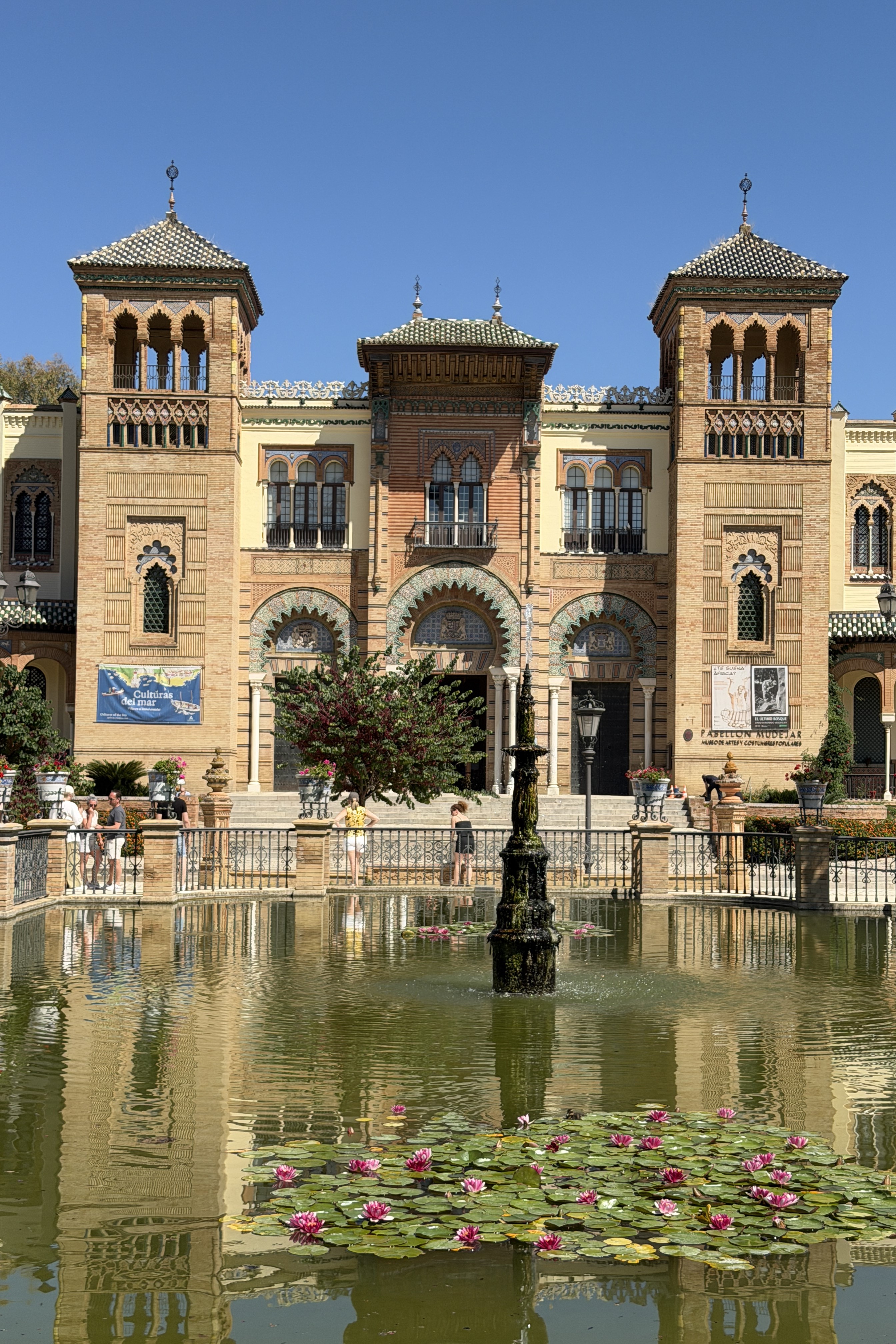
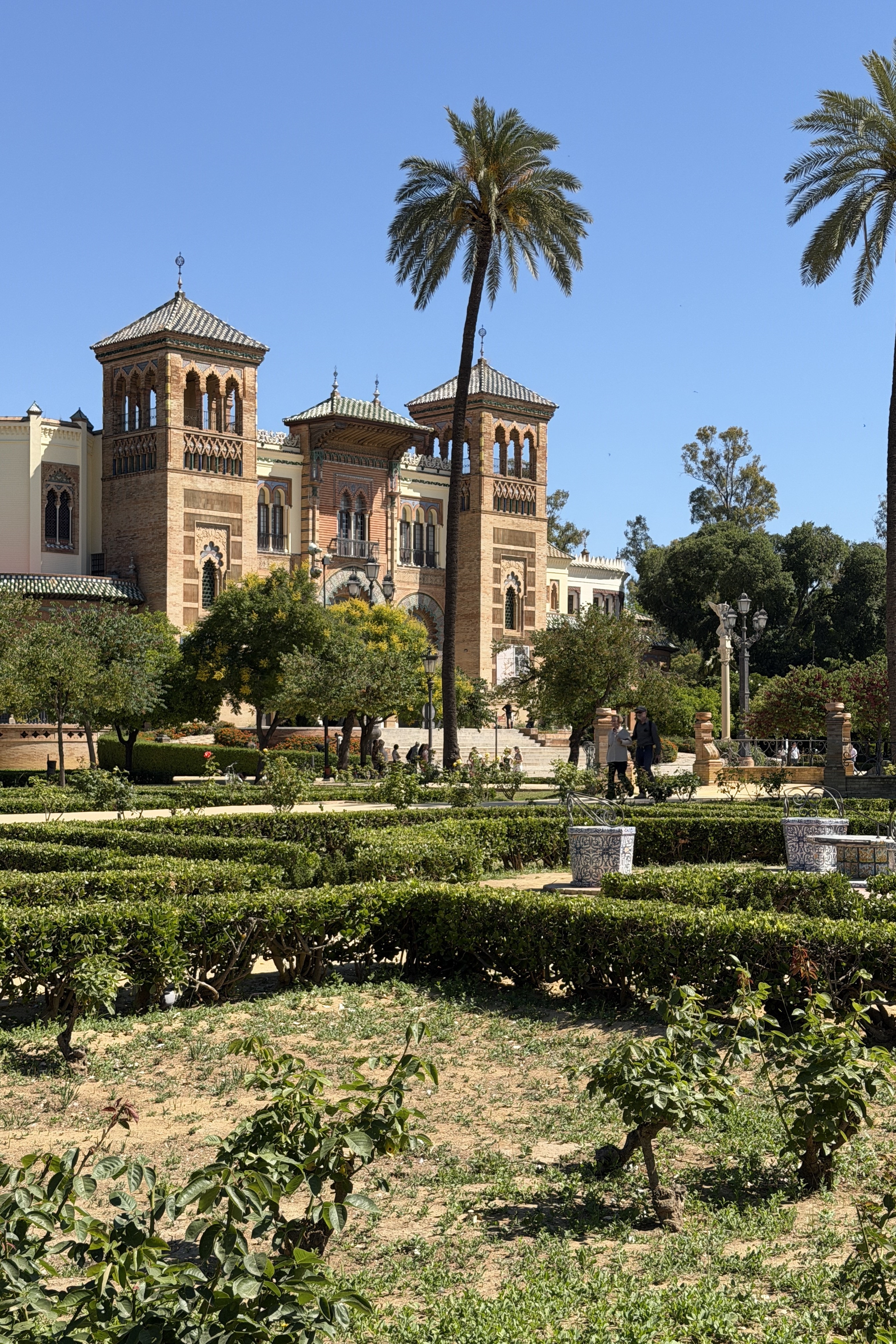
Seville is anchored by magnificent green arteries that allow both locals and travelers to find shade and tranquility. We spent hours exploring the sprawling, 84-acre Maria Luisa Park, the principal green oasis of the city stretching gracefully along the Guadalquivir River. Originally landscaped with a beautiful mix of Iberian and Moorish design influences, the park contains historic, tile-paneled pavilions and arched brick colonnades built for the grand Ibero-American Exposition of 1929.
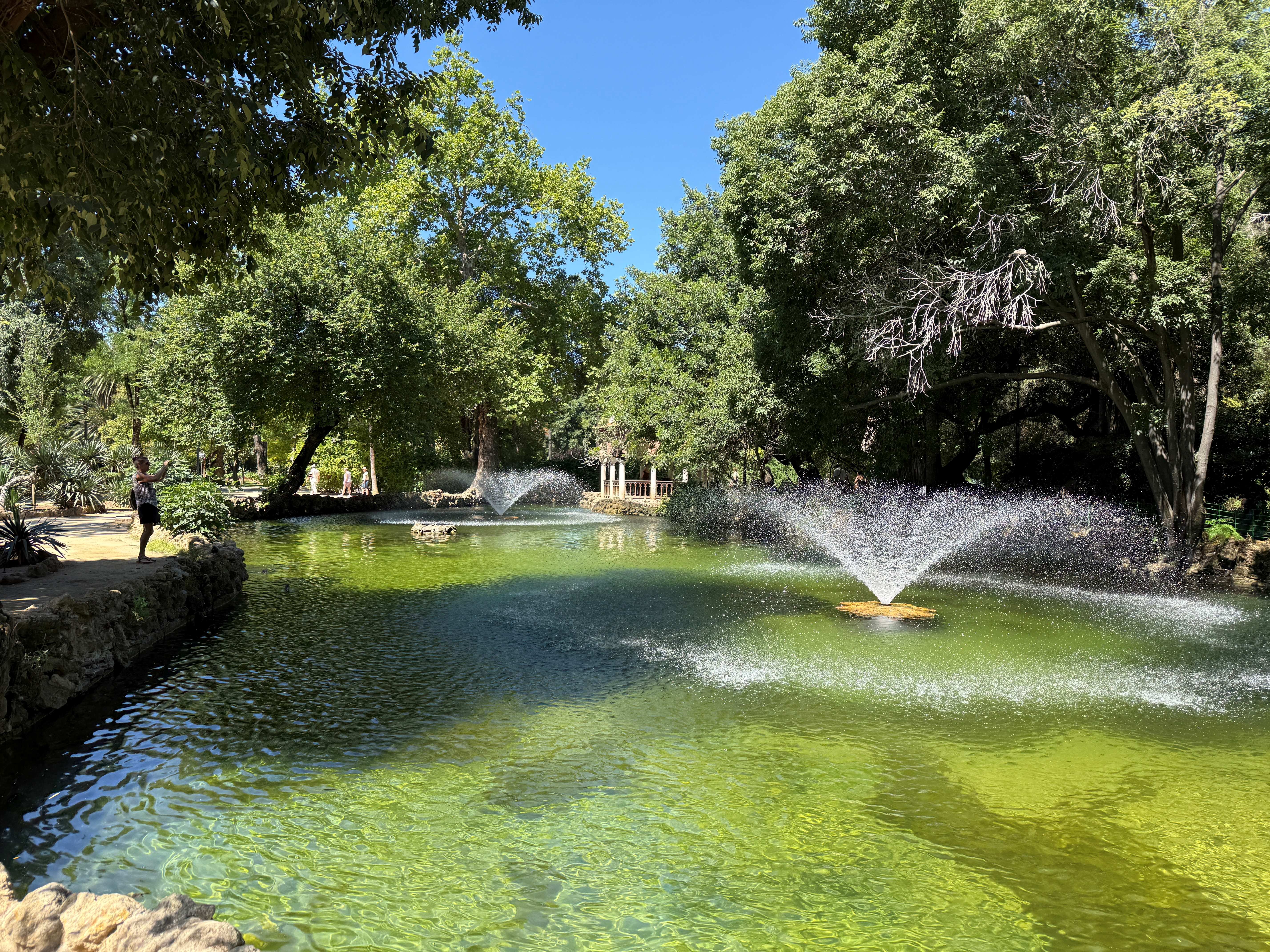
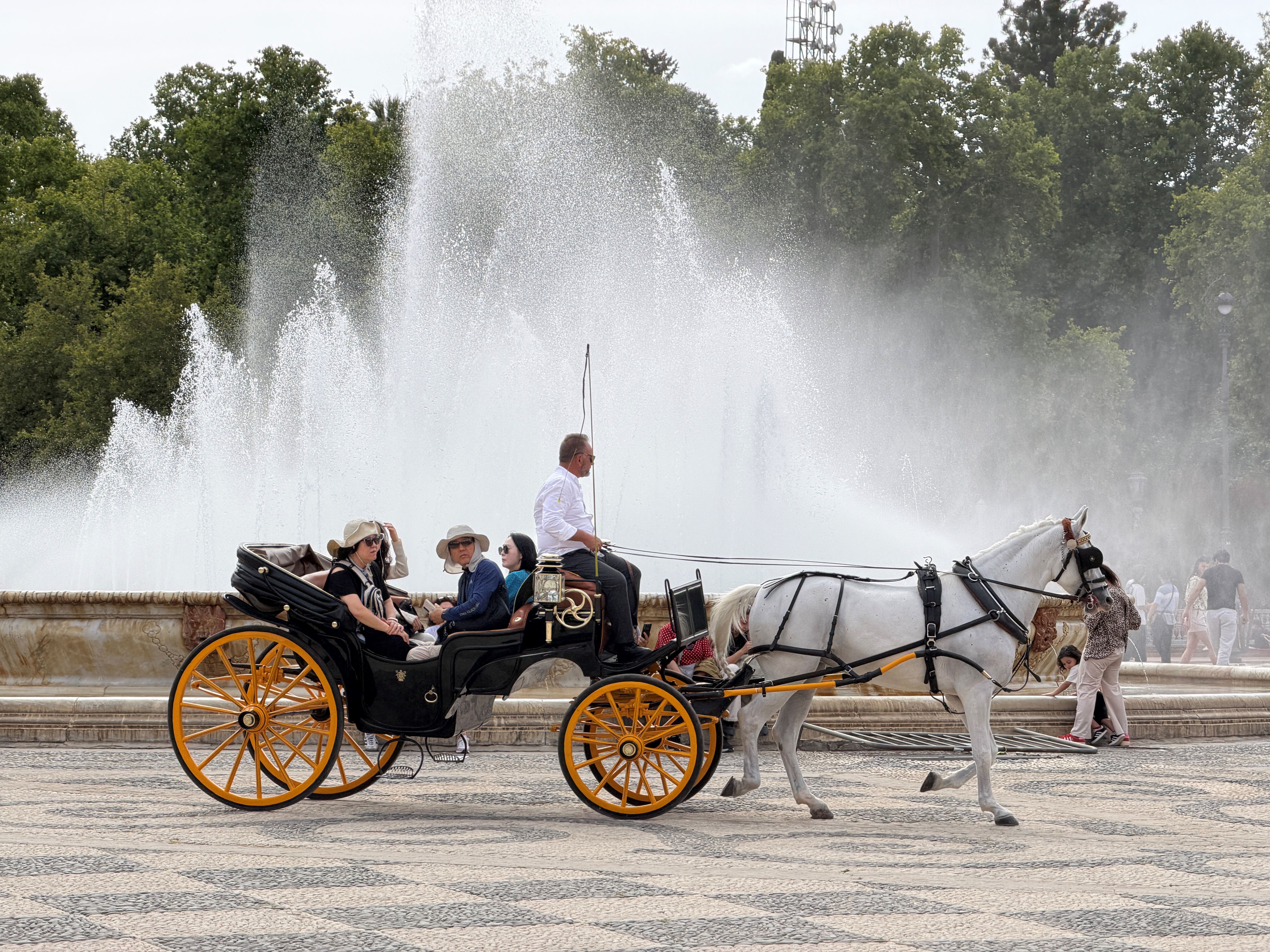
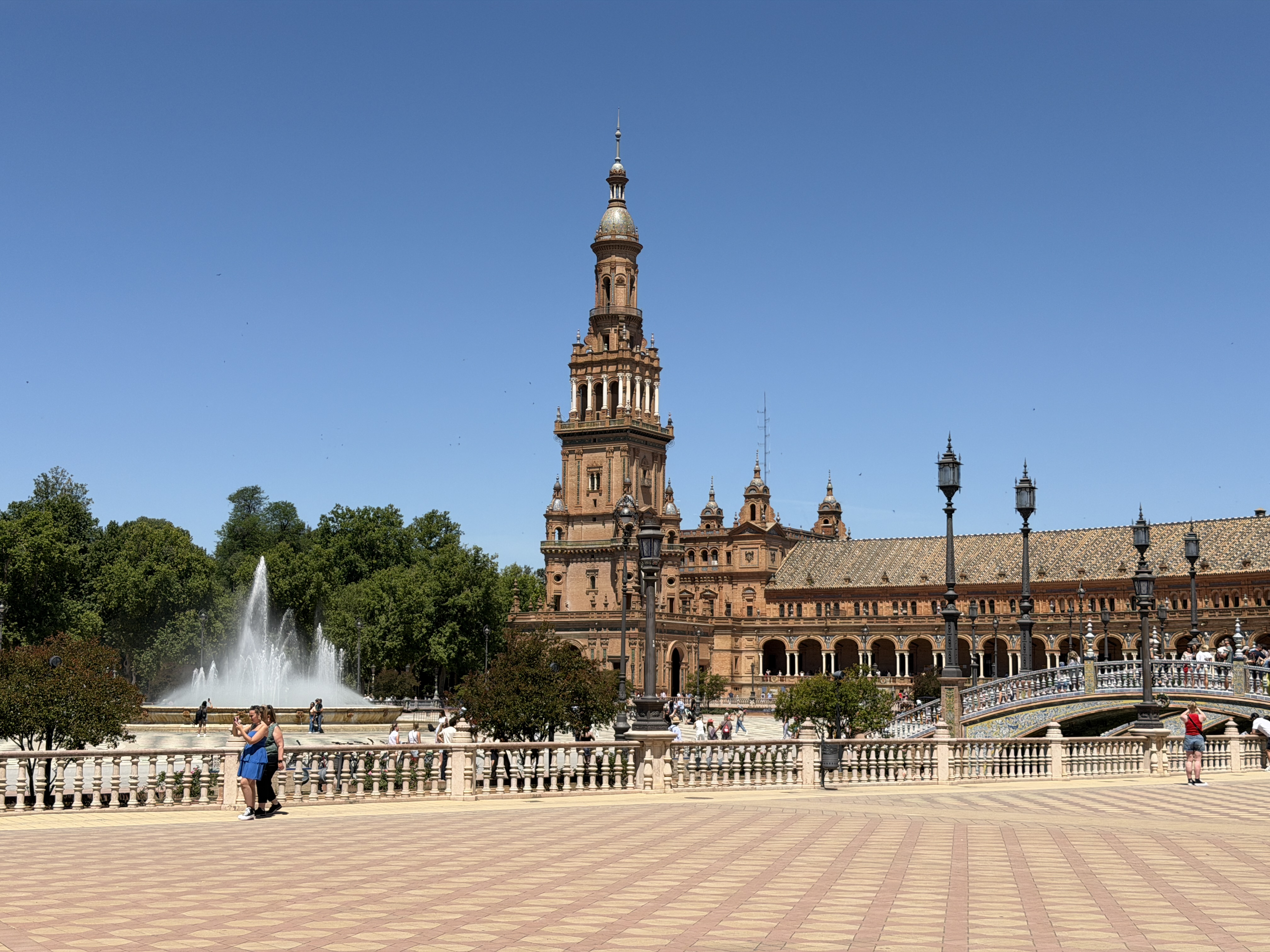
Chief among these is the over-the-top Plaza de España, a vast, sweeping semi-circular plaza bisected by a winding canal and spanned by Venetian-styled bridges. We walked the shaded walkways, admiring the beautiful tiled alcoves that represent each of Spain's historic provinces, and paused to watch street performers delivering a raw, passionate Flamenco show right out in the open air. We even smiled watching brave visitors interact at the local pigeon-feeding grounds, letting the birds land directly on their arms—a spectacle we happily preferred to observe from a safe distance.
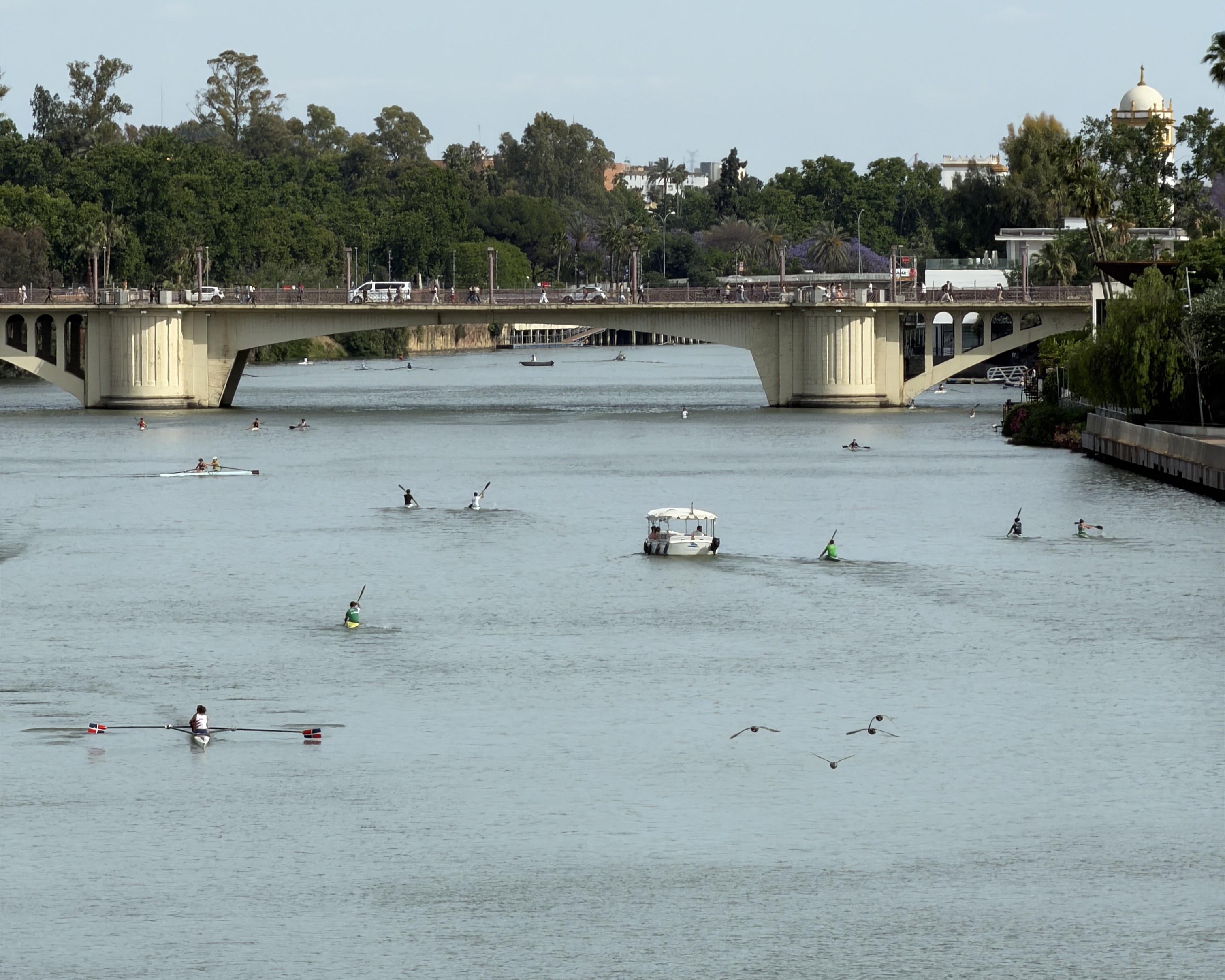
Our favorite daily ritual was walking the length of the river using the old exposition pavilions as our visual guide. On our final hot afternoon, we finalized our packing, filled a few water bottles, and retreated to a deep, shaded bench within the park to read and watch the local world go by. Afterward, we moved down to a bench along the river shore, sitting quietly in the cool shade to watch the athletic rowing teams, kayakers, and sleek sculling boats slice through the shimmering water as the afternoon drifted away.
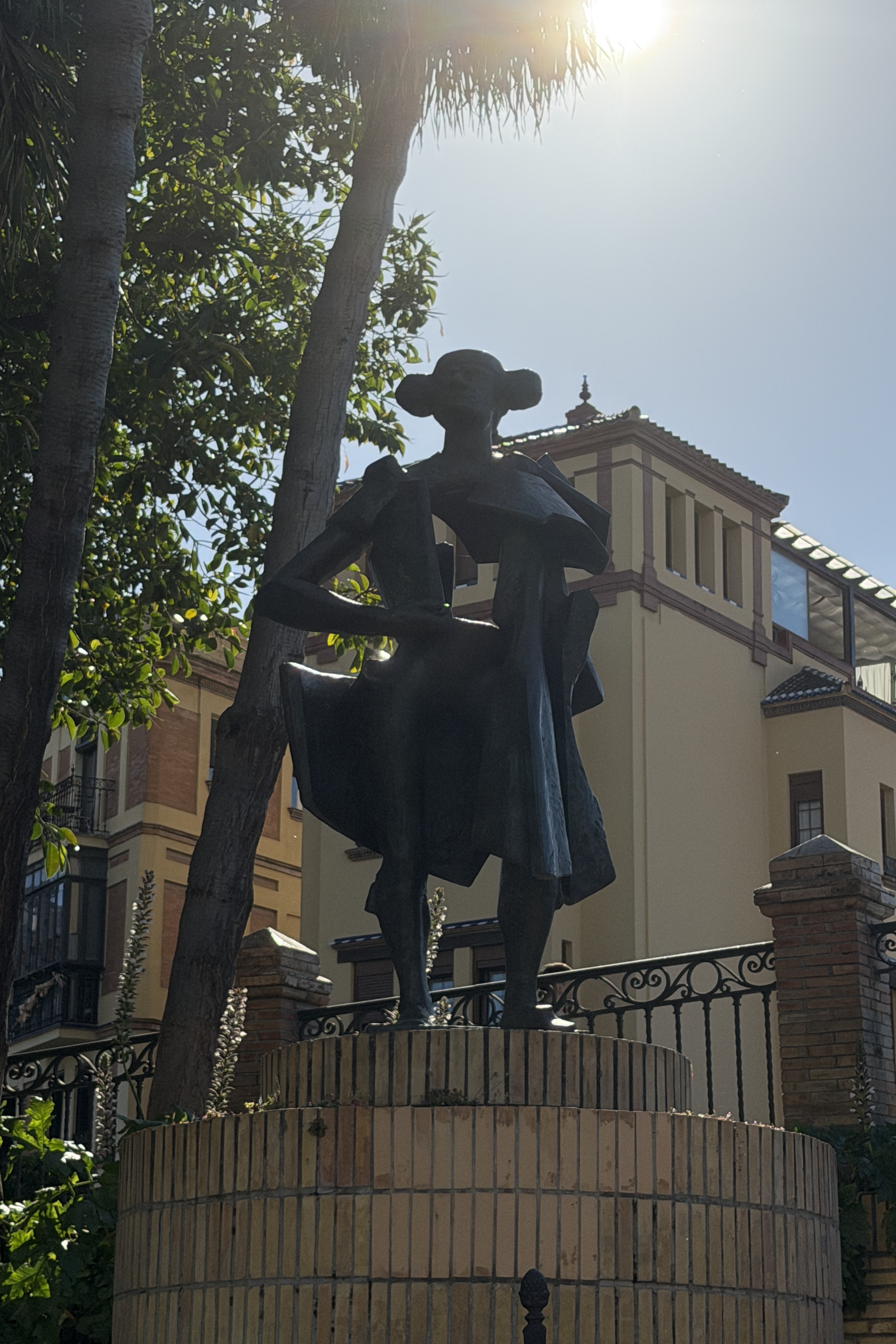
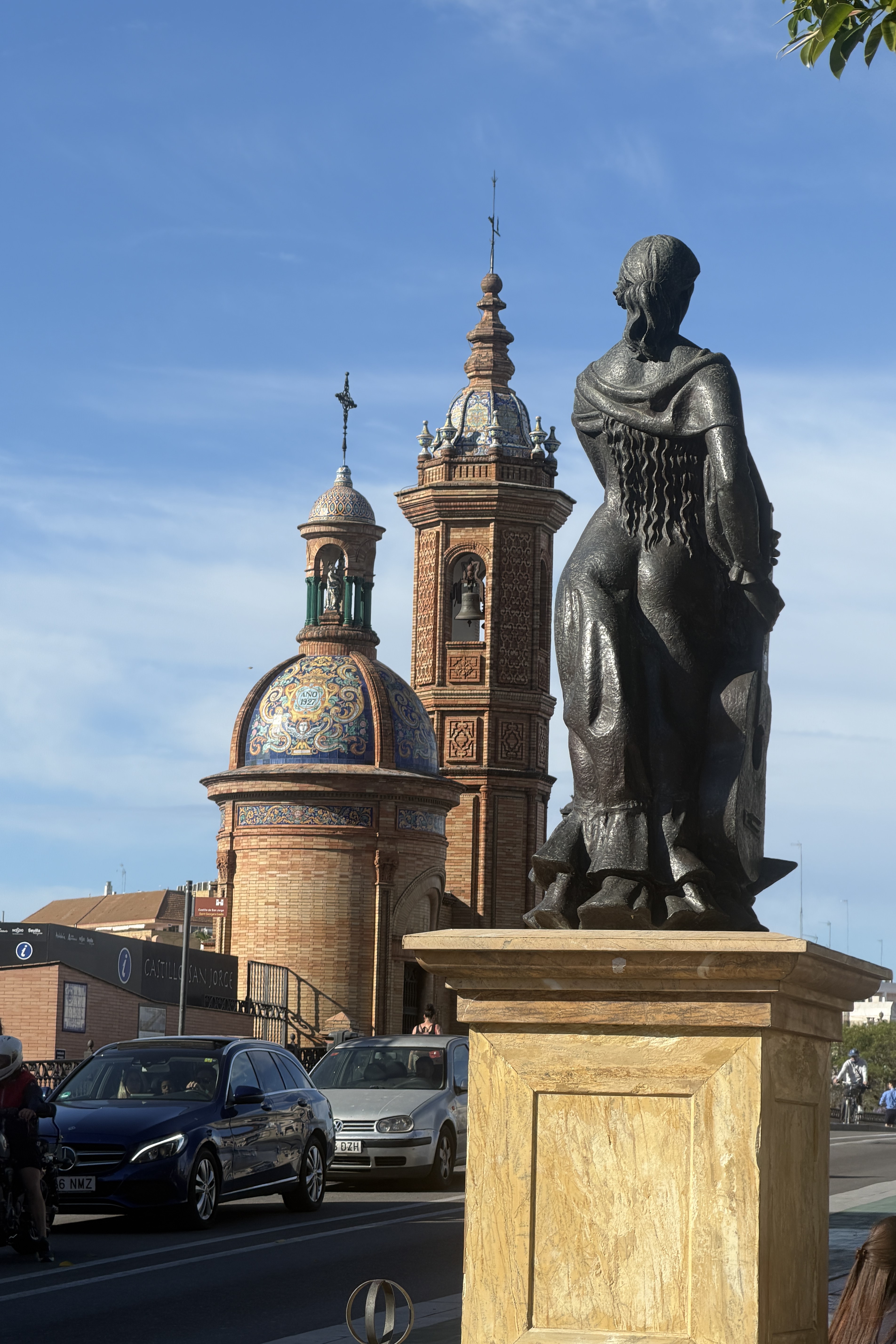
Reflections on the Journey
- The things we loved the most: The beautiful, seamless integration of nature and historic stones. From the monumental scale of Maria Luisa Park to the intimate, tree-shaded courtyards of the Jewish Quarter, Seville provides a gorgeous public landscape that makes slow, retired living an absolute joy.
- The things we didn’t: The sheer scale of the timed-ticket queues. Even during the shoulder season of May, major landmarks like the Seville Cathedral and Real Alcazar require serious patience and tactical maneuvering to avoid spending hours baking on the hot pavement just to clear the front doors.
- What we learned: The Aromatic Architecture of the Mediterranean: One of the most beautiful threads connecting our journeys through Morocco, Portugal, and now Seville is the ubiquitous presence of orange trees framing nearly every historic plaza. We learned that this wasn't just an aesthetic coincidence, but a brilliant piece of ancient urban engineering. Long before modern sanitation, Moorish and Spanish city planners strategically lined tight cobblestone streets with these trees because the heavy, fragrant scent of the citrus and blossoms acted as a natural air freshener to mask unwanted city odors. Walking through Seville, it made us look at the canopy with a completely different level of respect—realizing that what looks like simple decoration today is actually a living blueprint of historic climate control and public design.
- A Moving Finale: On our departure day, we checked out early and took a taxi to the Plaza de Armas bus station, storing our heavy luggage in their extra-large rental lockers to kill a few final hours at the Museum of Fine Arts. The museum granted us a free entry pass, and we spent a quiet two hours wandering through towering collections of classic Spanish art.
- Two pieces personally haunted us: a stunning, luminous painting of Mary where the masterwork of light left Tom completely transfixed, and a searing sculpture of a bound Jesus on his knees wearing the crown of thorns. The artist had sculpted the ripped, raw skin on his elbows and knees with such visceral, startling realism that it grounded the historical gravity of the piece in a way we will never forget. It was a profound, quiet grand finale to an extraordinary journey across the Iberian Peninsula.
Links: Spain Planning Guide | Malaga Trip Report | More Trip Reports | Andalusia Wine Guide
Up Next: Faro Trip Report | Algarve Wine Guide
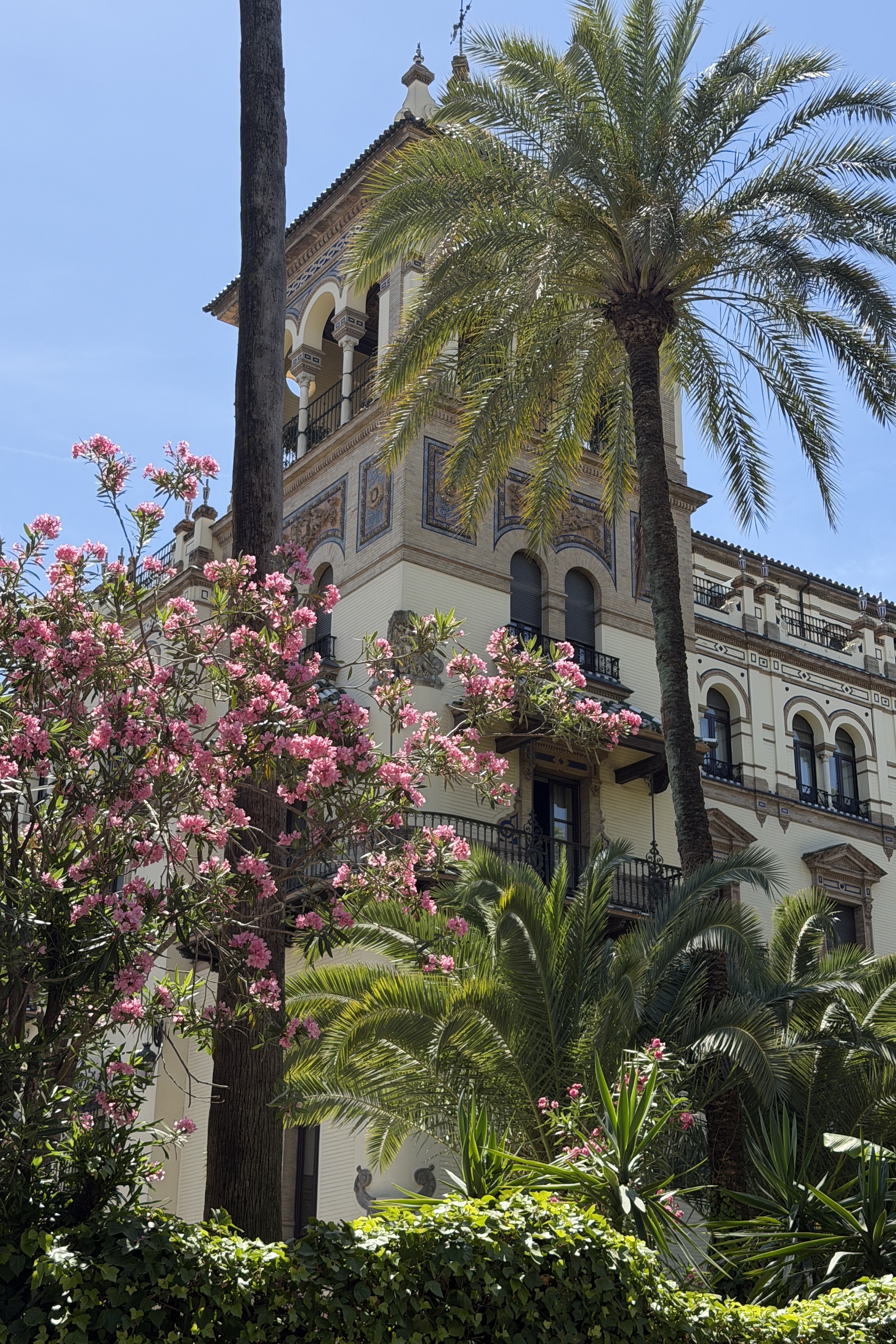
Welcome to the new Touchpoint Wines
We’re blending our passion for wine with a love for global exploration. Join us as we journey through the world's most captivating destinations, uncovering hidden wine gems and offering unique workshop experiences for your team retreats. Whether you're seeking to enhance team dynamics or discover the art of slow travel, let us be your guide.