A Note on the Moving Parts of Travel: This planning guide reflects our personal operational data and experiences. While we make every effort to provide accurate, high-utility planning frameworks, and detailed logistics (including prices, transport availability, and local banking rules); these things can change without notice. Please cross-reference live schedules and local resources when locking in your own itinerary.
Introduction:
If you’re coming to the Alsace region, you’re here for the wine! We spent much of our trip sampling everything from world-class Grand Crus to great-value everyday sippers. We put together this quick-reference guide of every winery and wine bar we visited, categorized by town, along with some logistic information and tips, so you can easily plan your own tasting itinerary.
Transportation: Getting Around the Wine Route:
Exploring the wine villages from Colmar is incredibly straightforward, and the region offers excellent options whether you prefer speed or savings.
Our Choice: Flexibility and Speed (Uber/Bolt):
For days when we had specific appointments (like winery tastings) or just wanted to get an early start, we opted for ride-shares like Uber or Bolt. This gave us total flexibility but came with a higher price tag, running between €30 and €40 for a one-way trip.
The Budget-Friendly Option (Local & Regional Buses):
If you have time to spare, the local and regional bus system is a fantastic, cost-effective way to travel:
- Local Buses (Letters: A, B, C, D, etc.): Turkheim was bus D from Colmar. These cost only €2 per person one-way, and the ticket is valid for two hours, giving you a little flexibility.
- Regional Buses (106 was to Ribeauville): These cover longer distances and cost €4 per person one-way. The ticket is good for four hours, which is perfect for linking two villages in one afternoon.
The Tourist Option (Kutzig Tour bus):
Avery popular method for hopping between the main wine villages is the Kutzig tour bus, which runs seasonally from April 18th through October 5th and costs around €29 per person / per day.
- It follows a set route and stops in specific wine villages on an hour-and-a-half schedule.
- It's a great choice if you want to visit multiple villages in a single day without worrying about public bus schedules. You can even use it to go to one village, walk the vineyards to another, and then catch the bus onto your next stop or back to Colmar.
Our Strategy:
Since we had a generous 15 days in Colmar, we didn't feel the pressure to rush. We relied mostly on the local and regional buses whenever possible. This saved us a lot of money and allowed us to take our leisure in visiting the different wine villages at our own pace.

Ribeauvillé: The Grand Cru Experts:
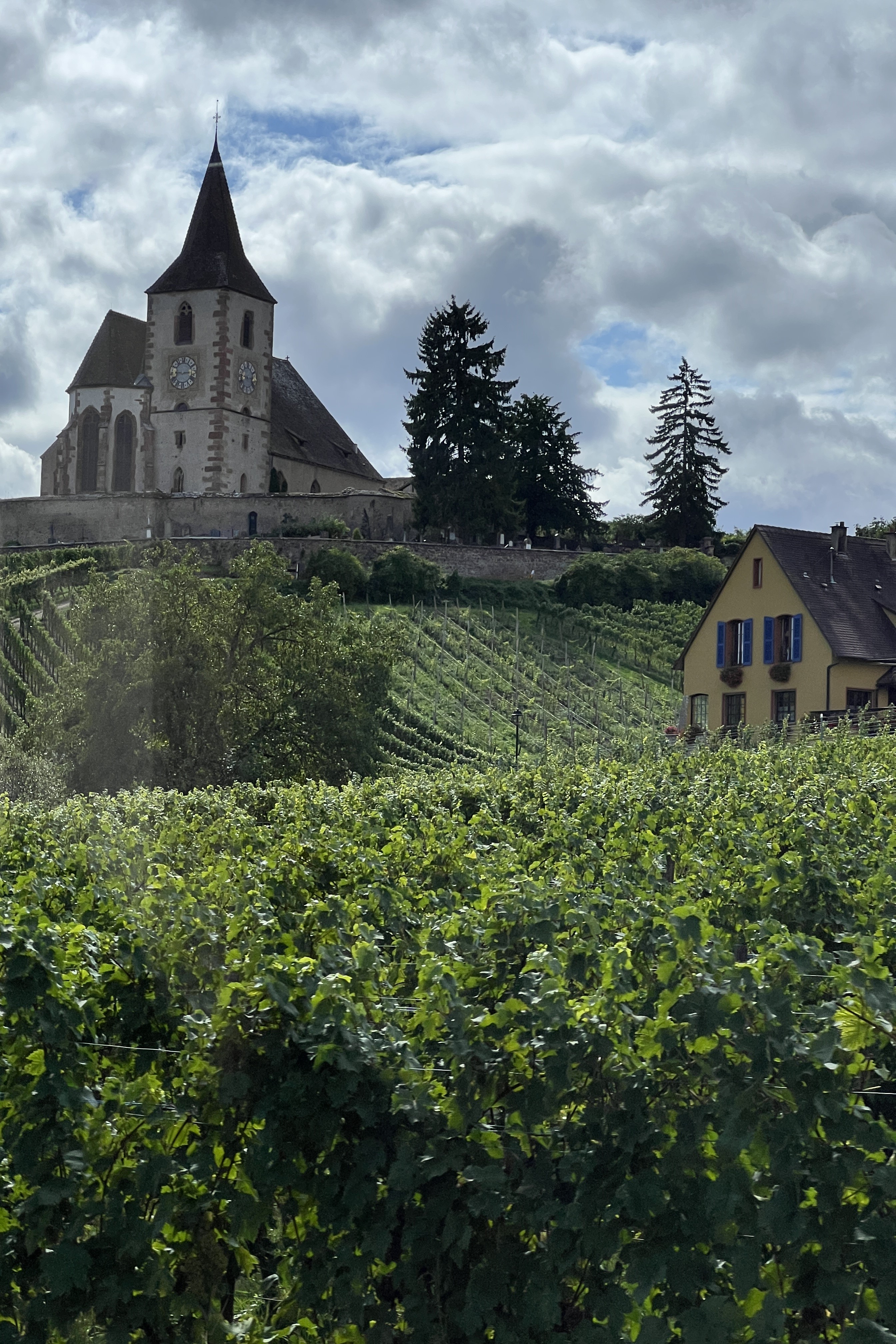
Ribeauvillé is home to some of the most famousand highly-regarded names in Alsace. The producers here are very proud of their three Grand Cru sites: Geisberg, Kirchberg, and Osterberg.
- Domain Trimbach: This was an excellent stop. You need to reserve well in advance for a tasting here. The host gave us a quick, highly educational tasting at the bar, explaining that the terroir was the only difference in their wines; they use the same winemaking process for every wine. It was a hard choice, but we ended up purchasing a Riesling and a few bottles of their Pinot Noir.
- Louis Sipp: We enjoyed a great vintage lineup tasting, loving their 2016 Grand Cru Riesling.
- Caves de Ribeauville: This is a large, co-operative tasting room where you can taste many wines for free. Prices were amazing, with many great wines in the €9–€20 per bottle range.
Eguisheim: The Wine-Hopping Haven:
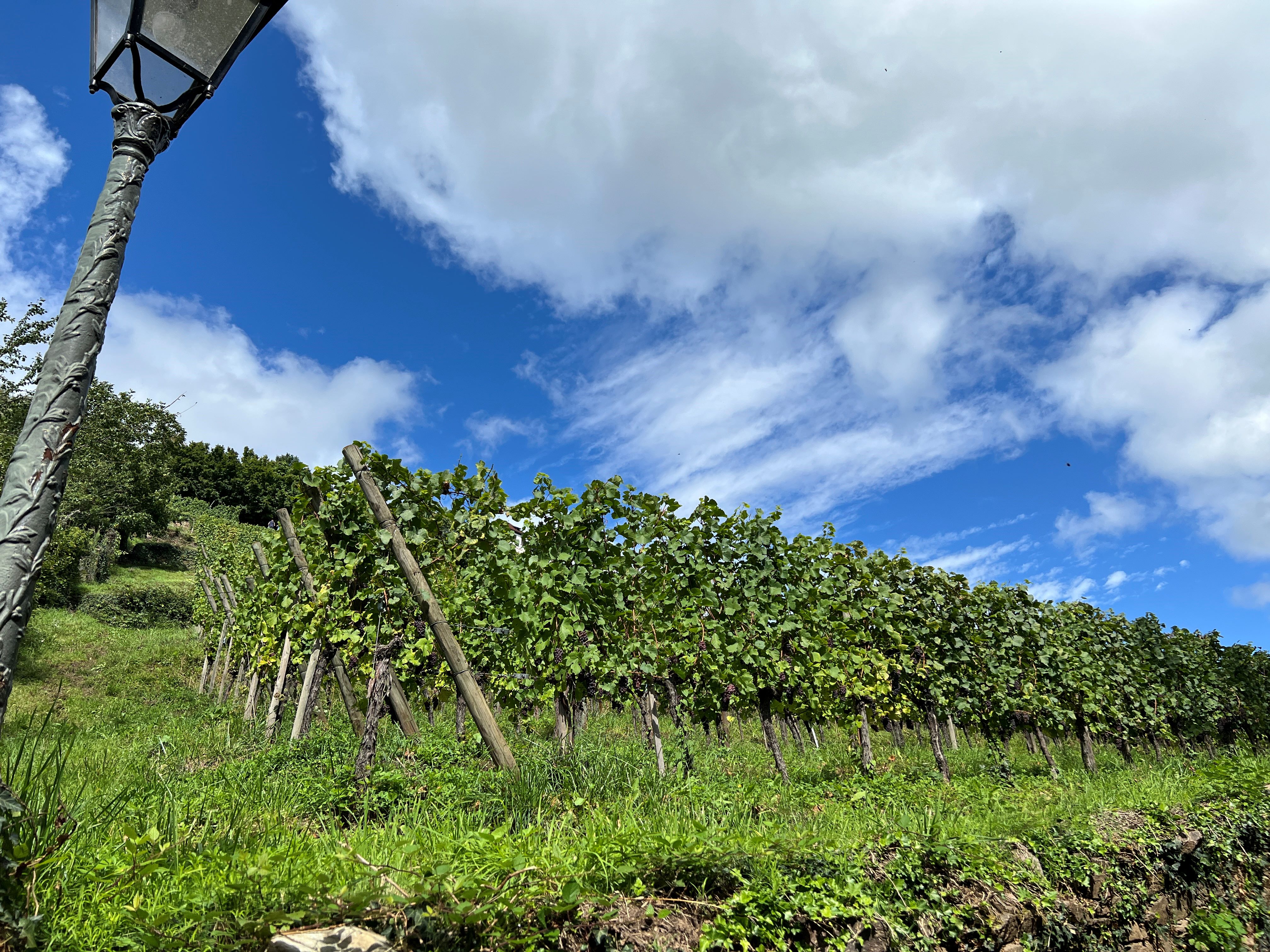
This beautiful circular town is set up perfectly for walking from one tasting room to the next, which is great for a wine-hopping day.
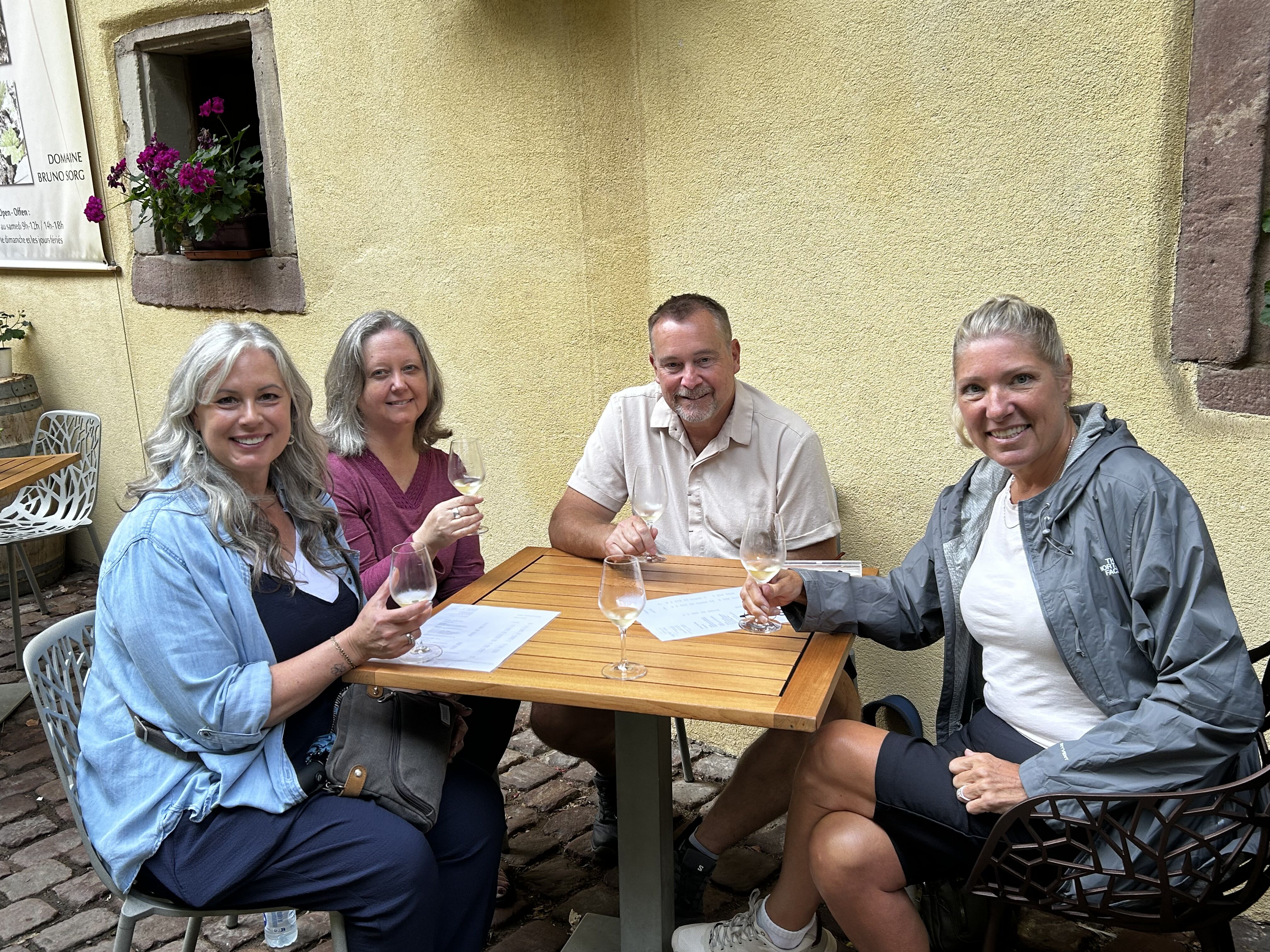
- Sorg Bruno: Our first stop, with a beautiful courtyard. The hostess explained the wines and where their vineyards were located.
- Ginglinger: The gentleman running this tasting was great, focusing his entire discussion around the food pairings for each wine.
- Paul Beyer: The host used a map to explain the difference between their "Classic" wines (from the flats) and their prize "Grand Crus" (from the highly preferred, east-facing slopes).
- Domaine Haeffelin: A 7-generation family winery focusing on very affordable dry, fruity, pale gold white wines.
Riquewihr: Beauty and Bumpy Roads:
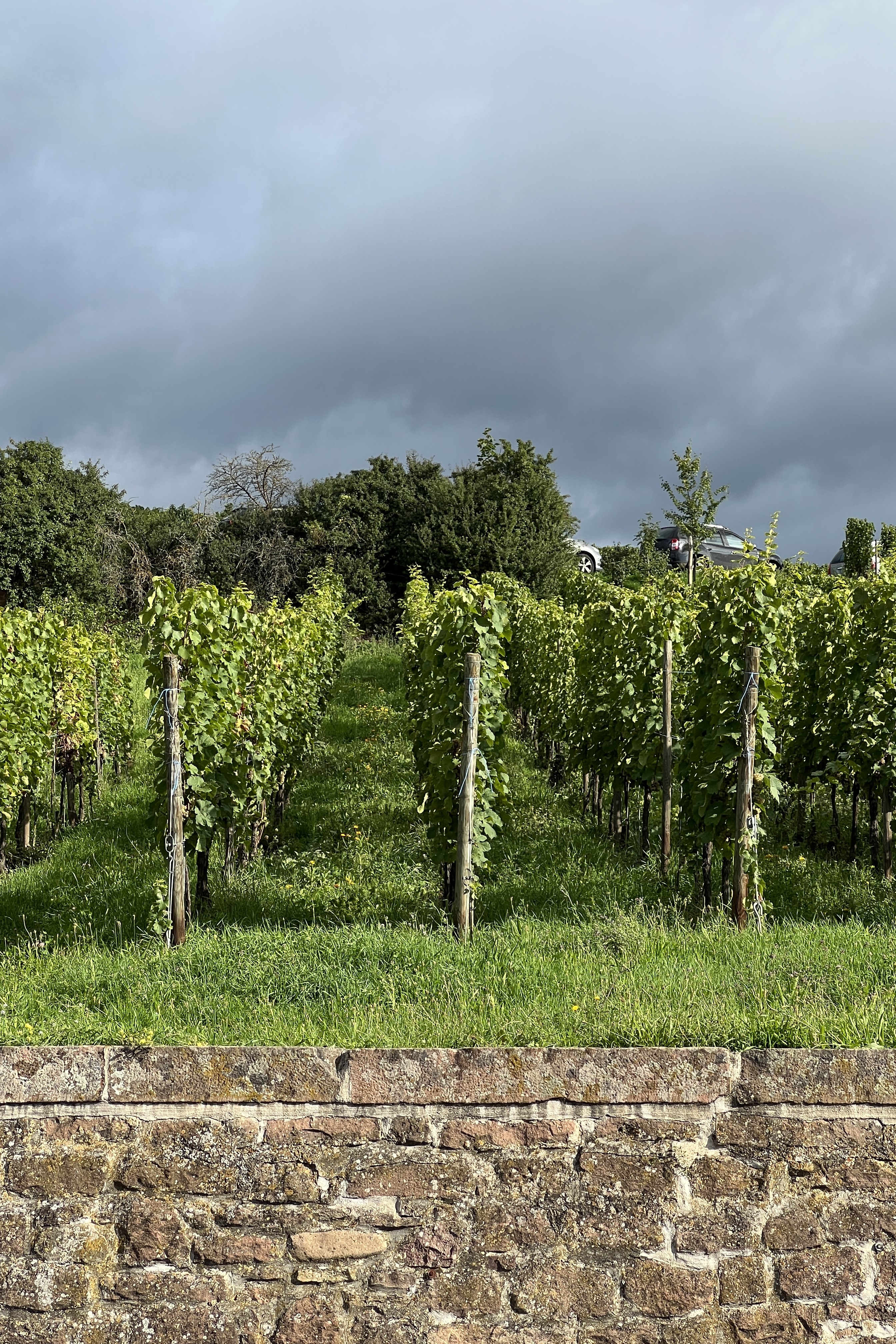
Riquewihr was another village on the "most beautiful" list, and its charm was undeniable.
- Cave du Chateau and Dopff & Irion: Two of the tasting rooms we checked out on the main drag.
- Maison Zimmer: We loved the cave tasting room here, with cool setups on the wine barrels and a dark, moody interior.
- Pro-Tip: We didn't buy any wines in Riquewihr because we planned on walking to Ribeauvillé and taking the bus back from there—it’s tough to carry bottles on a long walk!
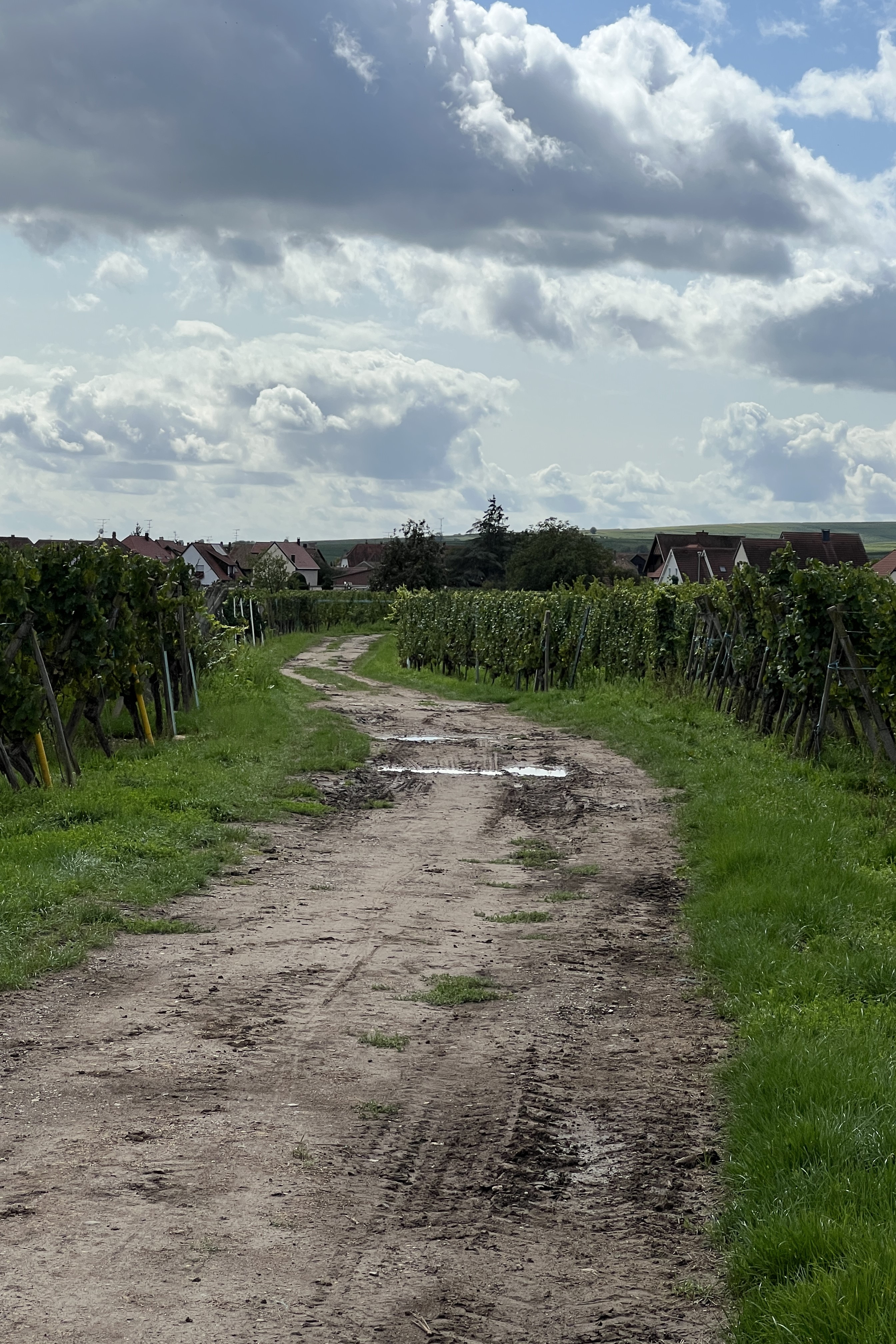
Wettolsheim / Wintzenheim: The Specialized Visit:
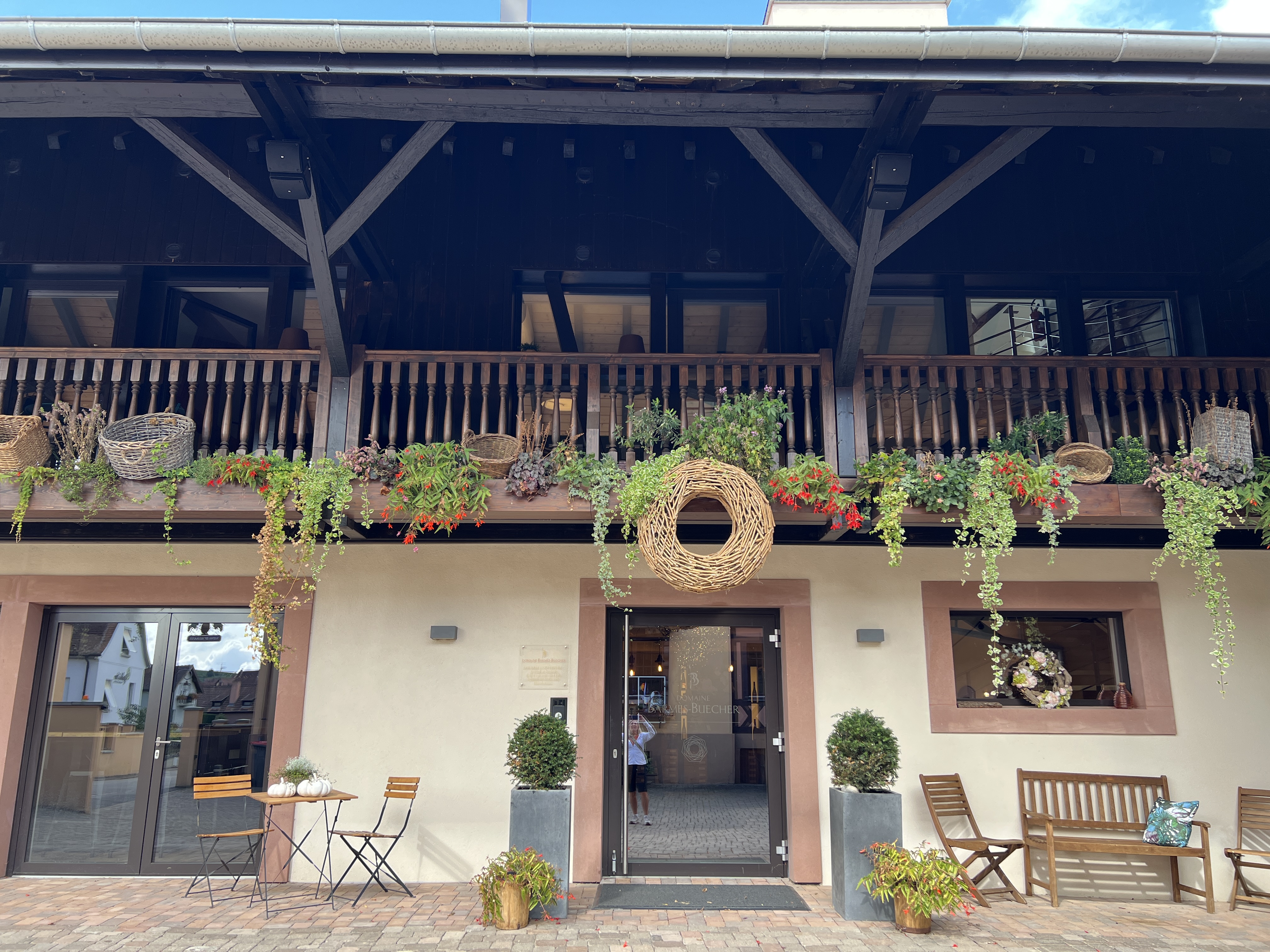
Barmès-Buecher (Wettolsheim):
We had a private tasting with winemaker Sophie, learning about their biodynamic philosophy and their passion for balance. We also discussed their current distribution, vision for the future, and how servicing the US is highly inefficient because each state is different. (Bonus: We discovered our favorite meal in the region right before this tasting at Hotel Restaurant SPA Au Soleil.


Final Planning and Tasting Tips:
- Cost in Small Villages: In the smaller villages like Eguisheim, tasting fees were very affordable. Most wineries here are €1 per taste. We also saw offers like €6 for 4 wines where you could choose from the entire list. Often, if you spend a minimum on a bottle, the tasting fee is waived.
- Start Early: In the small villages, many wineries (and shops) close for lunch between 12 PM and 2PM. Plan your day around this.
- Pro-Tip: Getting up early is a game-changer! Aim to arrive in the villages by 9:30 or 10:00 AM. You'll be able to walk around and take photos before the bus tours and crowds show up around midday.
-
- Plan for a Nice Lunch: The break between tasting times is a great time to wander for pictures, but its an even better time to experience some great restaurants. Plan ahead and make reservations if you can. (especially at peak season).
- Engage to Learn: With the broad knowledge you will find, it’s a great time to ask questions on vintage variation or on food pairing. They are happy to share, and it enhances the tasting.
- The Tasting Path: The tasting menus are usually set up to showcase the producer's work, starting with the classic wines and working your way down to the Grand Cru and special selections
Links: More Trip Reports | Colmar Trip Report | Alsace Wine Guide
Welcome to the new Touchpoint Wines
We’re blending our passion for wine with a love for global exploration. Join us as we journey through the world's most captivating destinations, uncovering hidden wine gems and offering unique workshop experiences for your team retreats. Whether you're seeking to enhance team dynamics or discover the art of slow travel, let us be your guide.